
When I read Substack’s announcement this week about native AI detection, something in me went cold. All month, I’ve been writing about the Fake Muse as fear in a housecoat: the overprotective grandparent who wants to keep us safe by keeping us inside. Perfect timing for my Fake Muse to come back with a new sweater. My first thought was to leave Substack.
I’ll be frank. I object to AI detectors and find them unethical, dangerous, and hypocritical. This is not theoretical for me.
As a neurodivergent person, I am very aware of what happens when systems and societies decide there is one correct way for a human voice to sound. I know what it is to have my patterns, my processing, my intensity, my phrasing, my timing, and my way of moving through the world misunderstood. Long before AI was in the picture, I had one of my publishers ask me if English was my second language because my English was “off.”
If that happened today, he might have put my work through a detector, gotten a false positive, and fired me over it. He probably would have felt justified by his decision, even though the fine print admits these tools are not 100% accurate. False readings already have consequences: students losing scholarships, books being canceled, and authors being review-bombed. Don’t even get me started on the hypocrisy of using AI to “catch” AI.
Tools like this are too easily treated as authority, even when they are not reliable enough to deserve it. False accusations do not fall evenly. Writers who use English as an additional language, neurodivergent writers, disabled writers, experimental writers, and people whose voices do not match expected linguistic patterns are too often the ones asked to prove their humanity.
A tool does not have to be accurate to become a weapon. It only has to produce a result someone already wants to believe. Until they are 100% accurate, I won’t use them.
Substack’s announcement felt like a betrayal and hit me on an emotional level. That was all the invitation my Fake Muse needed.
Take everything down. Abandon the platform. You knew better than to trust rented land.
Honestly, it wasn’t wrong. The Fake Muse is dangerous because it usually brings a grain of truth wrapped in six unnecessary sweaters.
Yes, platforms can change without our consent.
Yes, algorithms and tools can misread us.
Yes, a community built entirely on someone else’s land is vulnerable.
These things are true. That’s what makes the Fake Muse dangerous. It was right about the vulnerability, but not the remedy. The answer is not panic. The answer is to breathe.
I am not leaving Substack.
I can object to a platform decision and still use the parts of the platform that serve my readers. I can stay in conversation with the people who found me here and continue writing public essays that offer something worthwhile.
Substack is not the enemy, but I am still just a guest here.
That was the moment the next chapter of Authortunities became clear. It’s time to go home.
Authortunities began as a free Substack. Then it grew a free community. Then, somehow, it became a publishing ecosystem. There was no business plan. The original goal was just to offer free coaching to more writers without stretching myself thinner.
I didn’t expect the Substack to become such an important place for essays, opportunities, encouragement, and creative reflection.
I didn’t expect the NeighborHub to become such an active space for open mics, workshops, conversations, collaboration, accountability, and belonging.
I didn’t expect the press to spring up from the work we shared as a community.
I didn’t expect Space & Time to go monthly.
But they did. They developed lives of their own. Meanwhile, I kept adding rooms as I saw the need.
I continued coaching through Reedsy. I kept publishing Space & Time. I started giving books a home under Authortunities Press. I taught in other places. I spoke at events. I said yes to interviews, festivals, partnerships, conversations, experiments, and platforms.
These are all wonderful experiences, but I’ve begun to realize I’m trying to keep too many fires warm in too many separate houses.
The work has grown, but the structure hasn’t grown with it.
In some ways, this is a result of listening to my Fake Muse. It convinced me that to keep growing, I have to keep showing up everywhere. Every platform needs its own content. Every audience needs its own version of me. Every opportunity deserves a yes.
For a while, I mistook that for growth, but now I recognize it as fragmentation. Thanks to Substack’s wake-up call this week, I realize the community is not an extra branch of Authortunities. It’s the center. It’s my home.
That feels ridiculously obvious to me now, but it took me a while to see it. I don’t need to build another separate world on every platform. I need to build one world with many entrances.
Over the coming months, I will begin consolidating my deeper teaching, coaching, tools, cohort work, and implementation support inside the already thriving Authortunities community on Mighty Networks. Substack will remain an important part of the ecosystem, but its role will become clearer.
The free Substack will continue helping readers transform through stories, ideas, reframes, and meaningful public essays. These posts will not become empty advertisements with all the useful material stripped out and hidden elsewhere. I still want every public piece to offer something complete and worthwhile.
But the deeper work will go home to live inside the community, including the workshops, working sessions, coaching, resources, accountability, opportunity calendar, and structured annual journey.
Here is how I’m beginning to understand the difference:
Free Substack: Help me see the work, the world, and myself differently.
Free NeighborHub membership: Help me meet other people trying to build a meaningful creative life.
Paid membership: Help me keep showing up, building, revising, submitting, publishing, and becoming.
The free community will remain free. Open conversations, selected events, peer connection, and opportunities to participate will remain part of NeighborHub. The paid community will become the guided working space where inspiration becomes implementation.
Now that I’ve stopped asking every platform to be a home, I can finally see the architecture of the world I had already been building. The ecosystem now has four connected pillars:
Recognize with the Guided Cohort Community: We examine the inherited stories and scripts shaping our creative lives.
Reimagine with Space & Time: The magazine gives us room to explore what else might be possible through fiction, poetry, essays, and art.
Build with the Authortunities Almanac Planner: Writers carry the tangible part of the community with them as they move through Craft, Credibility, Reach, and Sustainability.
Become with Authortunities Press: Selected possibilities take physical form as books, intellectual property, professional credits, income opportunities, and artifacts that can travel beyond their makers.
If the community helps us recognize the scripts we inherited, Space & Time helps us imagine beyond them, and the Almanac Planner helps us build from that new vision, then the Press becomes one place where the work can take physical form.
Everything else becomes a doorway leading toward or extending the reach of those four pillars. This includes Substack, social media, Reedsy, public events, speaking, interviews, festivals, and partnerships.
One home with many welcome mats.
Those of you who currently support this Substack through a paid subscription helped make this evolution possible. You believed in the work before I could fully see what it was becoming.
I will not ask you to purchase your place in the new structure again. Current paid Substack subscribers will receive access to the paid Authortunities community as part of the transition. I’ll share clear instructions before anyone needs to take action, and no one will be asked to pay twice.
You are not being moved out of something. You are being welcomed further into what you helped build.
The Fake Muse tells us that success means being everywhere, but everywhere is not the same as home. Maybe that is why this realization doesn’t feel like retreat so much as return.
My favorite movie is Everything Everywhere All at Once. In the film, Evelyn Wang is an exhausted laundromat owner thrown into a dizzying multiverse where she experiences countless alternate selves. The realities spin faster and faster until possibility itself becomes overwhelming. In the end, she returns to her home with a new vision. Because she has seen everywhere else, she can finally recognize the sacred value of home.
That’s where I am now. Thank you, Substack. It’s been a wonderful party, but I need to go home now. The beautiful thing is, home is not a place I have to return to alone. The Authortunities NeighborHub is already there. The lights are on.
The door is already open.
If you’re already in the Authortunities NeighborHub, I’ll see you there as this next chapter takes shape. If you haven’t joined yet, this is a good time to step inside. The free community will remain free, and you can join us at authortunitieshub.com.
And if this post stirred something for you, tell me in the comments: where has your Fake Muse been telling you to flee when what you really need is a stronger home?
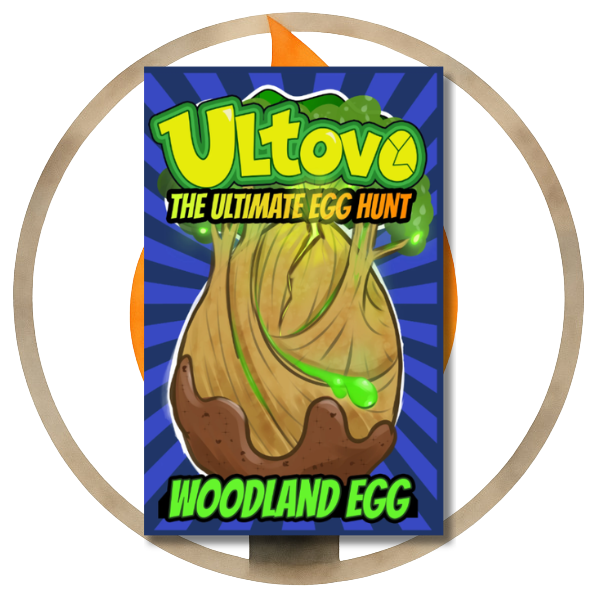
🔥 · Check out the kidlit books now available at Authortunities Press, including the new Ultovo series by Luiz Fernando Peters.
📅· The Authortunities Calendar is updated! Just added, bookfairs and conventions.
🎙️· This week on Reading Space & Time, we will be sharing stories and poems from the brand new August issue No. 153, namely “Paring Down” by Kelly J. Cooper, “The Masterpiece” by Anuksha Dey, “The Vision” by Andrew Brenza, and “Optimization Problem” by Xauri’EL Zwaan.
Comments
Nothing yet. Say the first thing.
Sign in to join the conversation.