
I've been thinking a lot about AI, for years now actually, about the negative, positive, and unforseen potential outcomes. Specifically this week, I’ve been noodling about how new developments affect the Author Brand.
I recently read Brad Beren’s “The Precipitous Decline of Brands” (via ) because thoughtful branding-related content is basically catnip to me. It’s an insightful piece discussing the possibility that many people will use AI (and AI agents) as decision-making and task-based digital servants. The idea is that they will use these AI agents to make a multitude of “boring” decisions every day that humans are less interested in making. And the prediction is that when that happens—and humans aren’t actually making as many buying choices themselves—it will be the death (or decline) of many consumer brands. I think it’s a good point, but I’d also like to illustrate one of the key differences between personal and corporate brands: how and why people buy.
A good personal brand embraces the layered, complex person it represents. A well-crafted author brand can outmaneuver and/or outlast a detrimental market trend for instance, because of its potential for a deeper, more satisfying connection with the reader.
A superfan of a particular author for instance, will not fundamentally abandon that writer’s books simply because there is something similar and cheaper to read.
As we take a deeper look at why that is, we can see major reasons to invest more fully in author brands.

You Aren’t Meant to Be One Thing
Kate Bowler recently posted a video of Elizabeth Gilbert talking about our society's obsession with having one big passion or purpose and then monetizing it. Gilbert walks us through the trope that many of us find ourselves trying to conform to:
Find the one passion or mission we’re meant to do, become the best in the world at it, and then make that your entire brand, and monetize it, and design your life around it, and so on.
Oh the trap that kind of thinking creates for us. Give the short video a watch, it’s good for an oof-inducing laugh. And if you’re craving more, you can read Kate Bowler’s Substack post that it’s meant to be a teaser for.
I want to remind you that despite what you may think of personal branding, you actually don't have to just be one thing or two things, or even three things, to have a successful brand. That's one of the biggest myths about personal branding. It’s also one of the most common fears authors have: how do I have a brand without feeling like I'm just being pigeonholed into being known for one thing?
What “Works” on Repeat
If this flies in the face of what you thought personal branding is, it’s because we are fed the shiny “success” of a many a one-note personal brand. It’s seen in the most frequently consumed media types, like TV, social media, and some genre or trope-siloed authors, among others. These personal brands haven’t just doubled down on their “one” thing, they’ve 10x’d it. They are the “hot one,” or “the beach read one,” or whatever.
That common strategy is a shortcut variety of branding and marketing and heck it can even be fun, but it relies on quick wins and knee-jerk emotional responses, and isn’t aimed at what I think most authors want: a fulfilling-for-humans kind of brand.
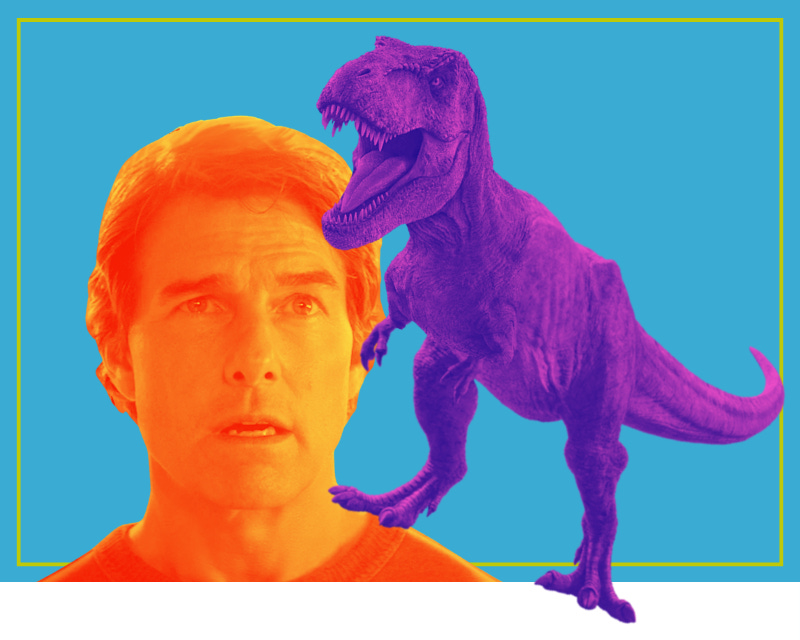
These one-note brands are a favorite of the capitalist machine: create one easy-to-understand, snappy idea that triggers immediate emotional response, rinse and repeat. It’s why we’re seeing the EIGTH installments of both the “Jurassic Park” AND “Mission Impossible” franchises released this summer. It sells. The best part for whomever owns the IP of these mega-brands is that they can swap out creators and entire teams and still make bank.
Which leads me to why your author brand is based on YOU as the creator and not solely on your book(s), essays, screenplays, etc.
We Contain Multitudes
If you’re still reading this I’ll assume you’re the type might want more than just money from your work. Perhaps you’re actually interested in having a fulfilling life, being known for more than just one thing, and having a meaningful impact on your readers’ lives—be that as simple as a good escape from the horrors of real life or as complex as teaching them how to parent.
Great personal brands have always been about having a more nuanced, complex brand rooted in our own freaking humanity.
Most authors feel like a personal brand will require them to be like Genie from “Aladdin,” squeezing themselves into a tiny package, to be called upon to perform at the will of others.
“Phenomenal cosmic powers! Itty bitty living space!”
But the good news is that it doesn’t have to be that restrictive. Throughout history, thinkers and seekers have long debated the nature of humanity, reinforcing over and over the idea that we never truly know each other completely.
And that’s okay, we don’t have to know someone completely to understand that we like them, or even love them. In life and in branding, it still helps to have shorthand though to communicate our value quickly and powerfully.
Can Our Slow Behavioral Adaptation Actually Save Us?
In this world of breakneck technological advancement, we’re often compelled to chase the shiny new object, yet what we crave most is true connection to each other and our natural world. To understand how to harness that power into our more layered approach to personal branding we look to the fundamentals of human behavior.
For instance, ever wonder why don’t see a suddent trend where most humans don’t want to have love in their life anymore. The desire to be seen and loved and connected to other humans is universal. It’s not something that technology can change.
When it comes to good brand strategy and connecting with your readers, it should be rooted in psychology and sociology—tapping into that innate desire for human attachment.
Understanding what our readers need and showing up as ourselves also creates a type of protection and durability for author brands against technology that simply doesn’t contain those same multitudes.
It may be that corporate “brands are dying”—I’m not sure—but I know it’s not true for personal brands that are built on our values, strengths, personalities, and core humanity nature.
I believe that we are born with certain proclivities, obsessions, passions, aversions, abilities, etc. that make each of us an essential member of life on this planet, but I’ve yet to meet someone who I admire who’s only known for just ONE thing.
All the best people and brands are multi-faceted. That nuance may be the very thing that helps protect authors from many of the seen and unseen dangers of AI, if they learn how to leverage it.
“A heart rises in a certain way when it encounters another heart on the page.”
There’s recent clip of on The Atlantic’s Instagram where he talks about his opinion on AI and fiction writing (and reading). Though he prefaces it with ta statement that he doesn’t have much experience with AI, he goes on to say that he’s not very concerned about the effect of AI on fiction because of how readers seek to connect not just with story but the author’s mind and their “unique interaction” of it with the world.
I think that it’s is true for nonfiction writers as well, despite others who have rightly noted that nonfiction books may become a harder sell when folks can simply learn the principles of whatever thing they want to learn by just asking AI. Nonfiction book sales are notoriously dependent on the pre-existing fame of their authors; it’s the author (and sometimes a killer concept) in these categories that often sells the book. And that’s not necessarily because they were the only one who could write it.
There are a lot of unknowns of course, and AI is changing faster than we can even wrap our heads around at this time, but again I’ll refer back to wealth of knowledge in human behavior, psychological needs, and the ways we humans are slow to change and quick to connect.
Saunders, in talking about reading, touched upon what could be a tagline for what true author branding aims for and supports:
“A heart rises in a certain way when it encounters another heart on the page.”
If we want that kind of experience for our readers it’s up to us to help them find our work and nurture the relationship when they do.
Your author brand is more than just a book; that's why it should be based on the multitudes you contain. It’s not a simple task—if it were, I wouldn’t be doing this job—but it is a doable one. ;)
I hope this brings you some reassurance this week, as you think about yourself and how you show up for your readers. Embrace the things about yourself that you love and be honest with yourself about the things that maybe you don't love so much, too.
And remember, the process of creating your personal brand includes deciding which parts of yourself to share with the public. You don't have to share everything and you literally couldn’t, even if you wanted to. That's the beauty: we get to decide how we show up in the world and even AI can’t take that away. We have the opportunity to show up as faceted human beings, choosing which aspects to reveal, always demonstrating that there's more to us than initially meets the eye.
Comments
Nothing yet. Say the first thing.
Sign in to join the conversation.