
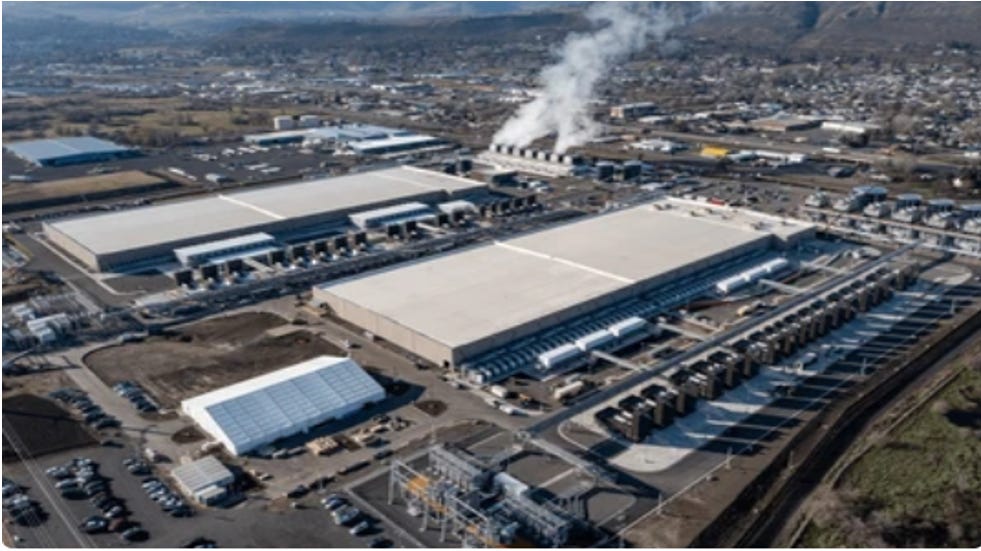
As I described last week, China is pursuing an open source AI system (now known as ‘open weight’), entering the race with a new approach to the technological war. As markets react nervously, the geopolitics of technology is beginning to reveal a new balance of power. China is ceasing to appear merely as a large manufacturer and is projecting itself as an all-round competitor across the entire artificial-intelligence value chain.
For the past three years, the global conversation about artificial intelligence was dominated by a relatively simple narrative. The United States led the development of large language models; Europe tried to regulate them; China appeared as a relevant actor, though one constrained by US sanctions and by its dependence on critical Western technologies, especially in advanced lithography and semiconductors.
The news that emerged last week forces a revision of that interpretive framework. Not because China has already attained every frontier technology. Nor because the United States has lost its lead in generative artificial intelligence. What is changing is something subtler and more profound: the assumption that Washington’s technological-containment strategy was achieving its main objective is beginning to be called into question.
For the first time since the tightening of U.S. restrictions, financial markets reacted not to a new advance by Nvidia, OpenAI or Microsoft, but to two converging fears: the possibility that China is rebuilding, piece by piece, a complete technological chain, and the growing doubt about who will finance, and when it will render profitable, the expansion of the West’s own AI infrastructure.
Recent history has a precedent: Nokia in 2007 was probably the company in business history that came closest to being “invincible”. That year, the Finnish company sold approximately 430 million mobile phones, capturing nearly half of the global market share. Its peak market capitalisation exceeded $100bn, and its revenue accounted for 4% of Finland’s GDP. The Symbian operating system dominated the smartphone world, holding an absolute leading market share; almost everyone had a Nokia. Then Google arrived.
In the autumn of 2008, the first smartphone using Google’s Android OS was launched, achieving something unexpected: Google released the source code and made it free of charge to all. Samsung, HTC, and Motorola took it up with enthusiasm and rapid development. Within only two years, Android phones filled every price range from flagship to budget phones. Nokia was aware of this competitor.
Google even approached Nokia, inviting them to join in; Nokia refused. Their reasoning was convincing: Symbian was their propriety OS, nurtured for over a decade. Using Android would be tantamount to handing over control of their platform and reverting to a mere “assembly plant” working for Google. This logic was unchallenged in board meetings.
Five years later, Nokia announced it would no longer release Symbian phones and sold its mobile phone business to Microsoft for $7.2bn. The empire that had peaked at over $100bn market valuation lost $93bn overnight. Nokia demonstrated what it means to peak on a tightly controlled market and then suddenly lose all the leveraged advantages that appeared to be an unassailable defensive monopoly.
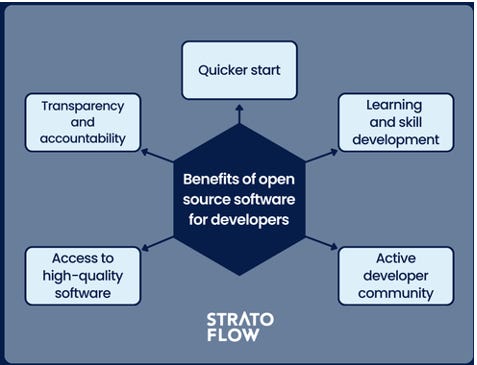
Today, seven out of every ten smartphones globally run on Android. And this is despite the dominance of the iOS system. Why did Symbian lose? Many people attribute it to the arrogance of Nokia’s management, but that’s just optics. The real reason: Symbian was a closed system, usable only by Nokia. Developers who wanted to write applications had to learn an extremely complex, proprietary language, resulting in a high barrier to entry and a narrow ecosystem.
By 2010, the Android app store had accumulated 100,000 apps, while the Symbian platform only had 3,000 at its peak. Developers voted with their feet, and users voted with their wallets. Android won in three areas.
Zero barriers to entry. Any manufacturer or developer can use it simply by downloading the code, without paying any licensing fees or having to answer to anyone.
The ecosystem flywheel. The more users there are, the more developers are willing to join; the richer the applications, the more indispensable users become. Once this cycle starts, the closed-source competitor can never catch up.
Global coverage. From Samsung flagship phones to budget phones in Africa, Android is everywhere, and massive amounts of real-world usage data feed back into system iterations, allowing it to outpace iteration speed.
Today the same script is being replayed in the field of AI. Only this time, the competitors have changed from two companies to two countries, and the stakes have shifted from the mobile phone market to dominating the future collaborative models of the global economy and potentially human society in general.
The 2026 G7 summit was held in France. A closed-door discussion was added to the meeting, attended by trillion-dollar US AI giants such as Google and OpenAI. The US message was clear: that American technology is the most advanced, and others only need to pay for it; there was no need for them to develop their own, following the Nokia playbook. On the same day, China announced at the 2026 World Artificial Intelligence Conference, held in Shanghai in July, that it would be opening its AI systems to cooperation for all countries around the world.
One builds a wall and collects taxes, the other opens doors and paves roads. Their approaches are completely opposite, seemingly a clash of the strongest contradictions. However, the spear or the shield is not determined by a company’s technological preferences, but rather by their respective national systems and economic structures.
If the United States is to maintain its hegemony, it is inevitable that it will pursue closed-source AI. This is not only the nature of capitalist oligarchs, but also because America’s technological hegemony needs a narrative to prop up its financial markets, and Silicon Valley needs monopolies to maintain excess profits.
Closed-source technology is its moat. Therefore, even without the White House’s demands, OpenAI and Anthropic would still move towards closed-source and high-fee models. China, however, is entirely different. As the world’s largest exporter of industrial products, China possesses the world’s most complete integrated manufacturing supply chain.
The licensing fees for AI are only a small part of the overall cost. By making AI a universally accessible public good, China can drive the industrial expansion of many developing countries. The logic is clear: once these countries have completed their industrial upgrades, they will have stronger purchasing power to buy Chinese industrial equipment, consumer goods, and infrastructure services.
In short, the US profits from AI alone, while China profits from AI driving its entire industrial export system. Different perspectives lead to different paths. However, explaining China’s open-source AI efforts solely from this point is short-sighted. The ultimate goal is to realise a community with a shared future for mankind, which requires the neutralisation of unipolar extractive monopolies.
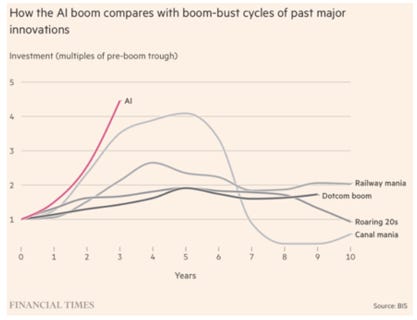
The shortcut to overthrowing hegemony is a united front. AI is the United States’ last strategic tool for maintaining its hegemony, and it is also a powerful weapon for China to pierce its hegemony. The boom in AI in the United States is essentially an “upstream carnival”
Since 2026, almost all of the US economic growth has been driven by AI investment. However, the logic behind this growth is not that AI has been successfully implemented and monetised, but rather that it remains at the upstream of the industry chain. Tech giants are frantically purchasing chips and building data centers, using massive equipment purchases to boost GDP.
This is similar to the South Korean market, where it appears to be a nationwide frenzy, but whether the benefits will materialise is uncertain. Even Americans themselves can’t offer guarantees. An MIT report states that 95% of enterprise AI deployments in the US fail to generate measurable returns.
The US media outlet, ‘The National Interest’ offered a more scathing assessment, arguing that the US has chosen a very risky path, channelling all its resources into generative AI, which easily boosts stock prices, resulting in a technologically disabled system that “has a brain but no hands or feet.”

The more challenging aspect is the physical ceiling; even the most advanced models require electricity. 70% of the US power transmission and distribution equipment is beyond its service life, and the three major power grids in the East, West, and Texas operate independently, making cross-regional power transfer operationally uneconomic.
The grid connection queue for new data centers in Silicon Valley is already five or six years long; companies can’t afford to wait and are forced to build their own power plants at high costs as a backup. In contrast, China not only has abundant power resources, but its AI has also been deeply rooted in the real economy from the very beginning.
By 2025, China’s manufacturing robot density will reach 470 robots per 10,000 people, surpassing Germany; it will also boast 43% of the world’s “lighthouse factories” and 18 fully automated container terminals. Furthermore, China has the world’s strongest new energy industry chain, as in the automotive sector, where the driverless delivery vehicles on the street are just one application scenario.
Meanwhile, relying on nearly 47 ultra-high-voltage power transmission channels and the East-to-West Computing Project, the green electricity ratio of intelligent computing centres in Western China generally exceeds 80%, with some benchmark parks exceeding 90%. The electricity price for computing power delivered to households is less than US40 cents, far lower than that of their American counterparts.
A Stanford University AI Index report released in April 2026 shows that the overall performance gap between top models from China and the US has narrowed to 2.7%, while China has already surpassed the US in the areas of industrial-specific models and lightweight deployment.
AI performs quality inspection in factories, scheduling in ports, and load balancing in power grids. Production lines generate massive amounts of physical data in real time, continuously optimising algorithms in reverse, forming a cycle of “scenario-based data feeding, data-based model training, and model-based production feedback.” This kind of data cannot be obtained by web crawlers or produced by laboratories; only a complete manufacturing supply chain can provide it continuously. Global developers will still vote with their feet, just when they abandoned Symbian and embraced Android.
A few days ago, nearly 200 Silicon Valley start-ups, including Proton and Y Combinator, jointly wrote to Trump, urging the White House not to cut off the US’s access to Chinese AI models. Otherwise, “hundreds of companies will go bankrupt instantly.” Behind this letter lies the growing rift within the US AI industry.
Giants like A-Company naturally want the White House to build a wall so they can reap the benefits of a monopoly; while hundreds of start-ups rely on Chinese open-source models for their ongoing operations. If a ban is implemented, they won’t have enough money and will struggle to survive. According to sources, the plan to impose a complete ban on Chinese models has not been seriously discussed within the White House because they know perfectly well what’s going on.
In today’s global AI landscape, only China and the United States truly hold significant weight. Without cooperation with China, the US AI efforts will remain merely theoretical concepts on financial market charts, unable to be implemented throughout industry. Cooperation benefits both sides. If the US is willing to cooperate, China will welcome it, and the whole world will benefit. Conversely, it’s a tit-for-tat situation following the pattern in Iran.
During the early years of the AI boom, the market assumed that demand for accelerators would grow indefinitely. Now different questions are beginning to surface. Who will finance such an expansion? How many data centres will actually be profitable? When will they begin to recover those investments?
The problem is that Nvidia itself invests in its customers so that they, in turn, buy its chips: an arrangement analysts call circular financing, which the ‘Bank for International Settlements’ 2026 annual report flagged as a source of systemic risk. When the maker of the shovels also lends the money to the miners, one may ask where, ultimately, the real demand comes from. The challenge is no longer merely to manufacture chips. It is to find enough electricity, water for cooling, industrial land, power grids, and capital.
These are not simply technology investments. We are witnessing the transformation of digital infrastructure into a new asset class. Data centres are beginning to occupy the place that decades ago belonged to motorways, pipelines, ports or power plants. Artificial intelligence no longer depends solely on scientific talent: it depends increasingly on who possesses the financial capacity to build thousands of additional megawatts.
And here China holds structural advantages that are hard to ignore. It does not merely manufacture components: it controls much of the manufacturing chains, critical minerals, batteries, consumer electronics, electric vehicles, industrial robots and logistics networks. While much of the Western debate continues to focus on foundation models, Beijing appears to be moving toward a far more systemic approach: controlling the entire material architecture that makes artificial intelligence possible.
Nokia had stood at its peak, believing Symbian’s moat was impenetrable and that open source was nothing more than a cheap trick. Today, the United States stands at the pinnacle of AI, believing that closed-source monopoly technology can lock everything in, and that open-source technology is nothing more than a free-riding tactic. Little do they know that, although the pace of human progress is not repeated, it follows the same rhythm and pattern. Sources - Edited extracts
The Beginning of a New Technological Era: The Week the Markets Discovered That China Is No Longer Chasing the West https://www.pressenza.com/2026/07/the-beginning-of-a-new-technological-era-the-week-the-markets-discovered-that-china-is-no-longer-chasing-the-west/
China’s AI Knife Fight: DeepSeek’s New Model Runs 100x Cheaper Than Anthropic’s Flagship https://www.zerohedge.com/ai/chinas-ai-knife-fight-deepseeks-new-model-runs-100x-cheaper-anthropics-flagship
Afterword
This episode concludes an overview of AI development thus far. The next series will examine the history of why AI is a leading instrument in the reconstruction of a replacement global financial system and the digital mechanics of the ‘Clearing House’ operation. The clearinghouse is the mechanism; the standard-setter is the authority and the two are rarely the same people. This matters because the people who decide whether your country can access development finance, your house can be insured, your business can borrow, and where your money can be spent were never elected, never named, and never asked your permission.
No posts
Comments
Nothing yet. Say the first thing.
Sign in to join the conversation.