
As wars once again raise their ugly heads this week I will leave others to document the details. This week continues my theme of placing the ills of our world at the foot of THE CORPORATIONS as an enablers of captured governments and corrupt macroeconomic failures, geopolitics and their constant inevitable wars.
I make no apology for reproducing this excellent description, edited from quoththeraven.substack.com about the failings, inherent in every institution and financial markets, seemingly losing all touch with reality in the years following the 2008 GFC and the former subtle changes, especially the repeal of Glass-Steagall Act in 1999. The trend line is unmistakable:
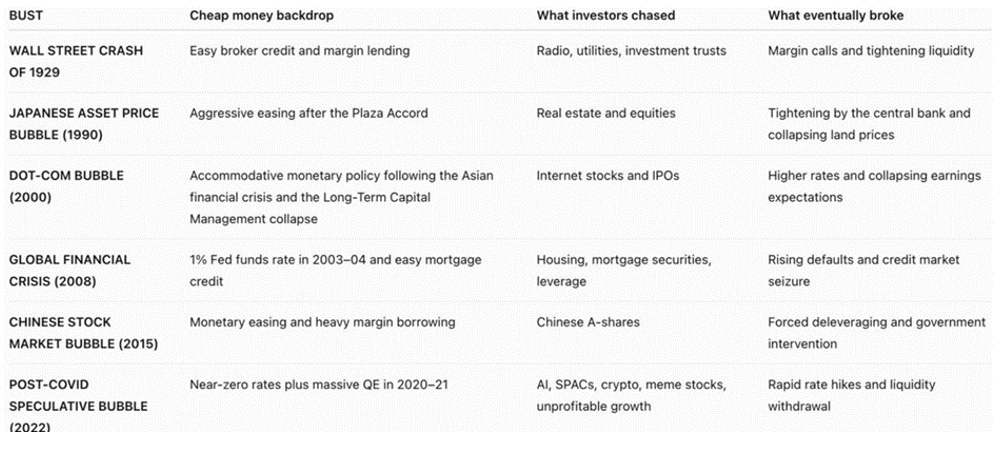
“Apparently it’s now considered bearish extremism to point out that a company says one thing and then does another. It’s futile to ask whether a proposed $2 trillion Initial Public Offering (IPO) valuation for a company trading roughly 100x sales while remaining unprofitable makes any sense. It’s negative to observe that the Federal Reserve appears trapped between an inflationary rock and a deflationary hard place, where fighting one problem inevitably worsens the other.
Companies that appear to have been caught engaging in outright misleading accounting practices that deserve far more scrutiny than they’re getting, only to watch investors shrug and buy more shares anyway. “We’ve seen this movie before. Enron did not implode because there were no warning signs. It imploded because the warning signs were inconvenient. There were whistle-blowers. There were people inside the system who knew the numbers didn’t add up. But complexity was treated as brilliance, and skepticism was treated as cynicism. Analysts admired the innovation. Television hosts admired the executives. And the stock went up—until it didn’t.”
None of the above observations are outrageous. They’re the kinds of questions investors used to ask before narratives became more important than numbers. The fact that simply asking those questions now provokes outrage says something has dramatically changed. Discussions that used to revolve around facts increasingly revolve around motives.
Apparently asking for consistency and follow-through from public company CEOs now qualifies as “hate speech.” Ironically, every bit of it is an echo chamber. Echo chambers make people intellectually lazy. If everyone agreed with everything they would probably stop challenging their own assumptions, like hearing opposing viewpoints. I’ve changed my mind plenty of times in over 30 years observing the markets. What I’m trying to arrive at isn’t confirmation. It’s truth. That distinction matters.
Part of the reason I view markets differently from the herd is because my framework has always been grounded in Austrian economics. Whether you agree with the Austrian School or not, one thing it relentlessly emphasises is that incentives matter, prices matter, capital allocation matters, and in the end economic reality eventually matters.
Artificially suppressing interest rates has consequences. Printing money isn’t free. Debt doesn’t magically disappear because politicians or central bankers wish it away. Malinvestment accumulates. Capital gets allocated to projects that never would have survived under honest market conditions. Booms fuelled by cheap money eventually collide with reality. Those aren’t particularly radical ideas. In fact, for most of economic history they would have been considered fairly obvious observations. The Austrian framework forces uncomfortable questions:
Is this asset actually worth what people are paying for it, or has liquidity overwhelmed price discovery?
Is this company creating durable cash flows, or simply issuing securities into an insatiable market?
Are executives maximising shareholder value, or exploiting shareholder enthusiasm?
Are prices reflecting genuine economic value, or simply reflecting trillions of dollars in monetary distortion through stock buy-backs, insider trading, and other aberrations?
These questions naturally make one sceptical, not because of pessimism, but because scepticism is the rational response whenever incentives become distorted. That puts it in a very different place than many investors today; being around long enough to remember markets before zero/negative interest rates became totally normal, before quantitative easing (QE) became permanent policy, and before passive indexing vacuumed up trillions of dollars regardless of valuation - via Investopedia:
“Passive investing is an investment strategy that aims to maximize returns in large part by minimizing the costs of buying and selling securities. Index investing is one common passive investing strategy. Using it, investors purchase the securities in a representative benchmark, such as the S&P 500 index, and hold them for a long time.
Passive investing is typically done by investing in a mutual fund or exchange-traded fund (ETF) that mimics the index’s holdings, either exactly or approximately. The strategy’s name reflects the fact that managers who use the strategy do not have to actively hunt for investments; they simply [thoughtlessly] buy and sell the investments that their target benchmark trades. In contrast, active investors must research and decide which securities to own.”
Before gamma squeezes, meme stocks, perpetual options speculation, and social media turned investing into something that often resembles a casino more than capital allocation. Many people investing (aka gambling) today have literally never experienced a market operating without extraordinary monetary accommodation.
If you’ve only invested during an era where every crisis is met with another liquidity program, another balance sheet expansion, another alphabet soup lending facility, and another trillion dollars created electronically, your expectations become calibrated around that environment. Eventually you stop recognising the distortion because the distortion becomes normal.
When markets become uncalibrated, investors become uncalibrated too. When asset prices become detached from economic reality for long enough, people begin confusing price appreciation with proof of correctness. Formerly we came up with gold to put more money into circulation. Then, after that, we used to at least print actual dollars. Now, we increase the money supply by literally just moving commas on an Excel spreadsheet somewhere at the New York Fed office. It’s as easy as typing these words right now: Boom. Another trillion.
People start believing valuation no longer matters because it hasn’t mattered recently. They assume management credibility is irrelevant because stocks keep going up anyway. They conclude accounting quality doesn’t matter because nobody gets punished. They believe debt doesn’t matter because refinancing has always been available. They mistake liquidity for genius. They mistake speculation for investing. They mistake momentum for truth. None of this is really an indictment of individual investors. It’s what decades of monetary distortion do to human psychology.
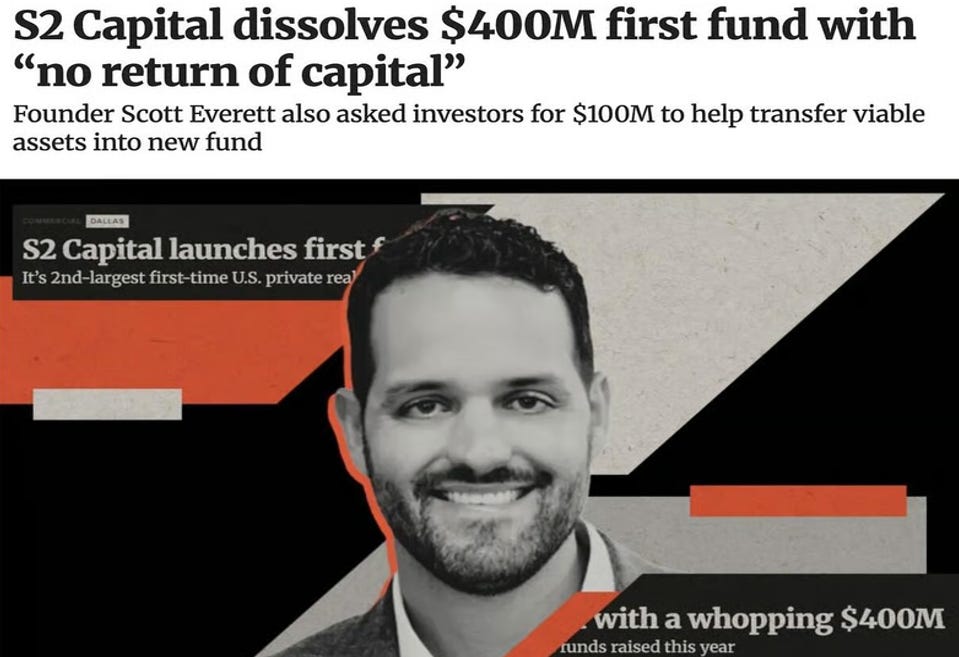
No one is worried about pointing out over and over things like commercial real estate imploding until we get a headline like this and a $400 million fund’s capital is completely gone. No capital returned. Total catastrophic loss. And the dickhead running the fund is asking for another $100 million (as in above photo).
So how should people, whose entire investing life has existed inside this bubble environment, react when it’s argued that executives should actually be held accountable for their words? Exactly the way many are reacting now, by claiming “Fearmonger.” “Hater.” or “Doomer.” Meanwhile, people whose intellect is genuinely respected bend themselves into contortions defending executives worth hundreds of millions of dollars because questioning management has somehow become taboo.
Think about how bizarre that really is. Public companies are not monarchies but are acting as such and CEOs are not monarchs but claim kingly powers. Being publicly traded is a privilege. Having access to essentially unlimited public capital through equity markets is an extraordinary privilege. Being included in major indexes that generate automatic buying regardless of valuation is beyond an extraordinary privilege. Executives don’t own that privilege. Shareholders and their pension funds should hold that privilege as the final arbiters.
CEOs should work for shareholders, not the other way around. They owe shareholders honesty. They owe shareholders consistency. They owe shareholders credibility. They owe shareholders decisions made in the owners’ best interests, not whatever best protects management’s compensation, reputation, or personal wealth.
If an executive repeatedly tells investors one metric defines success and then quietly stops talking about it once the trend reverses, investors should ask why. If an executive changes the story after raising billions based on the previous story, investors should challenge the motive. If accounting appears fraudulent, investors should inquire in depth. If incentives appear misaligned, investors should ask for accountability. None of that is negativity. That’s literally what investing is supposed to look like, not allowing executives to run amok with other people’s money.
Somewhere along the way we’ve convinced ourselves that accountability is bearish. It isn’t. It’s adult behaviour. The uncomfortable reality is that more than twenty years of extraordinary corporate-friendly monetary policy have conditioned markets to reward almost everything: unprofitable companies, financial engineering, sky high multiples, questionable capital allocation, narrative over cash flow, momentum over fundamentals. The passive bid buys regardless. Options dealers hedge regardless. Liquidity flows regardless. Every time prices wobble, investors instinctively expect another rescue. That environment doesn’t simply distort asset prices. It distorts judgment itself.
People lose the ability to distinguish between genuine business quality and abundant liquidity because abundant liquidity has made almost everything look like genius. When every tide lifts every boat, everyone suddenly thinks they’re an exceptional sailor. Eventually scepticism itself begins looking irrational because the market has become completely uncalibrated from reality.
If prices no longer reflect economic fundamentals, then the people participating in those markets slowly lose their own calibration as well. Their judgment becomes distorted because the measuring stick itself has become distorted. When the market stops rewarding discipline and starts rewarding whatever can attract liquidity, eventually investors stop recognising the difference.
This is not doom mongering. It only looks like doom because the reference point has become so detached from economic reality that merely insisting on truth sounds pessimistic. If you’ve been force fed unlimited liquidity, meme speculation, gamma squeezes, passive inflows, monetary expansion, and asset inflation for most of your investing life, someone saying, “Hold on. Does offering a 12% dividend when junk bonds trade at 6% and your company has no cash flow actually make some kind of sense?” sounds like they’re predicting the apocalypse. They’re not. They’re simply asking whether reality still exists.
I don’t blame anyone for pushing back. In fact, I’m pleased. If my criticism makes people uncomfortable, then that’s good. Discomfort usually means we’ve found an assumption that hasn’t been examined closely enough. Rather than assuming I’m motivated by fear or negativity, I would encourage people to examine their own investment thesis instead.
Ask why basic scepticism feels so threatening. Ask why demanding honesty from executives feels controversial. Ask why questioning valuation feels offensive. Ask why accountability sounds like pessimism.
Those are many more interesting questions than whether I’m a Doomer. I think I’m standing in roughly the same place I’ve always stood. The difference is that today’s market has drifted so far into euphoria that ordinary scepticism now looks like radical pessimism.
I’m not living in a darker reality than everyone else. I’m simply refusing to wear the rose coloured glasses that so many investors have slowly mistaken for reality these last three decades, and even that assumption I’ve tried to challenge honestly.”
QTR’s Disclaimer: Please read my full legal disclaimer on my About page here. As of May 20, 2026 I personally no longer actively trade (read my story here).

AFTERWORD. There’s so much in QTR’s commentary that requires careful analysis. Identifying some of the symptoms does little to offer options to rectify what is inherently human in its ability to deviate from any new system devised to offer authentic improvement.
Returning to separating investing from normal depository banking methods might offer a start to normal market functions but much more will be needed to root out the deep and complex dysfunction seen in markets today, especially global banking and the “too big to fail” megabanks. The old fear, the one Eisenhower named in 1961, was that the military-industrial complex would acquire unwarranted influence over the government.
Whilst no financial system is perfect, perhaps examining how alternative systems are working in the world today would help understanding our current dilemma. I will be researching other systems in future episodes. To be continued.

No posts
Comments
Nothing yet. Say the first thing.
Sign in to join the conversation.