
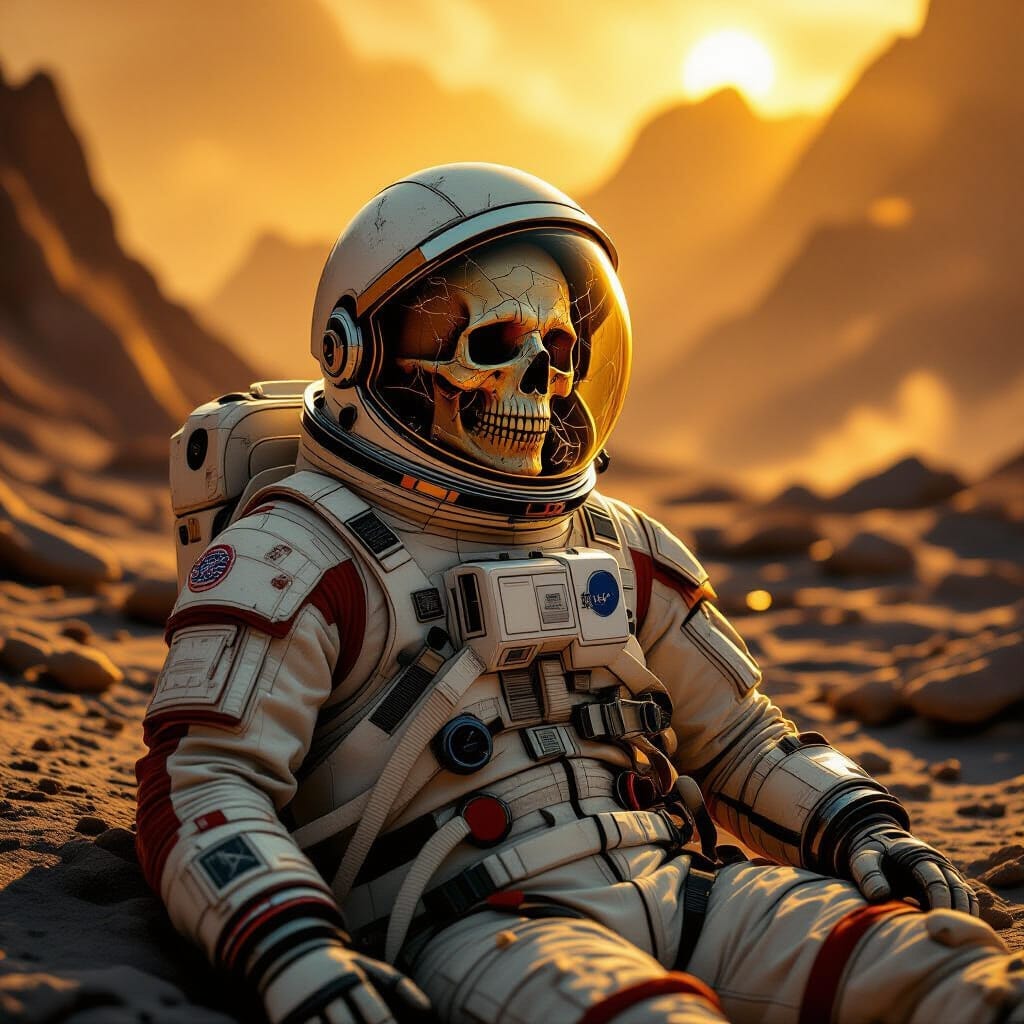
It’s Not All Fun and Games Like in the Movies.
Long-term space travel and extraterrestrial living expose humans to extreme radiation, bone loss, muscle atrophy, and mental health challenges due to isolation and confinement. Despite advances in technology, the human body—and mind—evolved for Earth, not Mars or another planet. Colonizing another world could pose irreversible risks to human that we aren’t yet prepared to manage.
But that’s not the case in the world of Planet Tamers!
The Great Dangers of Space Travel
Human spaceflight presents several hazards that significantly risk the health of space travelers. NASA’s Human Research Program has identified five key hazards:
• Space Radiation: This invisible hazard can increase cancer risk, damage the central nervous system, and contribute to degenerative diseases like cataracts. The type of radiation in space differs from Earth, making risk assessment and mitigation challenging.
• Altered Gravity Fields: Moving between different gravity fields (Earth, microgravity, lunar gravity, Martian gravity) places strain on the body. Microgravity, in particular, leads to bone and muscle loss (atrophy), cardiovascular deconditioning, and fluid shifts that can impact vision and balance.
• Hostile/Closed Environments: Living in a confined spacecraft for extended periods creates unique challenges. Factors like temperature, pressure, lighting, noise, and microbes need careful management to maintain a safe and healthy environment. Dust, both from the spacecraft and potentially from an extraterrestrial planet surface can also pose a risk to equipment and astronaut health.
• Distance from Earth: As missions venture further into space, the distance creates logistical and medical challenges. Resupply missions become more difficult, and communication delays can make real-time support from Earth challenging or impossible. Astronauts need to be increasingly self-sufficient and capable of handling emergencies independently.
• Isolation and Confinement: Extended periods of living in a confined space, far from family and familiar environments, can have significant psychological impacts. Stress, anxiety, depression, and disruptions to circadian rhythms can affect cognitive function and team dynamics.

Other significant dangers include:
• Space Debris: The increasing amount of space debris orbiting Earth poses a threat to spacecraft and missions. Collisions with debris, even small pieces, can be catastrophic. NASA tracks larger debris objects, but smaller debris and micrometeoroids are difficult to track and avoid.
• Temperature extremes: Although the vacuum of space is extremely cold, spacecraft and astronauts are also exposed to intense solar radiation, leading to vast temperature fluctuations. Maintaining a stable internal temperature requires specialized engineering and insulation.
• Potential for equipment failures and technical glitches: Space is an unforgiving environment. Malfunctions in any of the spacecraft’s complex systems, from power and communication to life support, can quickly become critical situations.
Addressing these numerous and complex challenges is crucial for the future of human space exploration, especially as ambitions extend to missions to the Moon and Mars. Research and development efforts focus on improving the understanding of these hazards, developing effective countermeasures, and building more robust and resilient spacecraft and systems.
In preparation of the launch of my military sci-fi series, Planet Tamers, this is the third article in a series of four. We’ve talked about the natural dangers of space. But what about the manmade kind? Should we call them space pirates or space mercenaries?
The real question is whether the crew of the Da Vinci, and their allies, can defeat all these many dangers to make it to Titan and begin humanity’s first step to terraform and colonize another world. Read the series and find out!
VIP: ☄️Comet
Comments
Nothing yet. Say the first thing.
Sign in to join the conversation.