
This week we’re discussing Chapters 1-6, Volume 3 , or Chapters 32-37, of ‘Mansfield Park’ in the Austen Connection’s Great Jane Austen Read-Along. Welcome!
Check out all the schedules and info for the Read-Along here:
Hello, friends -
This week involves what may be the most fun chapters and readings of this novel. It’s where the problematic women have got out of the way, Fanny has the run of this House more to herself, and the men on the premises have turned their attention to her. As we say in this week’s discussion post, it’s a sort of fantasy-world of male attention that Austen seems to create here.
And this week’s readings also contain one of the most palpable depictions of desire, in the passage where Edmund watches Fanny watching Henry, below. It’s getting hot here at Mansfield, yes? Or at least the temps are rising on this estate as far as likely they will ever go.
Below, we have all the chat, some key passages and moments, and some prompts for you to weigh in on, as well as our Cool Links and schedules - all below.
Happy reading, friends. -PJ
As the Mansfield Park Experience continues, we have in this week’s reading a surfeit of speechifying, strategizing, collaborating, and closing ranks around our heroine - most of it enacted by the magnetic, persuasive, and impressive Men of Mansfield.
An embarrassment of riches, in some ways; an affliction in others, depending on your viewpoint. Fanny Price is not having fun. But that doesn’t mean we can’t.
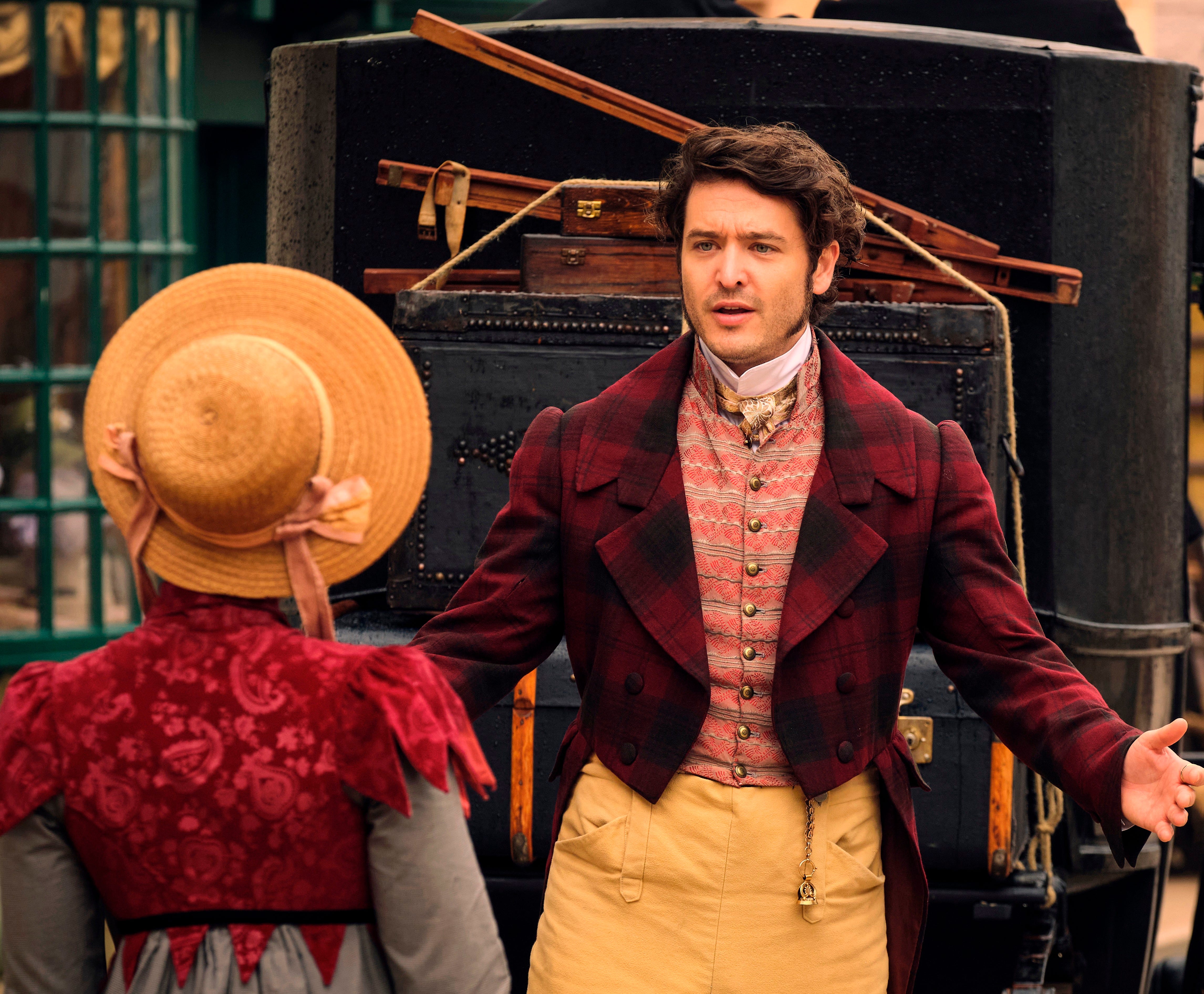
Right away in this week’s first six chapters of volume three of Mansfield Park, we have lectures, strategies, cajoling, and admonishing by the master of this house, none other than Sir Thomas. Fanny Price has continued the path from the margins to the center of this action. She has unhappily gained the full spotlight, and she is in Sir Thomas’s sights. He has an object in mind, she can deliver it, and he is not letting go.
And the same can be said for his collaborator, Henry Crawford. The attention Fanny commands from Sir Thomas is remarkable - but perhaps even more remarkable and definitely more fun is the attention Fanny gains from Edmund and Henry Crawford.
In the drawing room after dinner. Henry arrives and recites Shakespeare in a magnetic performance meant entirely for Fanny and she knows it, while Edmund closely watches her reaction. It’s one of physical transformation, and in a passage that reveals just how Austen permeates her pages with a desire that is smuggled in amidst the needle-work in a drawing room, Edmund watches Fanny as her needle-work falls:
“… from her hand while she sat motionless over it—and at last, how the eyes which had appeared so studiously to avoid him throughout the day, were turned and fixed on Crawford, fixed on him for minutes, fixed on him in short till the attraction drew Crawford’s up on her, and the book was closed, and the charm was broken. Then, she was shrinking again into herself, and blushing and working as hard as ever; but it had been enough to give Edmund encouragement for his friend …”
The men this week are tag-teaming: Sir Thomas not only joins ranks with Henry Crawford - in an alliance totally and clearly based on worldly standards of Henry’s wealth - but also recruits Edmund to his cause. And then as we’ve seen Edmund joins Team Henry in the drawing room, and afterward on a walk with Fanny in the shrubbery - always the shrubbery - as he attempts to further Henry’s cause.
This novel is full of Shakespearean stand-ins and wooing tricks, as here Edmund attempts to captivate Fanny on Henry’s behalf, just as Mary has done before him.
The men consort together, work together, and seem to automatically entrust each other to further their interests, with Fanny’s attempts at reason and her cogent assertion of her case going unheard and unheeded.
But yet that Shakespeare-recitation scene with Henry depicts almost a fantasy-world of attention. Edmund and Henry enjoy reminiscing about school days and then move on to a deep discussion on sermons and the art of preaching, both glancing at Fanny, noticing Fanny, and taking pains to bring her around to the charms of the conversation.
One thing that happens in this scene is that Austen - perhaps in this more mature novel more than the others - seems to take on the art of revealing action indirectly through dialogue, and she does this in interesting ways with Henry. In a dialogue during the speculation game last week, Henry interrupts himself to remind Lady Bertram not to show her cards; here in volume three we have Henry interrupting his dialogue to attend to Fanny Price with a “tender interruption“ that is worth replaying here in part. Take it away, Henry, pontificating to Edmund:
“Our liturgy, observed Crawford, “has beauties, which not even a careless, slovenly style of reading can destroy … For myself, at least, I must confess being not always so attentive as I ought to be—(here was a glance at Fanny) that nineteen times out of twenty I am thinking how such a prayer ought to be read, and longing to to have it to read myself—Did you speak?”
When Fanny protests that, no, she did not speak, he continues in this conversation with Edmund - both of them animated, but glancing at her - until Henry catches her shaking her head, stops the conversations again, pulls up a chair to her, and charmingly demands to know what she is shaking her head about: “Only tell me if I was wrong. I want to be set right.”
Edmund meanwhile is pretending to get himself engrossed in a newspaper!
It’s really a charming scene, is it not?! And it’s hard not to feel that Jane Austen herself is through this scene perhaps correcting some of what she must have experienced over a lifetime of being in rooms full of boys and men talking about college, about school days, and debating the merits of sermons, with a greater or lesser degree - who knows - of interest in her own thoughts on these subjects. But there, the debate, the discussion, of these worldly and male professions and theories play out all with one thing in mind: How it’s striking the quiet, smart young woman in their midst. One can dream!
And Fanny Price does get a devastating word in: Henry pursues at his own peril, as his subject finally does accept his invitation to speak and here’s what she says:
“Perhaps, Sir,” said Fanny, wearied at last into speaking—”perhaps, Sir, I thought it was a pity you did not always know yourself as well as you seemed to do at that moment.”
Henry has an almost literal “ah-ha!” moment - he’s delighted to hear her criticism. It’s an insight into her mind, and what a strong mind it is, and also it’s information that will help adjust his strategy as needed. We’ve seen he’s a player, and his head is in the game. Austen makes clear he’s pursuing the “glory” of the chase.
And his object continues to raise herself in his estimation, making the chase all the more meaningful. She’s transforming his game even as he plays it. Who will win?
LOL moments - For me this week there was really only one, OK two - and each had me truly laughing out loud. Fanny Price’s two aunts’ various reactions to her triumph in “capturing” Henry Crawford is marvelous. Lady B of course attributes it to … wait for it … Chapman! Chapman did her hair for the ball (except that she didn’t) and so Lady Bertram has single-handedly created this success. And as for Aunt Norris, wow - our narrator details such an awkward moment after dinner when Baddeley enters and quietly notifies Fanny Price that she is wanted by Sir Thomas, and Aunt Norris’s reaction contains no less than three “me’s”: “It is me, Baddeley, you mean; … You mean me, Baddeley, I am sure; Sir Thomas wants me, not Miss Price.” Sigh.1
This week’s reading was an awful lot of Henry - this is a complicated character, but do feel free to share your thoughts on how this is going for you. It seems hinted in these chapters that Fanny Price - as firm as she is, she resists! - could be open to new information, as an Austen heroine always is: “She began to feel that she had not yet gone through all the changes of opinion and sentiment, which the progress of time and variation of circumstances occasion in this world of changes. The vicissitudes of the human mind had not yet been exhausted by her.” A lovely passage - but what does this mean for Fanny’s future?
What are your thoughts on Sir Thomas? My impression of the critical history of this novel is that for 200 years this character was seen as benevolent - I think many still read the character this way. But what are your thoughts? With our readings and discussions, we are constantly calling attention to the ways that Austen presents power dynamics. But it’s not too leading, or misleading, to call out the words our narrator is using in these confrontations in the first two chapters of volume three, where Sir Thomas refers to Fanny’s potential ingratitude, and that “independence of spirit” which he finds “in young women is so offensive and disgusting …” Do we think Austen co-signs this? Do we think not?!2
Have you noticed these actions-showing-through-dialogue moments? Another one comes from Edmund, as he takes Fanny for that extraordinary walk - again, the shrubbery! - and he jokingly admonishes Fanny, telling her that Henry’s sisters are angry with her, ending a long speech to Fanny with, “But this is Teazing you. I have done. Do not turn away from me.” So that even before Fanny speaks, we know that she’s upset. But she devastates again with that wonderful retort: “I think it ought not to be set down as certain, that a man must be acceptable to every woman he may happen to like himself.” [We might add: even a well-established, wealthy one!] And Fanny continues: “His sisters should consider me as well as him.” You go girl!
What an intense scene between Mary and Fanny - comprised of the “scolding,” tricks, maneuvers, negotiations, and cajoling that populate this novel. It’s an intense, breathless, scene between two women. We’ll try to tackle this parallel scene in the East Room more next week - but for now, let’s crowdsource this one: What do we make of it?! It may be that with all the men talking - forcefully and impressively - in these chapters, it’s Mary’s strategy that is most effective.
Oh and saving the best for last - Lady Bertram has offered Fanny Price a pug puppy! 🤣
We’re in Volume Three, friends! Two more weeks to go - keep going, and meanwhile let us know your favorite moments and scenes from these first six chapters of volume three, and how you’re faring at this point in the story?
Share your thoughts/questions/ideas/frustrations/triumphs, here!
Up next - we’ve got two more weeks of this complicated, bleak story that we are managing to make fun. (Are we having fun?!) Coming up next week, we’ll have our Read-Along Librarian Tabrizia Jones’s Read-Alikes for Mansfield Park. And our conversation continues throughout the week - you can always join the lively Comments section as you read.
Week 1: Kick-off - Sunday, July 5
Welcome, announcement, schedule!
Week 2: Chapters 1-6, Volume 1 - by Sunday, July 12
Week 3: Chapters 7-12, Volume 1 - by Sunday, July 19
Week 4: Chapters 13-18, Volume 1 - by Sunday, July 26
Guest post - Jane Austen Society of North America’s Renata Dennis!
Week 5: Chapters 1-6, Volume 2 | or Chapters 19-24 - by Sunday, August 2
Week 6: Chapters 7-13, Volume 2 | or Chapters 25-31 - by Sunday, August 9
Week 7: Chapters 1-6, Volume 3 | or Chapters 32-37 - by Sunday, August 16
Week 8: Chapters 7-12, Volume 3 | or Chapters 38-43 - by Sunday, August 23
The Read-Along Read-Alikes List for MP - from Librarian Tabrizia Jones
Week 9: Chapter 13-17, Volume 3 | or Chapters 44-48 - by Sunday, August 30
Celebration Video - We did it!
We’re so fortunate that some of the most dynamic scholars, creators, authors, and Janeites have joined us for community discussion around the novels of Jane Austen. Here’s more information on our co-hosts and Readalong All-Stars:
All you need to get yourself on the Read-Along is two quick things :
1-Get the book - for Mansfield Park, I use as always the Norton Critical Edition, and this one is edited by the absolutely brilliant Claudia L. Johnson - and as always any copy from your library or an independent bookstore is also great.
2-And - subscribe! All the read-along content and discussion rolls out right here each Sunday on the Read-Along channel of this Substack. Toggle the Read-Along button to “on,” in the Settings of this Substack - here, and with a “read-along” suggested-donation ticket of $25 all the posts will drop to your inbox (or read for free - if you need to read free, just reply to this email to get added to the list!):
Get your $25 Read-Along ticket!
You can see all of the schedules and information on the 2026 Great Jane Austen Read-Along here.
You totally rock, readers. Like Fanny Price - and perhaps also Keri Russell and her friends in Austenland - you are moving center stage and dancing through this life your own way. You can subscribe, below, to get all our convos right to you inbox - and chances are you are not only a subscriber but also a Paid subscriber - in which case a triple-shimmy thank-you for powering this project. And whatever way you join us, thank you for reading along, conversing along, and shimmying along with the Austen Connection, our very own Austenland.
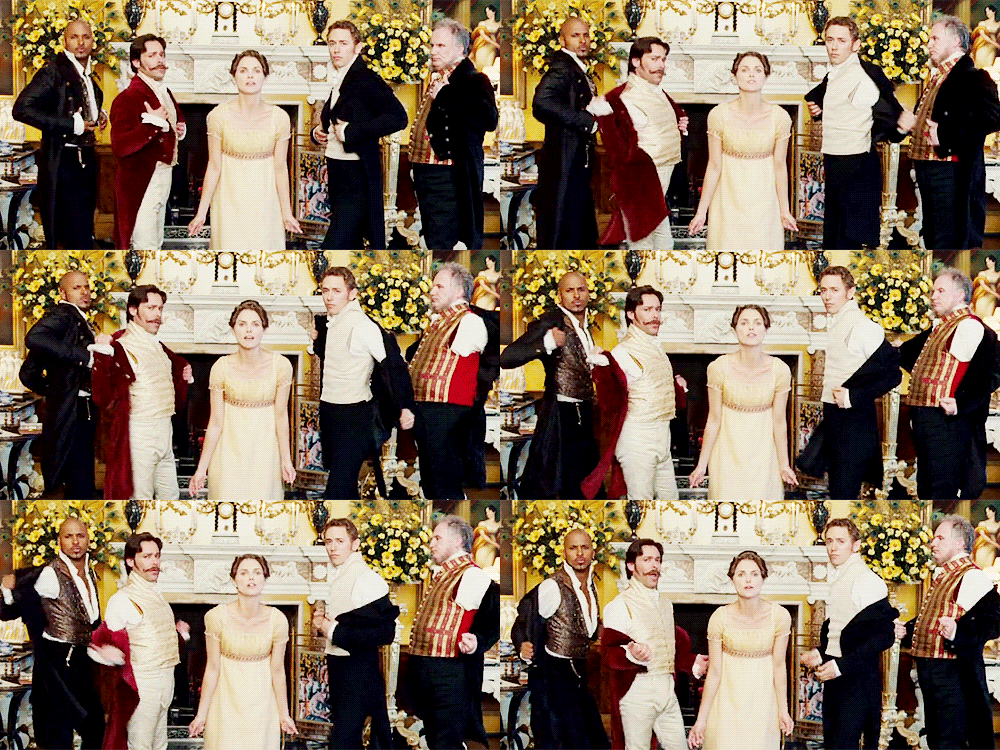
Have a wonderful week, friends. Hope your week involves some scintillating attention, some shimmy, some Shakespeare, and lots of books. Happy reading this week. Stay well and stay in touch.
Yours affectionately,
Plain Jane
All the ways to join and support the Great Jane Austen Readalong:
Here are links to the various ways you can join and support the Austen Connection read-along and project - thank you!
📚 Join the read-along by turning on the “read-along” notification - content rolls out free and stays free for one week, here.
📚 Support for $25 - and get a read-along ticket for a suggested donation of $25, and get access to all read-along content all the time, here.
📚 Support as an Austen Connection Member, at $5 per month or $50 per year, for access to all content at all times, here.
If you would like full access but can’t afford to support, simply let us know and you’re in, no questions asked. And in whatever way you choose to join, thank you!
A Jane Austen heroine resists: We don’t know what Austen had in store for the character of heiress Georgiana Lambe, who appears in her last, unfinished novel fragment Sanditon. The character is depicted here in an image from the PBS Masterpiece series ‘Sanditon’. But she is a character who - in the PBS version anyway - navigates her way to happiness.
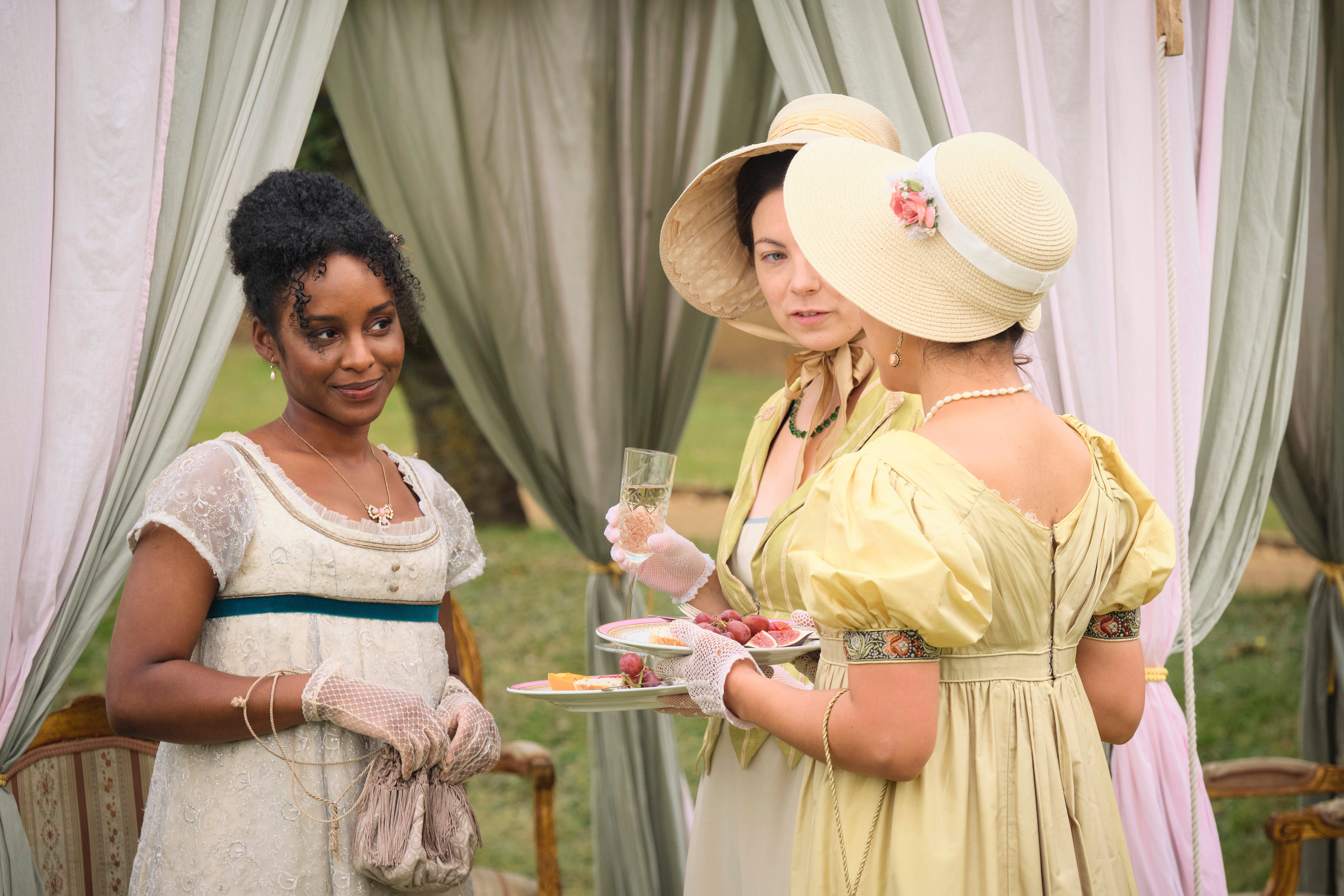
All Things Austenland! You might enjoy this deconstruction of All Things Austenland from this year’s Virtual JaneCon festival:
And if you haven’t watched yet, what are you waiting for? Here’s a glimpse of Austenland:
Men Explain Things to Me is the title of a well-known essay by Rebecca Solnit. It inspired the title of this post. Let us know your thoughts on this essay, and how it parallels, if at all, with Jane Austen’s novel.
What it all has to do with the price of tea in China: I’ve continued reading Susan Allen Ford’s What Jane Austen’s Characters Read (and Why), which contains fascinating analysis of the accounts published in Sir George Macartney’s Embassy to China, with various accounts referencing the diplomatic mission abroad and in China, and the exchanges of gifts, gratitude, and the transactional relation to power and influence. What a window these readings put on the thinking of the day, on both gender equality and general human rights and equality. And Ford makes an observation that had puzzled me for a while about Mansfield Park, which is Austen’s long, intentional dialogue and repeated imagery on landscapes and improvements. Ford makes the point that improvements can be connected to influence and control, as opposed to allowing natural, organic growth and gradual progress. It’s a fascinating way to look at this novel and its characters, in relation to: Improving vs Controlling! Management vs. Growth!
Alistair Duckworth’s The Improvement of the Estate is one on my TBR list and it’s referenced in Ford’s (above) book. It’s an academic book so it’s expensive - but has anyone out there read it?
The Royal Treatment - this one is not going to win any awards, but it was surprisingly original and adorable in ways it didn’t need to be, and the diverse casting and the overt treatment of class issues is refreshing.
Good clean fun with heaps of extra cheese!
If you enjoy the Austen Connection, feel free to share it!
Chapman and Baddeley - these names are great. And rare. One can wish that the lives and stories of workers in Jane Austen’s novels - not to mention her letters - got more of a spotlight. She consciously confined herself to writing what she knew well, but still - they were in her midst and she had the imagination to take her further. Jo Baker’s acclaimed and beautiful novel Longbourn reimagines Pride and Prejudice through the perspective of its workers in a powerful retelling. This needs to be a film adaptation. Please advise if you know of other similar works that pick up where Austen left off.
Sir Thomas’s speech in the East Room - his confrontation with Fanny Price - is for me strongly evocative of that conflation of giving, gratitude, expectation, “improvement,” and control that comprise the power exchanges of colonialism, which is a huge British enterprise of the Georgian era. And Austen presents a passage here that seems to do a lot of work, and it conjures misdirected but intended benevolence and all its devastation of impact. The passage begins with a telltale defense of Aunt Norris’s actions toward Fanny, and it’s worth replaying in full: “You will take in the whole of the past, you will consider times, persons, and probabilities, and you will feel that they were not least your friends who were educating and preparing you for that mediocrity of condition which seemed to be your lot.—Though their caution may prove eventually unnecessary, it was kindly meant; and of this you may be assured, that every advantage of affluence will be doubled by the little privations and restrictions that may have been imposed.” Austen is taking the time to say something here - and she’s put it in the voice of a plantation owner, and she’s placed a stack full of nonfiction books and accounts of British influence abroad and in China a few feet away in the East Room. It’s worth discussing and examining! For deep context on Fanny Price’s reading and the language of exchange, influence, and power that Austen deploys in Mansfield Park, see, again, Susan Allen Ford’s research on Macartney’s accounts of the embassy to China in this JASNA Persuasion’s piece on Fanny Price’s reading and also in What Jane Austen Characters Read (and Why).
Comments
Nothing yet. Say the first thing.
Sign in to join the conversation.