
Australia’s National Cultural Policy “Revive” is up for review.
Creative Australia are calling for our submissions:
We should have our say. It might be better than screaming into the void of social media. But, that is actually proving to be very effective as of late and getting some useful traction:
I started to think about what I would submit, so I started writing some dot points.
Educational Institutions crumbling; particularly universities. TAFE has been gutted for creative arts, where it was once a thriving community and an important development for many creatives who went on. Universities relying upon overseas students for their core business model is flawed and unethical.
Public education wilfully underfunded: Failure to implement Gonski; public education cannot catch up now, it is impossible: culturally people have lost faith in public education and have “moved on”.
Increasingly engagement with the arts & creativity is only accessible to the rich
Culturally, music is a “nice hobby to have” but you must get a “real job”.
Schools & the Obsession with ATAR scores that are drivers of real estate and the “productivity” that goes with that.
Obsession with ATAR scores results in less agency available to students: music and creative arts subjects are “scaled down” and are a disincentive to engage with at senior secondary levels.
Students are less likely to choose what interests them because of the high stakes nature of performance and the opportunities that are open to them, then the expense of Tertiary study. Students start their careers in substantial debt with astronomical cost of living and affordable housing availability being scarce.
Interesting reading:

"We need a society that values its visionaries, those who go against the grain to create new dreams that reveal other ways of being." — Ben Quilty
Worth checking out: https://australiainstitute.org.au/store/a-time-for-bravery
and then I wrote some more dot points:
The absence of safe places to “try things and fail”: arguably this is what is needed most in education. It is this culture that feeds innovation and scientific discovery more broadly.
Absence of “Third Places” - community spaces where informal, semi-professional creativity occurs. These are important breeding grounds of creativity and community engagement: It is important to have access to be able to put on an event with a low non-gatekept barrier for entry. It is important to have these spaces in which things can be tried out and failure can occur.
Increased conservatism of institutions - more risk aversion, less willing to take a chance on making something creative and interesting happen.
AI stealing all creative content that was ever made, completely disregarding Copyright laws. No prospect of any sustainable income from any copyright or royalty model anymore.
AI does not favour/encourage/support Australian content, there is no way currently to “steer” the algorithm towards what we consciously want more and less of.
AI completely eroding all existing all “knowledge jobs”; Expertise and experience devalued.
Cultural Infrastructure was fragile before C-19, and if that didn’t kill it, AI sure will.
Public Liability Insurance killing music venues that support and play independent artists playing original music. This results in established venues being more “risk averse” with their programming; less likely to put on original music and more likely to put on a “tribute” show - even for established artists. The pressure for established artists to just survive means that they have to do tribute shows at the expense of working on their own music. Tim Rogers, Emma Donovan, Vika & Linda should be playing their own original music.
and then I wrote some more ideas down:
We have a fundamental problem with how we measure the impact of creative programs and how we allocate funds to them. Creatives exist in the Qualitative. People with the money exist in the Quantitative. We need to be able to value qualitative data much more. Not everything that is important fits conveniently in a spreadsheet. How do you measure people’s sense of improved wellbeing from engaging in the arts? How do you effectively measure engagement? How do you quantify the spark of a new idea? How do you measure the value of an interesting conversation that changes someone’s thought process?
and then I tried to organise them a bit on Instagram to provoke a bit of conversation, some thinking, maybe some pushback, and maybe even some submissions to the National Cultural Policy review.
Fund the Infrastructure, Not Just the Festival
🎷 We celebrate the concert. We forget the ecosystem that made it possible.
Australia is great at funding events. We are terrible at funding the quiet, unglamorous work that holds the music sector together — the archives, the education resources, the databases, the curatorial labour that nobody sees.
Norway funds cultural infrastructure as a public good. We fund it until the creator burns out.
The next National Cultural Policy needs a dedicated stream for ongoing cultural maintenance — not projects, not festivals, but the connective tissue of a living music culture.
What infrastructure in Australian music do YOU think is being held together by one exhausted person? 👇
Our Gas, Our Culture
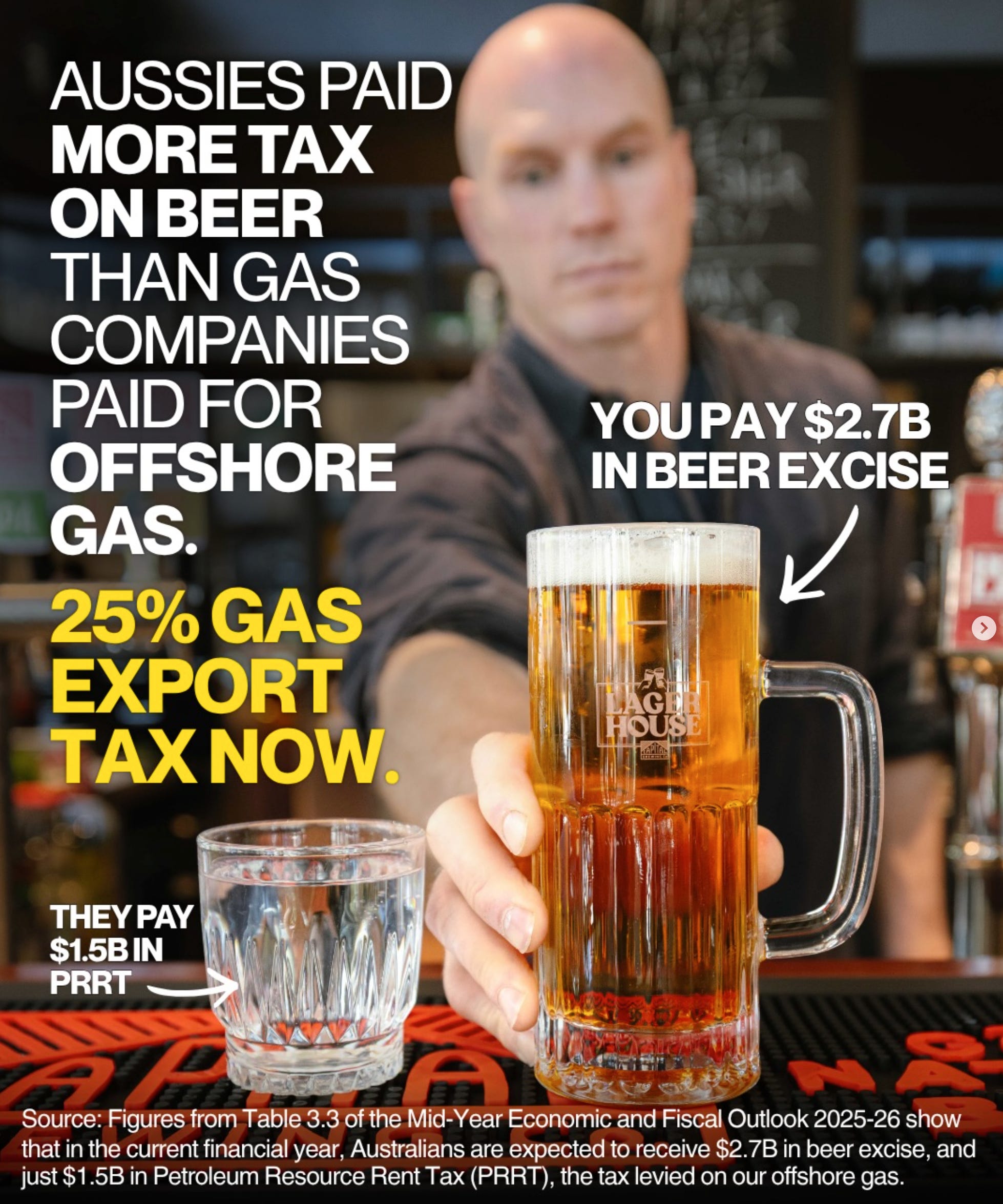
⛽ Norway extracts oil from the ground. They put the money in a sovereign wealth fund — now worth over $3 trillion — and use it to pay artists a working salary.
Australia extracts gas from the ground. We give it to multinational corporations at one of the lowest tax rates in the world, and then tell musicians to get a real job.
This is not an accident. It is a policy choice.
What if Australia’s resource wealth actually belonged to all of us — including the artists, composers and musicians who define who we are?
Should Australia follow Norway’s lead and fund culture from our common wealth? 👇
Make Australian Music Findable
🔍 Open Spotify. Search jazz. See what comes up.
AI recommendation algorithms are trained on global data — which means they default to American and British music. Not because our music is worse. Because the infrastructure to surface it doesn’t exist at the algorithmic level.
A student looking for jazz online will be directed to Miles Davis before Paul Grabowsky. To Chet Baker before Vince Jones. To the Great American Songbook before seventy years of extraordinary Australian composition.
This is a policy problem, not a taste problem.
Cultural policy must treat the discoverability of Australian music as core infrastructure — not an afterthought.
Stop AI Stealing Our Music
🤖 Every song ever recorded. Every composition ever published. Every Australian musician who spent a lifetime building a body of work.
All of it ingested by generative AI. Without consent. Without credit. Without a cent of compensation.
This isn’t a future risk — it’s already happened. And voluntary industry codes won’t fix it. The music sector needs legislation: the right to opt out, the right to attribution, and the right to be paid when your creative work trains an AI system.
Australian musicians built the cultural commons. They deserve to be protected — and compensated — when it’s used.
ATAR is Killing Music in Schools
📚 Imagine being a seventeen-year-old with a genuine gift for music. You’ve done your AMus. You practise every day. You love it.
Then your school tells you: don’t do Music for VCE. It’ll hurt your ATAR.
This is happening. Constantly. Music and creative arts subjects are scaled DOWN in ATAR calculations — meaning students are actively penalised for choosing them. Schools know this and steer students away accordingly.
The result is a generation of capable young musicians pushed out of the subject they love by an incentive structure that tells them their passion isn’t worth the risk.
This requires an urgent, independent review. Not a discussion paper. Action.
Original Music Needs a Stage
🎤 Tim Rogers. Emma Donovan. Vika & Linda. Artists who have spent decades building extraordinary original bodies of work.
Now doing tribute shows. Not because they want to. Because it’s the only way to survive.
Small venues have been priced out of programming original music by public liability insurance costs. The financial risk of putting on an unknown act is simply too high. So they go safe. Cover bands. Tribute nights. Nostalgia.
The pipeline that once moved musicians from learning an instrument to performing publicly to developing their own voice has been severed.
This is a market failure. It needs a policy solution — insurance pooling, government-backed underwriting, direct subsidy. Something.
Public Schools Deserve a Music Room
🏫 Two schools. Same city. One has a music suite, a full instrument library, specialist staff and an ensemble program. The other has a part-time teacher and twelve students sharing four guitars.
The difference isn’t talent. It’s funding.
Music education in Australia is increasingly only available to students whose families can afford private school fees. Every year the gap widens. Every year more young musicians who would have thrived never get the chance.
Cultural participation should not be a privilege of wealth. Full stop.
The next National Cultural Policy must fund specialist music education in public schools at a level that makes that sentence true, not just aspirational.
What would your life look like if you hadn’t had access to music education? 👇
Measure What Actually Matters
📊 How do you put a number on the moment a student first improvises and realises they can say something no one has ever said before?
How do you quantify the community that forms around a regular jazz night? The confidence of a kid who finally finds their people in a choir? The grief processed through a song?
You can’t. And that’s the problem.
Funding bodies default to what fits in a spreadsheet. Ticket numbers. Audience counts. Outputs delivered. The things that make music matter most — belonging, identity, wellbeing, the spark of something new — are systematically excluded from the measure of value.
A policy that can only count what it funds will always defund the work that counts most.
What has music given you that no spreadsheet could ever capture? 👇
Bring Back the Third Place
🎹 The rehearsal room above the pub. The jazz club that let you sit in on a Tuesday. The community hall where the band practiced and sometimes an audience just appeared.
These spaces — informal, low-stakes, not quite professional, not quite amateur — are where musicians actually develop. Where you try things. Where you fail safely. Where community forms around sound.
Most of them are gone.
Killed by rising rents, insurance costs, noise complaints and the relentless pressure on every square metre of urban space to generate maximum financial return.
We cannot build a living music culture without places where music can live. Policy needs to actively protect and fund these spaces — in every community, not just the inner hipster suburbs.
Is there a venue or community space that shaped you as a musician that no longer exists?
Arts Giving Shouldn’t Only Flow to the Opera House
💰 Australia has philanthropists. We have people who care about culture. We have businesses that benefit enormously from the creative sector.
What we don’t have is a tax and structural framework that makes it easy and attractive to direct that generosity toward small and mid-scale music — the independent artists, the grassroots venues, the community programs, the niche-but-vital educational projects.
The current system funnels philanthropic dollars toward the most visible, most established institutions. The musicians and projects that need it most sit outside the structures that would allow someone to give them meaningful support.
Norway doesn’t rely on philanthropy because it built public funding that works. We could do the same — or at least fix the system we have so it actually reaches the whole sector.
So, what do you think?
What would you submit?
What would you change?
What would you have different?
Now is the time to have your say. Be bold. Be brave.
What would you like the scene to be like in 10 years time?
Comments
Nothing yet. Say the first thing.
Sign in to join the conversation.