
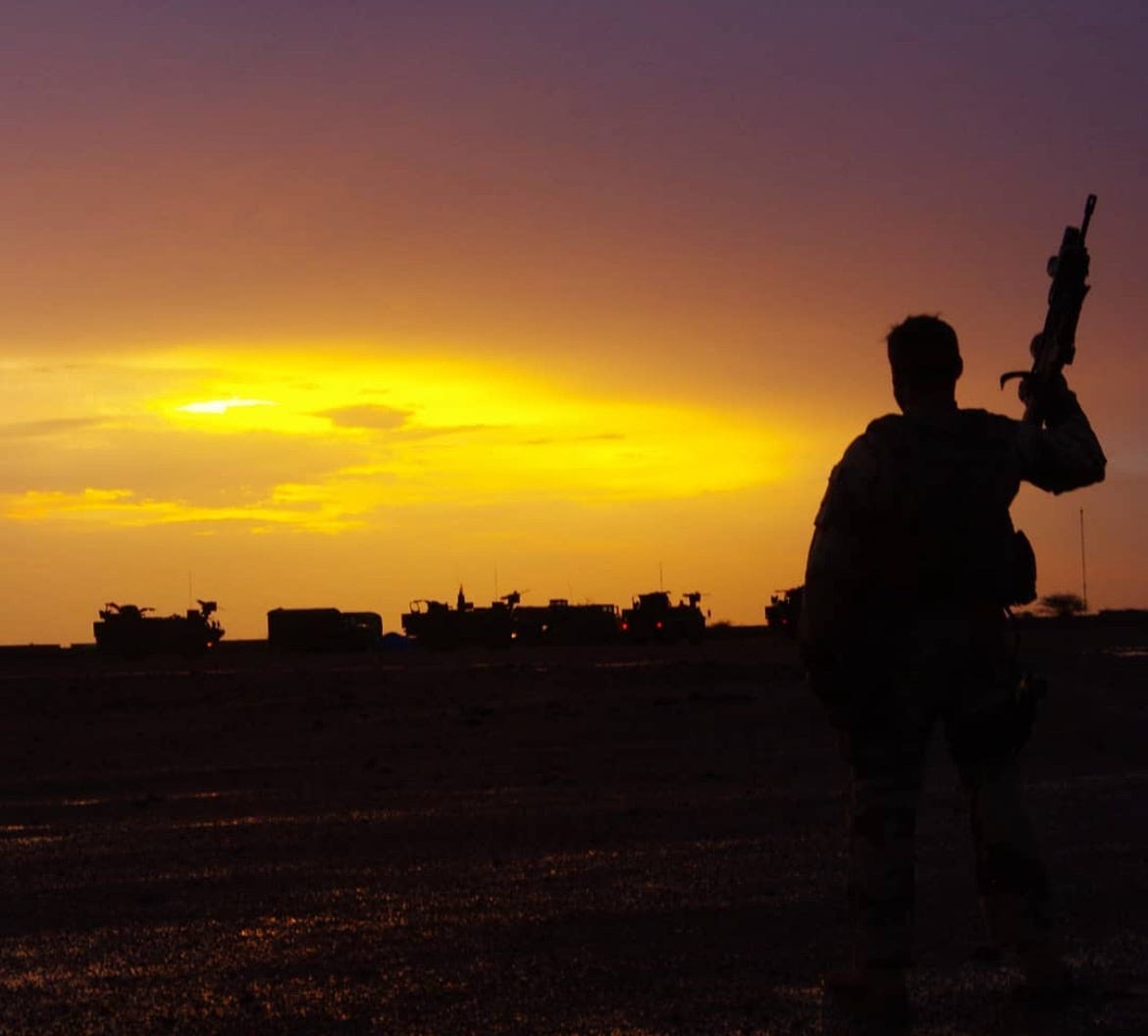
An Imperial Functionary somewhere in the GWOT
Former army officer turned journalist Seth Harp’s The Fort Bragg Cartel has created controversy with its primary revelation: Americas most elite warriors—men tasked with carrying out the missions critical for American national security—were simultaneously running drugs and committing murders from Afghanistan to rural North Carolina. The thesis is shocking to most: the most skilled operators our country has to offer have become outlaws. Anyone who’s been paying attention during the last 25 years of the Global War on Terror should not be shocked. If the events described in The Fort Bragg Cartel were completely accurate—some contend they are not—then they were not an aberration, they were an inevitability. The nation trained these men to operate in morally ambiguous situations and rewarded them for endless deployment cycles of direct action, acting surprised when they applied this training domestically. Harp has written an interesting expose; it is my intent to explain why he has documented a feature inherent to war and the individuals who choose a profession of arms.
The military operates according to its own internal logic informed by tradition and framed by virtues that are difficult to discern for outsiders. The philosopher Alasdair Macintyre described this most aptly in that moral reasoning exists within traditions of thought; we judge right and wrong through inherited frameworks. Accordingly, the military is one of the last strongholds of tradition in modern society: more than any other institution, it operates according to its own logic and virtues. The normative break between soldiers and civilians becomes more pronounced in units where the inherent purpose is the destruction of the enemy and the act of killing such as the infantry and special forces. In the past the draft allowed for the outward appearance of an army representative of its citizenry and thus of the moral tradition of the nation, in the all-volunteer force the individual who volunteers for the infantry or the special forces understands they are volunteering for combat and to kill. The act of killing and the potential of dying carry with it a myriad of consequences to an individual’s psychological and spiritual health as well as the society that sends that individual to perform that act. Prior to the Enlightenment in the West all wars carried a sacred function—a people’s political philosophy and its religious were inextricable thus its wars were inherently holy wars. Through the wars his people engaged in, the individual could find meaning in the possible spiritual ascension through fighting and dying in combat. The modern nation state and the enlightenment have stripped away the sacred function of wars of the leaving only the moralistic and political function. In modernity it is the Manichean “good guys vs bad guys” moral judgement that characterizes the narrative of wars after the judgements at Nuremberg. When the moralistic function is also in question, as can be argued in the case of the Global War on Terror, what meaning does the person responsible for pulling a trigger have left?
The conduct of modern warfare has further stripped the meaning for the individual by making the process of pulling the trigger depersonalized and bureaucratized. As many authors have pointed out the distance and organizational structure required to conduct modern war reduces the individual to a functionary role in a series of elaborate processes that must occur to achieve a kill, removing the intimacy from the act. These are just features of the process itself, mentioning nothing of the justness or morality of the Global War on Terror which—as Harp and I likely agree—are of a dubious nature. Many veterans including myself were originally moved by a notion of revenge against the people involved in the perpetration of 9/11. It would take less than two weeks in Afghanistan or Iraq for any vestige of belief about fighting the perpetrators of 9/11 or some nebulous belief in “democracy” to leave any discerning persons consciousness. The pessimistic view of Iraq and Afghanistan being this was a ideological project to force the notion of the state taught in policy schools onto people who were exhausted with our presence. Once clarity of purpose had evaporated it appeared that what was left were the aesthetics, community, and “love of the game” itself which one could retreat into when faced with the reality of meaninglessness at home and abroad.
Virtue in the combat arms community is founded on an unbreakable bond of truth of word backed by selfless action that is necessary in an environment where the stakes for failure are existential. This is completely absent in environments without danger or physical consequences, causing friction during the U.S military’s attempt to conform to modern corporate culture more broadly in the last two decades. The direct action these men engage in cannot be reduced to “just another job” and therefore removing the virtue and sacredness from the act leaves the individual seeking a substitute. Whether there is an atavistic tendency in men to form warbands and excise these annihilative energies can be argued, what cannot be argued is this field is objectively different from others. When these energies are not able to be excised it is likely that coping mechanisms and escapism emerge—an experience I have dealt with. As Harp emphasizes, the substance abuse issue in these communities is rampant. Harp supposes that this stems from a mix of physical pain and moral injury from deployments, while likely correct, a simpler answer may lie in the human desire to “feel something”. During my time as a contractor, I encountered individuals in constant pain that had been dependent on painkillers prescribed to them while still in the military. Conversely, I met people who did cocaine casually at home and abroad out of impulse. As critics of modernity will point out, escapism is endemic and likely necessary in a world after virtue. It is no surprise then that those who participate in its extremes are the ones faced with the last vestige of reality through knowledge of existential consequences.
The “cartel” part of the Fort Bragg Cartel revolves around the drug trafficking allegations among many in this community. Harp cites several cases involving special operations personnel involved in drug trafficking, and this cannot be denied—it exists to the point where it is joked about internally. Why do soldiers traffic drugs? Once again, the answer may be simpler than Harp supposes. Aside from the desire to “feel something”, the military is not a lucrative enterprise, the contracting opportunities outside of the military are more lucrative but they do not approach the salary of a mid-career consultant at a big three firm, corporate lawyers or comparable elite individuals in other professions. During my time as a contractor, a man who had spent over 4 years making 500 U.S. dollars a day overseas committed suicide during a police traffic stop. In the trunk of his car was a brick of cocaine, most likely for distribution—stories like this are not uncommon. As Harp points out these men have received top tier specialized training in the fields necessary to be successful at drug trafficking, but the desire to act with these capabilities do not arise out of the ether. Harp spent much of his media tour discussing the rise of the global heroin trade as a result of the U.S. involvement in Afghanistan. Narcotics trafficking as a matter of government policy can be debated, I have no doubt that creative and cruel instruments of statecraft have been deployed during the GWOT, but what is undoubted is the immense prescription of narcotics and psychiatric drugs by the government to service members in conjunction with recreational drug use inspired by escapism among the men who deployed in the GWOT.
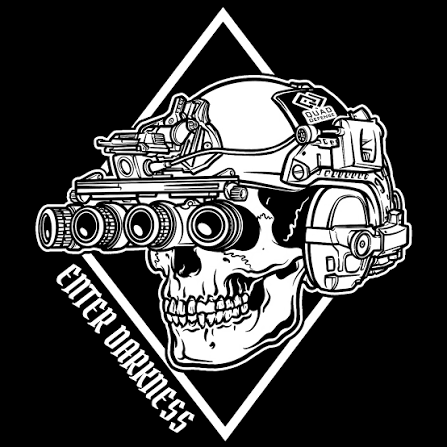
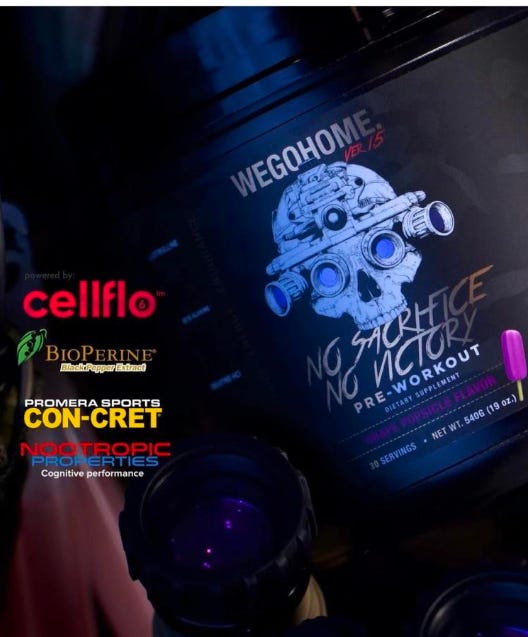
As the GWOT devolved in a continuous deployment cycle of kill capture missions with state building attached, many veterans faced disillusionment with the mission. The virtuous mission they had signed up for had been forgotten long ago, what was left were the tactics and the aesthetics. The military is full of those who love aesthetics, almost jokingly you would hear “rule number 1 is look cool”. The aesthetics changed from equipment designed to fight the Warsaw Pact forces in the Fulda gap to our very own contemporary style enlightened by the unique tactical situations of the GWOT. At some point this devolved into repetitive motifs of skeletons with night vision devices, low-cut helmets and plate carriers. A cottage industry of former veterans producing everything from pistol holsters to pre-workout powder arose in a matter of years, tailoring their product to the community. When your average soldier doesn’t know the strategy but does know that they will likely be back to the same theater of combat after a short break, they find meaning in the act of performing the job itself over any kind of moral rational for conflict.
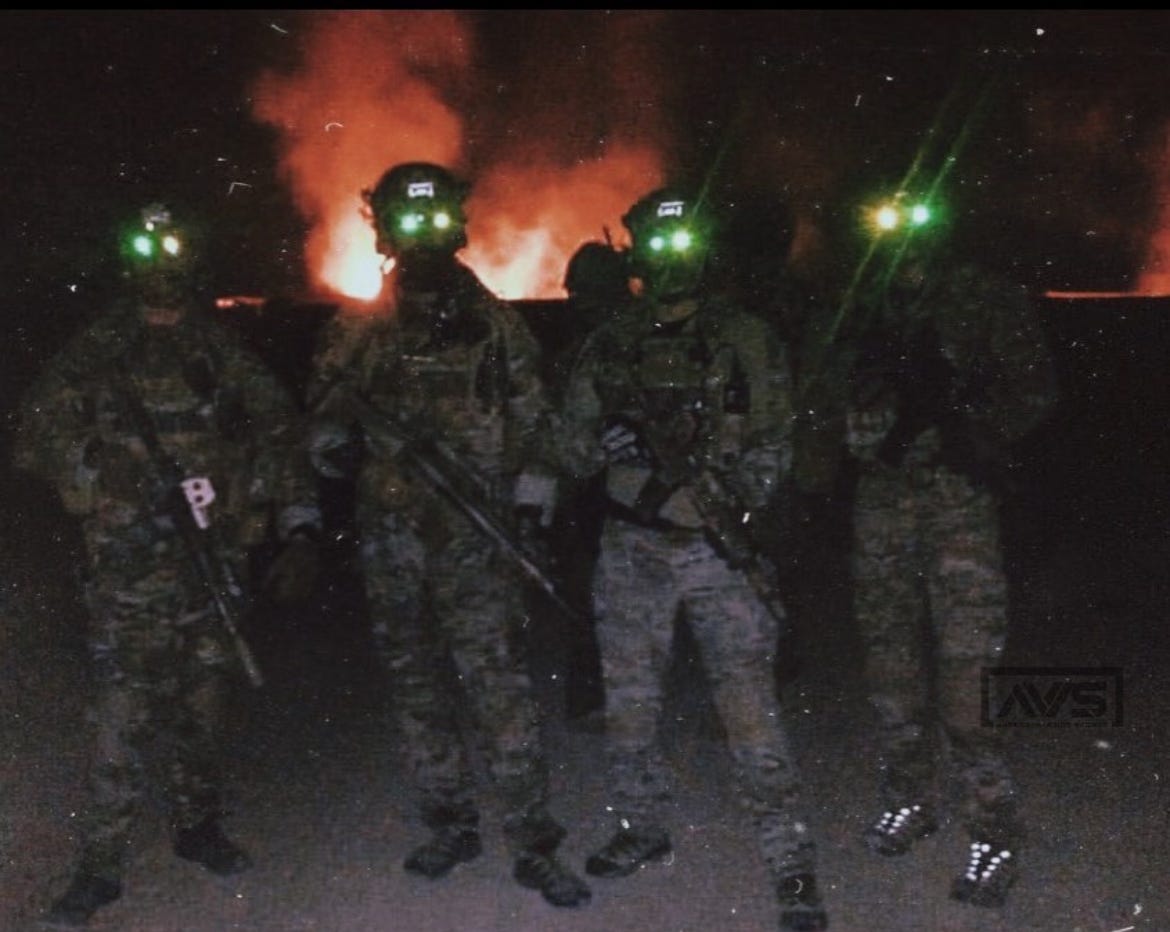
For special operations the war developed a feedback loop of find and kill the enemy in a “raid”, for conventional infantry this took place in a movement to contact or patrol. Harp makes much of the raiding element of modern warfare, referring to it as more an assassination than a military operation. By virtue of characterizing this as a criminal act rather than a military one Harp ignores the act of raiding is as old as warfare itself as archeological evidence throughout the world would suggest. It is less the tactical method by which the GWOT was conducted but the moral void in which it was utilized that a critic should illuminate. This does not negate the entirety of the work done in this expose, Seth Harp highlights a situation that the public should be aware of, the same public should have understood these impulses are bound up in the mission that their policymakers have ordered them to undertake. In its essence the men tasked with carrying out these raids are selected from populations of men who chase adrenaline in their spare time, they were trained to operate in the violent ambiguous margins with unlimited resources, they were told by the nation that they were assets and they believed it.
Somewhere in the middle of the GWOT the desire for identity and irreverence lead to in group memetics appearing. The military being a prime population for inside jokes and slang new terminology began to emerge sourced from gangster rap, film, and burgeoning internet culture. Verbs like “trappin”, “banging” and many others from gangster rap made it into the lexicon in an ironic way. Irreverence and irony propelled the adoption of references from media often shared on deployment hard drives that were easily accessible to men who consumed content they would not otherwise partake in. Media such as Scarface, Heat, and Boardwalk Empire that portrayed men of a parallel lifestyle complete with omertà and a parallel code of conduct appealed to some who found common cause with it. I do not suppose that media is responsible for the criminal actions of some or the nihilistic attitude towards violence—this is infantile— what I do put forward is that this aesthetic was adopted as a response to the “us versus them” mentality that is tangible in the military. In a hierarchical organization such as the military there is a feeling of obstruction or antagonism from the top, whether from military brass or civilian policymakers. Without the proper context of understanding the policy behind the orders received on deployment or at home men turn their frustrations upward. The same men in these units who often demonstrate proclivity certain antisocial behaviors could find fellowship with characters in media who navigate the complexities of their environments.
I put forth that this also in part stems from the opaque and often criminal nature of operations in Iraq and Afghanistan. Criminal as in often we, the United States servicemember, were working with and around criminals—be it militiamen of questionable loyalty, corrupt police, or fraudulent contractors. It would be hard to find someone in combat arms—enlisted of course—who did not encounter nefarious actors during the U.S. mission in Afghanistan lending to an environment of futility and nihilism. The motives for our involvement can be debated whether just or unjust, the victory conditions were opaque, the means to achieve any kind of victory always appeared to those on the ground as never enough—I included myself in this line of thinking at one point. It is not hard to see how one becomes disillusioned by the institution making the very specialized role of combat arms to be just another job, leading these frustrated individuals look to recreate their idea of a “true” brotherhood complete with its own omertà and in group.
From my own experience I can attest that within the combat arms of U.S. Marine Corps, the in group exists with an entire lexicon and subculture revolving around the archetypal grunt. The recognition of this archetype is prevalent and has evolved over time, but the core virtues of belligerency, expertise, stoicism, rebelliousness, and effectiveness remain unchanged. The institutional Marine Corps does not outwardly promote this archetype as a desirable manifestation of a Marine in the public eye. But this archetype is condoned and described in countless books, films and anecdotes throughout the institution. Quotes like “take me to the brig, I want to see the real Marines” by the legendary General Lewis “Chesty” Puller live as testament to this. An entire exhibit of the Marine Corps Museum is dedicated to the making of the 1987 Stanley Kubrick film Full Metal Jacket. The film is explicit with almost every single character’s desire to kill, not for the sake of anything other than the act itself. The film is the foremost archetypal tale in 20th century media of a rebellious young man dealing with the absurdity of the military through the coping mechanism of irony, for many young men who enlisted afterwards this would serve as a blueprint for navigating disillusionment with modern war. The film explicitly mentions Jung and in its execution it demonstrates Kubrick’s absolute precision in understanding the timeless archetypal impulse for violence coexisting with modernity.
When moral meaning is stripped away Militaries in their essence conduct actions that are considered criminal. Men engage in and are rewarded for acts that they would be incarcerated for in civil society. Without being able to express the virtues that these men signed up for the world stops making sense, it is no surprise that the men in The Fort Bragg Cartel desired to create a new world adapted for what they were trained to do. These same special operators are then hoisted up as model citizens as the ideal male worthy of emulation—why has the particular manner of dress and body modification that was only found in the team rooms of a Special Forces ODA now popular among suburban “girl dads” in Utah and Wisconsin? Why are the men and missions of the last twenty years the subject matter of so many popular video games? Because this is the only real-world avatar of masculinity we have cultivated in the last decades which have then been oriented towards popular culture. The shock behind the exposition of The Fort Bragg Cartel appears to be the disconnect between expectations of our armed forces and the reality of what they do. The truth is if you build a living entity, like the combat arms, it must release its energy somewhere. The men who make up this entity know that the GWOT will not receive some grand triumph or Pericles Funeral Oration that will be discussed for centuries, so they must make meaning where they can.
Despite the abhorrent behavior of some, the combat arms remain one of the last places in the Western world where tradition, and their associate virtues can be found. In an era where both corporations and employees bemoan the absence of loyalty and regularly complain of the lack of authenticity in modern relationships, the combat arms are built on loyalty unto death. Many young men have done unconscionable things—not for personal gain, but to earn the trust required to be considered a “good guy” by their peers. In the units that execute the violence upon which all policy and strategy depends your reputation matters, and you establish it through a covenant with your fellows. Word and deed are intertwined, and outsiders have neither earned the right to judge or paid the price—through shared hardship—to understand. The gravity of decisions in combat arms carries a moral weight that is not accounted for in policy decisions nor is can other institutions replicate it. The obligations required of someone in the position to kill transcend conventional morality. The few men who partake in the events described in Harps work are absolutely betraying the institutional military, the same institution that should know there are primordial suprarational forces inherent to war. You cannot divorce these facts and to do so is merely the luxury of those who outsource the savagery required for political ends .
Comments
Nothing yet. Say the first thing.
Sign in to join the conversation.