
Here’s the context, data, and what Audit Thinking would spotlight, right now.
Violent crime in DC is down sharply. 26 % year over year, homicide down 32 %, robbery down 39 %, armed carjackings down 53 % in 2024, according to MPD and U.S. Attorney’s Office data. The U.S. Attorney called it a 30-year low.(Department of Justice)
Yet, President Trump is deploying federal agents, and potentially the National Guard, citing rising crime and threats to DC's safety.(TIME)
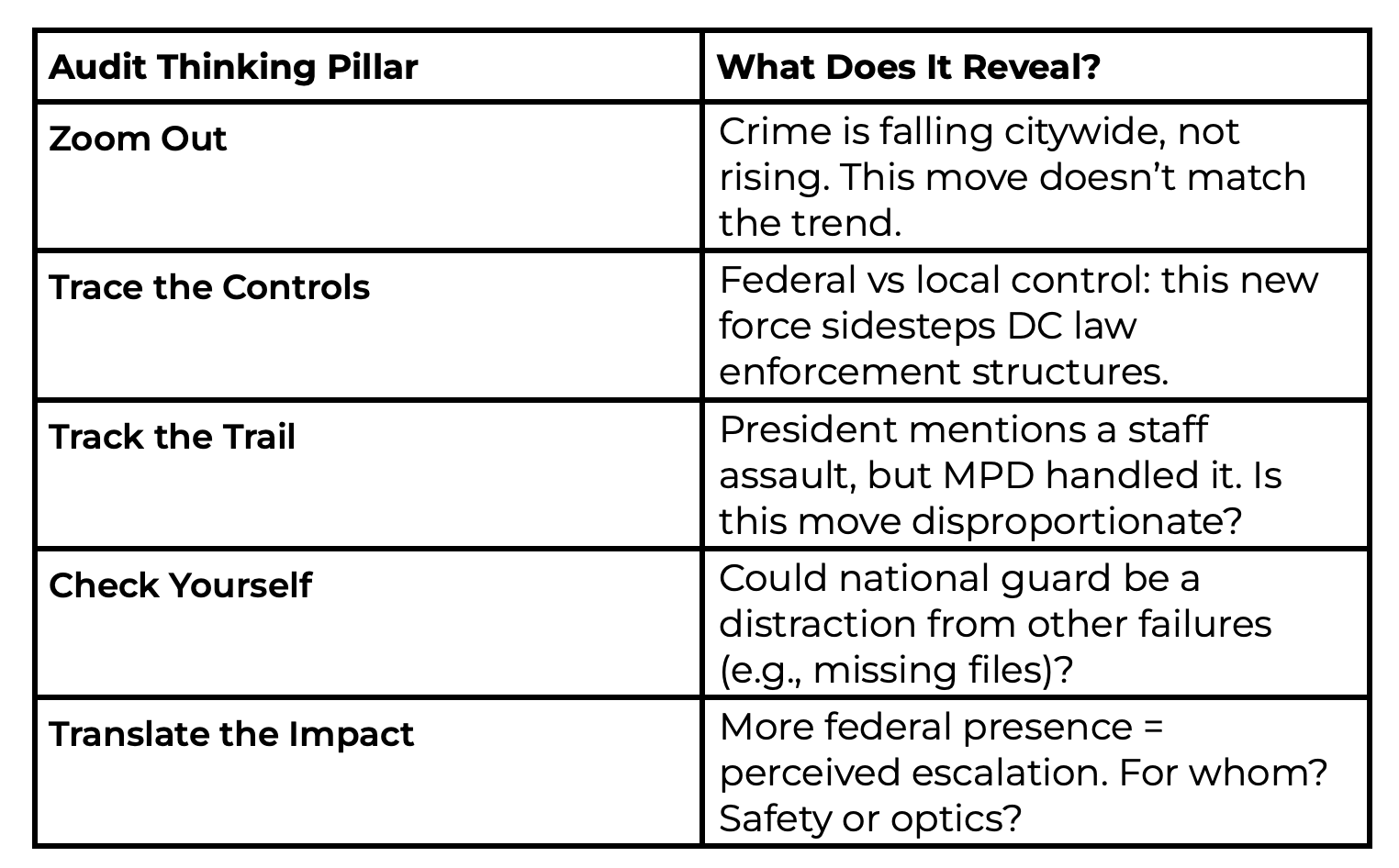
Why now? If crime is falling, what motivates this move?
What’s being masked? Could the PR moment be deflecting from deeper issues, like withheld documents?
What would a better step look like? Support for proven local crime strategies, not theater?
For U.S.-based readers:
Given that violent crime in Washington, D.C., has dropped 26% year-to-date and overall crime is down 7%, how do you interpret the decision to mobilize federal law enforcement and potentially the National Guard? (AP News)
Is this a justified measure of precaution or could it be a distraction from other pressing issues? What questions would Audit Thinking ask here?
How would you redesign the approach to public safety using local strategies rather than showy deployments?
For global readers:
In your own context, have you seen governments deploy emergency forces despite improving safety metrics? What followed?
How do you apply a framework like Audit Thinking (searching for the controls, the trail, and the real outcomes) when the official justification doesn’t match the data?
No posts
Comments
Nothing yet. Say the first thing.
Sign in to join the conversation.