
There’s been a quiet wave of interesting synth-related releases lately. Now if you actually care about sound design, workflow, and character, these are worth a look.
Let’s see what they got.
The microKORG refuses to die—and honestly, that makes sense.
At its core, it’s a virtual analog synth, meaning it digitally models analog circuits. You’ve got your standard building blocks—oscillators, filters, modulation—but stripped down in a way that forces you to move quickly.
And that’s really why it still works.
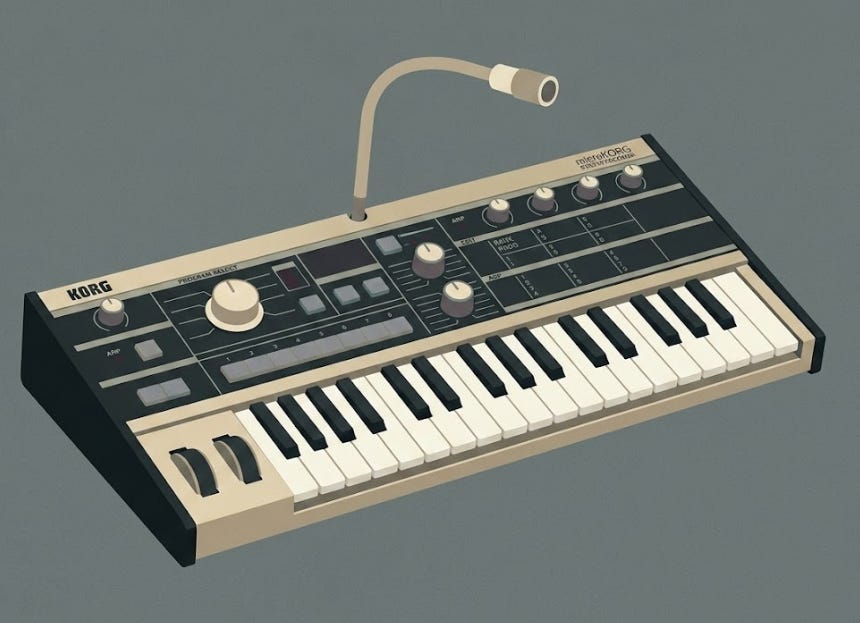
In hip hop, you don’t need endless options. You need something that lets you land on a sound fast and commit. The microKORG does that naturally. It gives you just enough control to shape tone, but not enough to overthink it.
There’s also something about the engine itself. It’s not perfectly clean. There’s a slight digital edge, a bit of grit. In a dense mix, that actually helps—it cuts without needing extra processing.
Where it really shines today is leads. That’s its lane.
If you’re making rage, trap, or melodic rap, this is the kind of synth you reach for when you want something that immediately sits in the pocket.
Square + saw blend
Fast envelope (short decay, low sustain)
High cutoff, slight resonance
Light distortion after the synth
Comes out sharp, aggressive, and sits right on top of heavy 808s
Melodic lead (Drake lane)
Triangle-based tone
Slight attack fade-in
Medium release
Plate reverb + subtle delay
Softer, more emotional, naturally sits behind vocals
LUNA is a different conversation.
This isn’t about a new sound—it’s about how you get to the sound.
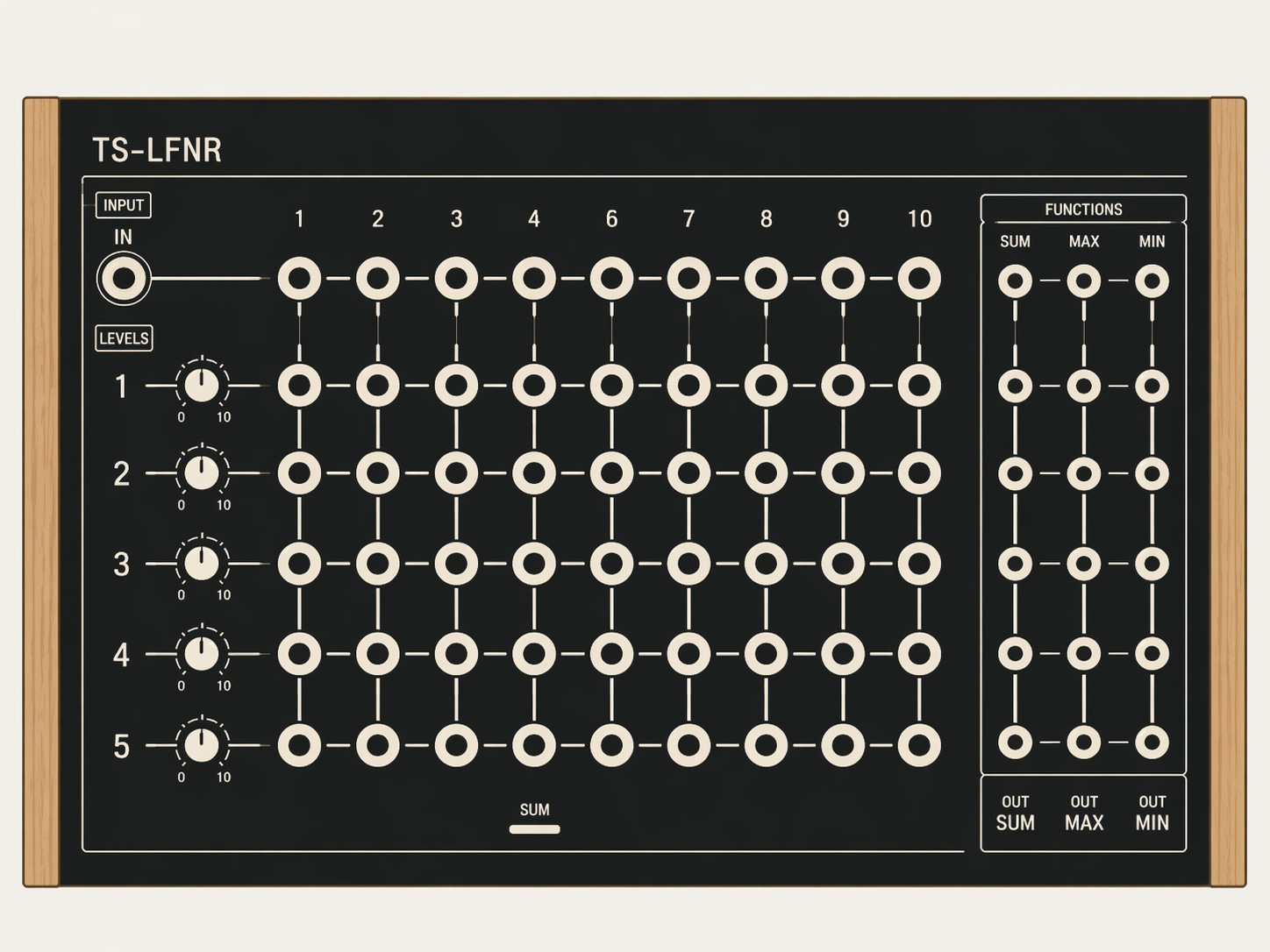
Most synths are built around legacy design. You’re navigating menus, routing modulation manually, thinking in terms of architecture instead of intention. LUNA flips that. It’s designed so that what you see matches how you think.
Signal flow is obvious. Modulation is direct. You don’t spend time searching—you spend time shaping.
That matters more than people realize.
In hip hop especially, speed is everything. You’re not trying to design a perfect patch for 20 minutes. You’re trying to get something that feels right, bounce it, and move forward while the idea is still fresh.
That’s where LUNA fits. It removes friction.
Sonically, it’s familiar territory—oscillators, filters, envelopes. But the difference is how quickly you can get something usable, especially for background elements.
Because that’s really its role: space, not spotlight.
Air pad (Drake / ambient trap)
Sine + subtle noise layer
Low-pass around 40%
Slow attack, long release
Very slow LFO on filter
Creates width and emotion without getting in the way
Dark pad (Carti / Opium)
Saw + noise
Lower cutoff (~25%)
Slight pitch instability
Touch of distortion
Feels darker, more raw, slightly unstable
The GR-700 is where things get interesting.
This isn’t a keyboard synth. It’s a performance-driven system. You’re feeding in a guitar signal, tracking pitch, and using that to control an analog engine.
That alone changes everything.
Because now you’re not programming notes. And that introduces imperfections: slight pitch drift, uneven timing, natural modulation from the way you touch the instrument.
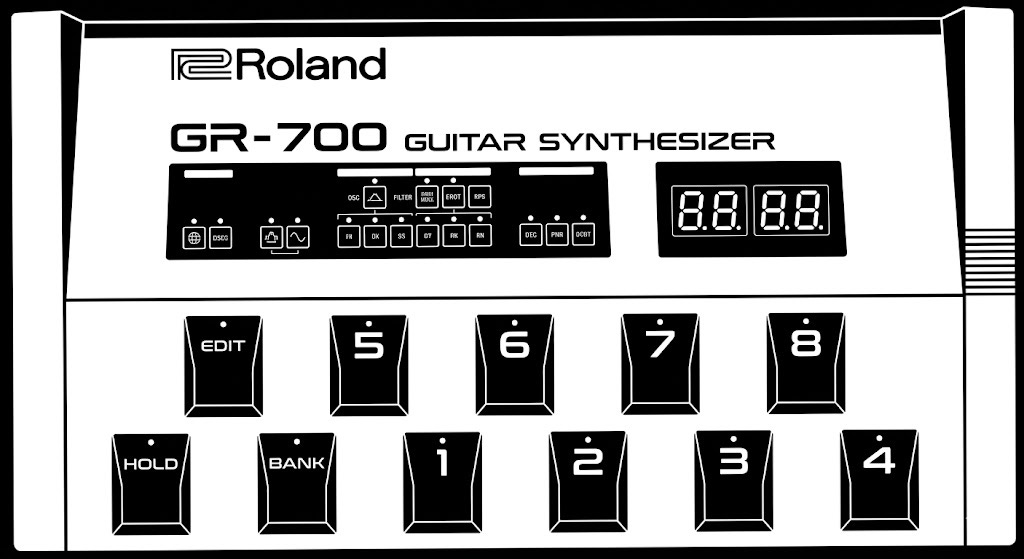
Technically, it’s doing a lot:
Hex pickup splits each string
Converts pitch into control voltage
Drives analog oscillators and filters
But what you actually hear is simpler: movement. Life. Texture.
You wouldn’t use this for clean melodies. That’s not the point.
You use it for layers that sit behind everything else and make the track feel alive.
Ambient texture (Travis / Don Toliver lane)
Play slow, simple notes
Use bends and let things ring out
Don’t overplay
Then shape it:
Long reverb (5–8 seconds)
Dotted delay for movement
EQ out lows and muddy mids
Ends up as a floating layer that adds emotion without being obvious
All three of these point in different directions:
microKORG → fast, character-driven sound
LUNA → workflow and speed
GR-700 → expression and imperfection
But they all solve the same problem. Most producers don’t need more sounds. They need better roles.
A strong track usually comes down to just three layers:
A lead that carries the idea
A pad that creates space
A texture that adds depth
Everything here fits into that. Speed gets the track finished. Character is what makes people remember it.
Discover, compare, and learn about the best DAWs, synthesizers, plugins, and music production tools — all in one place.
https://audiosoftwarehub.online/
Comments
Nothing yet. Say the first thing.
Sign in to join the conversation.