
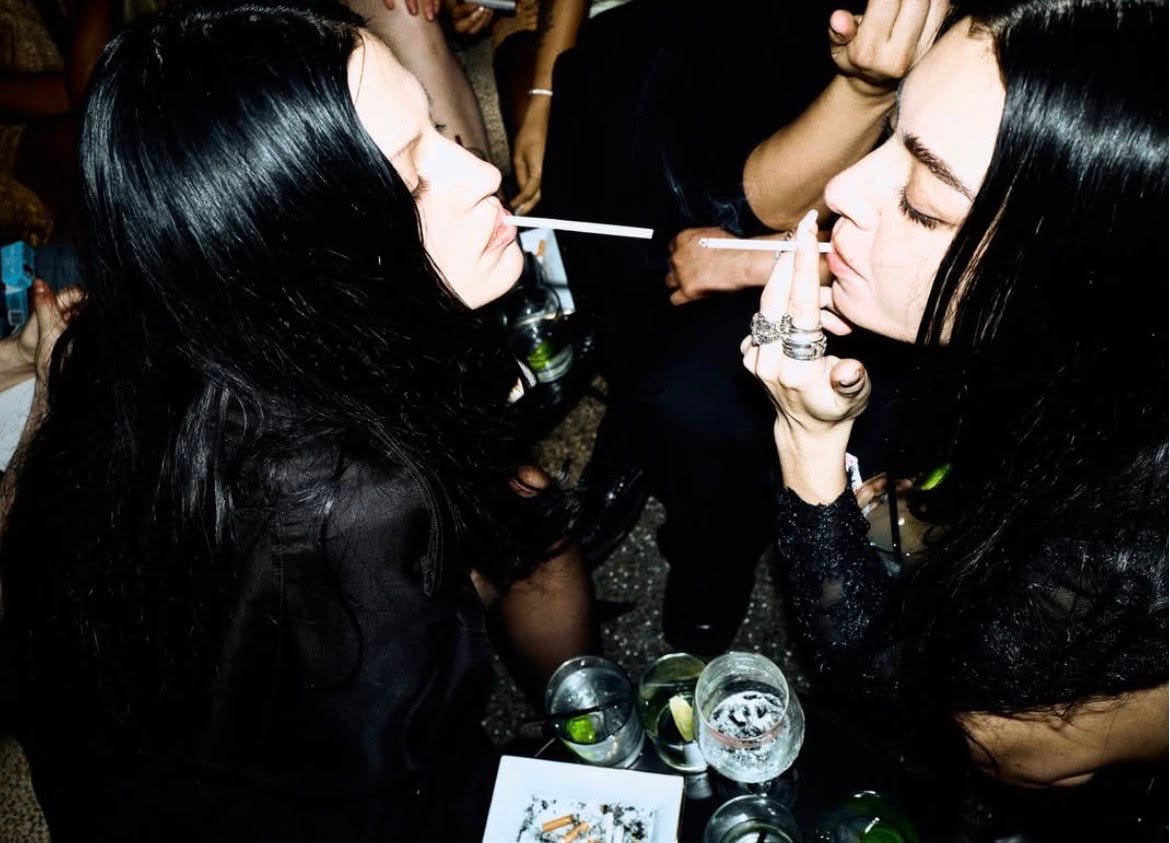
By now you’ve seen the headlines - self-proclaimed 365 party girl Charli XCX has announced that “the dancefloor is dead, so now we’re making rooooooock music.” Maybe you’ve even listened to the song; two minutes of glitchy synths, braggadocious lyrics, and aughts-reminiscent guitar riffs. Let me start by saying, I like Charli XCX. I was a fan of brat when it came out and I danced to 360 on the party bus at my wedding. She’s fun and she clearly knows how to throw a ‘lil party. Whether she actually thinks the dancefloor is dead or just wanted a catchy hook that doubled as a marketing ploy for her next project, I personally think she fucked it with this one. Not only is the song just kinda bad, the sentiment is worse, especially when put up against the current cultural & socio-political landscape.
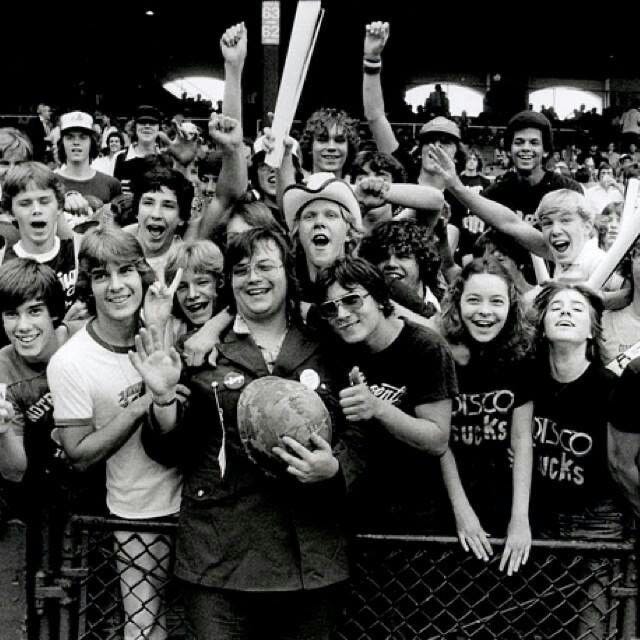
And what is that landscape exactly? Well, at least in the U.S., it’s the rise of an authoritarian government, a crack down on LGBTQIA+, women’s, and marginalized people’s rights, and an oppressively high cost of living - amongst other things (sorry to be a downer). And what has dance music been since its Disco origins but a sweaty, strobe-lit reprieve from the oppressive structures that be? What we know know as modern Electronic Dance Music (EDM) - a huge blanket covering subgenres like techno, house, synth-pop, dub, drum&bass, and more - can be traced back to dingy, 1970s basements where the counterculture met in solidarity to make communion through Disco. Disco emerged from the need for marginalized groups - especially Black, Latino, and LGBTQ people - to have a safe place to converge and feel JOY. It was specifically made in response to the male-dominated rock music that lorded over the charts of the time. It was everything that rock was not: sensual, inclusive, queer. And like everything that challenges the mainstream, it faced severe backlash, including a literal “Disco Demolition Night” in 1979, where local radio DJ, Steve Dahl, incited White Sox fans to burn tens of thousands of Disco, Funk, and R&B records at Comiskey Park – an act that many felt was fueled more by racial and political motives than musical ones.
SO, unless Charli is going to turn around on her next single and release an undeniable dancefloor banger, proving to us all that her corny rock song & statement was all just one big troll and she’s in on the joke (bad joke if you ask me), then her little stunt is just a tasteless and predictable mirror of the cycle that has repeated tens of times; Counterculture tops the mainstream for a moment then mainstream beats the counterculture into submission. Did Charli and her team see this coming and want to get ahead of it with a genre switch? Or is Charli trying to make some meta statement about this aforementioned cycle? After reading her personal essay, “the death of cool,” I’m not sure I am willing to give her that much credit.
In her essay, Charli says:
“I have always rejected the idea that art, film, persona or music becoming commercial means it cannot also be considered cool. The rejection of commerciality ‘just because’ is such a boring and immature argument that is perhaps more suited to some mediums than others but in general I find to be elitist in a way that does not thrill me whatsoever.”
And, sure, I agree with this to a point. It’s completely pretentious to look down on something just because it appeals to the masses. There are plenty of universally loved pop icons who have maintained their cool - i.e Prince, David Bowie, Addison Rae, etc. I think something becomes uncool when it feels ingenuine. Like, say, massively profiting off adapting the sound and look of a subculture and then pivoting when you get “bored.” And before the Angels (Charli fans) come at me talking about Charli’s background in warehouse rave culture, yes, I know.
Charli performed at warehouse raves when she was fourteen, tailed by her parents who were reportedly being offered drugs left and right. And while some would say that offers her a level of “street cred” in terms of the dance music world, those observers may be missing the fact that this was a part of the New Rave movement. Far from the ethos of the underground Detroit, Chicago and New York warehouses where house music was born, the New Rave scene championed artists like Skrillex, David Guetta, The Chainsmokers etc. And, sure, while some of these artists undoubtedly pulled from sounds of early 90’s rave culture, the scene in itself was a much less subversive community. It was sunglasses without the shades, glowsticks, American Apparel jumpsuits. Your high school bully loved Skrillex.
So, while Charli has been crowned the “queen of cool” - the girl who always knows where the party’s at, the blueprint for your going out look, the courthouse-wedding-chic anti-bride - maybe she’s literally not? Maybe she’s that for a very specific type of person. And, again, I LOVED brat and am not trying to be shady. But maybe her “devil-may-care” attitude and “effortless cool” is an aesthetic informed by years of market research and professional curation. Carefully shaped by a team around her that HAS been entrenched in underground scenes, attended ballroom clubs, ingested culture where it lives at the fringes of society. I just don’t necessarily believe that Charli has ever truly been a part of an underground dance scene (especially if her core rave memories included mom and dad, bless them), which is probably why she’s so quick to dismiss the “dancefloor” as a whole.
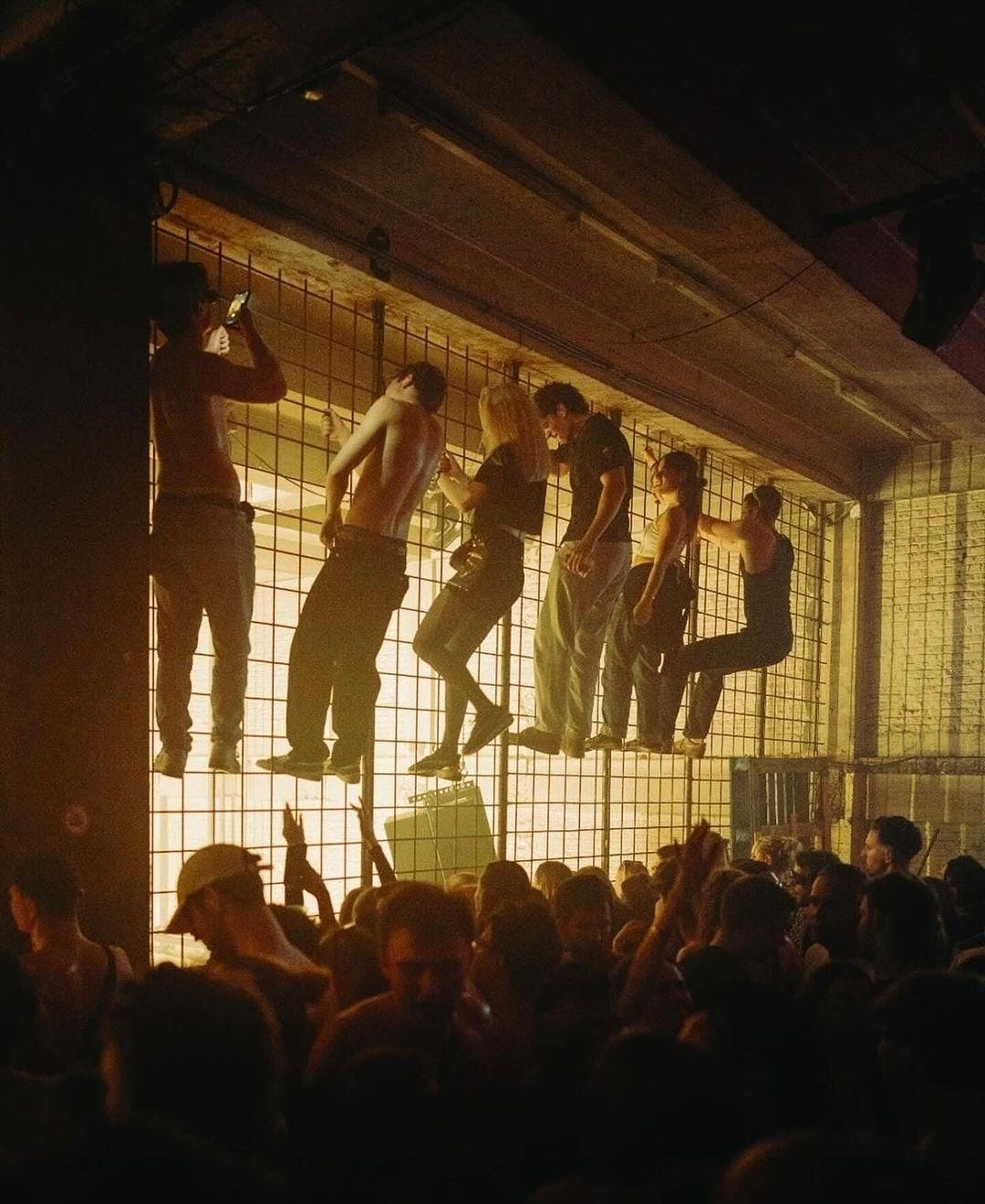
Because for those who go out to dance, I mean truly dance, It’s not about the cocaine or the end of night conquest. It’s church. It’s moving your body because you’re tired of speaking, of screaming. It’s revolution. Gathering in basements and warehouses to sweat on each other and be healed by the reverberations of a 140+bpm drum and bass song. It’s a way to be in community with others who are experiencing the same meta turmoil as you and wordlessly meld with each other, letting go of pain, hurt, anxiety - if only for a night. But don’t take it from me. I talked to a couple DJ’s who make people shake ass on the daily. Here’s what they had to say:
“I’d just say the dancefloor will never die and expressing ourselves through dance and community is both primal and what real music lovers will continue doing in the future.” - Father Dukes, Detroit
“The dance floor is definitely not dead!! Honestly I actually think it’s thriving right now. In a post-COVID world, I feel like people are craving third spaces and tangible connection more than ever, and dancing offers this rare sense of collective release and community that’s hard to find anywhere else. Every good night I’ve played recently has felt less like escapism and more like people trying to feel alive together again.”- mal d’amour, Los Angeles
“No, I don’t believe the dance floor is dead - that’s an idiotic thing to say. If anything, dance music is having a resurgence or “reimagining,“ if u wish. That’s how I’d describe it…. Also, the dance floor aesthetics that are being romanticized are from reminiscing from the 70s-90s where we had pure party and zero cell phones and social media…so I will say the dance floor will be dead if these fuckers cant put their phones down and release their inhibitions - AK, Detroit
And…not a DJ, but I like this quote from a similar piece written by Misha MN for Polyester:
“As the dictator of cultural coolness, Charli’s flippant proclamation that the dancefloor is dead just because she wants to explore more music genres and undergo another popstar reinvention is harmful to an already precarious industry that depends on the goodwill (and financial investment) of its customers. In an unstable world full of war-related inflation, an increasingly fascist approach to identity politics and new cost-of-living-crises dropping every week, mass spiritual communion in the nightclub seems superfluous as more and more venues close their doors, never to be seen again. Nightlife, and especially queer nightlife, is no stranger to ebbs and flows of popularity and accessibility, from American prohibition to post-stonewall legalisation, from the homophobic terrorism wave of nail bombs in 90s Soho to Rudy Giuliani’s zealous sanitisation of New York, from Great Depression to the 2008 recession, the threads of the dancefloor have always sparkled behind closed doors.” - Misha MN
Sources:
Barker, E. (2019, July 19). Disco demolition: The night they tried to crush black music. The Guardian. https://www.theguardian.com/music/2019/jul/19/disco-demolition-the-night-they-tried-to-crush-black-music
CharliBB. (2024). The death of cool. Substack.
Hermes, W. (2014, August 14). Dark star rising: Charli XCX talks rave roots and her colorful future. Rolling Stone. https://www.rollingstone.com/culture/culture-news/dark-star-rising-charli-xcx-talks-rave-roots-and-her-colorful-future-52620/
Pelly, J. (2024, August 29). Charli xcx’s brat and the return of new rave. The FADER. https://www.thefader.com/2024/08/29/charli-xcx-brat-new-rave
Seal, T. (2024, July 18). What’s cooler than being cool? Charli XCX and what the moment tells us about the ultimate party girl. Tatler. https://www.tatler.com/article/whats-cooler-than-being-cool-charli-xcx-what-the-moment-tells-us-about-the-ultimate-party-girl
The brief history of EDM. (n.d.). Los Angeles Film School. https://www.lafilm.edu/blog/brief-history-edm/
No posts
Comments
Nothing yet. Say the first thing.
Sign in to join the conversation.