
A product manager presents a perfectly formatted PRD to the engineering team. The structure is flawless, the acceptance criteria comprehensive, the language polished.
Three days into development, the team realizes the AI-generated document missed a critical edge case requiring complete architectural rework.
The PM’s response? “But I used Claude!” Famous last words.
This is the new normal. Stack Overflow’s 2025 survey found 84% of developers now use AI tools, but 46% actively distrust the output (up from 31% a year ago). Adoption is climbing while trust is falling.
AI is accelerating individual work while fragmenting team coordination. Your people are moving faster. Your team is slowing down.
Product teams heading into 2026 need to adapt how they work when AI becomes part of the workflow.
We’ve identified three challenges that will define the year ahead: taking responsibility for AI-generated work, navigating blurred role boundaries, and managing collaboration problems that keep getting harder.
Teams are bringing AI into their workflows faster than they’re establishing ownership for its outputs. Right now, someone on your team is using AI-generated code, documentation, or requirements in production work. Who’s responsible when it’s wrong?
Your senior engineer just spent four hours debugging code that took AI twelve seconds to generate. They’re not alone. 45% of developers say debugging AI-generated code takes longer than writing it themselves.
AI output looks polished. Proper formatting, professional language, comprehensive structure. But polish and accuracy are different things. Teams haven’t built the muscle memory to catch subtle errors: the edge cases missed, the assumptions baked in, the context AI doesn’t have.
Product teams are facing decision fatigue. Every week brings new AI solutions promising to transform workflows, and most teams adopt without clear success metrics. Six months later, nobody can say whether that AI pair programming tool actually improved velocity, code quality, or satisfaction.
AI tools also evolve faster than traditional software. Consider Anthropic’s Model Context Protocol. MCP launched in November 2024 as an open standard for AI tools to share context. Within a year, it had been adopted across ChatGPT, Cursor, Microsoft Copilot, and others. Then in December 2025, Anthropic donated it to the Linux Foundation’s Agentic AI Foundation, shifting governance to a multi-company consortium. The protocol remains stable, but teams now need to track how decisions get made across a broader set of stakeholders.
If keeping up with AI tooling feels like a second job, that’s because it is.
Teams need processes that account for constant tool evolution, not just initial adoption decisions.
When a developer writes code, they own it. When a PM writes requirements, they own them. When AI generates output, ownership becomes fuzzy.
If you’re putting AI output into production, you own vetting it as thoroughly as if you’d created it yourself.
Read what AI generates. Don’t just skim for obvious errors. Test the edge cases AI might have missed. Understand the logic, not just the syntax.
Vet AI-generated work before it reaches stakeholders. The time saved in generation should be partially reinvested in validation.
Apply the same quality standards to AI output that you’d apply to human-generated work. If code needs tests, AI-generated code needs them too.
Create review checkpoints that prevent AI output from skipping quality gates.
AI is making everyone more cross-functional. Product managers are generating UI mockups. Backend developers are building frontend components. QA engineers are contributing to architectural discussions.
Our CPO Doug uses Claude to “feature riff,” generating interactive mockups to refine product ideas before involving UX. In a recent 20-minute session, he went from a vague concept (”make acceptance criteria selectable for story splitting”) to a working prototype that exposed edge cases he hadn’t considered, like how hierarchical parent-child relationships should behave during selection.
But Doug is careful to note that this process refines ideas rather than replacing UX. He’s led product and UX teams for 15 years, so he knows when something’s off. A PM with less experience using AI to generate mockups might not catch accessibility issues, interaction patterns that don’t scale, or visual hierarchy problems that a trained designer would spot immediately.
Ask your team if they’re “vibe coding” (generating entire applications from prompts) and watch the room shift uncomfortably. 72% of developers say it’s not part of their professional work. Even with AI making adjacent work accessible, developers know there’s a difference between generating something and understanding it well enough to maintain it.
When roles blur, teams need stronger scaffolding to maintain quality.
Make acceptance criteria explicit. Quality standards can’t be implicit when anyone can contribute to any role. What does “done” look like? What edge cases matter? If these aren’t spelled out, AI-assisted work from someone outside their domain is more likely to miss them.
Establish clear review ownership. Who validates work done outside someone’s core domain? Domain experts should review before it ships, providing quality assurance without bottlenecks.
Keep context connected. When requirements live in one tool, code in another, and design specs in a third, context gets lost. Teams need ways to keep related work connected: stories that link acceptance criteria, feature flags, and implementation details in one place.
While AI dominates headlines, it’s not the only challenge intensifying for product teams.
You’ve sat in the retro where everyone agrees communication is the problem but nobody can pinpoint why. You’re not imagining it. A Fierce Inc. study found that 86% of people blame lack of collaboration or ineffective communication for workplace failures. Add AI-complicated estimation and constant team reorganization, and familiar problems are getting worse.
Organizations are reorganizing more frequently. Team members shift between projects. Priorities change mid-sprint. People leave, new people join.
This churn reduces the consistency needed for accurate estimation and predictable delivery. When team composition changes every quarter, historical velocity becomes less meaningful. Cycle time data requires stable conditions to be reliable, and stable conditions are increasingly rare.
We’ve experienced this at Atono. Earlier this year, our velocity nearly doubled, going from 10.5 to 18.4 story points per week over six months. That growth became sustainable because we had visibility into where bottlenecks formed as our team evolved.
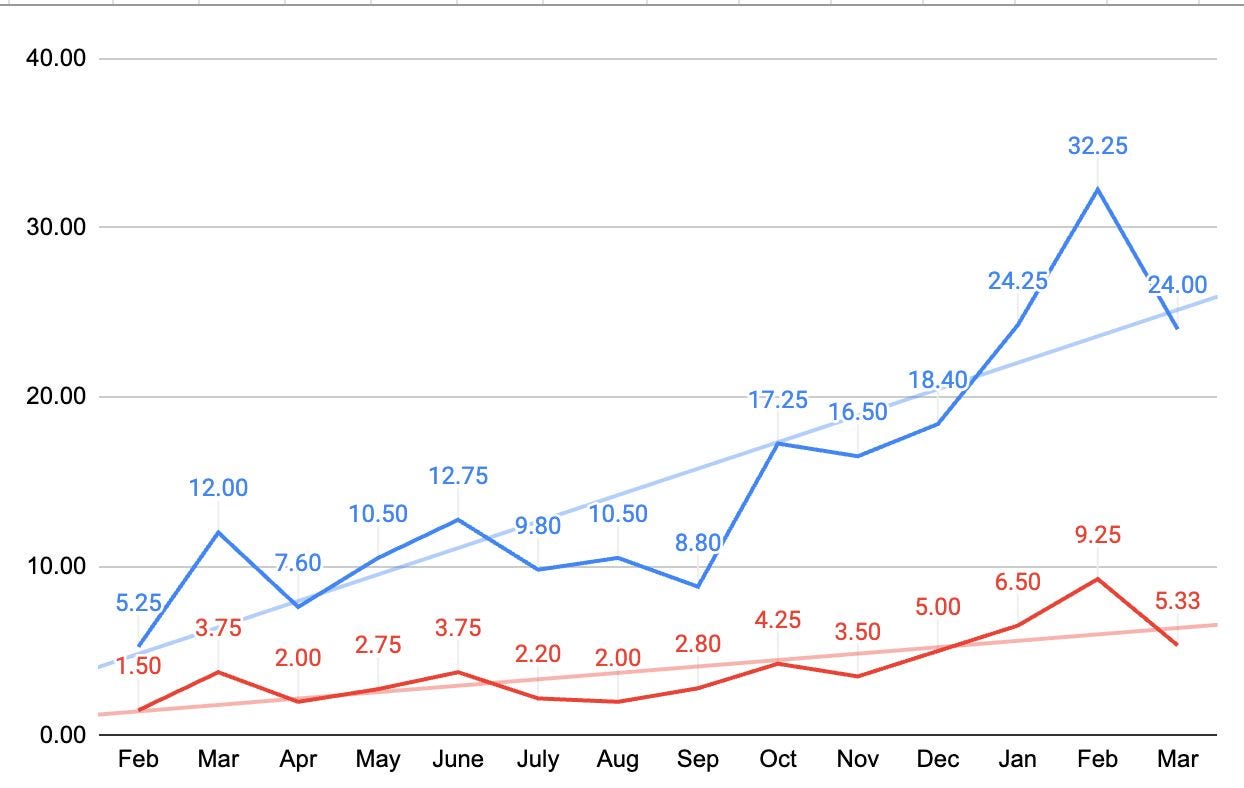
When stories went stale in our QA workflow step, we could see the exact impact and make informed decisions about capacity. The key was metrics that adapted as our team changed, not static historical data assuming stable conditions.
How do you estimate when blending human output with AI capabilities? A story that took three days might now take one with AI assistance, if you account for vetting time. Or it takes five days because AI went down the wrong path and created technical debt.
Traditional estimation assumes relatively consistent human productivity. (Stop laughing.)
AI introduces variables teams haven’t learned to account for yet.
They track metrics that adapt to change: continuous cycle time recalculation instead of historical velocity from quarters ago.
They preserve knowledge despite reorganization. When someone leaves, their knowledge shouldn’t disappear. This requires documentation that evolves with the work.
They treat AI’s impact on estimates as a learning process. Which tasks got faster? Which got slower due to review overhead? Some teams track AI-assisted work separately. Others add “validation time” as a factor. There’s no standard approach yet because everyone is still building that understanding.
These challenges aren’t going away. They’re likely to intensify as 2026 progresses.
For AI adoption: Establish clear ownership. Whoever uses AI output is accountable for vetting it. AI-generated work gets the same quality gates as human work. Budget time for review as part of your workflow, not an afterthought.
For cross-functional collaboration: Make expectations explicit through clear acceptance criteria. Assign domain expert reviewers when work crosses role boundaries. Keep context centralized rather than scattered across tools.
For estimation: Adopt metrics that account for change. Document intentionally so knowledge survives reorganization. Treat AI-assisted estimation as a learning process, tracking what actually happens and building that data over time.
Throughout 2026, we’ll dive deeper into practical processes for vetting AI output, case studies on resource shifting and velocity, guides for AI-assisted estimation, and strategies for maintaining context across cross-functional teams.
We built Atono because we lived these problems. The coordination breakdowns, the context lost between tools, the estimation chaos. If any of this sounds familiar, we should talk.
This post is public, so feel free to share it.
Comments
Nothing yet. Say the first thing.
Sign in to join the conversation.