
In July, Spotify’s founder raised another $700 million to scan bodies. Neko Health, the company Daniel Ek started in 2018 with engineer Hjalmar Nilsonne, is now valued at close to $7 billion. Mark Zuckerberg invested personally. Midjourney, the AI lab best known for image generation, is building a body scanner into a spa opening in San Francisco. Function Health, co-founded by technologist Jonathan Swerdlin with physician Mark Hyman, raised $298 million last November at a $2.5 billion valuation.
And then there’s the most audacious version. In April, Biohub, the research organisation Zuckerberg founded with the paediatrician Priscilla Chan, committed $500 million over five years to something called the Virtual Biology Initiative: an attempt to build AI models that simulate a human cell accurately enough to predict how disease begins and how to stop it. The stated goal, in their own words, is to help cure or prevent all disease. Not a subset. All of it. Their head of science, Alex Rives, came from an AI lab, not a hospital.
Notice the pattern. The people pouring capital and talent into rebuilding health are, overwhelmingly, not from medicine. They’re from software, hardware, consumer products. And I don’t think that’s a fad. I think it’s a correction.
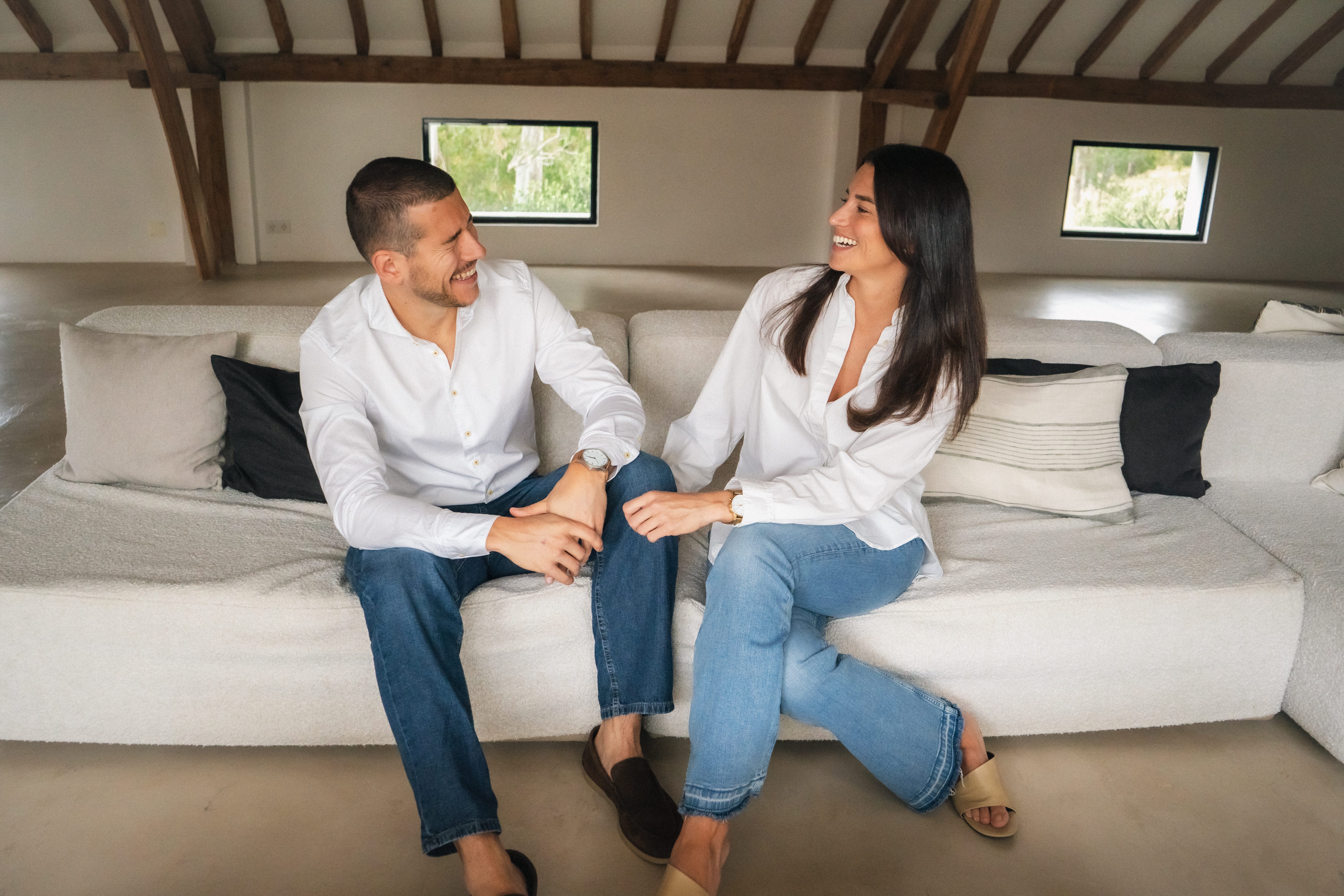
My brother Tom and I are part of this wave, at a much smaller scale. We spent our careers in tech. Now we run Atlas Cove, an intimate health retreat in Sesimbra, Portugal. This essay is about why outsiders keep showing up in health, what we found when we mapped the retreat market, and how we actually build what we sell, including the part most companies in this space would rather you didn’t ask about.
Medicine is extraordinary at keeping you alive. It is far less good at keeping you well.
A 2024 cross-sectional study from the Mayo Clinic, published in JAMA Network Open and covering 183 WHO member states, put a number on this. Globally, people now live an average of 9.6 years longer than they live in good health. That gap grew 13% between 2000 and 2019. In the US it’s 12.4 years, the widest in the world. And women carry a gap 2.4 years larger than men, driven by a heavier burden of chronic, noncommunicable disease.
Read that again. Nearly a decade of life, for the average person on earth, spent unwell. Lifespan went up. Healthspan didn’t follow.
This is not because clinicians are failing. The system is built for a different job: identifying and treating disease once it exists. Building health before anything breaks, the daily work of strength, sleep, recovery and capacity, has no department, no billing code, and no owner. That vacancy is exactly the kind of thing tech people are trained to spot. An enormous, universal problem. No incumbent defending the territory. So they walk in.
So why retreats, of all things?
Because when we mapped the market, we found a strange shape. Wellness tourism is enormous: the Global Wellness Institute measured it at $894 billion in 2024. But almost all of it sits at two extremes.
At the bottom: one-off yoga and pilates weeks, hosted by a single facilitator, built around one modality. Lovely, often. Personal, rarely. Measured, never. You leave relaxed and, within a fortnight, unchanged.
At the top: the medicalised estates. German diagnostic clinics. Ayurvedic hospitals in India. Longevity clinics with full imaging suites, where a week can cost more than a car. Their diagnostics are genuinely excellent. But they inherit medicine’s blind spot. They are superb at telling you what’s wrong and thin on making sure you do anything about it once you’re home.
Between the two sits a gap, and the gap is not really about price. It’s about what the week is for. Almost nobody has built a stay where implementation is the product: your own baseline measured on arrival, a protocol built from those specific numbers, the work done under supervision, the same markers measured again before you leave, and then a year of somebody staying on it with you.
That absence is absurd, because implementation is the entire problem. Most people who could afford either extreme already know what to do. They have the podcast knowledge, sometimes the bloodwork, occasionally a full-body scan. What they don’t have is the doing. A 99% effective health protocol is 0% effective if you never do it.
I won’t turn this into a memoir, because the point of this essay isn’t my biography. But you should know why two people from tech care this much.
Tom and I have both lived with chronic illness for most of our adult lives. Mine are Hashimoto’s, PCOS and endometriosis. Tom has Gilbert’s syndrome, cold urticaria, migraine, elevated autoimmune reactivity and inflammatory joint pain. None of these kill you. All of them shape every week of your life, and several sit in the badly researched part of medicine, particularly the ones that mostly affect women.
Nobody handed either of us a protocol. We built our own, over years, out of published research, trial and error, and a long series of appointments that ended with a shrug and a prescription. Everything we now know about making a body with a chronic condition strong, functional and full of energy, we had to assemble ourselves. That’s not a complaint about our doctors. It’s a description of what the system is and isn’t for.
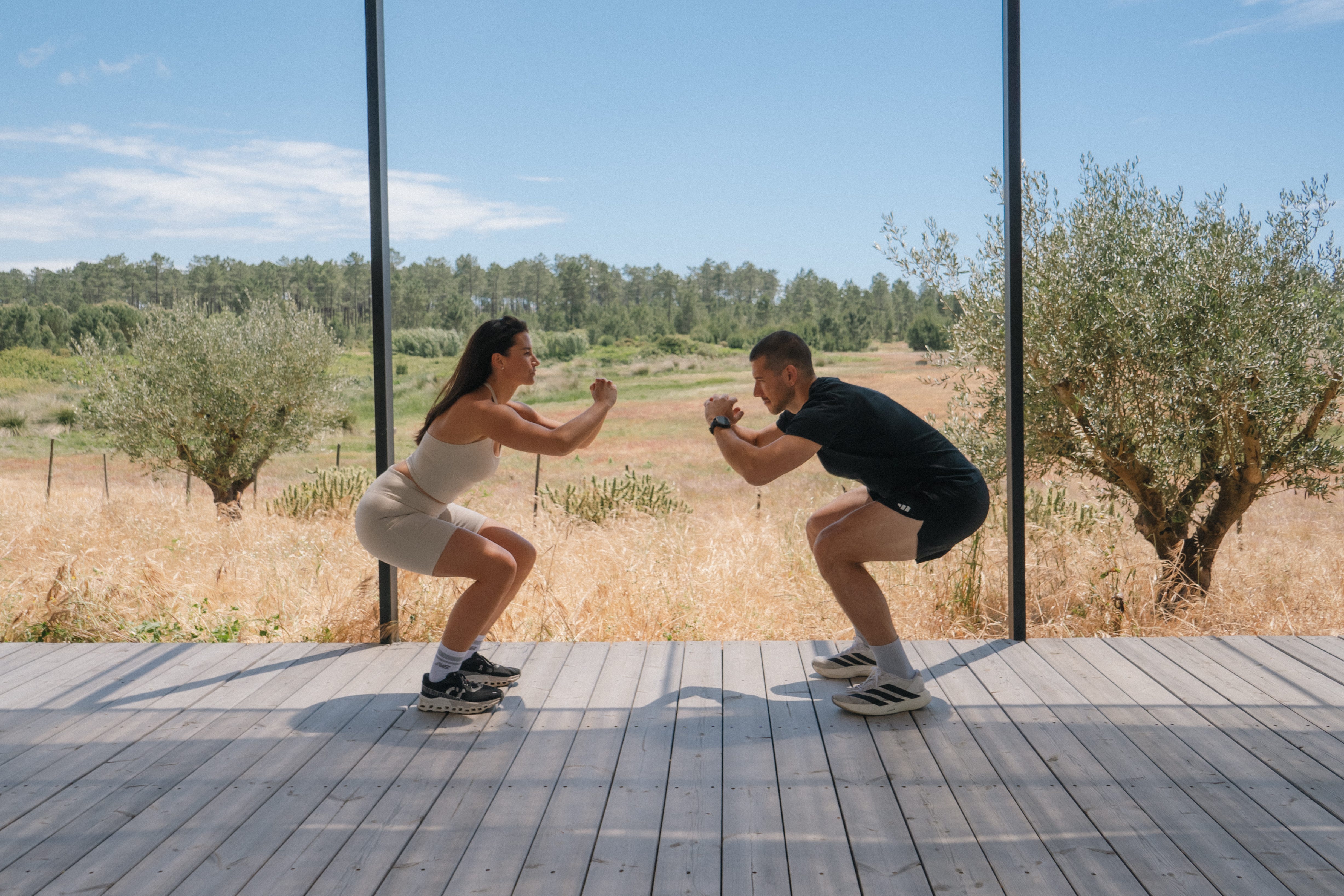
Atlas Cove is that assembly, turned into a product. Six days on the Arrábida coast. Your baseline measured on day one: strength, fitness, sleep, recovery, blood pressure, stress, on validated instruments we bring. Overnight, those numbers become your personal protocol. You do the work, coached daily. On day six the same markers are taken again, side by side with day one, so whatever changed is yours to see rather than ours to describe. Then the year after: a month of guided return, included, and a membership that keeps your numbers and your protocol alive between visits. A week that doesn’t survive contact with your real life is theatre.
Our protocols are generated by AI.
I’ll say it plainly, because most of this sector won’t. The method is ours: the logic of what to do with a given set of numbers, built out of published research and about two decades of managing our own conditions. That method is encoded into a system, and the system turns your day-one assessment into your week. Before anything reaches you, a doctor reviews it remotely against your health history and your assessment results, and approves it. Nothing runs on you that a clinician hasn’t signed off.
We kept quiet about this for a while, and I’ve decided that was the wrong call. The reason we kept quiet is that “AI built your health plan” makes people flinch, and I understand why. But hiding it would mean arguing in public that AI belongs in health while being coy about using it, and that position doesn’t survive a single hard question.
So here’s the case, honestly. The strongest evidence I know is the MASAI trial in Sweden: a randomised controlled trial in over 105,000 women, the first of its kind, with final results published in The Lancet in January. When AI supported radiologists reading mammograms, cancer detection rose 29% with no increase in false positives, screen-reading workload fell 44%, and fewer aggressive cancers surfaced between screening rounds.
What matters most is what that trial did not do. It did not remove the radiologists. It gave them better instruments, and the combination beat either alone. That’s the structure we copied, scaled down to ten rooms. A system that never gets tired at eleven at night and never forgets a contraindication buried on page four of your history, checked by a human who is accountable for the result.
Worth noting too: Biohub, the most ambitious AI project in this whole field, is co-led by a practising paediatrician. The serious version of this always has a clinician in it.
The advantage of coming from outside medicine isn’t thinking you can do everyone’s job. It’s knowing precisely which job is yours.
Ours is the system, and standing behind it. Tom and I host every cohort ourselves, alongside specialists in the disciplines the week runs on, because a method nobody shows up for is just a document. What the system can’t do, and what we can’t do, goes to people who trained for it.
We also brought an instinct medicine’s structure suppresses: build it, measure it, change it weekly. Ek is doing that with scanners. Biohub is doing it with cells. Function is doing it with bloodwork. We’re doing it with the unglamorous last mile, the distance between knowing and doing. I’ve written before about what that distance costs, in energy and mental load, and I’d argue it’s the most expensive gap in health. Not the missing scan. The missing follow-through.
Now the part where I have to be straight with you, because an essay arguing for measurement that fudges its own would deserve to be ignored.
We have not proven this yet. September is our first full cohort. The week is designed so that the same markers are taken on day one and day six, on the same instruments, and every guest sees their own two columns. But I have no outcome data to show you, because we haven’t collected it at any meaningful scale. The figures published on our own method page are estimates drawn from research on comparable programmes, and they’re labelled as exactly that. I’d rather say this plainly in an essay than have someone discover it and assume we were hoping they wouldn’t look.
What we do have is a demand signal, and it’s the part that convinced me the gap is real. More than a thousand people are on our waitlist before a single full-price cohort has run. That’s not proof the method works. It’s evidence that a lot of people have already tried the bottom of this market and the top of it, and are looking for something neither one sells.
So the honest position is this. The category argument, I’ll defend now. The outcome claim, I’ll have data on by next summer, from cohorts running monthly from November. Ask me then, and hold me to it.
Ten rooms is a strange place to start an argument with an industry, so let me be clear about what this is. Sesimbra is one site, at a partner estate, and it’s deliberately the smallest version of the thing. The plan is a network of our own-operated sites across Europe. We’re starting here because a method that hasn’t survived contact with real cohorts shouldn’t be copied into five buildings, and because the discipline of ten rooms and one cohort a month is what makes the measurement honest. Scale after proof, not before it.
Zuckerberg’s timeline for curing all disease runs to the end of the century, which is a polite way of saying nobody alive will audit it. Ours is six days and then twelve months, which is a much harder promise to make, because you can check it.
What I’m confident about is the direction. Health is being rebuilt by people who were failed by the current version of it, using tools the current version was too slow to adopt, with clinicians as the check rather than the gate.
So here’s what I’d ask you. Where does your own gap sit: in what you know, or in what you do? And if you’re honest with yourself, when did knowing more last change anything?
If this argument interests you, subscribe. The next essays go deeper into what actually moves a baseline, and what a year of holding it looks like.
Comments
Nothing yet. Say the first thing.
Sign in to join the conversation.