
I have spent most of my working life looking at homes through the lens of a camera. Styling rooms, moving things around, finding the right angle, waiting for the light to change. After all these years, I know that a photograph can give you a snapshot of a room, but of course, that’s not the whole story
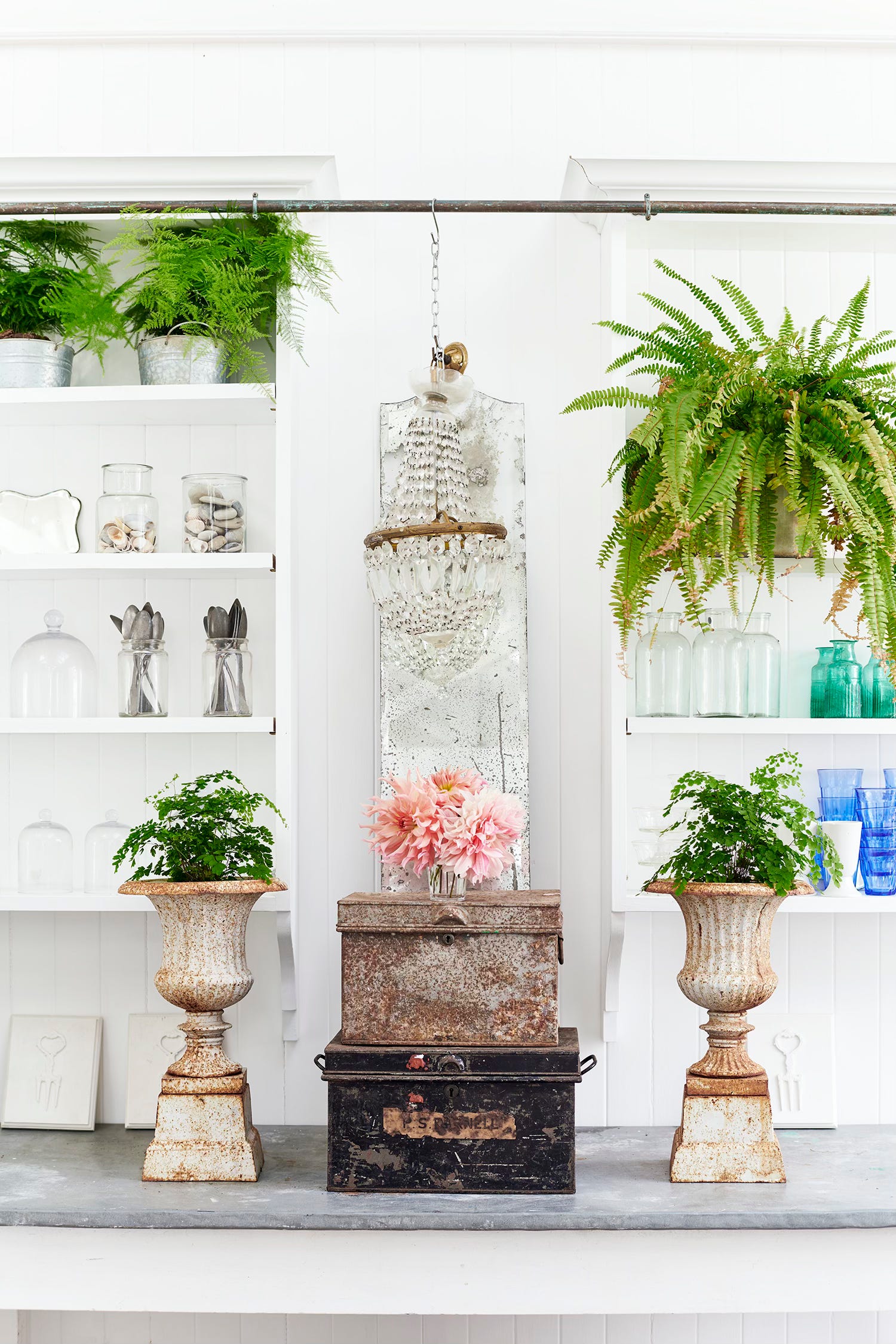
A photograph is the ultimate edit. You choose what goes into the frame and, just as importantly, what stays outside it. Very often a few inches to one side there’s a pile of discarded ‘real life’ items that didn’t make the cut: the extra books, the third pair of shoes (not just the artistically placed pair of plimsolls by the door), the party invitations on the mantelpiece, the pile of clean washing waiting to be folded. Not only that, if you moved the camera a few inches to the left or right, up or down, you would catch a completely different glimpse of the room. When we are composing photographs we pay attention to the minute details... a chair gets pulled slightly forward, a door opened slightly ajar, something distracting is taken away. You wait for the sun to disappear behind a cloud or for it to come through the window. And that is the point, of course, you’re making a picture.
But there is another side to these rooms, the parts that don’t get photographed. Not necessarily the ugly or untidy bits, although there are plenty of those in any real home, but also the parts of a house that we tend to pass over because they don’t make an obvious photograph. Then of course there are the parts that can’t be photographed: the sounds, the smells, the sense of time that passes as a shaft of light travels across the floor.
A lesser photographed are of my home.. but it catches the evening light so beautifully
Last week I wrote about the sound of opening our shutters in the morning. It’s something I’ve done thousands of times and barely thought about, and yet it’s one of those sounds that is completely connected to home for me. Every house has its own sound DNA... the creak of a particular floorboard, the familiar sound of footsteps as somebody moves around upstairs (each family member with their own distinctive rhythm and gait), rain against a window, the trees outside, perhaps a church bell that sounds every hour or a pair of pigeons that return to roost on your chimney every year.
Then there are the other senses that you can’t capture in a photograph: the smell of coffee in the morning, a fire that’s just been lit, washing drying, something cooking, flowers brought in from the garden. The feeling of a cool tiled floor under bare feet, the warmth of a patch of floorboard where a hot pipe passes underneath or the breeze that comes through a certain window.
None of these things are really photographable, but they are all part of how we experience our homes.
And then there are the actual spaces we don’t tend to photograph.
Hallways, landings, passages, doorways, the little bits between one room and another. They are rarely the hero shots, but they are the connective tissue of a home. The bits just to one side of the bedside table with a vase of flowers, the chair beside the window or the kitchen table laid for supper.
Every Saturday I send paid subscribers a more personal note from my week — things I’ve noticed, places I’ve been, things I’ve found and loved, and whatever has been occupying my thoughts. Less of an essay, more of a letter.
I’d love you to join me.
Don’t misunderstand me, I love all of those things, I’ve spent a whole career creating them. Small moments of beauty are the stuff of life as far as I’m concerned.
ButI also know that the gaps between them matter just as much.
In fact, those gaps are part of what allows the beautiful moments to work. It’s the chiaroscuro idea of light and dark: you can’t have one without the other, and the same goes for decorating your home. You have to have space around the beauty for it to shine. Those spaces help to lead your eye towards the focal point and objects often look more beautiful when they have some breathing space around them.
Negative space is a big deal in design, we talk about it a lot, but I think it is just as important when thinking about a whole house. There needs to be a rhythm between the moments of interest and the ordinary bits in between, because we don’t actually experience our homes as a collection of still images. We move through them, catch glimpses through open doors hear what’s happening in the kitchen when we’re sitting in another room.
This is why it’s important to think about the design of your home as a whole: to think about how one room moves into another, the view across two or three spaces, how a material might appear in one room and then again somewhere else, a colour that repeats itself from room to room, or having the same floor running through several spaces.
This is what we call flow, and it’s flow that helps a home hold together, so that each room feels part of a whole home. Not because everything has to match — quite the opposite — but because there needs to be some sort of conversation happening between the different parts.
Some people call this the red thread — it’s quite a well-thumbed idea now — but understanding why the red thread is important changes everything and when you allow a home to develop its own language, it comes naturally.
Have you noticed that the houses you love the most don’t feel like a collection of individually decorated rooms (although that’s a whole other fun design technique that we’ll save for another day), they feel cohesive, like one place.
That’s difficult to capture in a photograph because it isn’t really about a single view. It’s about the experience of moving through the whole. And one of the biggest things I’ve learnt from spending so much of my life photographing homes is that a photograph will never capture the whole.
It’s a bit like when we look at ourselves in the mirror and can only focus on the bits we don’t like about ourselves... my legs aren’t long enough, my tummy sticks out, there’s a mole on my face... the things we think need fixing. But no one else is looking at those details. When people look at you they see the whole of you, and I think it’s the same with our homes.
A home is a bombardment of senses and experiences that our brains take in all at once. The sounds and smells, the spaces between rooms, the empty bits, the messy bits, the glimpse through a doorway, the light changing as you walk through the house. The completely ordinary parts that would never make it into a photograph but which are the real heroes of how it feels to live in a home.
Atlanta x
One Calm Moment
If this has made you think differently about spaces and the moments in between, One Calm Moment takes the idea a step further. It’s my guide to noticing what you already have and creating small moments of beauty around your home. Not by redecorating or buying more, but simply by looking at things differently.
It’s 24 pages exploring my method for creating small moments of beauty from what you already have.
No posts
Comments
Nothing yet. Say the first thing.
Sign in to join the conversation.