
0:00
-8:32
It would have been my mother’s 104th birthday this past week. And if ever there was a woman who would have seemed like the type to make it to 104, that was my mother.
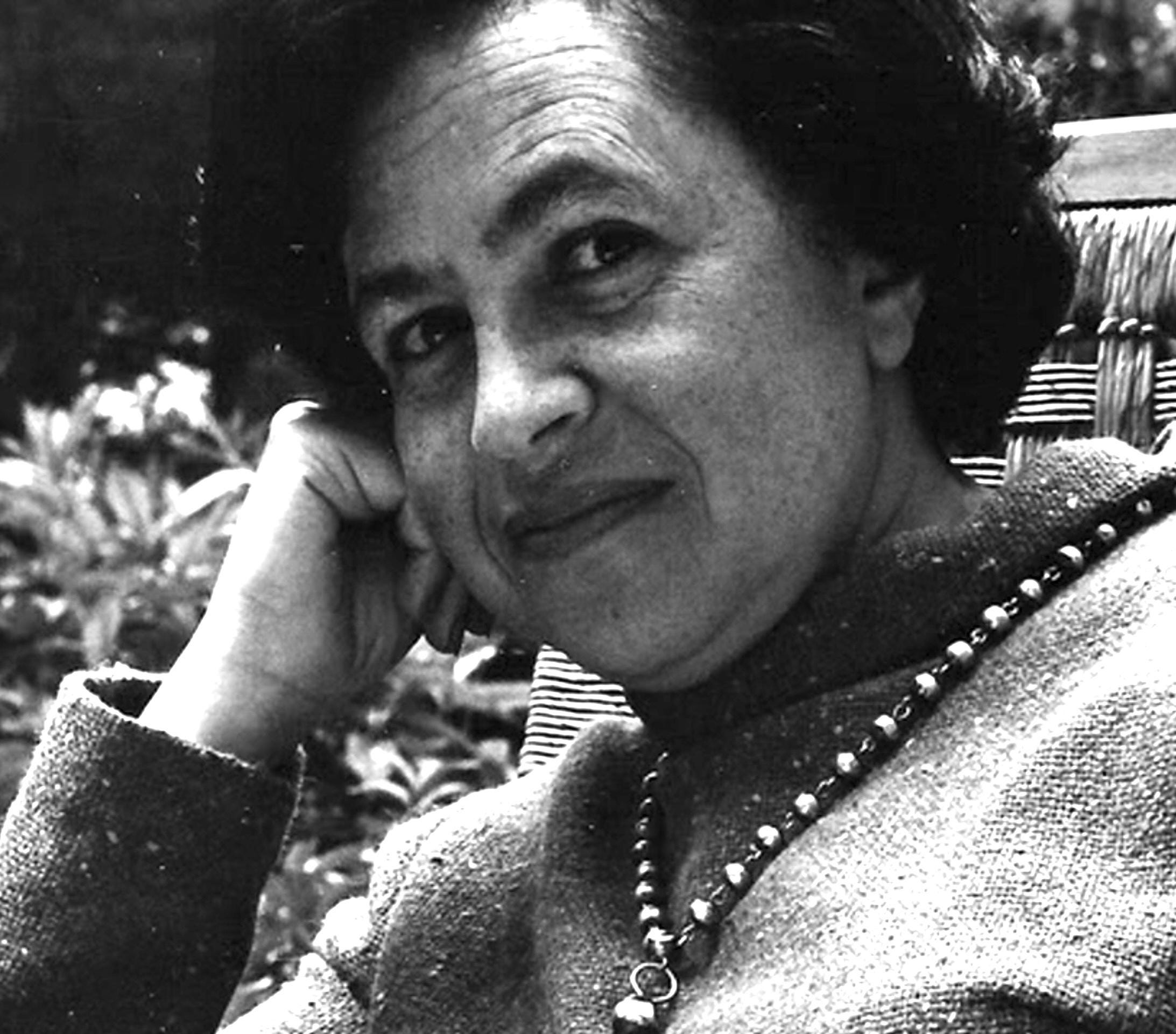
But she was diagnosed with glioblastoma at age 66, and died five months later. That was 37 years ago. I am older now than my mother ever got to be. I have now lived longer without my mother than I did, with her. And still she remains a powerful figure in my life--when I bake a pie, when I pull weeds in my garden, when I dance, or walk through a market in Mexico, and most of all when I write.
My mother, Fredelle Bruser Maynard, raised two daughters--me, and my sister Rona. Both of us have lived as writers all our lives, and though we have both worked with some pretty accomplished editors in our long writing lives, I think we’d both agree that no editor ever taught us more, or took a red pen to our work with greater care (and, often, ferocity) than our mother. She started us young, and taught us uncompromisingly, holding us always to the highest of standards. Hers. I sometimes say, of my childhood, that I was raised in a kind of a boot camp of language and writing. When I teach memoir, at my retreats, I offer the women with whom I work a gentler version of my mother.
If there is one sound that most powerfully conjures the home of my childhood more than any other, it may be the clicking of my mother’s typewiter. Daughter of immigrant Jewish parents, raised in the Depression with very little in the way of money or opportunities (or so it might have seemed), my mother made her way to university in Manitoba, and eventurally to Cambridge, Mass., where she earned a PhD, summa cum laude, in English literature at Radcliffe--only to discover that as a woman, and a Jew, she would remain unemployed at the small university in the town where I grew up.
Fredelle was not the name her Russian Jewish parents gave her, by the way. She was born Freidele. She changed her name, in an attempt to fit in better, in a world that was often not welcoming to Jews, and often simply cruel to a woman whose roots lay in the shtetl.
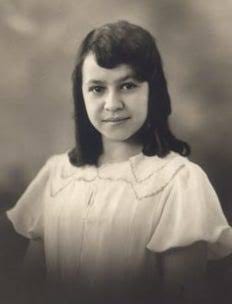
Freidele Bruser, around age 13, in Birch Hills, Saskatchewan.
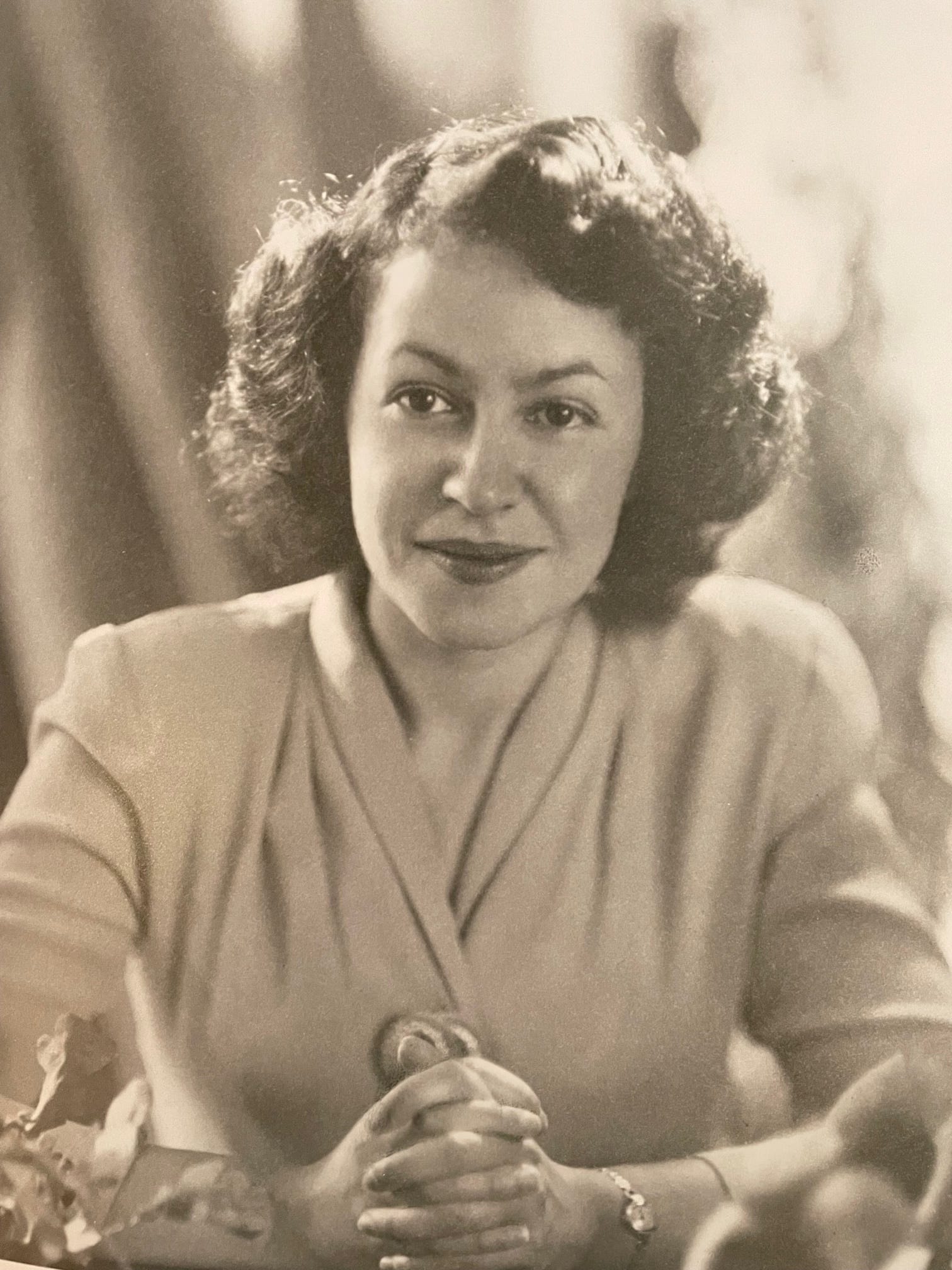
….and a few years later, at the University of Manitoba in Winnipeg, where she came, from her little country town, on a full scholarship at age 16. And met my father, a gentile. This almost killed my grandparents.
She turned to writing--for baby magazines, and then to women’s magazines (where she served, among other things, as the poorly- paid ghost writer for Dr. Joyce Brothers.) But she always wrote her own stories too--as well as the most funny and captivating letters home to her mother in Canada. She did this for a few decades. Her letters were typewritten, and she kept carbon copies. She believed her writing should be preserved, and she was right.
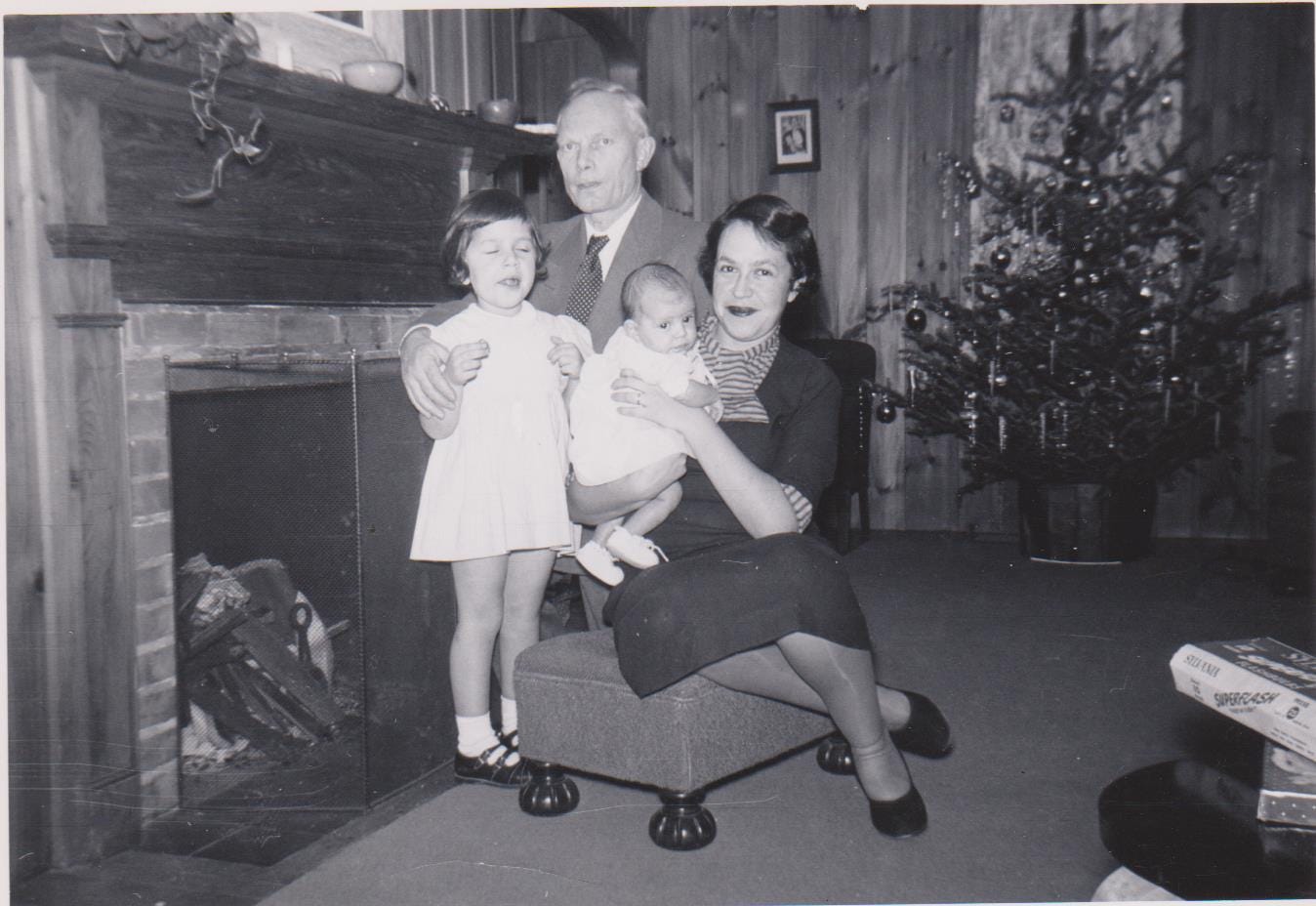
December, 1953. In Durham, New Hampshire, with my older sister Rona. Note the Christmas tree.
Then in 1972, a wonderful thing happened. She published a memoir about growing up on the prairies of Canada--Saskatchewan--in the only Jewish family in town during the very hard times of the twenties and thirties, where her father, an immigrant from Ukraine, ran a little general store.
The book was called Raisins and Almonds--its title coming from a Yiddish lullaby her father used to sing to her. Even if I weren’t my mother’s daughter I’d say this about Raisins and Almonds: It’s a deeply moving and beautiful book, not simply about being Jewish, or growing up with very little , other than parents who wanted the world for her. It’s about being an outsider...about the drive and hunger to look beyond the horizons of a small and narrow world and discover the vast landscape beyond. My mother managed to get there.
It’s also a book about the love of language, the love of learning. I’ll go further and say, love of life.
A thought comes to me, as I type those words. I am suddenly reminded of a moment that took place in my own life, long after the death of my mother--when, at the age of 44, I paid a visit to the man who had derailed my life and changed its trajectory, 25 years earlier, J.D. Salinger.
“The problem with you, Joyce,” he said to me that day--pointing his finger at me, as if it were a gun--”is that you....love...the...world.”
Well, yes I do. And it was my mother who taught me to do so.
Back to her story. Most particularly, back to that book she wrote, Raisins and Almonds.
My mother’s memoir was published only in Canada, where it met with a certain degree of success. A stage play was adapted from it, and even a musical. But the book went out of print, as books do. And for years, the only way a person could find Raisins and Almonds was to locate a used copy. Now and then one shows up on Amazon, usually at a pretty high price.
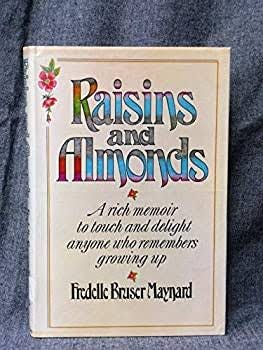
Every holiday season, on Facebook, I read out loud a story from my mother’s memoir that’s called “A Jewish Christmas.” My writer sister, Rona, does the same in Canada. When we do, readers always reach out and ask, “where can I get a copy of this story?”
So Rona and I decided, finally , to do something about this. We’re bringing Raisins and Almonds back into print. We’ll be publishing the book ourselves, though it will also be available on Amazon. And our hope is that we’ll be taking our mother’s story out into the world, speaking to Jewish groups--and other groups--about this beautiful story, that has become particularly timely, unfortunately, in these times when antisemitism is, terrifyingly, on the rise.
Last month I spent three days in a recording studio in San Francisco, recording the audio book edition of Raisins and Almonds. There are some Yiddish phrases in the book that I probably pronounced imperfectly --oh, I’m sure I did, though I asked a friend to speak them to me, and I tried my best.
So there will be an audio edition of Raisins and Almonds, too. When the book’s release gets closer (late this year, we’re hoping) I’ll have much more to say about it, as will Rona. And we’ll share a few passages that will inspire you to want more, I’m guessing.
There is no way to write about my mother, Fredelle, without adding these words: She was not an easy person to have for one’s mother, and there are aspects of our history that were complicated, for sure. As could be said of many mothers and daughters. My daughter would no doubt say the same of me.
But oh, how I loved her. Oh, how I miss her. Every day in fact. After all these years.
The picture below is of the two of us, the day of her wedding to my stepfather. My mother was dying of a brain tumor at the time.
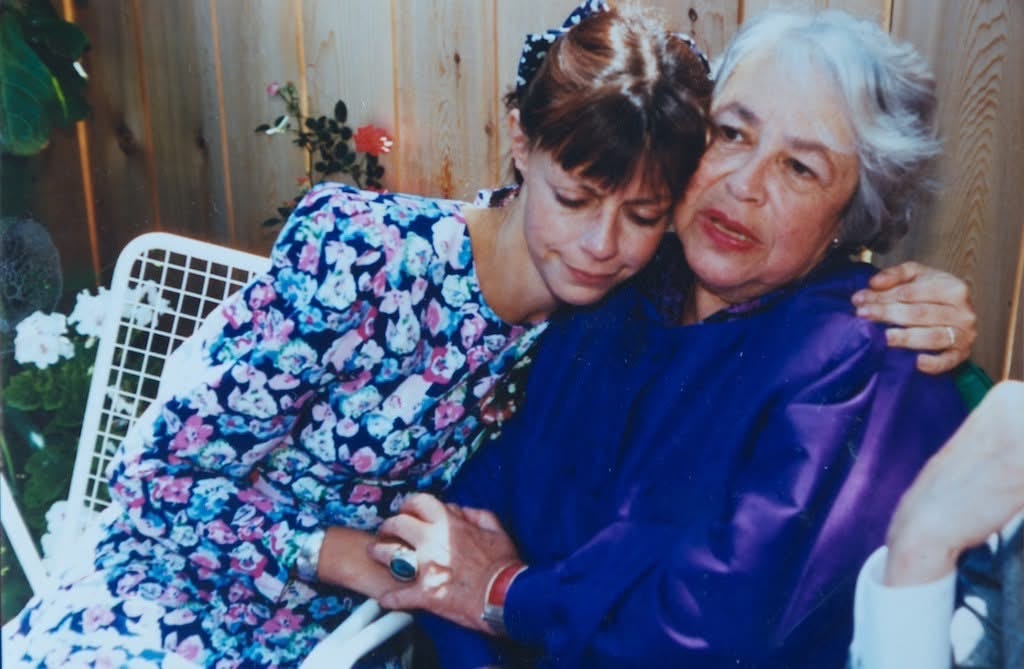
June, 1989. At my mother’s wedding to my stepfather, Sydney—a Jewish man. She died that October.
When the rabbi spoke the words--”long life to you both”--as he smashed the glass, my mother, though strugglling with words by this time, spoke these: “Would that it were true.”
I’m going off on a short book tour tomorrow to talk about my new novel, In Wonderland, and of course I’m excited to be sharing it with readers of my work. But here’s the truth, I am just as excited by the thought that a few months from now, Rona and I can share another book with you. The one written by our amazing, brilliant, challenging and deeply lovable mother, Freidele. She gave me the gift of my writing life. She taught me to love the world.
No posts
Comments
Nothing yet. Say the first thing.
Sign in to join the conversation.