
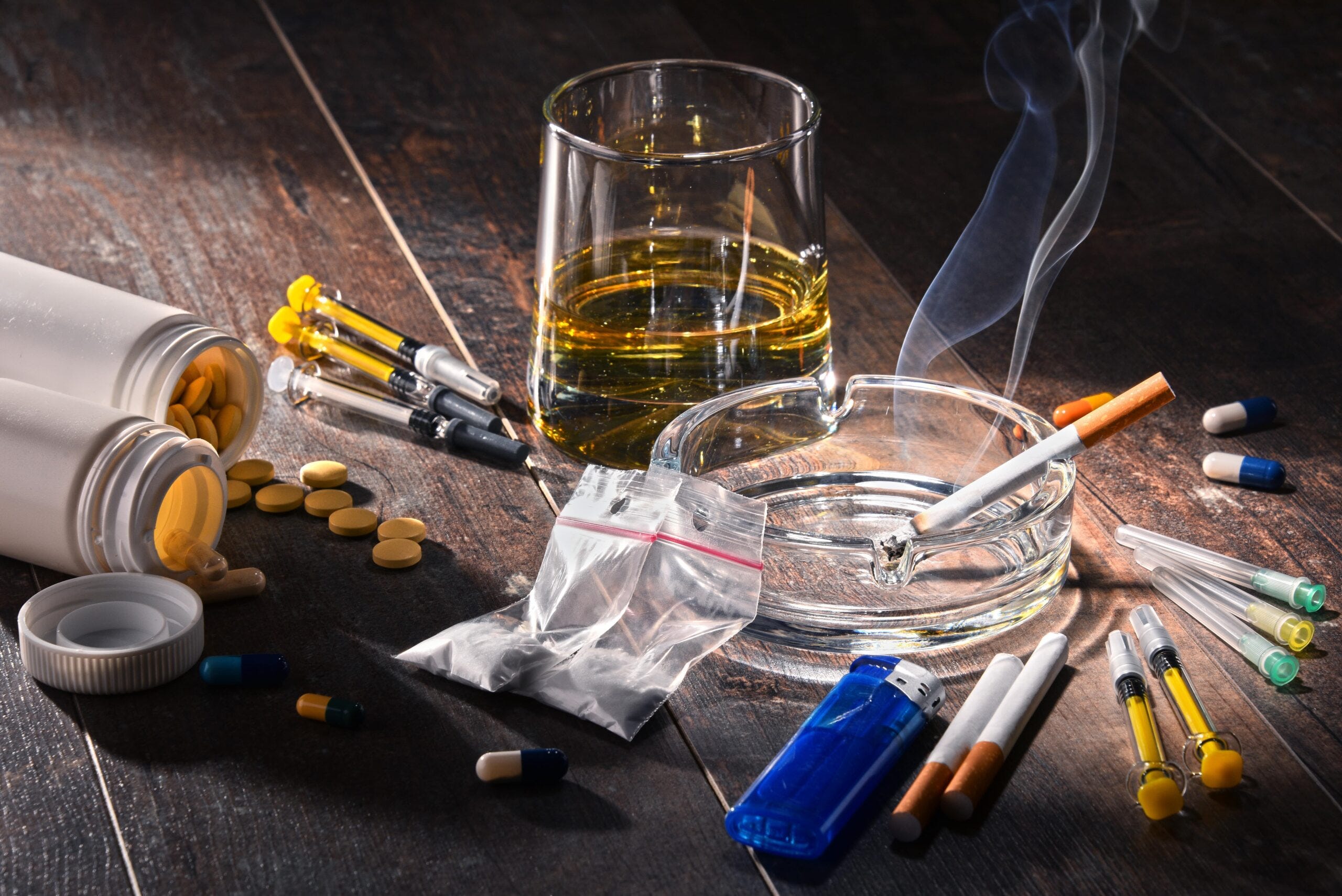
Addiction is a serious issue in society, and it is one that can create a lot of conversations about what the causes are, and what the most effective strategies for dealing with it as well. However, these conversations are things that, for the longest time, I just thought were excuses. You see, psychopaths lack the ability to become addicted to anything. The part of the brain that is activated in addiction is underactive in psychopathy, making the end result a total lack of understanding of addiction as a concept. To us, it doesn’t exist.
This can create a lot of animosity when I speak about this. Everything from people outright telling me that this is BS, psychopaths are the most addicted people out there, despite the science demonstrating otherwise, to people assuming that because we can’t get addicted to things that trying something like heroin or meth would be appealing to me. Let me clear that one up now. The things that make heroin and meth supposedly enjoyable to neurotypicals don’t fire in our brains. There is nothing about it that would be enjoyable, it would just be introducing unnecessary toxic substances into my body for the lols. That is not something that interests me.
This will be a couple of posts, maybe more, depending on how long they end up being, that will address the physical differences that make psychopaths immune, but also our perception of addiction, as when I have discussed it with others wired like me, we seems to share a similar mentality, and that mentality may seem mean to those of you that can be affected by addiction. I will do this by addressing a personal account of a person in active addiction, and responding to it as I would internally. In other words, mask off.
First, let us address the reason that psychopaths do not have the same responses to addictive substances that neurotypicals do. This has to do with the regions of the brain that psychopathy is present in. I also suspect it has to do with our turned down emotions. Frankly, there is a big part of me that still believes that a great deal of addiction is emotional, not physical. There was an experiment done on rats:
“Put a rat in an empty cage with heroin-laced water and it will drink itself to death. Put the same rat in ‘Rat Park’ — full of friends, toys, tunnels, and cheese — and it barely touches the drug.”
Johann Hari shared this on TED Talks and it completely changed how I think about addiction.
Professor Bruce Alexander ran the experiment in the 1970s and flipped the old “chemical hooks” story on its head. Isolated rats became addicts. Happy, connected rats in Rat Park almost never did.
The same pattern showed up in humans during the Vietnam War: 20% of American troops were heavy heroin users, but when they came home to normal lives, 95% simply stopped — no rehab, no massive withdrawal.
Hari’s conclusion: addiction isn’t primarily about the drug. It’s about the cage — isolation, trauma, lack of connection. Humans have a deep need to bond. When we can’t bond with people, we bond with something that gives relief: drugs, gambling, porn, whatever fills the void.
What’s one “addiction” in your life (or someone you know) that might actually be a symptom of disconnection rather than just the substance itself?
To a psychopath, it appears to be more about the emotional aspects rather than the physical, and because that appears to be the case, I would imagine that it relates to oxytocin in some form or another. My argument for that is strictly based on observation, but what I have seen in people is that they can become addicted to the results that oxytocin gives them, such as love, or bonding, even jealousy. I think that people that are highly jealous are more interested in the feeling of jealousy and having control than they actually feel threatened. However, as I have never felt such things, I could be totally off the mark.
Let’s do the sciency part, then we can get back to me talking about something that I will never experience, like I know something about it.
Psychopathic traits modulate brain responses to drug cues in incarcerated offenders
Now, you all know that I enjoy tearing apart bad studies, and this one does have some issues, but less than most out there. First issue, the sample size is only 137. That is kind of low. Second, they assessed for psychopathic traits using the PCL-R, and we all know that I think that it is a garbage checklist. However, they do use brain scans for this one, so it gets some points restored there. Also on the good side, the cohort had an average age of mid-thirties of both male and female participants. So… for once this is not a bunch of eighteen-year-olds that they decided were psychopathic because an intern said so.
Onto the study.
Abstract
Recent neuroscientific evidence indicates that psychopathy is associated with abnormal function and structure in limbic and paralimbic areas.
This study is from 2014, but the way they word this makes it sound as though it is older. The neuroscientific evidence for psychopathy has been around for a minute, but whatever, there are always improvements in imaging, so fair enough.
Psychopathy and substance use disorders are highly comorbid, but clinical experience suggests that psychopaths abuse drugs for different reasons than non-psychopaths, and that psychopaths do not typically experience withdrawal and craving upon becoming incarcerated.
I have never known a psychopath that has used illicit substances before, but we are kind of rare, so this isn’t exactly surprising. I would imagine that certain environments are more conducive to this sort of lifestyle, so perhaps if you are a lower functioning psychopath that grew up in a largely negative environment, drug and alcohol use is more common, and perhaps even expected.
I have, however, been given the pharmaceutical grade versions of a lot of these products, and let’s just say, the result is not the one that is intended by the manufacturer. For instance, amphetamines have no effect on me at all, Opioids might slightly lessen pain, but whatever emotional/physical euphoria they apparently grant, that is not a thing for me. They might make me feel out of step with my body, if the dose is high enough, but that effect is quickly mitigated, and the pain relieving aspect also is quickly tolerated. Meaning that these medications have a very short effectiveness window with me before they are rendered useless to my body.
These neurobiological abnormalities may be related to psychopaths’ different motivations for—and symptoms of—drug use. This study examined the modulatory effect of psychopathic traits on the neurobiological craving response to pictorial drug stimuli.
I don’t know what the motivation would be for the use of such things. I would say boredom, but as there isn’t an effect from the drugs themselves, I don’t know why there would be an interest in wasting money and time on them. Perhaps it is a side effect of the mask. It is what the environment calls for, so they continue to use such things. Maybe someone else has a better hypothesis. Toss it in the comments if you do. I’m interested.
Drug-related pictures and neutral pictures were presented and rated by participants while hemodynamic activity was monitored using functional magnetic resonance imaging. These data were collected at two correctional facilities in New Mexico using the Mind Research Network mobile magnetic resonance imaging system. The sample comprised 137 incarcerated adult males and females (93 females) with histories of substance dependence.
Why does this sound like a Pavlov’s Dog’s experiment? People really respond to drug related images? That’s wild to me.
The outcome of interest was the relation between psychopathy scores (using the Hare Psychopathy Checklist-Revised) and hemodynamic activity associated with viewing drug-related pictures vs. neutral pictures. There was a negative association between psychopathy scores and hemodynamic activity for viewing drug-related cues in the anterior cingulate, posterior cingulate, hippocampus, amygdala, caudate, globus pallidus, and parts of the prefrontal cortex. Psychopathic traits modulate the neurobiological craving response and suggest that individual differences are important for understanding and treating substance abuse.
I mean… I guess score one for Hare. It looks like his blessed checklist actually was able to demonstrate psychopathy on some level that correlates with brain scans. It would be nice if they did a study that showed whether or not the PCL-R given by one set of psychological researchers could blindly stack up to the results of neuroscientific researchers without either group knowing who scored high on the PCL-R until after brain scans were done. I wonder if that has been done. Hopefully I remember to look it up after writing this. Afterall, it would be interesting to see if Hare got any of it right, or if he made a total mess like it appears he did.
Ooo… looky what I found:
Contributions of the PCL/-R to the Construct Validation and Mechanistic Understanding of the Cleckley Psychopath
It isn’t a brain scan comparison, but it is looking at Cleckley, the PCL-R, the current thoughts on psychopathy, and it is written by Dr. Joseph Newman who isn’t a dullard. Seems like fun for later. Also, it’s brand new. As in, published in March of 2026 brand new. Super fun.
Introduction
Substance abuse and psychopathy are two conditions strongly linked to criminal activity. The net annual burden of crime in the United States alone has been estimated to exceed $3.2 trillion (Anderson, 2011; Kiehl and Hoffman, 2011). Individuals with psychopathy are among the most dangerous and chronic offenders, as evidenced by high re-offense rates (Hemphill et al., 1998; Leistico et al., 2008).
All right, the only study out of those listed that is remotely useful is the last one, it is a meta-analysis, and it really didn’t show what they claim that it did. It basically said, well, we found certain results, but… those results aren’t really really accurate. They were trying to figure out how associated a high PCL-R score was with antisocial behavior, but then say, well… factor one traits really can’t be accurately measured like this, not because they didn’t show up as antisocial, but because the very traits of psychopathy mean that they can lie convincingly.
Researchers and clinicians should also be cautious when interpreting the limited predictive ability of F1 scores. High scores on F1 indicate interpersonal charm, exploitative manipulation, and self-advancing deceitfulness, which are likely associated with duping the system and escaping documentation of antisocial conduct. It is possible that some individuals scoring high on F1 engage in comparable amounts of antisocial behaviors, yet are interpersonally skilled, cunning, and manipulative enough to escape documentation. Future studies could examine this hypothesis by using outcome criteria such as dismissed charges, staff observations, and institutional notes.
Yeah, that is a round about way of saying, factor one traits, the only traits that associate with psychopathy did not have a high correlation with antisocial behavior, but the reason isn’t because there is a negative correlation, but rather, people high in factor one traits can lie and we believe them. So while we didn’t see the correlation, we will just pretend that it’s there because we are not qualified to do our job… apparently.
How do these people get funding for this nonsense?
Also, the results are weighted racially as well.
Our results suggest that predictions of antisocial conduct based on the Hare PCLs should be interpreted more cautiously for members of minority ethnic groups, males, and prisoners than for Caucasians, females, and psychiatric patients.
Why? Reasons. But not reasons they are going to tell us. So, as much as this part of the study has been oh so carefully cited, the citations are trash. Do better study. I expect more of you.
Moreover, the use of alcohol and drugs greatly increases the likelihood of psychopathic individuals engaging in serious and/or violent criminal activity. Indeed, a large scale study on aggression and offending found that the best predictor of violence was psychopathic traits in conjunction with alcohol and/or drug abuse (Steadman et al., 2000).
Are you freaking serious? I went through this citation looking for substantiation of this claim. What did I find? Psychopathy is mentioned nine times total, in the entirety of the paper.
One time in a table:
Table 1 displays the results of the logistic regression model. As shown, 18risk factors were selected using the forward stepwise procedure, each of which contributed significantly (p , 0.05) to the prediction of patient violence
However, this claim is based on factor two traits, not factor one. I had Grok look into this further for me:
Subsequent analyses from the same MacArthur dataset (not in this 2000 paper) provide important nuance:
A 2001 paper by Skeem and Mulvey (directly using MacArthur data) found that the PCL:SV’s predictive power for community violence was driven primarily by Factor 2 (the antisocial/lifestyle deviance component). The unique contribution of Factor 1 (core affective/interpersonal traits) was limited or nonsignificant once Factor 2 and other covariates were accounted for.
In other words, while the total score showed a robust main effect in Steadman et al.’s Table 1, the “psychopathy” signal was largely carried by the impulsive, irresponsible, and antisocial behavioral traits (Factor 2) rather than the emotional detachment or callous-unemotional features (Factor 1).
In other words, psychopathy does not have a high prediction of violence. Antisocial traits do, which is why they are called… antisocial traits. It’s like water=wet. It is so bizarre to me that researchers just refuse to acknowledge that factor one and factor two are very different things. They are making me defend Hare, which is annoying. He is pretty clear that there is a large difference between the two, and while he thinks that they magically meet in the middle and that is what creates a psychopath’s definition, he doesn’t try to claim that factor two traits exist in a bubble.
Oh yes, it is mentioned eight more times, twice in a footnote, three times in citations, once in a description of what the PCL-SV is (which is the wrong assessment form to be using in this situation, but what do I know), twice in the acknowledgement section, and that is all, so why this was a citation this study decided was useful is beyond me.
Anyway, back to it. That’s not what this is about. However, so far, their citations have been pretty bad.
Moreover, the use of alcohol and drugs greatly increases the likelihood of psychopathic individuals engaging in serious and/or violent criminal activity. Indeed, a large scale study on aggression and offending found that the best predictor of violence was psychopathic traits in conjunction with alcohol and/or drug abuse (Steadman et al., 2000).
Yeah, Grok already called you on that BS, so no. Again, that is factor two traits, which related to ASPD, which means that it is not significant in the slightest.
This is particularly disconcerting given the fact that individuals with psychopathy appear to have a propensity toward substance abuse (Smith and Newman, 1990; Walsh et al., 2007). One potentially effective way to decrease the economic burden of criminal activity in the U.S. would be to design effective substance use treatments for individuals with psychopathy.
Stop making me debunk your citations, it’s extremely time consuming.
In the 1990 study by Smith and Newman (”Alcohol and Drug Abuse-Dependence Disorders in Psychopathic and Nonpsychopathic Criminal Offenders,” Journal of Abnormal Psychology, 99(4), 430–439), the authors examined substance abuse/dependence in a sample of male criminal offenders using the Hare Psychopathy Checklist-Revised (PCL-R).They specifically analyzed the two-factor structure of psychopathy:
Factor 1 — Core interpersonal/affective traits (e.g., superficial charm, grandiosity, lack of remorse, shallow affect).
Factor 2 — Social deviance/antisocial lifestyle traits (e.g., impulsivity, poor behavioral controls, juvenile and adult criminal behavior, irresponsibility).
Key finding on substance abuse
Substance abuse (alcohol and drug abuse/dependence disorders) was significantly related to Factor 2 (general social deviance) but was unrelated to Factor 1 (core personality features of psychopathy).
Psychopaths (high total PCL-R scores) showed higher rates of substance abuse/dependence than non-psychopaths.
When the PCL-R factors were examined separately, the association with substance use disorders was driven almost entirely by Factor 2 traits. Factor 1 showed no positive relationship (and in some related analyses or citations, it has been noted as unrelated or even inversely related in certain contexts).
This suggests that the impulsive, antisocial, and lifestyle deviance aspects of psychopathy (Factor 2), rather than the emotional detachment or callous-unemotional features (Factor 1), primarily account for the elevated comorbidity with substance abuse in this offender sample.
This pattern has been influential and frequently cited in later research on psychopathy and substance use. It aligns with broader findings that Factor 2 overlaps substantially with externalizing behaviors and disinhibition, which are strongly linked to substance misuse, while Factor 1 (the “core” of psychopathy in many theoretical models) does not show the same direct tie.
All right, so the claims thus far are, psychopaths use drugs more, and they are more violent on drugs than regular people, but what we are finding the actual results to be are that people with ASPD are more likely to use drugs and be violent.
Yup… great job there.
Well, let’s try to get to the actual science, shall we? The part where they used the machine that can actually tell a psychopath from a non-psychopath, instead of drowning in citations that either have nothing to do with the subject matter at hand or are entirely related to factor two traits, and not related to factor one.
Psychopathy is characterized by abnormal affective, interpersonal, and behavioral functioning. Psychopathic traits include emotional deficits such as a profound inability to experience empathy and remorse; behavioral problems such as impulsivity, stimulation-seeking, and instrumental aggression are also noted features (Cleckley, 1976; Hare, 2003). Given this behavioral propensity, it should not be surprising that the comorbidity of psychopathy and substance abuse is high.
You would think that at this point it would be obvious why psychopathy and ASPD have to be considered different things, but no, we are going to continue on this nonsense. For those of you that just got here, and are not familiar with the psychopathy and ASPD conundrum, you can find a full detailing here:
Psychopathy and ASPD
·
July 27, 2021

ASPD is a well known construct, as is psychopathy. In today’s world it is normal to run across things that will make claims about psychopathy, sociopathy, and ASPD all being the same thing. However, even in the most simplistic of terms, they are not the same thing, and really, they aren’t much alike at all. I will address sociopathy later on, as it dese…
However, no, we can’t do that, because murky waters pay the bills.
Relative to non-psychopathic offenders, research has shown that psychopaths are more likely to have a diagnosis of drug abuse or dependence and are more likely to have a polysubstance diagnosis (Smith and Newman, 1990).
Smith and Newman did not demonstrate that. It showed that people with ASPD are more likely to have such issues. Would a psychopath use drugs? Imagine that the answer has to be yes, for some reason. Why eludes me, but I can imagine a world where this would be the case. I can also see those psychopaths being included in this study, and by some miracle of miracles that the PCL-R successfully found a couple of psychopaths that were later confirmed by brain scans, and those psychopaths used drugs for the aforementioned reasons that elude me.
An interesting paradox may exist, however. Though psychopaths are more likely to be diagnosed with drug use disorders than non-psychopaths, clinical observation suggests that psychopaths are less likely to experience symptoms such as withdrawal and craving when access to drugs is externally limited (e.g., during incarceration) (Cleckley, 1988).
I can tell you that when it comes to substances, as I mentioned above, pharmaceuticals have no effect on me in terms of feeling good. Alcohol also doesn’t have this effect, though I think a lot of people getting drunk is due to them wanting to be in that state. There is a good portion of drinking that has to do with the desire to be loose emotionally. That part doesn’t exist for us. We aren’t tight emotionally to begin with, so there is nothing to let loose of. The state that people are trying to get to is the state that we already exist in.
I could drink a bottle of wine every day for a year, more even if I was really putting the work in, and then someone could come and take it away, and I wouldn’t notice a thing. The idea that there would be some physical punishment for not drinking that wine is not something that exists in my world.
I can easily say the same about medications. Actually, with medications, any effect that they might have had the first two days will be gone by the third. If they gave me some kind of relief from pain that I am in, they will no longer do so by that third day. I either have to switch to something that works on a totally different mechanism in the brain, or I just stop taking them. If I were dumb enough to take these things all the time, firstly it wouldn’t have an effect, and secondly, if I had something happen and needed them to work, they wouldn’t. That would be cutting my nose off to spite my face.
I asked my Significant Other if he had any insight into why a psychopath would use drugs given what I have stated. You would think I would know being the psychopath, but no, I have no clue. He thought that perhaps there are other effects that might be considered fun. Perhaps a rapid heartbeat or that out of step feeling. I might not like it, but maybe it is different enough that a psychopath might think it was fun to be like that.
Drug craving is an intense desire or urge to use drugs, and plays a fundamental role in the maintenance of drug use problems. Craving has been associated with both repeated drug use and relapse after a period of abstinence (cf. Ehrman et al., 1998; Weiss, 2005). Cue-elicited craving paradigms, where drug cues are presented and brain activity is recorded using functional imaging techniques, have identified several cortical and subcortical brain regions related to craving1: anterior cingulate [Childress et al., 1999 (cocaine); Filbey et al., 2009 (marijuana); Garavan et al., 2000 (cocaine); Heinz et al., 2004 (alcohol); Wang et al., 2011 (heroin); Yin et al., 2012 (methamphetamine)], posterior cingulate (Wang et al., 2011), orbitofrontal cortex [Bonson et al., 2002 (cocaine); Sell et al., 2000 (opioids)], insula [Brody et al., 2002 (nicotine); Myrick et al., 2004 (alcohol); Wang et al., 1999 (cocaine)], ventral and dorsal striatum [David et al., 2005 (nicotine); Garavan et al., 2000; Myrick et al., 2004; Wang et al., 2011] (i.e., nucleus accumbens, caudate, and putamen), thalamus [Franklin et al., 2007 (nicotine); Wang et al., 2011], and amygdala (Childress et al., 1999; Bonson et al., 2002; Franklin et al., 2007). However, despite the strong tendency for individuals with psychopathy to abuse drugs, studies on the neurobiological correlates of craving have not yet examined the potential modulating effect of psychopathic traits.
Told you this was really wordy…
An examination of these two separate lines of research suggests there is striking overlap between regions implicated in drug craving and regions implicated in psychopathy. For instance, among individuals with psychopathy, reduced amygdala activity has been reported during aversive delay conditioning (Birbaumer et al., 2005), emotional memory (Kiehl et al., 2001), and moral decision-making (Harenski et al., 2010). The orbitofrontal cortex also has received considerable attention due to its role in impulse control. One study identified abnormalities in the orbitofrontal cortex in psychopathic adults during an attention-related task (Veit et al., 2002). Noting these abnormalities, Blair (2008) proposed that amygdala and orbitofrontal cortex/ventromedial prefrontal cortex dysfunction are fundamentally related to the development of psychopathy. Other regions have been shown to be under-reactive, including the anterior cingulate during negative picture viewing (Muller et al., 2003) and aversive conditioning (Veit et al., 2002), the insula during aversive conditioning (Veit et al., 2002; Birbaumer et al., 2005), the ventral striatum and posterior cingulate during an emotional memory task (Kiehl et al., 2001), and the posterior cingulate during emotional moral decision-making (Glenn et al., 2009). Taken together, these results lend support to the paralimbic hypothesis of psychopathy (Kiehl, 2006), which states that limbic (e.g., amygdala, hippocampus) and nearby paralimbic structures (e.g., anterior cingulate, insula, orbitofrontal cortex) are dysfunctional in response to emotional and other salient stimuli.
Notwithstanding years of behavioral, psychophysiological, and now neuroimaging research focusing on reward and punishment processing in psychopathy, the picture is not entirely clear. Despite clinical observation to the contrary, some studies have instead suggested a heightened sensitivity to (monetary) reward with higher psychopathic traits (Buckholtz et al., 2010; Bjork et al., 2012). Another study found a positive correlation between (monetary) gain vs. loss activity in the ventral striatum and psychopathy scores in those scoring 30 or above on the Psychopathy Checklist-Revised (PCL-R) (Hare, 2003; Pujara et al., 2013). Other studies of youth with disruptive behavior disorders (e.g., oppositional defiant disorder, conduct disorder, attention deficit hyperactivity disorder, psychopathic traits) suggest abnormal reward processing (Finger et al., 2008, 2011; White et al., 2013). The present study was undertaken in an effort to clarify how psychopathic traits in adults are related to neural responses to drug cues specifically, given increased drug use but decreased craving and withdrawal among psychopaths.
I have nothing to add to this other than… yeah. That.
Actually, that increased drug use part. I really wish they asked why though. Why use them if they do nothing for you. It makes me wonder if these people are more like borderline psychopaths, and that they are still getting some kind of physical and emotional entertainment from drug use, but also have the immunity to addiction? I guess if you are going to use drugs this would be the best case scenario. The other two sides would be, you get addicted and wreck your life, or, you have no response at all, so you are wasting your time and money. I have no evidence that this is the case, however. It is just me trying to sort this out so it makes sense to me.
Studies indicate that individuals with psychopathy start using substances at an earlier age (Corrado et al., 2004) and are more likely to develop polysubstance dependence (Smith and Newman, 1990; Mailloux et al., 1997), but clinical observation points to less craving and withdrawal (Cleckley, 1988).
That is not what that first study even looked at. Let’s set aside the fact you cannot assess anyone under the age of twenty-five for psychopathy, so the PCL-YV is hot garbage. There is no value there. The brain is not developed, so there is no ability to assess for something that requires that it is. Also, the study cited doesn’t look at substance abuse in youthful offenders. This paper focuses narrowly on rater effects in PCL:YV scoring and short-term recidivism prediction in Korean juveniles. Soooo… what… are they citing it for?
The present study utilized fMRI and a cue-elicited drug craving paradigm to examine the modulatory effect of psychopathic traits on the neurobiological craving response in a sample of 137 incarcerated offenders. Participants viewed drug-related and non-drug pictures, and indicated their level of craving for each picture. Since psychopaths tend not to experience withdrawal and craving and the regions engaged during drug craving overlap considerably with the regions implicated as being deficient in psychopathy, we expected to see reduced craving-related activity in paralimbic, limbic, and subcortical areas among participants with higher scores on the PCL-R. These areas included the anterior cingulate, insula, amygdala, dorsal and ventral striatum, thalamus, and orbitofrontal cortex.
Finally, relevant information. Unfortunately that’s it for this week. This was just the introduction, so remember when you are on post eight thousand about this study, you wanted the whole thing.
See you next week.
No posts
Comments
Nothing yet. Say the first thing.
Sign in to join the conversation.