
Home…
Home is supposed to be a feeling.
A place where you can show up tired, unfinished, uncertain, and still belong. Where mistakes don’t feel like verdicts about who you are.
That’s the idea, at least.
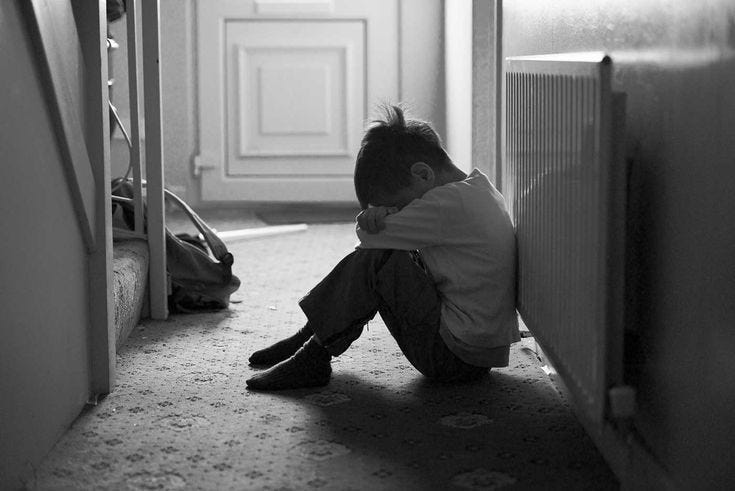
But the house I grew up in never felt like that.
It was a place where I learned early that love had conditions. That safety could disappear quickly. That small mistakes could turn into something much bigger.
The most common trigger was studying. If I couldn’t recall a formula, if I gave the wrong answer, if I hesitated too long, my mother’s patience would snap. I remember the shift in her voice, the anger rising, the moment when the air in the room changed.
Then came the hitting. And the cussing. Sometimes a slipper. Sometimes cardboard. Sometimes just her fists.
But the words were often worse.
She didn’t just scold me. She humiliated me. She said things that had no place inside a home, let alone directed at a child.
Where I come from, this is often called discipline.
Parents hitting children is normalized. People defend it as necessary for shaping a child into someone successful. It is treated as part of upbringing.
But when you grow up inside it, it doesn’t feel like discipline. It feels like fear.
And fear teaches you something very specific: how to shrink yourself.
My father was always there during those years. That was the strange part.
He wasn’t absent in the way people imagine absent fathers. He didn’t disappear or abandon the family. He was present — physically, consistently, undeniably present. He sat in the same rooms. Watched television. Played games on the laptop we all shared. He was there for dinners and weekends and ordinary Tuesday evenings.
He saw what was happening.
And he chose, most of the time, not to intervene.
Occasionally he said something, but never in a way that protected me. It was usually about restoring peace in the house, not about questioning why things had escalated in the first place.
For a long time I told myself that was something. That at least he tried.
But sometimes he joined in.
Once, when I couldn’t solve a math problem and said the wrong formula out loud, he held his head in his hands. I remember watching him do it — that gesture, slow and heavy, like I had exhausted something in him just by existing in that moment. He told me I was good for nothing. That I was out of his hands. That he didn’t have the patience to teach me anymore.
He didn’t shout it. His voice was almost quiet.
And that was the part I couldn’t unhear.
Sometimes it’s not the shouting that breaks you. It’s the moment someone decides you’re not worth the effort.
What I’ve understood only much later is that my father’s silence was its own kind of message. Children learn not just from what is done to them, but from what is allowed. From who steps forward and who stays seated. His presence without protection taught me something I carried for years without knowing I was carrying it: that I was not worth disrupting the peace for.
Comparison was constant in our house.
My younger sibling was everything my parents admired — confident, expressive, good at academics, good at sports. They said so. Out loud. Often. Sometimes directly to me, as though the gap between us was a useful motivational tool rather than something that cut.
It wasn’t just family either. My classmates got pulled into it. Their marks. Their behavior. Their ambition. Why couldn’t I be more like them? Why was it so easy for everyone else? The comparisons came with names attached, specific and deliberate, as if vagueness might soften the point and they didn’t want it softened.
I was different. Shy. Slower to arrive at things. I needed more time, more quiet, more space to think before I could speak. I wasn’t less, I just wasn’t legible to them. And in a house that valued what was visible and fast and impressive, that made me difficult.
Slowly, without anyone needing to lower their voice, I began to understand my role in the family story.
I was the difficult child. Not because I was rebellious or aggressive. I wasn’t loud. I wasn’t cruel. I was uncertain. Sensitive. Always trying not to make things worse.
I didn’t become invisible on purpose. I became invisible because no one seemed to know what to do with me.
And so I learned to take up less space. To ask for less. To need less. To perform okayness so consistently that after a while, even I started to believe it.
Children don’t question these things while they are happening. They absorb them.
For years, I believed that if I tried harder, if I became impressive enough, everything would change.
So I built my life around that belief.
The career I chose. The friends I surrounded myself with. The version of myself I tried to become.
All of it was driven by one hope: that one day my mother would finally look at me and feel proud. That she would finally see me as worthy.
What I didn’t realize then was how deeply that belief had colonized my life. I woke up every day pursuing things that didn’t feel like mine, pushing myself toward achievements that looked impressive from the outside but felt empty from within.
It felt like breaking your own heart in a thousand small ways.
Distance was what finally changed things.
When I went to college and later started working, I didn’t leave home with any grand intention of healing. I left because that was the next thing. But being away — physically away, with weeks between me and those rooms — created something I hadn’t had before. Space. Not just distance in miles, but distance in time. Room to think without the weight of the house pressing on every thought.
I started journaling. Badly at first. Fragments and half-sentences and things I couldn’t bring myself to finish. But slowly, the act of putting words to things I had buried for years began to do something. It made the past concrete. Nameable. And things you can name, you can begin to examine.
I started noticing patterns. The way I instinctively made myself smaller in certain rooms. The way I apologized before I had done anything wrong. The way I measured my own worth almost entirely by what other people seemed to think of me.
And for the first time, I began to ask a question I had never allowed myself to consider before.
What if I was never the problem?
My mother eventually acknowledged what happened. She apologized for the years of physical and emotional abuse.
But the apology didn’t land the way people imagine apologies do. There was no sudden release. No moment where everything rearranged itself into clarity. I received her words carefully, the way you receive something fragile from someone who once dropped things.
Today she sometimes tells me she is proud of me. She says she trusts whatever decisions I make about my career.
But her words no longer carry the weight they once did.
For so many years I built my life trying to earn those exact words from her. I chased them through achievements, through choices that didn’t feel right, through a version of success I thought would finally make me acceptable in her eyes.
Now that they are here, they feel strangely hollow.
Not because I want revenge or resentment. But because the part of me that needed her approval the most has already learned how to live without it.
Healing, I’ve learned, doesn’t happen in one dramatic moment.
It happens slowly.
Through distance. Through boundaries. Through learning to listen to your own voice instead of constantly measuring yourself against someone else’s expectations.
And through writing.
Writing was the one place where I could exist without judgment. Where I didn’t have to be impressive or legible or easy to understand. I could just be uncertain on the page, and that was allowed.
Looking back now, I realize writing was my first act of survival.
Self-love, I’ve learned, is not some grand transformation.
It is choosing your own path even when someone else might not approve. It is speaking up when every instinct tells you to stay silent. It is setting boundaries with people you once spent your entire life trying to impress.
And sometimes it is something even smaller than that.
It is finally understanding that the child who grew up in that house was never broken.
She was just trying to survive.
For years I tried to earn my mother’s love. What I didn’t understand then was that the person who needed my compassion the most was not her.
It was me.
No posts
Comments
Nothing yet. Say the first thing.
Sign in to join the conversation.