
0:00
-13:46
I’ve been wrestling with whether this story is worth sharing. The part of me that’s currently winning the internal battle is the part that remembers that stories connect us and make us feel less alone.
The story ends with a recent diagnosis that finally helped me figure out a disability I’ve been struggling to live with, but it starts with a move across the country...
In December 2023, after eighteen months of nomadic life, I moved to Vancouver Island, full of hopes and dreams for my new island life. Why it felt so important to uproot myself from the prairies and move alone to the Pacific Northwest, after my kids all moved away from home, is hard to explain, but there’s just something about the island that feels like my soul’s home.
In January 2024, I settled into the lower level of a house at Shawnigan Lake. I was enchanted with the lake, the tall trees and the mushrooms, and, though I found many places to wander, my heart felt most happy in a special little sanctuary among three fallen trees at the edge of the water.
Then, in October 2024, a metaphorical bucket of ice water got dumped all over my hopes and dreams.
I flew to Toronto to help my daughter move to Montreal. On the overnight flight, I started having vision issues, and by the time I was driving the U-Haul down the freeway, I was nearly blind in my left eye. At the ER in Montreal, I discovered I had a detached retina. Macular detachment increased the seriousness of it but decreased the urgency of treatment, but it was still urgent enough that I needed to get back home as quickly as possible to avoid further deterioration. I changed my flight and, over the next month, saw multiple specialists and had more than one form of surgery. My daughter flew with me to serve as caregiver and chauffeur during that month.
Because of the severity of the detachment, I was warned that there might be permanent damage. Sure enough, I was left with a blurry spot at the centre of my eye that moves around like a floater.
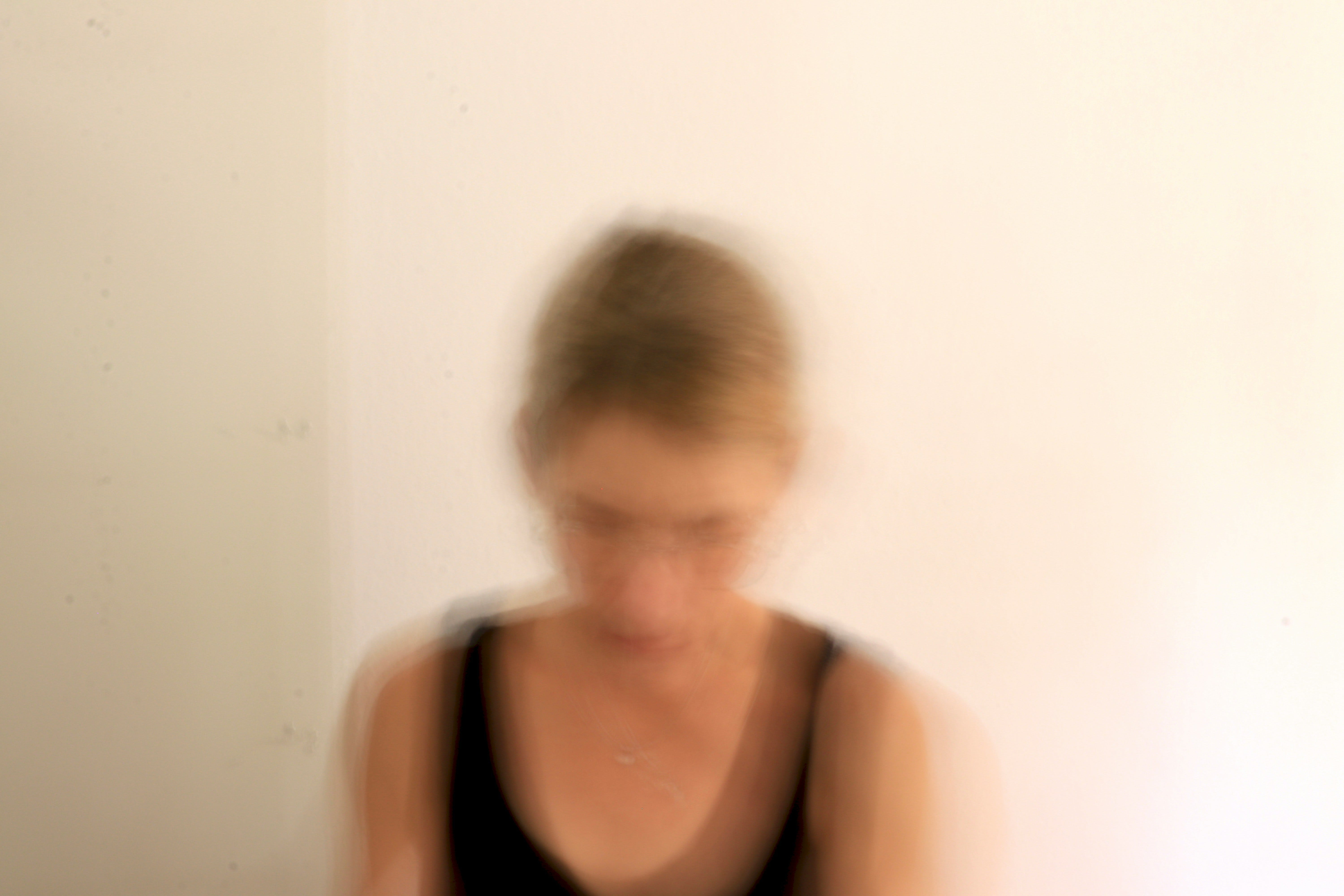
Worse than the floater, though, is the way I was suddenly having trouble focusing my eyes, especially on close things like a computer screen or a book. It’s particularly evident on Zoom calls (which I do multiple times a day), where I see every face doubled and can’t force my eyes to bring the two images together. It’s also a challenge when reading, but when I’m alone, it’s easier to keep one eye closed.
I tried to explain this repeatedly to the three eye doctors I had to see for follow-ups (optometrist, ophthalmologist, retinal specialist), but the response was largely a shrug and some version of “yeah, well... we expected there could be some long-term damage... get used to it”. Not once did any of them refer me to anyone who would help me figure out how to live with it.
I asked around a bit, thinking maybe I could find someone else who’d give me better answers, but mostly I got exhausted with how many times I had to try to explain it. Appointments usually require dilation, which means I can’t drive myself home, and I live in a rural area without access to adequate public transportation and hadn’t yet established much of a local support system, so the whole thing was just taking TOO MUCH effort, and I was feeling too depleted and discouraged to push for more.
Instead, I tried to accept it, make meaning of it, and rewrite it into a story in which I was a spiritually grounded person who wasn’t thrown by a seemingly minor vision loss. I thought often of my friend Randy, who taught me a lot about acceptance in the final year of his life, when ALS was taking away one bodily function after another.
Meanwhile, something else was happening that I thought was a separate issue. I noticed it first in grocery stores, and then I realized it was happening almost every time I was in public or driving my car. My brain would get completely overstimulated, to the point where I could feel it physically as intense pressure and buzzing in my head. I couldn’t focus, could barely concentrate enough to make simple decisions, and was almost useless in engaging in conversation. A trip to the grocery store usually needed to be followed up with a nap.
The sensation wasn’t entirely new, which is why I didn’t automatically connect it to the vision issue. I’ve always had an issue with overstimulation and was finally diagnosed with ADHD a few years ago. What was new, though, was the severity and regularity of it. What was once an occasional issue, especially when I’m tired or overwhelmed with decisions or social interactions, was now happening the moment I stepped into a busy environment or pulled my car onto the street.
After some research, I came to a couple of conclusions. For one thing, I suspected that my neurodivergence was likely AuDHD (autism + ADHD) rather than just ADHD. For another thing, I suspected that menopause had increased the severity of my symptoms.
I tried taking ADHD meds before going out in public, but it made no difference. After almost a year of asking for it, I finally convinced a doctor to prescribe hormone replacement therapy (HRT), but that also made no difference. Again, I was left with no answers and no idea which professional might help me navigate this new reality.
It’s largely in retrospect that I see just how much this was permeating my entire life. Even as I write this, I feel the grief of what changed and what was lost. I did my best to push through and live a “normal” life, even though my brain was constantly screaming at me, but I left the house less and less. It was just too hard to deal with the overwhelm, exhaustion and crash when I got home. The adventurous spirit that carried me around the world and landed me on this island felt like it was being forced to shrivel up and die.
Sadly, I became more reclusive. I hadn’t yet made many friends in my new home, and now it was even harder to make them. Arriving at most places with a buzzy brain and compromised nervous system made it nearly impossible to engage in small talk with strangers. More than once, I left social engagements in tears, feeling awkward and socially inept.
Having lived with undiagnosed neurodivergence for most of my life, I was used to masking, so that’s what I did – I masked. I hid what I was struggling with and tried to get by. Not being able to explain it to professionals made me doubt whether anyone else would understand, so I rarely tried. Mostly, I gaslit myself for being so affected by it.
Meanwhile, I was also struggling with the things that have always given my life purpose and joy. I kept trying, but it was harder to make things with my hands because of the lack of visual focus. Sadly, the thing that suffered most was my writing, not only because of the way the words swim on the screen in front of me but because I couldn’t make sense of my life in the way that I once could.
I’d started writing a book about the value and importance of becoming an elder and coming to terms with aging and death, but, despite repeated efforts to reignite my passion for it, I could find nothing in me worth writing about. I didn’t feel wise, I didn’t feel like I was handling life well, and I was disconnected from people, so there seemed little worth offering.
In despair over my lack of ability to do meaningful work on the page or on a Zoom screen, plus the ongoing financial challenges we’ve had with the Centre, I looked for alternate sources of income. But... I could barely function in public, and couldn’t stare at a screen for too long, so work options were severely limited and every attempt ended with me in even more despair.
Then, a few months ago, I was told by my landlord that I needed to move, and, with even less of my life feeling like it was under my control, I sank into a months-long depression. I got through the move, and I’m largely contented with my new place, but it’s been hard to reengage with what once brought me joy. Even my walks in the woods – the place my brain usually feels the quietest – sometimes feel overstimulating for my tired brain.
That leads me to last week. Emerging from the shadow of depression made me want to try a little harder to find answers for what I’ve been struggling with since October 2024. I’m not sure what it was about this particular rabbit hole, but FINALLY I typed the right combination of words into my computer and suddenly I had an answer that made all the pieces fall into place.
I discovered something called Binocular Vision Dysfunction, a condition that occurs when your eyes are slightly misaligned, forcing the brain to constantly strain to merge the images into one clear picture. The list of symptoms is endless, and it explained not only the double vision when I was looking at things close-up, but the cognitive strain when I was trying to navigate a world with too many things for my eyes and brain to bring into focus. Going down multiple Reddit rabbit holes, I found something called Supermarket Syndrome that helped me feel a little less crazy for the way my brain was constantly glitching in public spaces.
After self-diagnosing, I was able to find a specialist (in a surprisingly short period of time) who validated my struggle by telling me that I actually have a fairly severe misalignment (which was either caused by or exacerbated by the retinal detachment and resulting surgeries), and my eyes do different things with near-vision and far-vision (and are constantly trying to adjust, depending where I look).
Suddenly it all makes sense. All this time, my brain has been struggling to put the world in order when it’s been getting conflicting information from eyes that not only function differently from each other, but function differently depending on what I’m focusing on. Remarkably, the specialist showed me with a couple of tests how much my brain is actually working overtime to compensate by choosing which information to prioritize and which to ignore. (Some symbols become invisible to me when I look with two eyes even though they’re clearly there when I look with only my good eye.)
My poor, tired little brain! Suddenly I have a lot more compassion for the way it’s been working so hard to function in a world that doesn’t make sense. No wonder it’s been so exhausted!
In the immediate aftermath of the diagnosis, I was flooded with grief over it all, but not long after that, relief moved in. Now, at least, I have an explanation. Now, at least, I can stop beating myself up over how much of a struggle this has been. Now, at least, I can build better adaptations into my life and can set expectations and boundaries at a more realistic and compassionate level.
I am waiting to receive the two sets of glasses that will hopefully help my eyes and brain work better together, so I don’t yet know how successful they’ll be. Time will tell, but at least now I have language for this, and I know how to better integrate this disability into my life without feeling like I’ve gone crazy. Finding compassion for my overworked brain and setting boundaries that limit the overwhelm will be easier now that I know what’s going on. (There’s also visual therapy that I can try, but my budget is already stretched too far, so that’s not currently an option. At some point, you might also see me wearing an eye patch so that I’m only looking at the world with one eye.)
What I want to leave you with, dear reader, is this... If you’re struggling with an invisible disability that you don’t know how to talk about or get professionals to take seriously, I hope that this post will encourage you to offer yourself the compassion and care I wasn’t always very good at offering myself. And if you know someone in your life who might need to read this, please share it with them.
We are all fumbling through life, trying to do the best we can with the cards we’ve been dealt. May we remember to treat ourselves with tenderness when we struggle.
If this post (or any of my writing) is meaningful to you, please consider becoming a paid subscriber on Substack, or click on “buy me a coffee” to make a one-time contribution to my work. Your support means a lot!!
Reminders:
I’ll be teaching several in-person workshops in Europe in the Fall. Check out my schedule.
Join us for the next module of Become a Grounded Guide, on Understanding People.
Consider joining us in the Fall for the next offering of our signature program, How to Hold Space - Foundation Program.
Comments
Nothing yet. Say the first thing.
Sign in to join the conversation.