
It is Leo season, the season ruled by the Sun, the great luminary, and the skies themselves are saturated with Leo.
At the August 12 total solar eclipse, the Sun and Moon met in Leo while Mercury and Jupiter were also moving through the sign, concentrating extraordinary emphasis around the solar archetype: identity, creativity, vitality, courage, visibility, and the force of the individual self.
Leo speaks the language of light. It is the desire to shine, to create, to love with the whole heart, and to recognize that there is something singular we have been entrusted to bring into this world. Yet at the very moment the sky becomes so intensely solar, the Sun disappears. Astronomically, the Moon passes between Earth and the Sun.
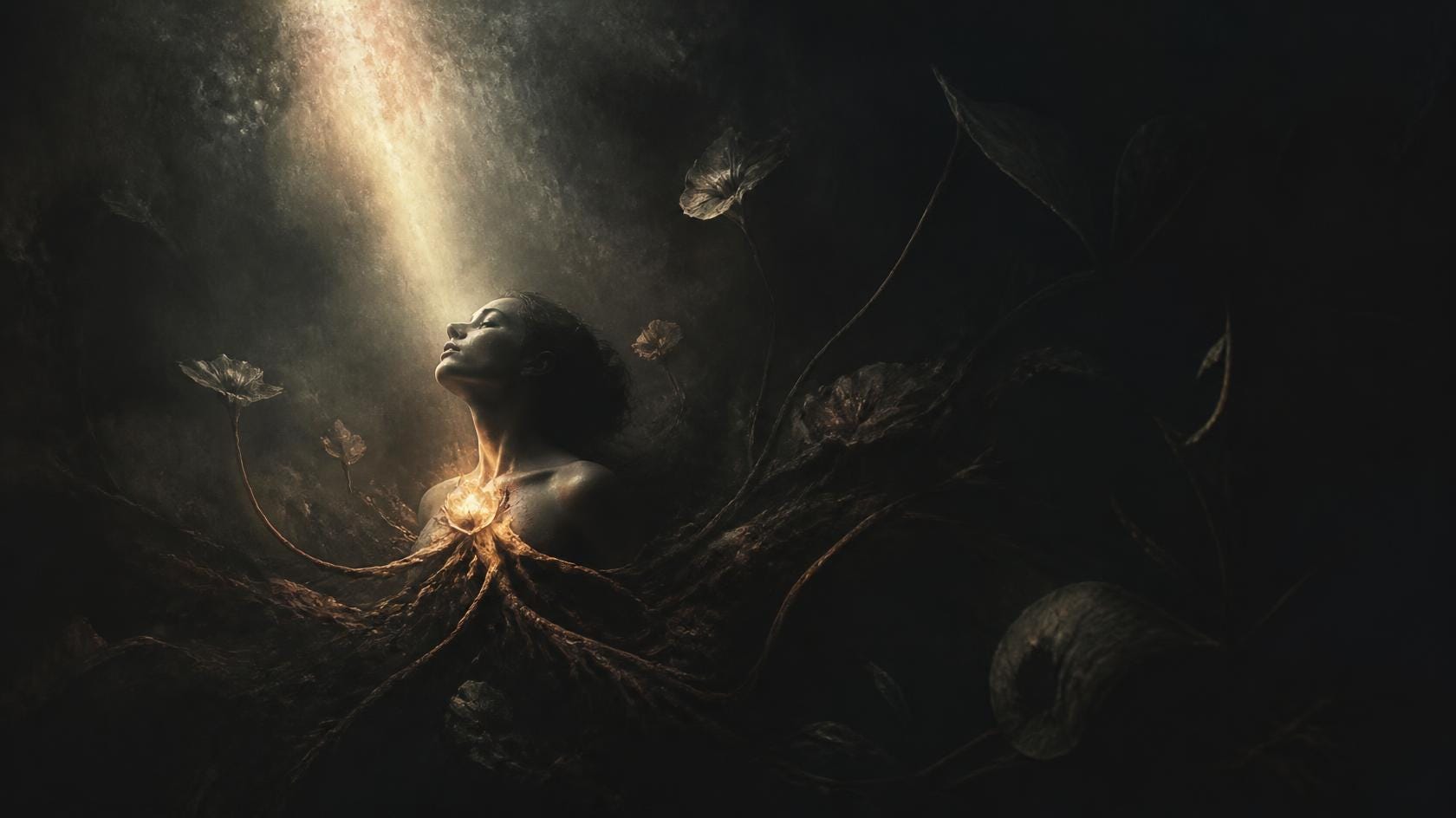
Symbolically, this is the great paradox of the eclipse: at the height of Leo, we are brought into darkness. The sign that most wants to see itself illuminated is asked, for a moment, to live without its light.
A total solar eclipse is visually simple and almost unnerving. The brilliant Sun becomes a black circle, a dark vacuum in the sky surrounded by a burning corona, and for a few minutes the familiar order of the world is suspended. Day becomes dark and what was visible can no longer be seen.
An eclipse is very much felt inwardly in our sense of self, our creative fire, our confidence, our regenerative energy, or the parts of life through which we usually experience vitality.
A relationship can disappear, a plan can collapse, an identity we built can stop holding us, or the feeling of being carried by G-d can suddenly become inaccessible. We may know intellectually that G-d has not gone anywhere, just as we know that the Sun has not ceased to exist during an eclipse, but knowledge and experience are different things. The pain comes when we are left standing in the dark without access to the light we once depended upon. There are moments when G-d seems to turn off the light and leave us alone with ourselves.
This is especially powerful in Leo because Leo carries one of the strongest expressions of ego in the zodiac, and for good reason. A person needs an ego; we need a coherent self in order to act, choose, create, protect, lead, and contribute.
Leo’s healthy fire says: I am here, my life matters, and I have something to give. Its shadow begins when we forget that we carry the light and begin to believe that we are its source. The shadows of Leo are very strong as well, they are seen when creativity becomes a need for applause, leadership becomes control, uniqueness becomes superiority, and the natural desire to be seen becomes an endless hunger for recognition.
Fire has always contained these two possibilities. Uncontained, it destroys; contained and directed, it warms a home, cooks food, gives life, and builds. The spiritual work of Leo is therefore not to extinguish the fire but to humble it until the same force that once demanded attention becomes capable of construction.
This is where darkness becomes sacred. Jewish thought has a language for the experience of Divine concealment: hester panim, the hiding of the face. There are times when the presence of G-d feels obvious and times when it becomes obscured, yet concealment is not the same as absence. Psalm 139 expresses this beautifully: “Even darkness is not dark to You; the night shines like the day; darkness and light are alike to You.” The verse does not tell us that darkness feels like light. It tells us that from the Divine perspective, what we experience as darkness is not outside of G-d. The eclipse gives us a physical image of that mystery: the Sun appears to have vanished, yet it continues to shine with its full force. What has changed is our position in relation to it. The darkness exists because our line of sight has changed.
And exactly here we enter Elul, the month that begins the great spiritual movement toward Rosh Hashanah and Yom Kippur. Its central practice is teshuvah, a word usually translated as repentance but whose literal meaning is return. Teshuvah is therefore larger than guilt over what we have done wrong; it is the return to the original direction of the soul. Virgo, the sign associated with this season, carries the image of the virgin, the betulah: whole, untouched at the center, still possessing an original integrity beneath everything that has accumulated around her. The spiritual drama of Elul rests on this possibility; that beneath what we have feared, confused, or distorted, there remains a self that has never entirely forgotten where home is.
This is also where the idea of sin becomes deep.
The concept of Return brings us back further into ourselves that we would have been able to access otherwise.
Return can become so profound that even the distance traveled is gathered back into the journey toward G-d.
The mistake becomes part of the wisdom, the fall creates a depth of longing, and the person who has wandered can come to know the road home with an intimacy that belongs specifically to someone who once lost it.
This may be part of the meaning behind the teaching that the place reached by the ba’al teshuvah, the one who returns, is a place even the completely righteous cannot occupy in the same way.
Sometimes we find our original direction precisely because we have experienced what it means to move away from it. We discover our values because we violated them, our boundaries because we abandoned them, the nature of love because we mistook something else for love, or the truth of our own soul because we spent years inhabiting identities that could never fully hold us.
The wrong road does not become the right road, but through teshuvah it can become the road that taught us how deeply we wanted to come home. Failure is therefore not merely something teshuvah erases. Teshuvah can redeem the descent itself, taking what once separated us from G-d and transforming it into the longing that draws us closer.
We return not despite having wandered, but with a depth that could only have been born from knowing what it feels like to be lost.
A soul, like a seed, does some of its most important work in darkness. Long before the first green shoot appears above the soil, the shell has cracked underground, roots have begun reaching into unseen places, and an entirely new structure is forming without witnesses. We tend to call a period successful once we can see what it produced, yet the invisible stage may have contained the deepest transformation. Pain can work this way as well. There are seasons when the personality believes it is losing everything while the soul is quietly growing roots.
An eclipse represents this threshold: the old light cannot guide us in the old way, and something deeper must learn how to see. Elul does not ask us to emerge from darkness shinier, louder, or more impressive. It asks us to emerge truer, with less attachment to proving who we are and greater willingness to use what we have been given.
The great invitation of this Leo eclipse is therefore not to shrink the self but to return the self to its Source.
Leo says that there is light inside us; Elul asks what that light is for.
The ego says, “My light proves that I matter.” The soul says, “My light was entrusted to me because I have something to do with it.”
This is the movement from the fire of destruction to the fire of construction. The same passion remains, the same creativity remains, the same vitality remains, but it is no longer consumed by the need to prove its own existence. It becomes service. It becomes devotion. It becomes something that warms rather than burns. When the external light disappears, even briefly, we encounter what remains underneath recognition, certainty, control, and identity: the soul itself, its longing for G-d, and the quiet memory of who we were before we wandered so far from ourselves. That is teshuvah.
This is why Psalm 27, recited throughout the season of Elul, ends where it does. After moving through fear, abandonment, concealment, longing, and the desire to behold the goodness of G-d, David closes with: קַוֵּה אֶל־ה׳ חֲזַק וְיַאֲמֵץ לִבֶּךָ וְקַוֵּה אֶל־ה׳ — “Hope in Hashem; be strong and let your heart take courage; hope in Hashem.” Kaveh means to hope, to wait, to remain oriented toward what has not yet revealed itself.
Faith is easy when the Sun is shining;
Elul teaches the soul how to remain turned toward the Light when it cannot see it. The eclipse passes and the Sun returns, but we are not meant to return exactly as we were.
We return humbler, clearer, stronger, carrying the same Leo fire with a deeper understanding of what it is for. קַוֵּה אֶל־ה׳. Trust the Light you cannot yet see. A soul does not only survive the darkness; sometimes, it is there that it finally remembers the way home.
Trust the Light you cannot yet see.
A soul does not only survive the darkness;
sometimes, it is there that it finally remembers the way home.
Comments
Nothing yet. Say the first thing.
Sign in to join the conversation.