
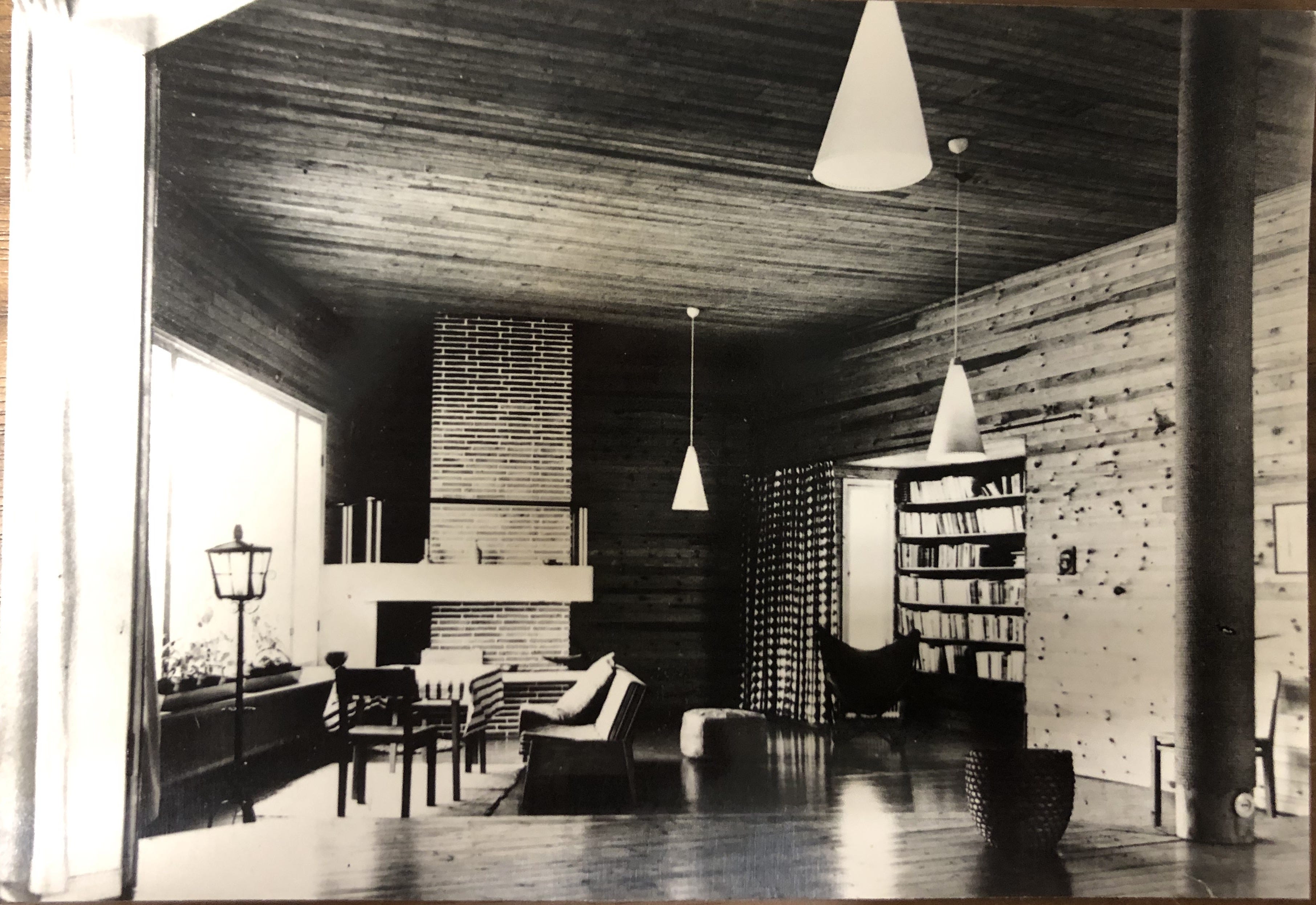
It has taken me years to get to the point where I dared to visit a place you and Kerttu called your home. Last fall I visited your winter residence in Raisio. For a long time I didn’t know it existed. Then I found pictures of Kolmio in the Kerttu Wanne archive at Sibelius Museum, but imagined it might have been bulldozed a long ago. Slowly, my yearning to find out what happened to the building grew but nothing concrete happened. There was something hollow about chasing addresses and places where you’d been. Was I haunted or was I doing the haunting?
Your winter home in the country went by the name Kolmio (triangle). According to newspaper articles from the 1950s the locals had dubbed the building “the temple of art” (Taiteen temppeli) even before it was ready because of its inhabitants. A mixture of irony and admiration reserved for strange artistic people who decide to stake a claim in this periphery.
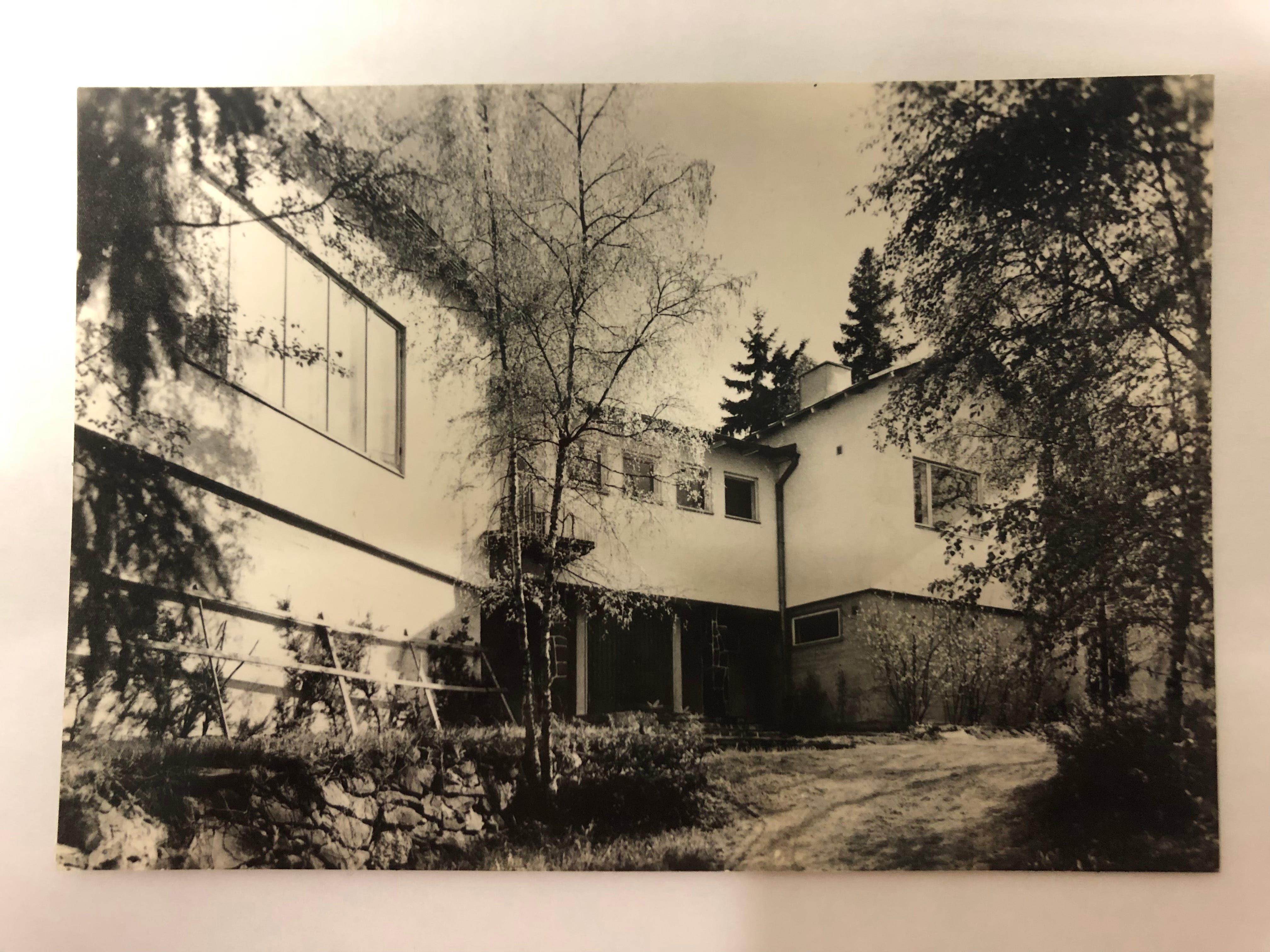
Kerttu and you built Kolmio in the first years of the 1950s. Architect Arno Ehojoki designed the house according to your needs. You wanted a building for two distinct purposes: a home for two and concert hall with the capability of hosting around 200 guests. The clean lines, exposed wood of the hall and the nautical robe decorating a pole in the middle of the room remind me of Scandinavian modernism, of Aalto minimalism and your love of the Turku archipelago – your summer island and sailing. The outside of the building is covered with white rendering and the front steps with charcoal grey slates. These outside features are familiar to me from my grandparents’ house in Pieksämäki. They seem distinctly 1950s and romantic in a way that the inside of Kolmio is not.
The estate was a large triangle shaped piece of land — a thicket of fir trees and granite cliffs with almost no neighbors nearby. Although Raisio is very close to Turku, where you also have a downtown apartment, in the middle of the 20th Century your new location was defined by its remoteness. Having read that you used to drive a car between Naantali and Turku (another newspaper article) and knowing that you built a summer cottage on an island near Rymättylä in the 1930s, I imagine that this site was familiar to you as a woodsy bit you passed by often enough. It is possible that one kind of large triangle was formed by purchising this land and therefore having your three places: Turku, Kolmio and the summer island.
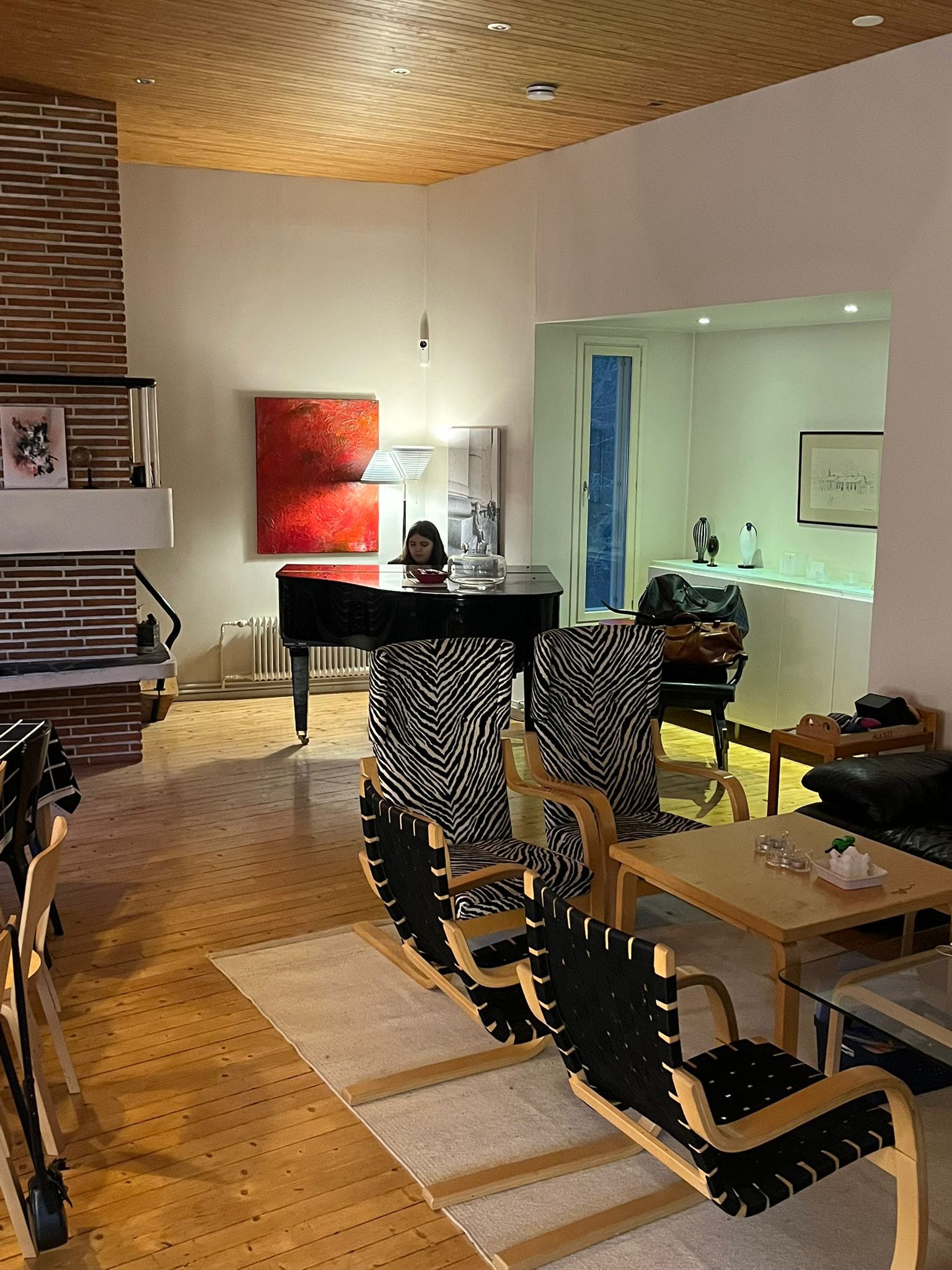
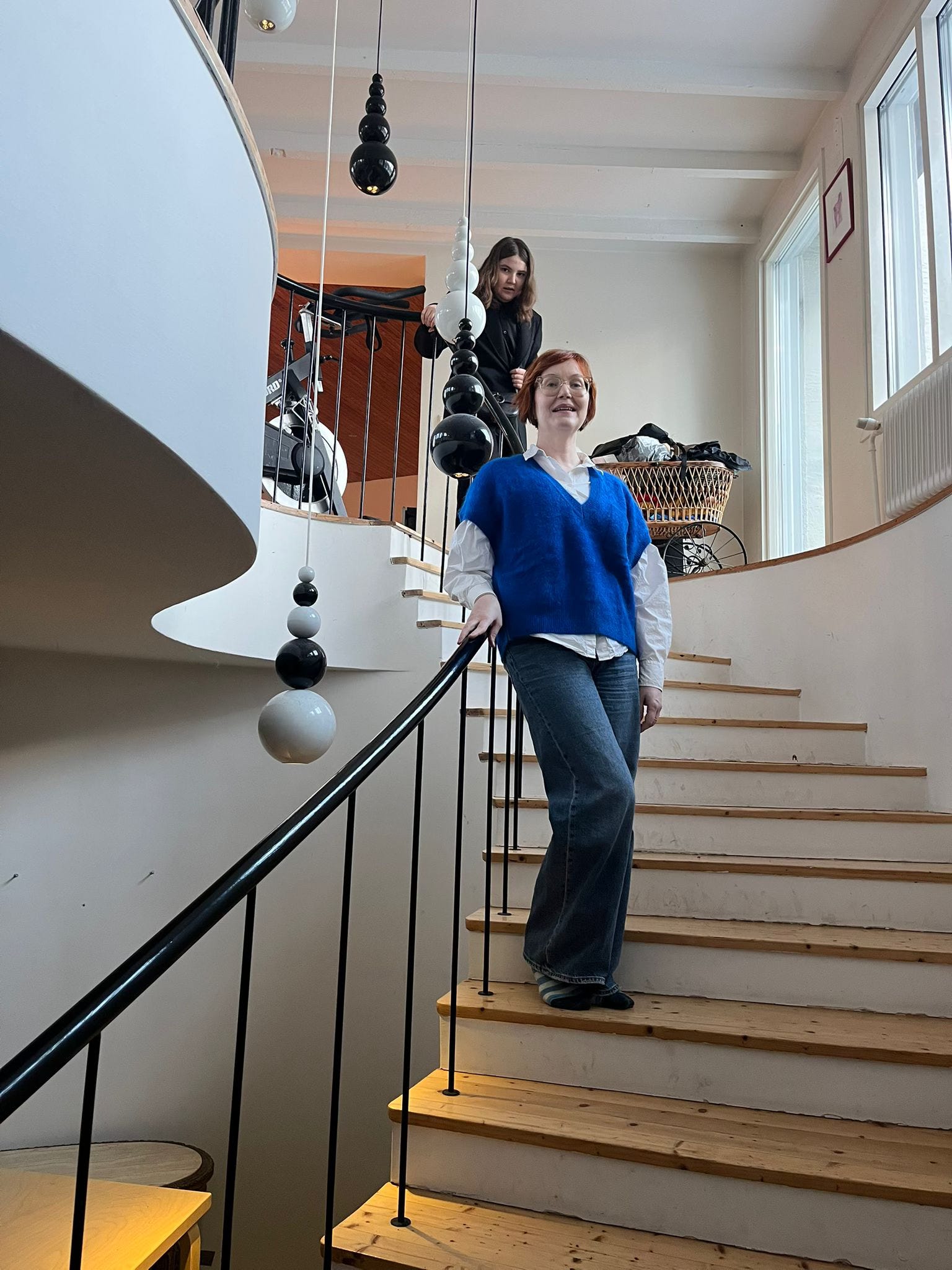
Additionally, triangular shapes appear in the design of the house itself where inspiration was taken from the forms of the violin and the grand piano: there is a staircase shaped like the f-hole of a violin and a raised stage as part of the living room shaped perfectly for the grand piano. Everyone seems to have their own opinions about which parts of the building are reflections of what instrument.
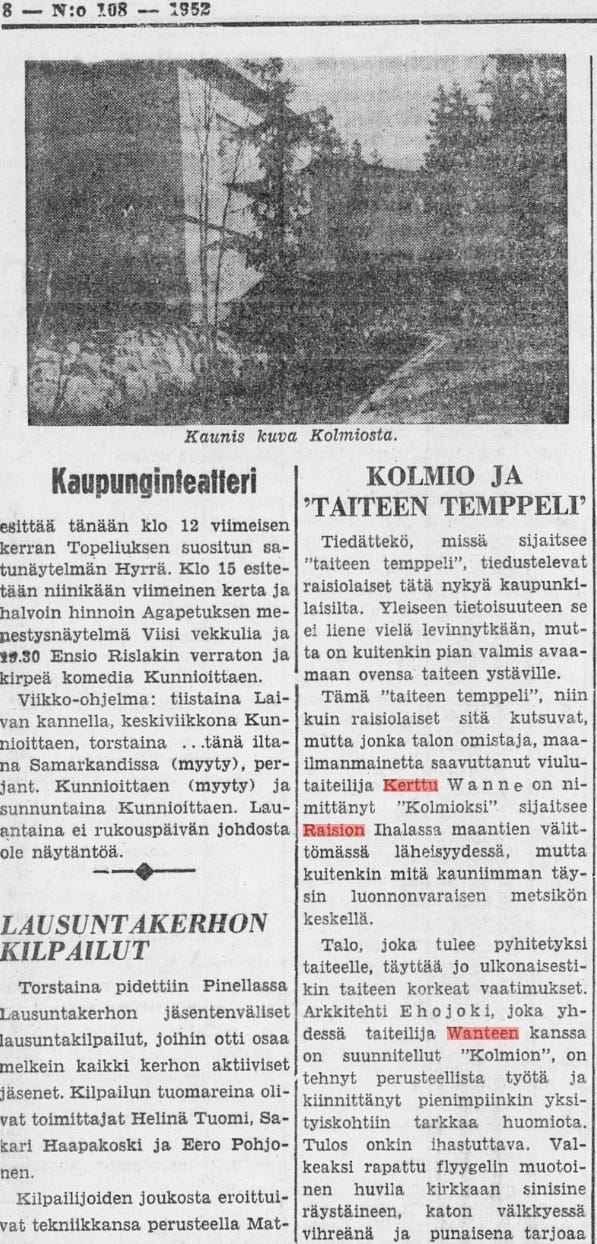
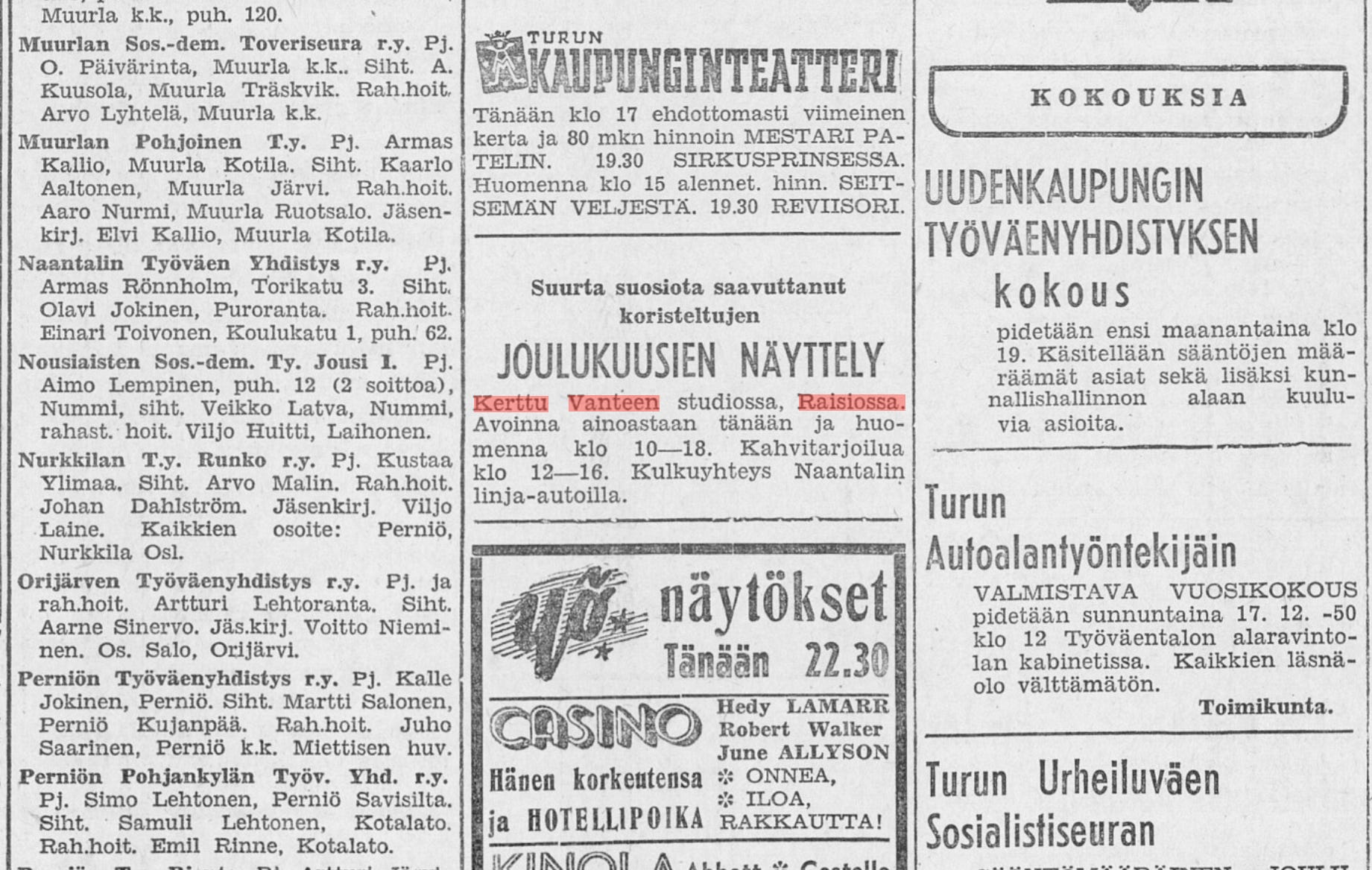
In late 2024 a woman messaged me on a social media platform about your home. She had been its owner and had sheparded a large renovation, which aimed at bringing back some of the features of the original architectural plan. This renovation saved the house from likely demolishing in 2011 and turned it into a family home. The woman moved in with her husband who had lived in the house as a child in the 1970s and could remember its atmosphere almost from the times of its first owners. Over the decades, the house had experienced some perilous times, which included a 1980s attachment being built and at some point becoming divided into three separate apartments.
In November 2025 I visited Kolmio, the private home. I went together with my piano-playing teenager, who is becoming more aware of her musical great aunts. It was a gathering of women who had lived and cared for the home over various decades from the 1970s onward and those who lived there now. And then there was us, the Joutseno family members who undenianly belonged to this story, yet were utterly dismembered from the narrative of the house.
I nursed a hesitancy regarding places and what they mean in time. I was afraid of discovering that places do not tell anything of times past and do not carry traces of the inhabitants former lives. At the same time, I feared being subsumed by who had lived there and how life had been, what had happened and who had died. As if by entering the house I could risk offending you Astrid or Kerttu. I was afraid of materially experiencing the distance between us which is so familiar. Or facing its dissolution, the messiness of our connection.
To prepare, I asked for advice in a wonderful group of biographers and life-writers about how to enter the house, as if needing armor or some magical cape for invisibility. I was given expert advice on the intricacies of layeredness. How to listen and make space for what transpires when the people present share what they want to tell about the place and its history; how to watch for the signs of the past and what is carried from there to now.
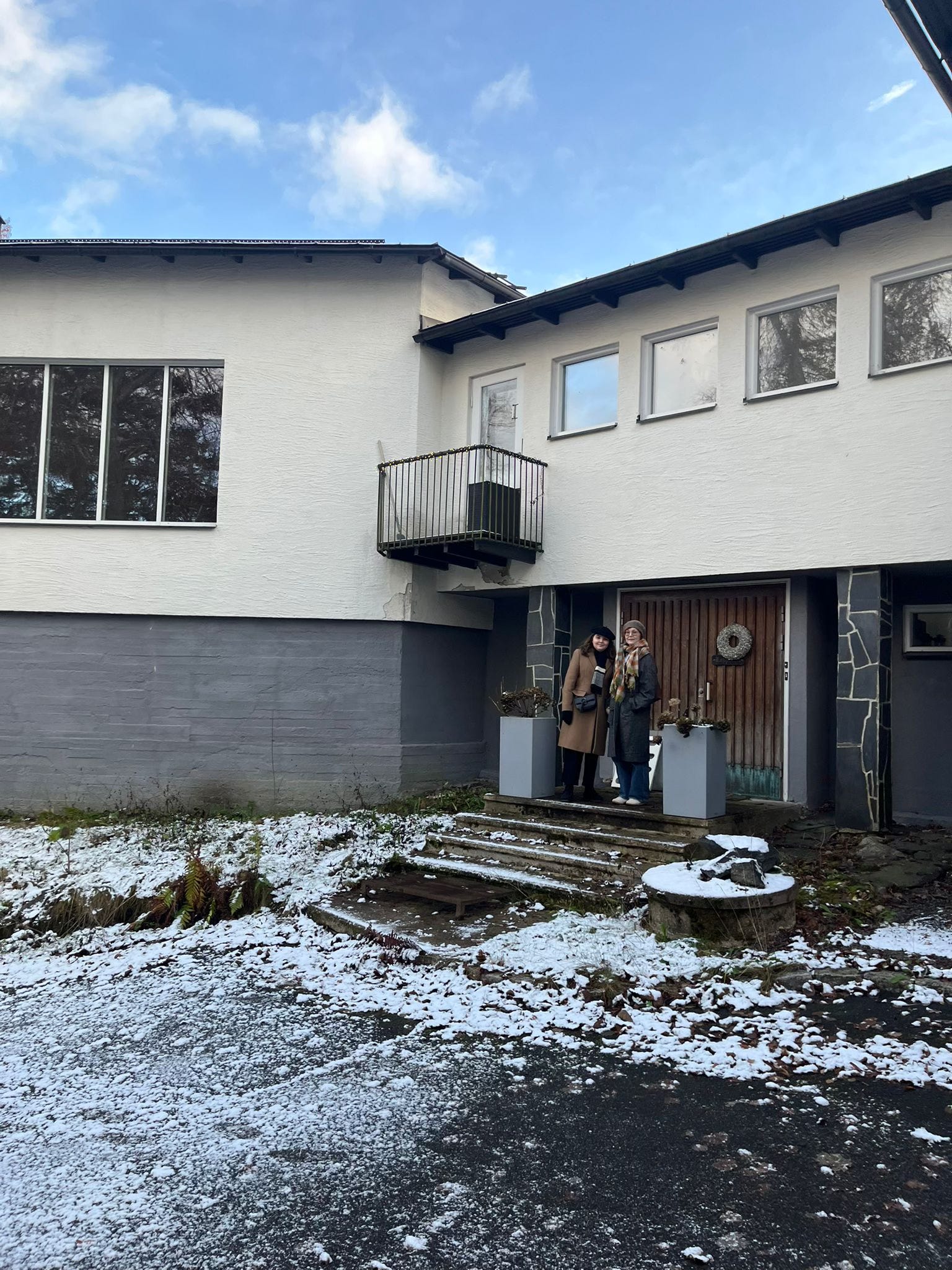
We stayed at the house for about three hours, inspecting its every corner and sitting down for coffee in your living room. A table was set where it is in the picture taken from the newly finished house (first image in this post). The perfect spot. As we talked sitting down, I could admire the view out the large windows and see what you saw: the swaying tops of fir trees, the vast darkening sky. There was a grand piano, which seemed almost necessary. It wasn’t on the so-called “stage” part of the hall but in what used to be the reading nook. My teenager performed a couple of songs. Your great niece sitting there playing the piano seemed self-evident, the only right thing to happen. For a moment the world appeared neatly ordered, us in a chain of pearls, realizing our connection, our unquestionable belonging. If it was possible for you Astrid, to be there, to see this, I am certain you were pleased. The years themselves (which so often appear a harsh divider) condensed into a single space where we were your returning guests, the inheritors of whatever it means to play the piano.
Kolmio was built for two women who slept in a single room and brewed their morning coffee in a small kitchen opposite their bedroom. They stored their preserves and vegetables in an earth cellar (maakellari) attached to the end of the house and prepared for the end of the world by having a bunker below. The neighbors gossiped that the bunker was going to be used for recording sounds. Apparently Kerttu had boasted about the great echo down there. I stared down into the square hole in the ground and the ladder that was the only way to enter and exit the ‘cave room’. It was maybe good for dangling a mic down there but that’s about it. Only claustrophobia and fear down under, yet above this spot the current owners of the house kept a framed photograph of Kerttu. Here she is not forgotten.
Eight months after you died in 1962 Astrid, Kerttu ended her life here. Kolmio ended up with the Finnish Cultural Foundation (this was Kerttu’s will). The foundation immediately sold the house and so started its afterlife. In what transpired you two never disappeared from the memory of the building or the neighbors. They multiplied little by little, as people bought the forest behind your house and built their homes, none of which looked like yours. According to the women showing us around, whenever a new owner took over Kolmio, an old neighbor greeted them with stories about Kerttu and Astrid. They especially liked to mention that Kerttu died here – a discussion I wasn’t going to have as a guest at Kolmio, but which was had by my hosts. Fingers most often pointed to the sauna (also designed by Ehojoki) which still stands. It was a separate building detached from the house, thus protecting the main building from the tarnish that a suicide appears to bring.
The sauna had been beautiful and loved. It is an ocean grey little mökki on the edge of Kerttu’s and your forest plot. Now succumbing to irreparable damage, in the not so distant past it still operated the original wood-burning kiuas with a fully paneled nut tree shaded interior, a separate washing room and a small dressing room (all of these paneled wall to ceiling). The entrance of the sauna is from a front porch where I can imagine you and Kerttu sitting wrapped in soft linen bathrobes after a long sauna. Drinking a cool glass of self-made apple juice or a beer, cheeks flushed, content in your immediate surroundings and life, exactly where you want to be.
The sauna appears an old place still displaying the love and care with which it was built and used — the possible scene of your love’s suicide. When the door is opened, a stifling smell of the dankest mold greets me and I know I should not go in, yet I do. Without hesitation I circle round from sauna to washroom to dressing room and out. I take two pictures. The lights still work. I feel closest to you than ever before and I have to get out. I feel I have to rush out. The smell of mold is a warning. Something is impossible to carry. Something ends here.
Saunas have been the places where women give birth, where children enter this world. They have also been the places where the dead are washed. Have I found the last scene of your story, the end scene from where I have to look back? Everything she lost she held in this sauna. Kerttu remembered it all here. And here she grieved with the acute sense that she would not go on. Not without you Astrid. What else? What were the things she could not have without you? It’s a question I will pursue. Now that I have seen Kolmio — I have stood inside the material realization of some of your audacious dreaming. I know I have to see more.
No posts
Comments
Nothing yet. Say the first thing.
Sign in to join the conversation.