
This is Clara Malley and Eli Williams of Side Projects. This is our last special edition report from Cannes Lions, and if that isn’t special enough, today I (Clara) learned in a very gruesome way that seagulls sometimes eat pigeons. We’re also still thinking about Max Tani’s spine-tingling rendition of Santana and Rob Thomas’ hit track “Smooth” at karaoke on Wednesday. Read on for some much more relevant learnings.
For our second Cannes special, we spoke with Mark Stenberg, Senior Media Reporter at AdWeek, to compare notes on what people are talking about this year: AI FOBO, the proliferation of creators, and the increasingly blurry purpose of the festival itself. We get into why Cannes may be less about new ideas than consensus building, why public panels feel more PR-approved than ever, and data dissonance in the basement of the Palais. Tune in here.
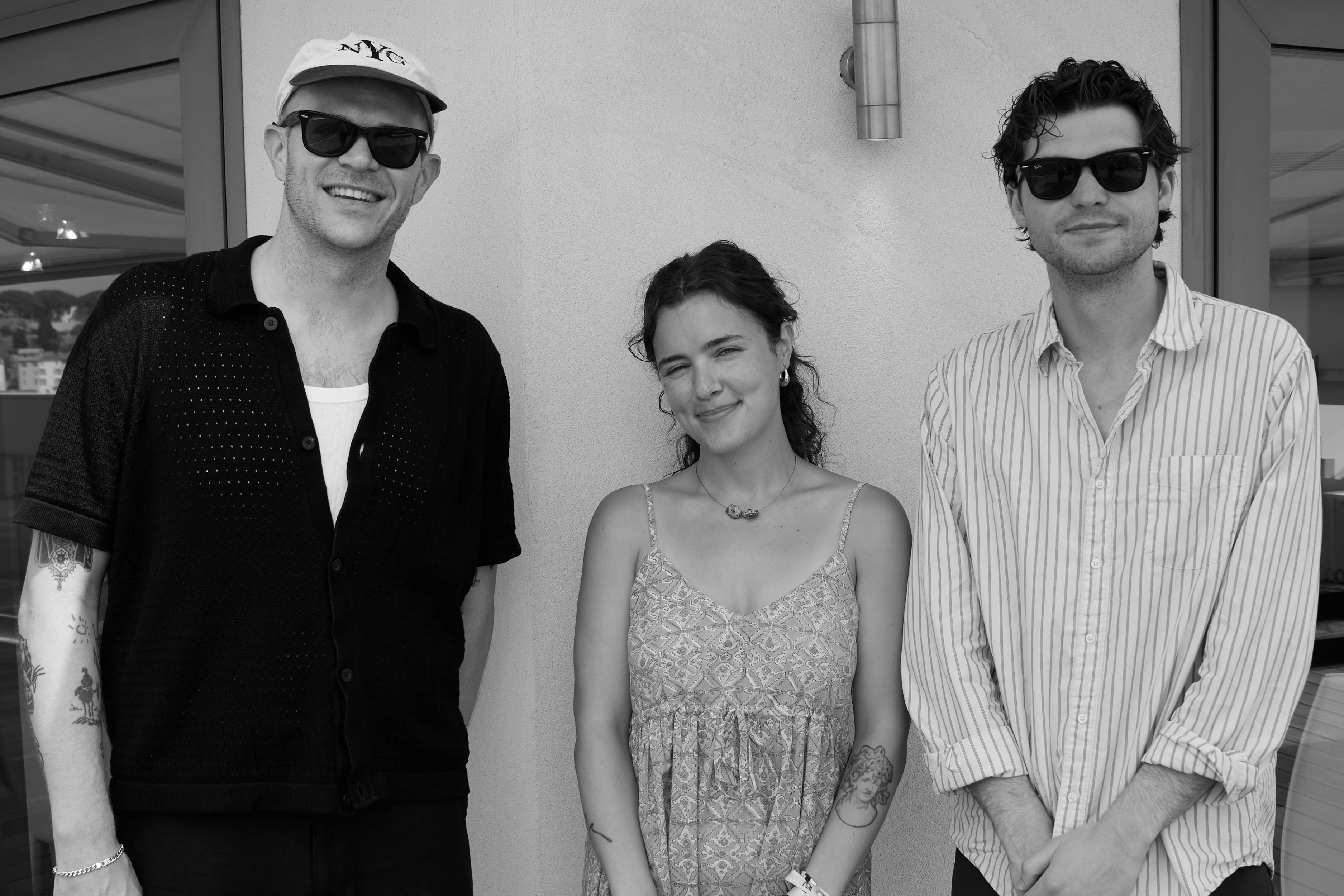
After talking at length on the podcast about how we expected to see a more visible AI footprint, I spent the rest of the day hearing about the many things OpenAI is doing here lol. Forgive us! Just goes to show how much even at events like this we all exist in our own bubbles. I was also re-gifted this bag charm, which I tested out on my bag, which like me is hanging by a thread.
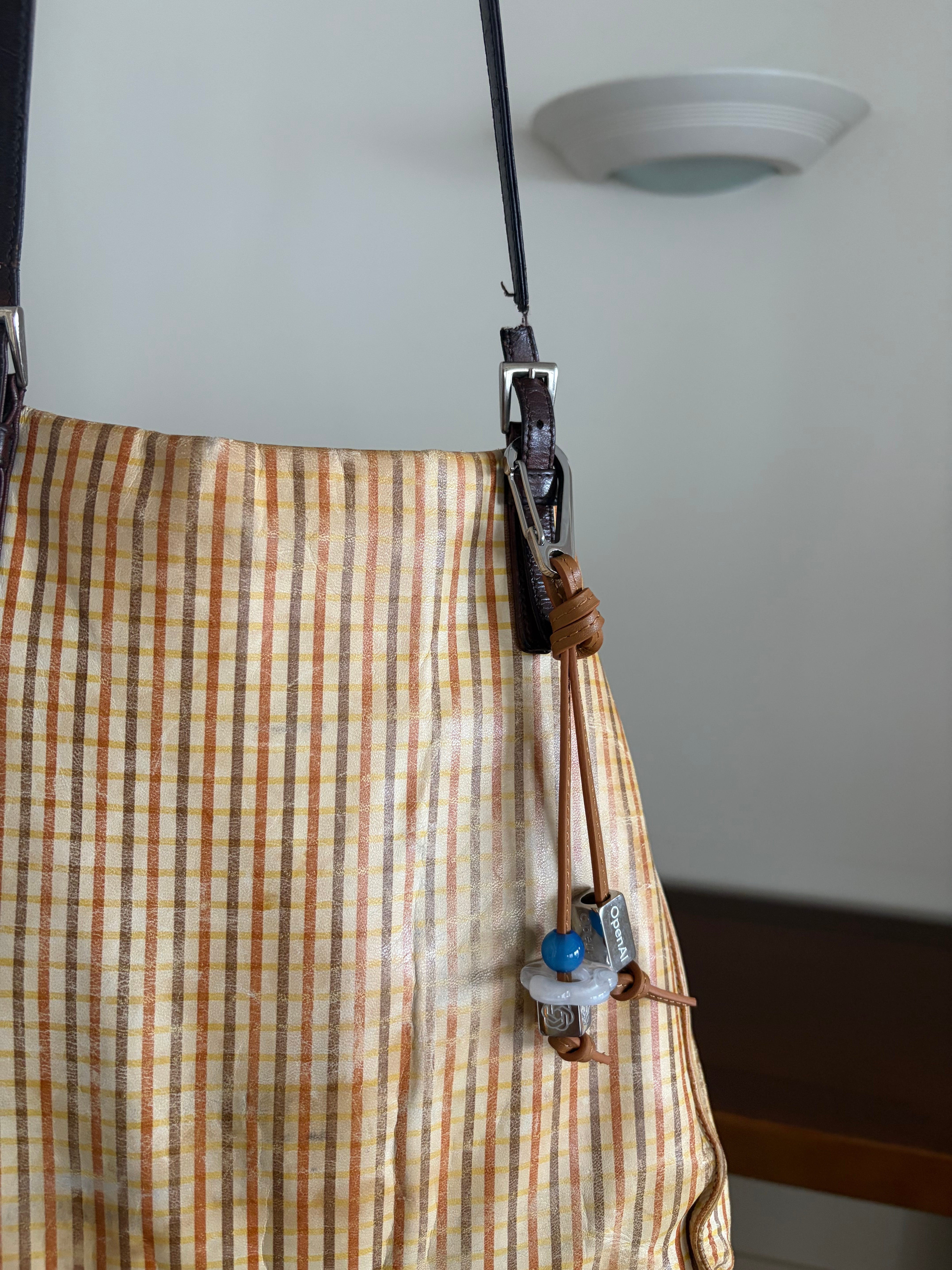
Something that strikes me every year is there isn’t really an “it” merch item: the Parade scarf of Cannes Lions, if anyone remembers that reference. You’d think some company here would invest in gifting something more exclusive and eye catching to scream “I went to the UTA party” (for example) to the rest of us plebs on the Croisette. Free idea! — Clara
I trekked down to Pinterest’s “Manifestival,” a Candy Land-looking buildout “where attendees can interact with the trends, aesthetics and ideas shaping culture, putting phones aside, taking a cue from Gen Z and getting creative through IRL experiences designed to spark discovery and turn inspiration into something tangible and real.” There’s a tattoo parlor, a hair dye station, screen printing table, and ample mirrors with Hallmark card-type affirmations, primed for selfies. I couldn’t help rubbernecking as I watched this guy flex his bicep in the mirror, unveiling some fresh ink.
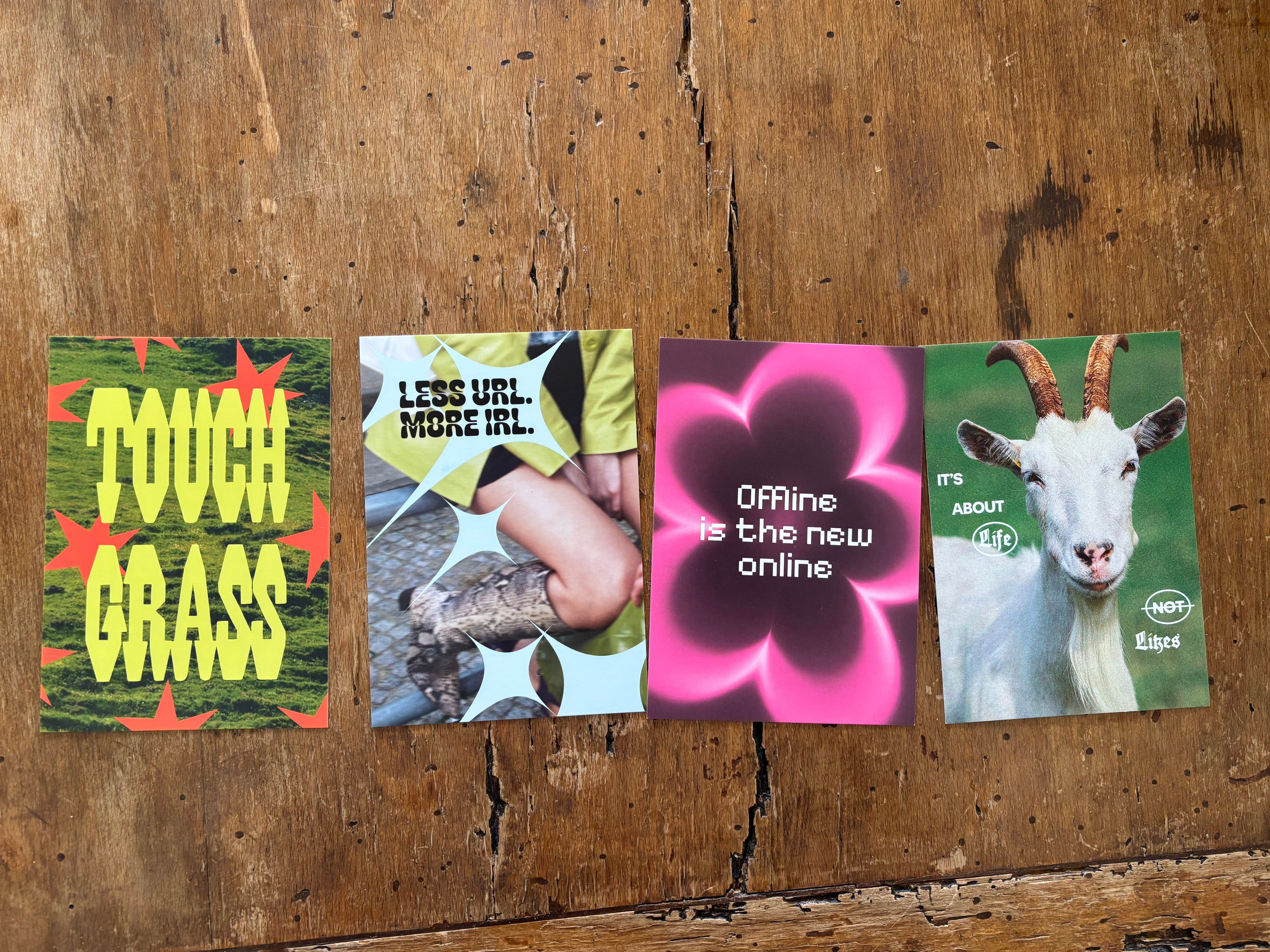
I stumbled into the “Offline Social Club,” a section dedicated to “analog experiences,” and slalomed through signs compelling visitors to “act on the insight,” like how “81% of Gen Z adults wish they could disconnect more easily.” I’m generally in the “phones are bad for us” camp, and recognize that there’s a real and concerted pushback against how tech is slowly turning our brains into tiramisu. But as I looked up at people clamoring to take photos next to a giant sign that read “the best thing you can find online is a reason to go offline,” or wait in queues to design their “analog bag” I couldn’t really help but think that when most people (and especially brands) are pushing “analog,” they’re doing so from the standpoint of it being being a social trend and aesthetic, rather than something real, self-sustaining and more importantly, incognito. — Eli
There are a lot of student groups at Cannes Lions, and a few days ago I overheard one of the girls say to her friend, “it would be so amazing to come back here one day as a creator.” I’m sure there are some kids who leave Cannes with the dream of being a CMO or investor one day, but I would venture that it’s a lot fewer than even two years ago. At this point we’ve all heard some version of the stat that a substantial portion of young people aspire to become creators. But it was interesting to hear the fact brought to life in such a literal way.
If you’ve read or heard anything else about the festival this year—say, from Scott Galloway— it’s that creators are the clear darlings: the people everyone wants to see at parties, stop and ask for a photo with, even get career advice from. That was true last year too, but this year the attention felt a bit more existential. Students want to be creators, brands want to work with creators, but what do creators themselves want?
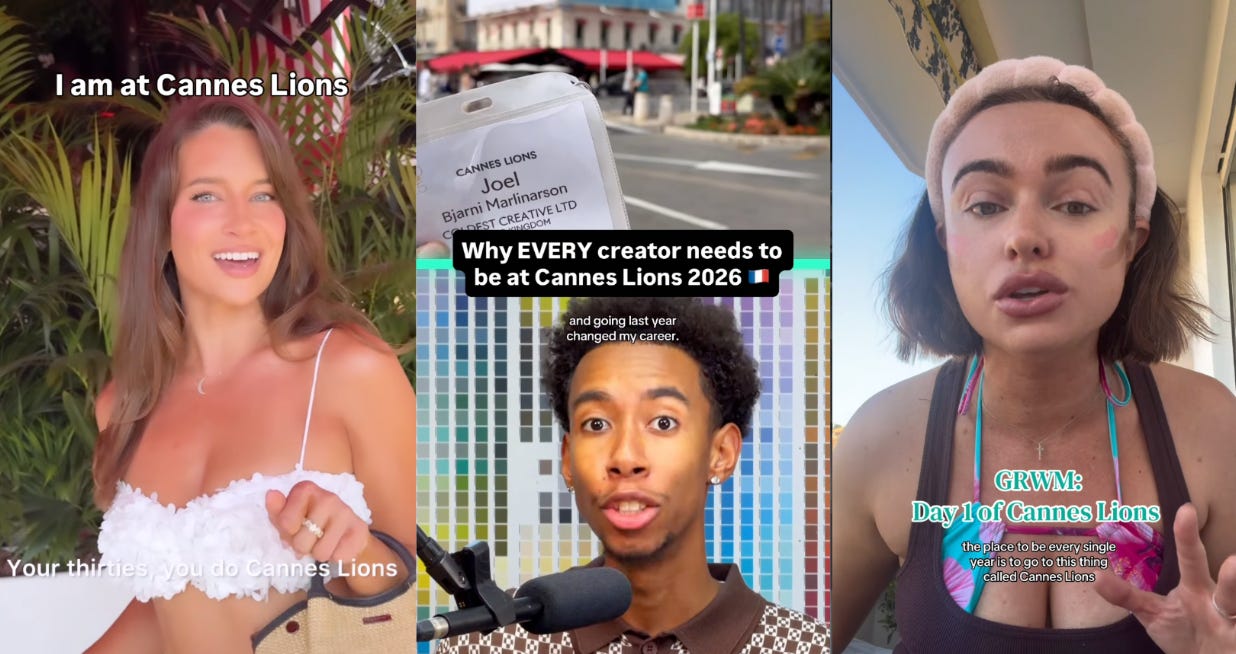
The vibe around here is that a lot of them want to move away from or supplement the platforms that built them through building their own media companies, creating CPG brands, etc. Eli and I attended a live recording of Semafor’s Mixed Signals yesterday, where (friend of the show) Max Tani and Ben Smith hosted Alex Cooper, who is in many ways the case study for that pivot (even if a bit embattled currently). Ben said something to the effect of being a creator is cool and being an executive is a step down. Perhaps that’s true now, but as “first gen” creators start to outgrow making content full time, is there any other recourse? Are the creators of today the CMOs of tomorrow? Is that the career pipeline now? I think so probably. — Clara
“Cannes has lost the creative plot,” The Rebooting’s Brian Morrisey wrote this week. The festival is ostensibly about celebrating best-in-class creative and advertising, but I think there are simply too many Lululemon flex pants and adtech yachts for that to be the case. A Mumford & Sons DJ set and free reversible tote bag at the Canva Cabana is more of a draw than the awards shows, panel discussions or work shown at the Palais.
This is somewhat understandable. The lanyards are widely seen as gauche, the tickets are expensive, and the talks are largely PR exercises. To that end, I’ve started to think about the Palais, the main creative hub of the festival, as something of a “white elephant:” expensive and underutilized relative to its cost. Think: new World Cup/Olympic stadiums or Chinese infrastructure projects. That’s sad. If the best in the business are here, shouldn’t this also be a place where new, unconventional, and inspiring ideas are shared first? — Eli
Comments
Nothing yet. Say the first thing.
Sign in to join the conversation.