
Hello, and welcome back to as seen on!
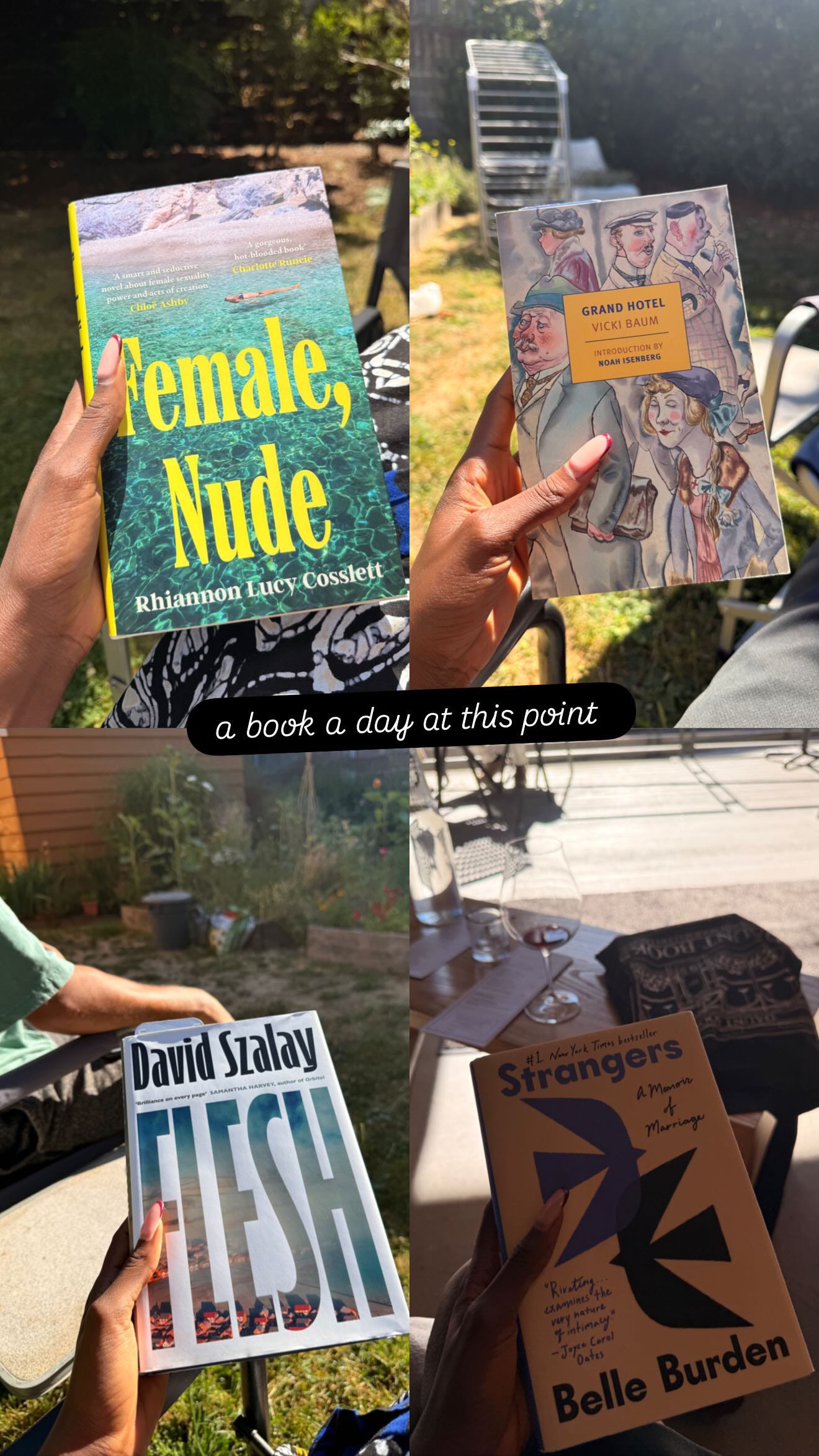
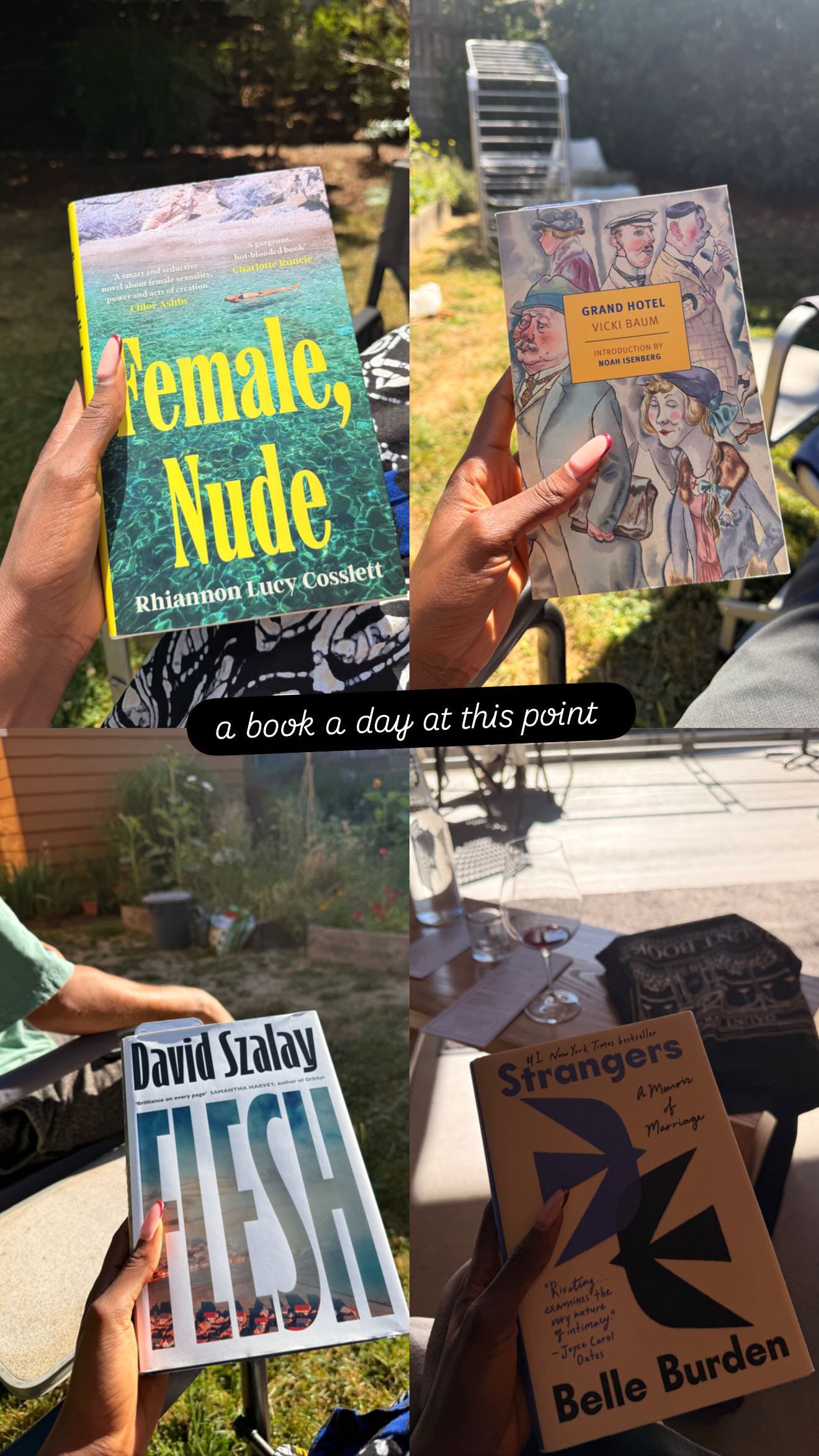
It feels really good to be writing that. After spending the first six months of the year in Lagos, I am now officially back stateside, enjoying the Portland summer with my husband and avoiding our neighbor’s dog who’s obsessed with me. I’ve read six books so far this month and am on track to finish my seventh tomorrow. I’m really happy.
I spent May and June travelling through Japan (five cities), followed by a family vacation in Greece and a trip to Lisbon with my mother-in-law. Then I spent a week falling in love with New Orleans, and now I’m back. If you’re in Portland and want to meet up, let me know! I’m looking for friends. Please be funny and willing to shop with me. I’ll also be making trips to LA and New York this summer and will keep you posted.
I’m a bit rusty, but writing this was loads of fun, although I nearly had a panic attack beforehand. So much is happening all the time, after all. Today’s issue is free, and then it’s back to regular programming.
Quick Hits
It makes sense that the details of the Versed/Belle Brands acquisition were not disclosed. The skincare and makeup line, founded in 2019 by entrepreneur and investor Katherine Power, joins Belle Brands’ portfolio—a self-described “platform company” formed by private investment firm Windsong Global. But this is not where brands go to thrive. JVN Hair and Pipette were scooped up out of Amyris’ 2023 bankruptcy for a combined $3 million, at a time when the two businesses were losing more than $40 million a year. KVD Beauty was the first-ever brand sale by LVMH’s Kendo, offloaded after its post–Kat Von D rebrand tanked revenue from $150 million down to the tens of millions. Belle Brands doesn’t buy momentum; it’s in the business of fixer-uppers. As WWD put it, beauty now has “a growing universe of distressed acquirers”—and I expect we’ll see plenty more of them.
Meanwhile, Glossier is working very hard to avoid that fate. Last week, it unveiled its “I ❤️ NY” campaign — its latest marketing push, this time in partnership with the city’s Tourism Board and featuring OG era faces including founder Emily Weiss. Under new CEO Colin Walsh and CMO Nicole Solórzano (both arriving from Ouai), the brand has since closed 9 of 12 stores, cut headcount and SKUs, and secured $45 million in working-capital debt from Tiger Finance — a move I take to signify Glossier’s acceptance that it no longer expects the growth trajectory that justifies venture-style dilution.
Pie, the Partiful-meets-Geneva Gen Z “real-life” social networking app founded by Bonobos founder Andy Dunn, has brought on Nadya Okamoto, who I think of as a serial founder but is apparently better known as a TikToker, as its co-founder and CMO. “There was a dinner we had in New York,” Dunn told the WSJ. “I saw her address the room ... and I was like, ‘That’s the face of Pie, not me.’” Iconic. Nadya will leave her six-year-old period care company and presumably make Pie the next big thing!
Apple sued OpenAI on Friday in federal court, accusing the startup of stealing its IP in order to develop its own consumer hardware. The suit alleges that Tang Tan, who worked at Apple for 24 years, rising to vice president of product design, would routinely solicit trade secrets from its employees interviewing for jobs, encouraging them to bring “actual parts” from Apple for “show and tell” sessions at OpenAI. It’s probably true, but apparently standard practice. What this suit signals more than anything is a.) OpenAI is cooking b.) and Apple knows it’s on the backpedal.
Is nothing real until The Atlantic says it is? Or maybe that only applies to existential declarations, because I’d assumed we’d already made peace with the reality of a post-literate world. I have. You shouldn’t have to convince first world adults that reading even one book a year is a worthwhile habit. Anyone who refuses to pick up a book can live with the cognitive consequences. What’s worth noting is the inverse relationship between literary culture as a trend and reading as a cultural practice. According to the piece, just 20% of adults accounted for more than 80% of all books read last year. “It’s becoming “a kind of niche hobby, like stamp collecting or growing orchids.” Usually, when a practice becomes aspirational, it’s because access is limited, not because people are losing both the willingness—and, increasingly, the ability—to engage. Tragic.
let me be your inspiration Bay Area women are banking 50 to 100 eggs, considerably above the standard medical recommendation of around 15—sometimes not telling their partners, and often turning to companies like Herasight, which announced last year that it had developed an algorithm that can also predict embryos’ future IQ. “Eggmaxxing” (I cringe) is at least in part in response to the growing fear in Silicon Valley that AI intelligence will soon be superior to that of humans. Speaking to The Information, Genomic Prediction co-founder Stephen Hsu said that at a recent conference focused on AI security, AI researchers kept coming up to say, “We don’t need to speed up the capabilities of AI: We need to take a pause on building AI and instead focus on finding more ways to make supersmart babies.” Anything but pick up a book.
That EmRata article you all hated gave birth to a seven-figure book deal with Penguin after a 12-way bidding war, by the way. Winners win!
I’m actually enjoying Substack’s I make a living series. Something has gone right with their social strategy in the last year.
You couldn’t convey much more urgency than The Times’ top editor, Joe Kahn, calling the publication’s second pivot to video “the biggest and most important transformation that’s underway now in the newsroom”—on par with the print-to-digital transition. The paper, he says, is in a “race against time” to establish quality journalism on video platforms before they’re overwhelmed by AI-generated slop and influencer content. A bit late for that, no? The biggest difference between 2026’s video strategy and a decade ago seems to be brand versus monetization, at least in the immediate term. The 2016 pivot to video promised near-term advertising dollars. This time, the play is almost entirely defensive: protect the brand, establish credibility where audiences increasingly consume information, and, somewhere in there, build algorithmic authority across both social platforms and LLMs—which, as we know, is the new SEO. It’s bad decade for the camera shy.
In other news, The Times hired its first Texas culture reporter.
Such a weird year Netflix is having. If a failed Warner Bros. bid wasn’t enough to spook investors, then Bloomberg’s report on the company’s struggles to retain viewers past a show’s first season definitely did the trick. The stock is down more than 40% over the past 12 months; its share of U.S. TV viewership fell to 7.8% in April, its lowest since May 2025; and subscriber engagement, measured by time spent watching, grew by less than 2% last year—all of which casts the company’s recent flurry of moves in a very different light: striking deals with publishers including Hearst and Condé Nast to feature their videos on the platform’s homepage (yikes); exploring the addition of live channels and subscription streaming bundles to boost engagement; acquiring Letterboxd (?!); and, of course, its steady stream of creator deals (congrats, Wishbone Kitchen, Stokes Twins, and Harry Jowsey). I think Netflix is scared and grasping at the lowest-hanging fruit to solve its self-imposed engagement problem. Ergo, we are witnessing the brand dilution of a great company in real time.
A coalition of 12 states has sued to block Paramount Skydance’s acquisition of Warner Bros. Discovery. “We have antitrust laws and merger controls for a reason, because competition is the lifeblood of a healthy and vibrant economy,” California Attorney General Rob Bonta, who is leading the charge, said at a press conference. Reports emerged last week that Paramount was weighing relocating its headquarters—and $30 billion in planned content spending—outside California if Bonta sued to stop the merger. Presumably, that would mean its roughly 300,000-square-foot lease in Bayonne, New Jersey, which, I’ll just note, is also suing to stop the merger.
Department M, the indie production studio founded by producers Mike Larocca and Michael Schaefer, has bought a significant stake in Neon, together launching a new TV division.
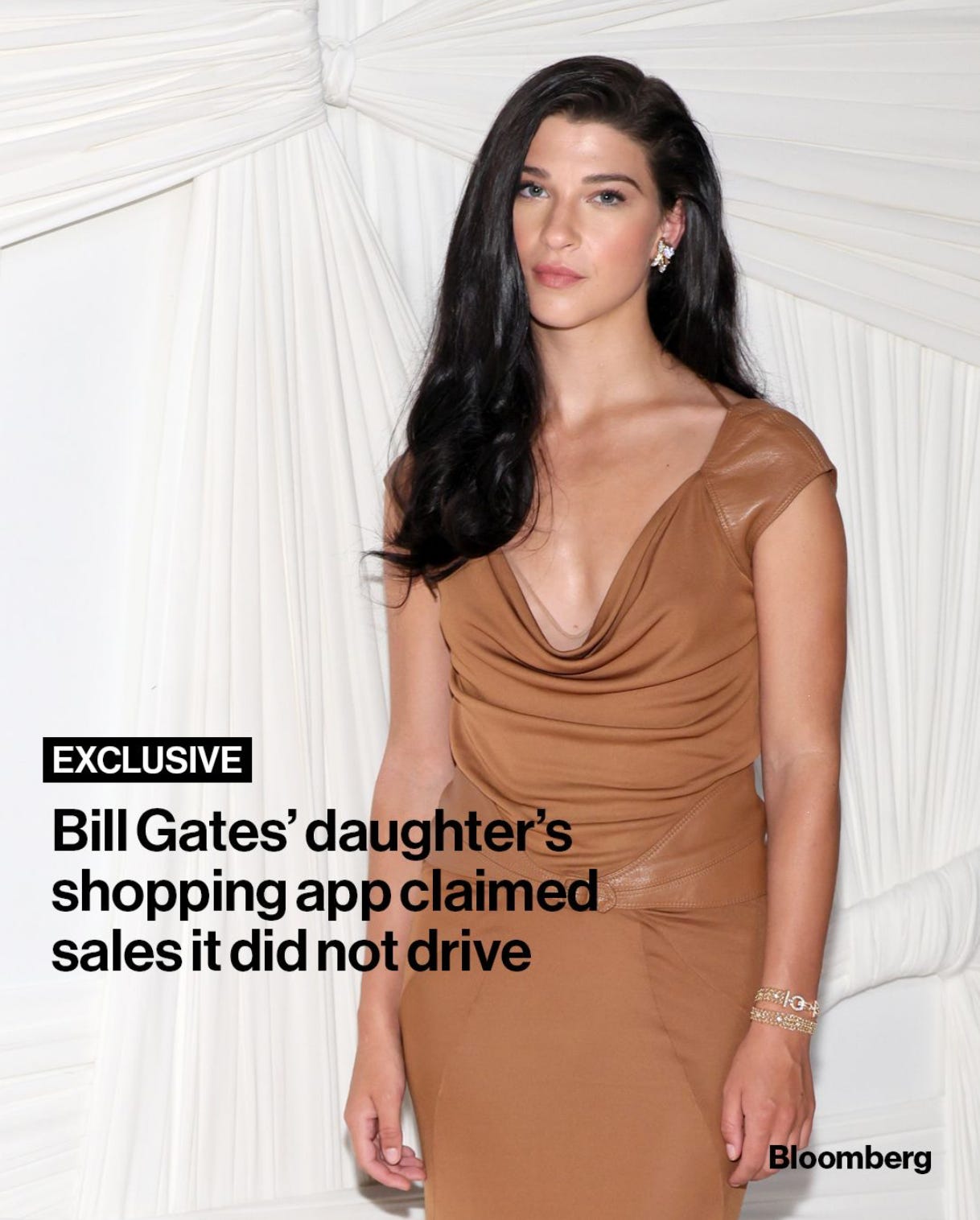
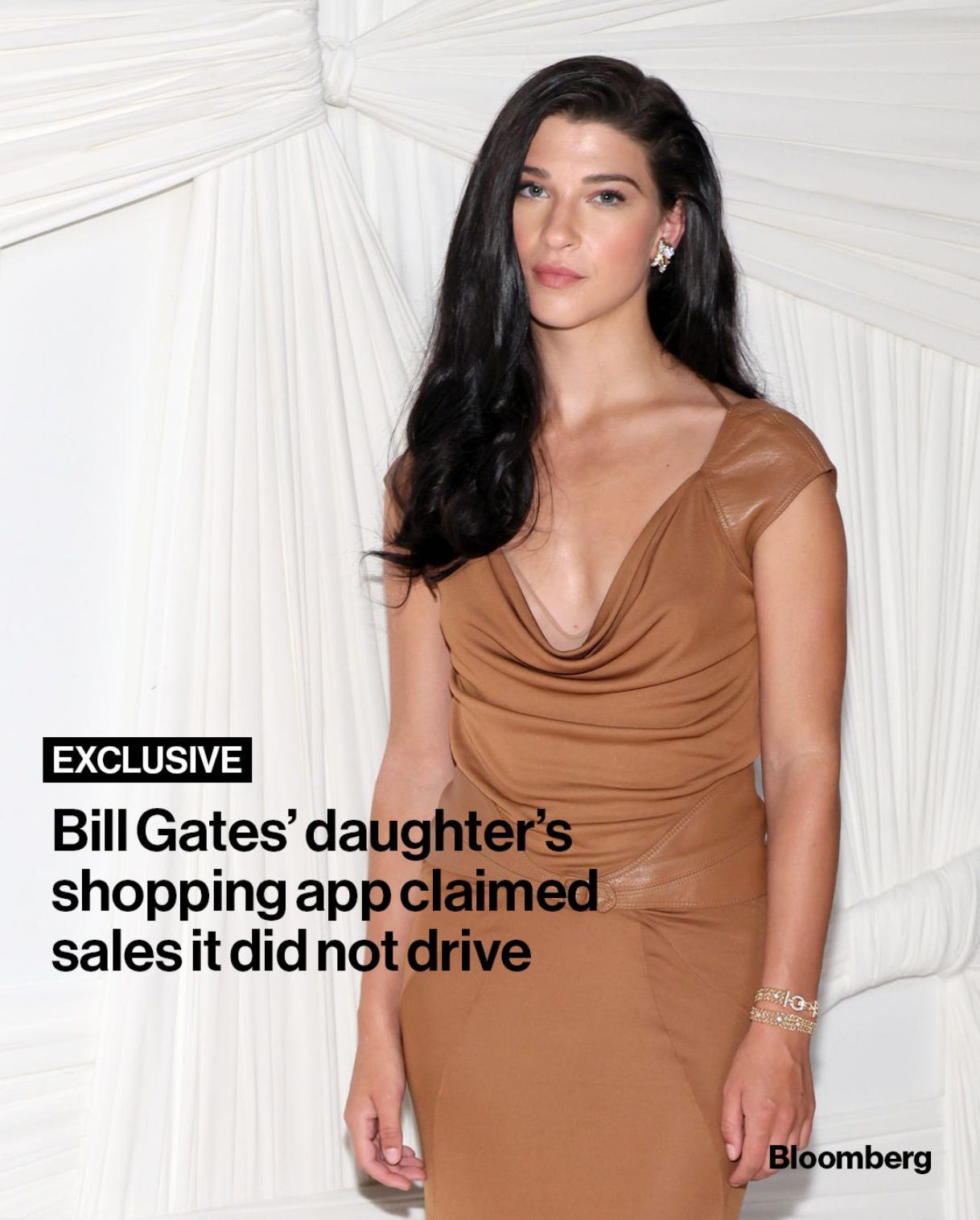
Bloomberg published a report claiming Phia, the Phoebe Gates co-founded personal shopping assistant, claimed credit for online sales it didn’t actually drive, and the internet couldn’t be happier. Seriously, I’ve never seen people so offended over affiliates. Independent researcher Ben Edelman and competitor Capital One Shopping both flagged the practice, and Bloomberg’s own testing across 50+ sites confirmed it. Notably, only Impact.com suspended Phia’s account, despite being in violation of many digital platforms’ policies. Phia acknowledged the issue — zero chance it was an oversight— and fixed it within 24 hours. I’ll just point out that this is Phia’s second ethics controversy in under a year. Fortune reported in November that the app was logging users’ full web browsing history, including sensitive content like bank statements and private emails, before switching to URL-only logging after being caught. Make of this what you will, but I promise you Phia isn’t going anywhere.
The Texas Stock Exchange went live this week selling political assurance as much as liquidity. Founded by James Lee at the request of Governor Greg Abbott, the exchange is backed by BlackRock, Goldman Sachs, Fortress Investment Group, and Charles Schwab, having raised roughly $120 million. TXSE is explicitly positioned as a business-friendly, low-regulation alternative to the NYSE/Nasdaq duopoly — part of a broader multi-decade Texas push that includes business-friendly courts (2023) and aggressive corporate recruitment. Tesla, SpaceX, Coinbase, Dell, and Exxon Mobil have all reincorporated to Texas in recent years. Zero company listings so far, but with regulatory tensions coming to a head and aggressive TXSE recruiting, might not be long!
My World Cup experience — viewed exclusively on TikTok — was greatly diminished by the excess of Kalshi ads on my feed. Just me? Anyway, Goldman Sachs has banned employees from trading on prediction markets except for sports and entertainment bets.
Skims’ impact on Spanx has been every bit as cataclysmic as you’d expect. While the former is on pace to generate north of $1.3 billion in annual sales this year, Spanx likely remains in the mid- to low-nine-figure range after two decades, with U.S. sales, excluding wholesale, declining more than 10% for the past three quarters. All of which is a headache for Blackstone, which acquired a majority stake for $1.2 billion just five years ago.
I promise I was this close to returning from my hiatus just so I could write about the Bread Beauty marketing stunt. Oh well. Topicals founder Olamide Olowe is launching a fashion line with her stylist Solidad Nwakibu. I’m guessing it’s going to be Lagos-based? If so, smart.
Shay Mitchell’s controversial kids beauty brand Rini is entering the bath and body category with its latest collection. My first thought was, remember Kylie Baby? What happened to that? My second was, Sophia Richie really did nothing with all that.
Am I going to spend the next year writing about niche dining? Is food the new luxury entry point? Ami Paris’ February month-long Balthazar takeover in New York drove 55% higher foot traffic and 21% higher sales at its SoHo flagship during the activation, plus 1,300 new customer leads and over 1 million Instagram impressions. A growing cohort of “culinary creatives” are being commissioned by fashion houses to design conceptual dining experiences — tablescapes, bespoke menus, branded pop-ups — as an extension of brand storytelling. Luxury food service is growing at nearly 4x the rate of the core luxury goods business it’s supposed to be a marketing accessory to, which at least in some part must be a reaction to the frictionless automation of pretty much everything, and brands deliberately investing in the one category algorithms can’t replicate. Or something.
CoverGirl is throwing in the towel with Gen Z, opting instead to focus on middle-aged women. Coty consumer beauty president Gordon von Bretten called the brand’s youth-focused strategy a “mistake,” which resulted in the company losing market share and relevance in the process. Upcoming advertising campaigns will feature Gen X models, and the brand will also focus on affordability, keeping new product launches below the $10 price point. Elf for Gen X? It’s a real market opportunity and I hope it works out for them — Coty sure could use a win.
Small town landowners are cashing out on the AI data-center boom. A group of 96 families in Salem Township, Pa. (median household income under $64,000) sold about 1,700 acres of land to data-center developer QTS for $586 million — an average of $330,000 per acre and $5.5 million per family. Nearby, a second, larger deal is already in motion, with 200 landowners eyeing a $1.3 billion sale. Sellers are buying new trucks, funding cancer-research foundations, building “barndominium” dream homes, and printing “1 DEAL OF A LIFETIME” T-shirts. Not everyone’s thrilled, though — at least one neighboring resident is actively fighting a separate proposed data center and describes the sellers as having “sold out your entire town.” All I can say is that I’d like a Sweet Magnolias episode on this.
Over in SF, sellers are explicitly requesting OpenAI or Anthropic pre-IPO stock as payment. Homes above $10 million have doubled in sales volume over six months, and 144 sales this year have closed $1 million-plus over asking, versus just 8 in all of H1 2025. Fewer than 600 homes are on the market citywide, about 40% below the decade average. Sacra, a private markets research firm, projects the combined OpenAI/Anthropic/SpaceX IPO wave could create more than 16,000 new millionaires and 20+ billionaires. A wealth manager describes advising “dozens” of OpenAI and Anthropic employees on structuring home purchases through trusts for privacy. One couple was offered a $10,000 discount in exchange for 60 hours of AI consulting instead of cash — which they declined as “the weirdest thing that has happened.” What can I say? Must be nice.
as seen on is a reader-supported publication. To receive new posts and support my work, consider becoming a free or paid subscriber.
Comments
Nothing yet. Say the first thing.
Sign in to join the conversation.