
At the beginning of this year, we shared a few of our predictions for 2026. We wanted to take a few of our next posts double clicking into some of those predictions, starting with Healthcare as it certainly did not ease into the year — it started with a bang!
In just the first two weeks, OpenAI announced ChatGPT for Health, followed quickly by OpenAI for Healthcare, signaling intent across both consumer and provider use cases. About a week later, Anthropic announced Claude for Healthcare and Life Sciences. All around the same time, Doctronic, an AI doctor, made headlines for being one of the first AI doctors who can prescribe medication renewals in Utah.
That’s a lot of activity in a very short window.
Why the sudden flurry of announcements? Part of it is likely timing. JPM Healthcare, one of the largest and most influential conferences in the industry happened this week and JPM offered a natural forcing function to go public with the news.
But the timing also reflects something deeper. These announcements are riding a broader set of structural shifts already underway in healthcare and these shifts are only accelerating.
So, what exactly are the implications of some of these announcements, and what may happen in 2026? Let’s dig in!
In just the past week we saw major healthcare-related announcements from the frontier labs:
On January 8th, OpenAI launched “OpenAI for Healthcare”, a set of HIPAA compliant products designed to help healthcare organizations and providers “deliver more consistent, high-quality care for patients”.
Just three days later, Anthropic introduced “Claude for Healthcare”, an expansion of their “Claude for Life Sciences” products they announced in October, but more focused on tools and resources for healthcare providers to compliantly use Claude for medical purposes.
Literally the next day OpenAI announced their acquisition of Torch, a healthcare startup focused on unifying lab results, medications and recordings from doctor visits, with The Information reporting the acquisition was valued at $100M.
And finally on Jan 12th, Nvidia and Eli Lilly announced a “first of its kind” AI co-innovation lab to “reinvent drug discovery in the Age of AI”, with each of them jointly investing up to $1B over five years in infrastructure and research.
That’s a lot of AI x healthcare x life sciences in one week!
So what’s going on? As mentioned above, these announcements were likely timed to coincide with the annual JP Morgan Healthcare conference happening this week in San Francisco.
But on a deeper level, this certainly exemplifies how much the major AI labs are interested in healthcare and the overall ecosystem. And for good reason. It turns out plenty of people are turning to AI chatbots to inquire about their health. From OpenAI’s “ChatGPT for Health” announcement:
In fact, health is one of the most common ways people use ChatGPT today: based on our de-identified analysis of conversations, over 230 million people globally ask health and wellness related questions on ChatGPT every week.
These medical-related queries can be highly sensitive, with content consumers are typically only willing to share with close family or their physicians. Through their healthcare initiatives, OpenAI and Anthropic are layering in more protections and security controls so consumers and healthcare providers alike feel more comfortable sharing sensitive data.
And that is another cornerstone of these initiatives: data. The frontier labs are rushing to collect unique datasets to train their models on and improve model performance. Healthcare data represents a significant trove of valuable consumer information that is not readily available on the internet. This is where acquisitions like Torch are strategically valuable to OpenAI as they represent opportunities both for users to better understand and manage their healthcare data AND for OpenAI to integrate and subsume that information.
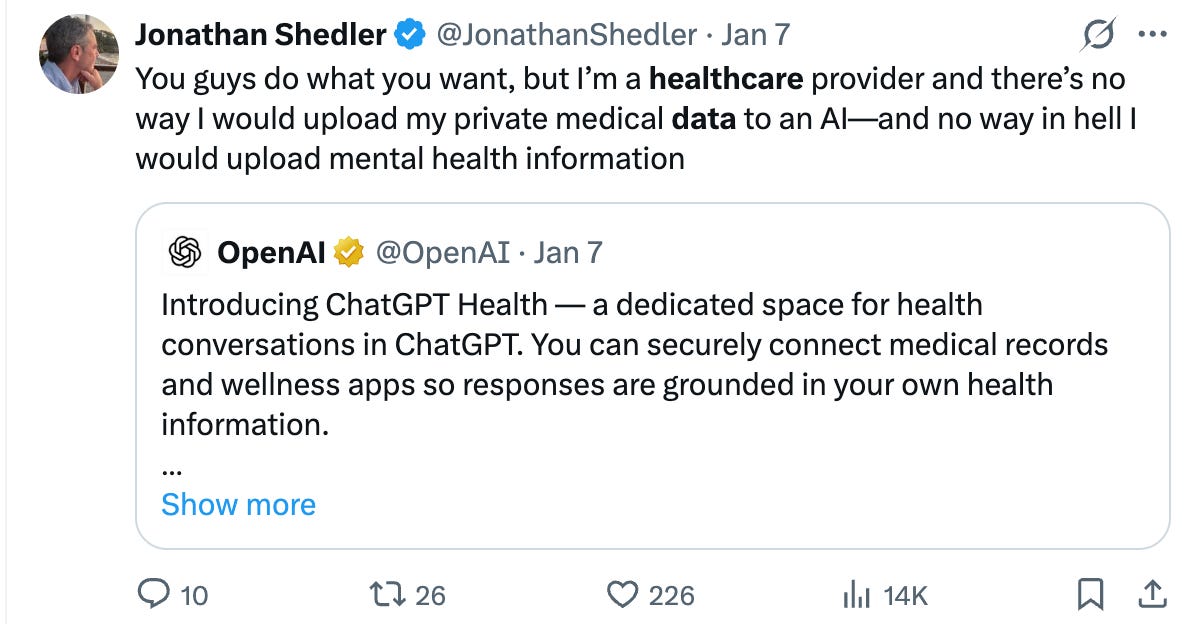
Of course, some healthcare providers will remain skeptical of inputting sensitive patient information into any AI system, especially OpenAI. It remains to be seen how quickly physicians and other healthcare providers adopt these products.
And of course, don’t be surprised if Google/Gemini announces healthcare-related initiatives soon as well!
What is striking about most of these announcements is how consumer focused they are. And that isn’t accidental. On the consumer side, we’ve been seeing strong trends over the last year including:
Increasing willingness to cash-pay for tailored, verticalized services be that around weight loss (GLP-1s), mental health, fertility, longevity, dermatology, etc.
The combination of LLMs + virtual care + remote monitoring creating scalable, “1:1” healthcare experiences
Asynchronous chat, AI triage, and ongoing coaching at unit economics that actually work
That raises an important question: what becomes the patient front door?
Historically, it’s been all through the provider interface (e.g., MyChart chat with your doctor) or your telehealth provider for specific groups. In the long term will that continue, or is it going to be a general-purpose interface like ChatGPT, Claude, or Google? Is it a telehealth provider? Is it a new AI startup? For basic care and triage, broad consumer tools may be sufficient. For deeper analytics, continuity, and intervention, providers still play a critical role and will continue to. But regardless of where the front door lives, consumer behavior is clear: people want faster, more personalized, and more accessible care, and they’re willing to use AI to get it.
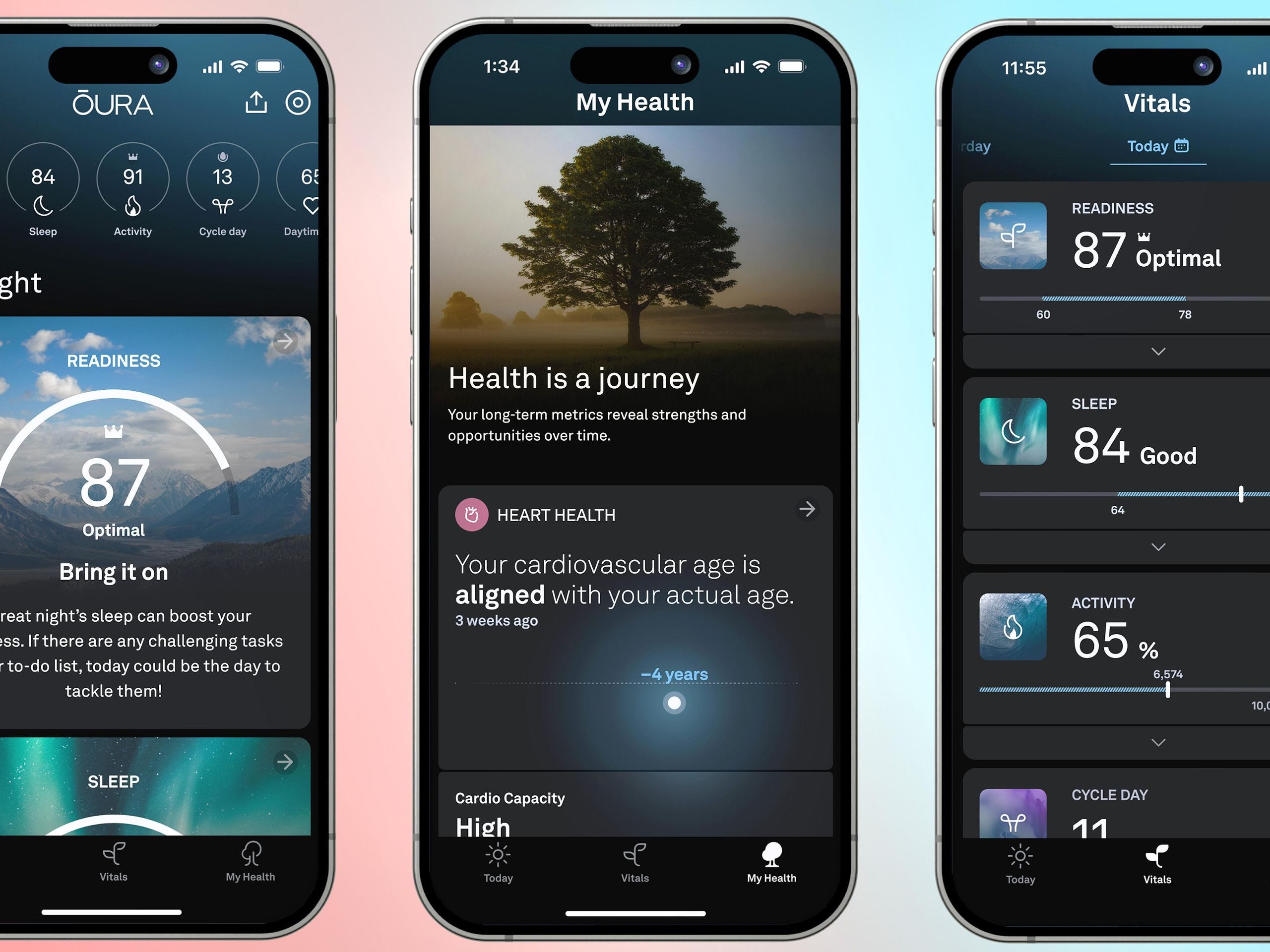
As momentum builds on the consumer side, a large and compelling opportunity also exists in selling to healthcare organizations, though significant challenges remain, including:
Understanding and navigating deeply nuanced clinical workflows
System specific policies and procedures based on size of organizations
Fragmented data environments
Organizations that are not “AI-native”
Even with connectors and integrations being offered by these large model providers, there’s significant work required to make these systems actually function in real-world clinical settings.
Importantly, the constraint here is not what AI can do, but how healthcare systems are structured today. Over time, AI will be able to take on meaningful portions of clinician workflows. From documentation and triage to longitudinal monitoring and care coordination. AI is not just there to replace clinicians, but to enable more complete, continuous, and accurate care. The opportunity is far broader than administrative automation alone.
The deeper value is that healthcare today lacks precision and continuity. Clinicians are overloaded, care is episodic, and true 1:1 attention is rare outside concierge models. AI creates the first scalable path to more legitimate, personalized care. Absorbing work that cannot be done at human scale and surfacing the moments where human judgment matters most.
This is also where regulatory, liability, reimbursement, and trust challenges concentrate, but where some of the most durable enterprise opportunities will ultimately be built.
We’re seeing a new wave of healthcare business models emerge alongside novel applications of AI, spanning purpose-built models, AI agents, and vertically integrated services that reshape how care is delivered and monetized. A few of these we’ve seen and expect to see more of in 2026 include:
Consumer-First Diagnostics & Preventive Health Companies: Companies like Function Health are expanding access to biomarker data through direct-to-consumer, cash-pay models. By offering 100+ lab tests, these platforms shift testing upstream from episodic care to continuous health monitoring, giving individuals greater ownership and visibility into their health data. Other examples: Superpower, InsideTracker, Mito Health.
Verticalized and Specialty Care Models: Verticalized providers in the fertility space such as Orchid Health focus on specific clinical domains by owning the full workflow, from testing to interpretation to clinical integration. These companies sell complete services directly to patients and specialty providers, capturing more value than point solutions. Other examples: NucleusIVF, Kindbody.
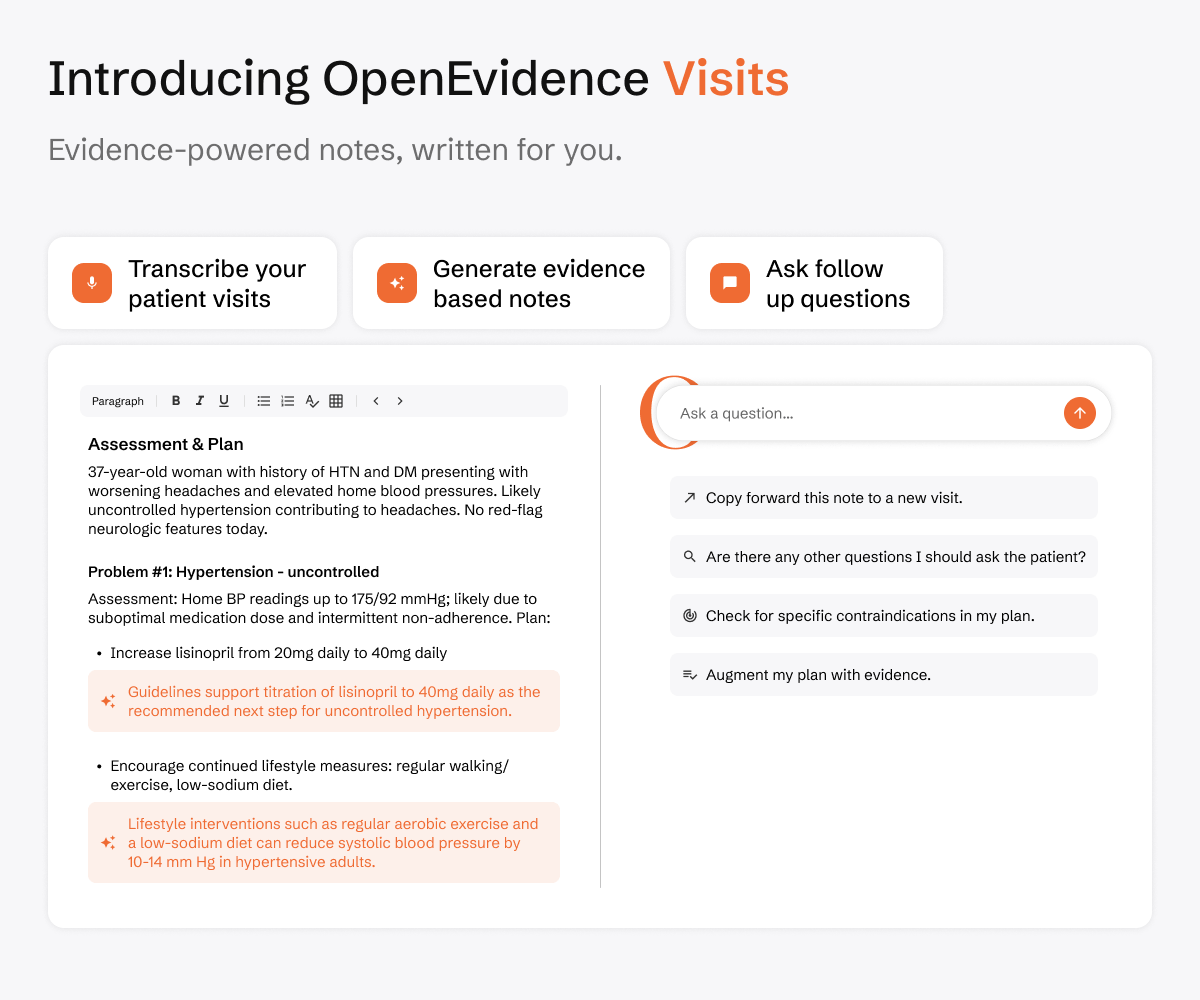
Provider Platforms: Platforms like OpenEvidence offer clinical decision support tools (real-time intelligence) free to physicians while monetizing through paid ad placements. These provider-facing platforms embed intelligence directly into clinical workflows, helping clinicians focus on delivering high-quality care while reducing the burden of documentation and administrative tasks. Other examples: Abridge, Ambience Healthcare, Charta Health.
AI Agents: Companies like Amigo are building AI agents to automate clinical and administrative workflows across healthcare organizations. By reducing manual work and lowering adoption barriers, these solutions accelerate time to value while allowing clinicians to focus on delivering more personalized, high-touch care rather than routine tasks. Other examples include Assort Health, EliseAI, and HelloPatient.
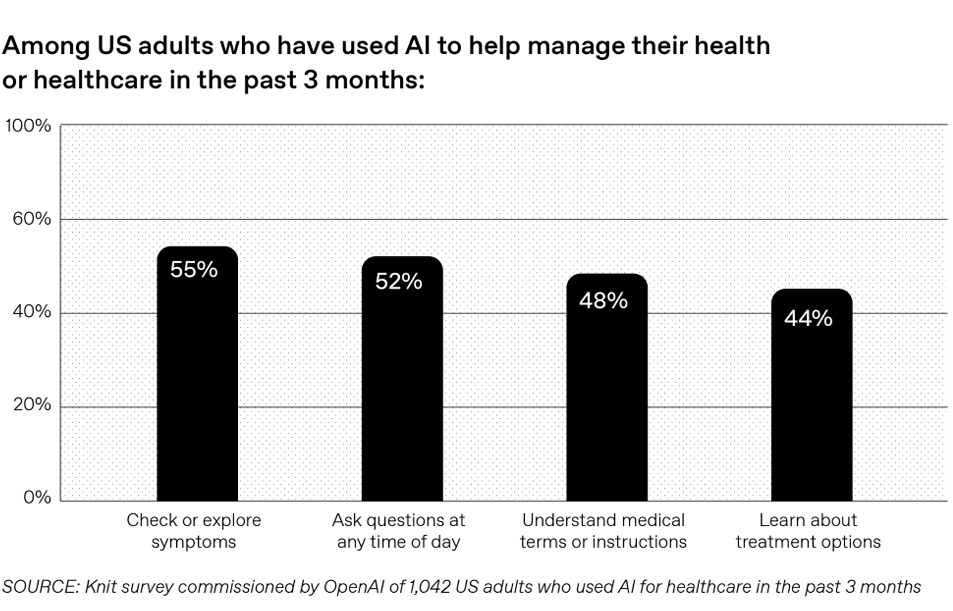
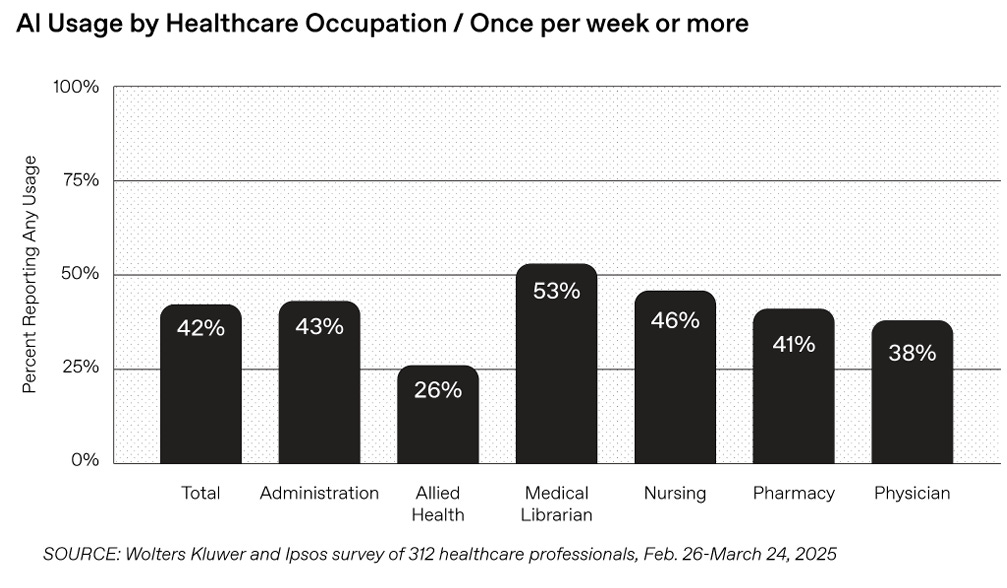
Our belief is that there is room for many winners and it’s clear that there is an increased pull in consumer and physicians for more AI in healthcare. Advances across the AI stack, from model innovation and chip development to increasingly democratized access to data, are expanding what’s possible. Nvidia continues to push the frontier at the chip layer, large AI labs are driving rapid model progress, and healthcare systems themselves recognize that this shift is inevitable.
Healthcare has always been a challenging market, yet from a market size and economic perspective, it remains one of the largest and most important sectors in the global economy and more importantly, traditional systems are under real strain.
We believe we’re at a tipping point. AI won’t fix healthcare overnight, but it is reshaping how patients enter the system. That shift creates enormous opportunity for those building thoughtfully, responsibly, and with the full system in mind.
No posts
Comments
Nothing yet. Say the first thing.
Sign in to join the conversation.