
Dear Learning Partners,
What is the primary purpose of education today?
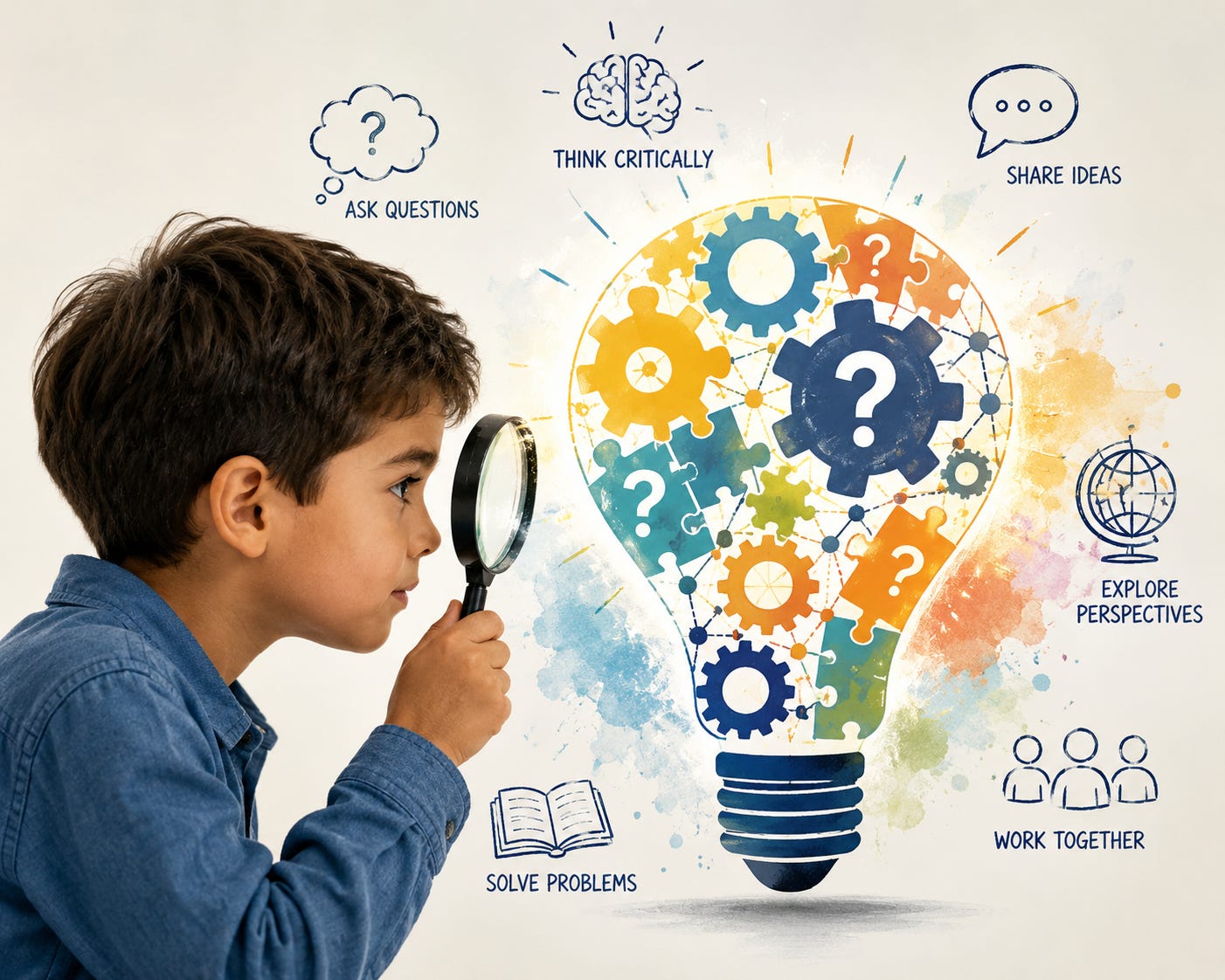
We believe it is to prepare students to think, learn, communicate, and contribute to our rapidly changing world. Education is not simply about acquiring information. It is about developing the knowledge, skills, and habits of mind that enable our young people to become capable workers, engaged citizens, and lifelong learners.
Whether students attend public or private schools, the responsibility remains the same: teach them how to think, not what to think.
This begins with helping students develop the ability to think critically, evaluate information, solve problems, communicate effectively, and make informed decisions. When teachers expose students to strong academic content, multiple credible perspectives, and meaningful discussions, they prepare them for both careers and life.
The Basics Still Matter
Critical thinking cannot exist without knowledge.
Students need a solid foundation in reading, writing, mathematics, science, history, , geography, communication, and civics. They also need practical life skills such as financial literacy to help them navigate budgeting, credit, taxes, saving, and investing. Together these subjects provide the foundation for thoughtful reasoning and informed decision making.
The Role of the Teacher
The role of today’s teachers should be to guide students through the learning process, not just to give them information.
An outstanding teacher encourages curiosity by asking thoughtful questions, challenging assumptions, and creating a classroom where respectful dialogue flourishes. They also help students analyze evidence, consider multiple perspectives, and develop well-reasoned opinions.
When students can explain their own thinking, support it with evidence and remain open to refining their ideas they are truly demonstrating that learning has taken place.
Teaching Students to Evaluate Information
In an age of unlimited information, students must learn how to distinguish reliable sources from misinformation.
That means teaching them to:
Master core academic knowledge
Identify primary sources and credible research
Distinguish fact from opinion
Support conclusions with evidence
Engage respectfully with viewpoints that differ from their own
These are lifelong skills that extend far beyond the classroom.
Preparing Students for an AI World
Artificial intelligence is transforming how people think, learn, and work. The school’s role is to teach students how to use it responsibly.
This begins with teaching students to question AI-generated information, recognize its limitations and potential bias, and verify information before accepting it as accurate. AI is a tool and should never replace thoughtful human judgment.
Thinking Begins with Conversation
Learning to think also requires learning to communicate.
Meaningful conversations help students move beyond simply expressing opinions. They learn to listen, ask thoughtful questions, consider different perspectives, collaborate with others, and work toward understanding. These communication skills strengthen critical thinking, build relationships, and prepare students for school, work, and life.
As we often say, conversations are where learning begins.
A Shared Responsibility
Preparing students for the future is a joint responsibility. Parents and educators must be partners in helping young people become thoughtful, responsible adults.
Schools provide instruction. Families reinforce values, curiosity, and a love of learning. Together, they develop the habits of mind needed to succeed throughout life.
In Closing
Successful schools, whether public or private, must prepare students for the next challenge.
Knowledge will always matter. In a world where information is instantly available, having the skills to analyze it, question it, communicate about it, and apply it wisely is critically important.
Education’s greatest responsibility is giving students the knowledge, skills, and confidence to discover answers for themselves; to think critically, communicate effectively, and continue learning throughout their lives.
👉A question for all parents and educators: Are we merely giving students information to remember, or are we helping them develop the skills needed to discover the answers for themselves?
Warmly, Peggy & Tamara
⭐Because better outcomes begin with better conversations.
If you’re ready to go deeper, we’d be honored to have you join our paid community. Subscribers receive practical monthly resources to help turn communication insights into real-world practice, including:
• Communication Toolkits
• Live Conversations & Q&A
• Real-world Case Studies
• Downloadable Meeting Resources
No posts
Comments
Nothing yet. Say the first thing.
Sign in to join the conversation.