
Dear Learning Partners.
Why the future of learning still depends on communication, collaboration, and connection.
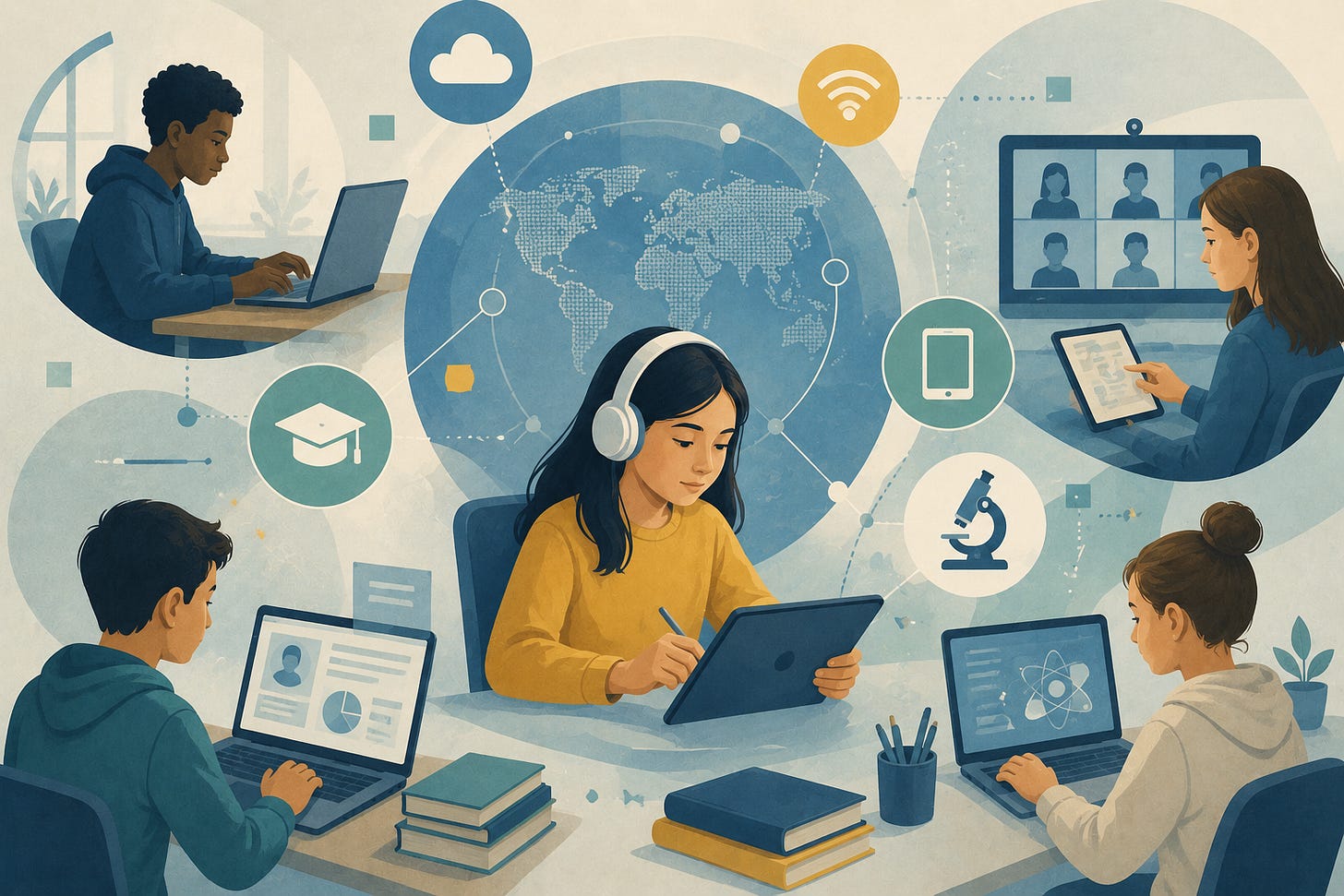
Education is entering a new era, shaped by innovation, creativity, technology, and a growing recognition that learning must evolve alongside the needs of students and society. Across schools, colleges, workplaces, and social media platforms, educators are exploring how technology can enhance engagement, personalize instruction, and prepare learners for a rapidly changing world.
In 2025, educational leaders and instructional design experts gathered online to discuss The Future of Learning: What to Expect in Digital Learning in 2025 and Beyond. The conversations focused on how artificial intelligence and immersive technologies are transforming teaching and learning for both students and teachers.
Today, artificial intelligence is influencing education in ways that once seemed impossible. AI can help teachers analyze student progress, identify learning patterns, and create personalized pathways for instruction. It also supports teachers in adapting lessons to better meet the individual strengths and challenges of their students. AI can also help families stay more connected to their child’s learning, offering them tools and insights to reinforce skills at home and build stronger home-school communication.
At the same time, technology will never replace the importance of human connection! Relationships remain at the heart of education. These tools give educators more time to focus on what matters most, building trust, fostering communication, and encouraging creativity and critical thinking. Parents play an essential role in this process. When families and educators work together, technology becomes a support or learning rather than a replacement for meaningful interaction.
AI has expanded the possibilities of augmented and virtual reality, allowing students to move beyond traditional textbooks and experience learning in more interactive ways. For example, students can explore ancient civilizations through virtual field trips, conduct science experiments in simulated laboratories, or practice career skills in safe digital environments before entering the workforce. These experiences increase engagement and make learning more meaningful for a wide range of learners.
With the support of technology, educators can more effectively personalize learning, so instruction is flexible, responsive and learner centered. All students do not learn in the same ways. Competency-based education and individualized instruction therefore play a critical role in today’s teaching and learning. At the same time, maintaining high expectations and accountability remains essential. Forward thinking allows students to demonstrate mastery through multiple pathways while still working toward rigorous standards.
Preparing students for tomorrow’s workforce is another important priority. Schools are no longer solely on memorization. Increasingly they are helping students develop communication skills, problem solving abilities, and digital literacy. As workplaces continue to evolve, education must evolve alongside them. Digital learning provides students with opportunities to apply skills in real-world contexts, collaborate globally, and build confidence using modern technologies.
Educators are collaborating with instructional designers to transform complex concepts into engaging, practical lessons. Thoughtful lesson design through technology integration is the path to effective and meaningful learning in all environments. As online and blended learning environments continue to expand, there is a growing demand for professionals skilled in instructional design, educational technology, and digital learning management.
Even as technology advances, the heart of education remains rooted in relationships, communication, and human connection. While tools and platforms may change, students will always need caring adults to guide, encourage, inspire, and support them. The future of education is not about replacing teachers or families. It’s about empowering educators and parents with tools to help every learner succeed.
Educators, parents, administrators, students, and communities all play important roles in shaping the future of learning. By embracing innovation while remaining grounded in compassion, collaboration, and inclusion, and effective communication, we can create educational experiences that prepare students for meaningful and successful lives.
The future of learning is here. The challenge is to shape it thoughtfully, responsibly, and together.
With appreciation,
Peggy & Tamara
⭐Because better outcomes begin with better conversations.
If you’re ready to go deeper, we’d be honored to have you join our paid community. Subscribers receive practical monthly resources to help turn communication insights into real-world practice, including:
• Communication Toolkits
• Live Conversations & Q&A
• Real-world Case Studies
• Downloadable Meeting Resources
No posts
Comments
Nothing yet. Say the first thing.
Sign in to join the conversation.