
The Albachiara Journal is an eclectic collection of our opinions and perspective, from our travels and encounters.
There is an old forgotten skill in investing, the alchemy of the good old boys, and it has many names.
Value-investing, stock-picking, turnaround plays, special situations.
What it really means is recognising a moment when a company with real inherent value is beaten-down, in a period of difficulty, under-capitalised. And hence, potentially, a bargain. By far the biggest returns are always grasped when an investor manages to buy well, at the right time, and for the right price. It’s the entry, not the exit, that delivers your ROI.
The asset in question of course must have something about it; something special.
It may be a great brand, amazing people and culture, fantastic product innovation (R&D), a strong moat, a loyal customer base. Good investors will see all that early, realise the serendipity of the timing, and put capital to work to nurse the patient back to health.
Steve Jobs returning to Apple is the obvious example. Nike today would be another candidate for such rehabilitation, and it applies even more in sports. The run-down storied franchise, the sleeping giant club, an Olympic sport that has never been set-up correctly. Perhaps even SportRadar.
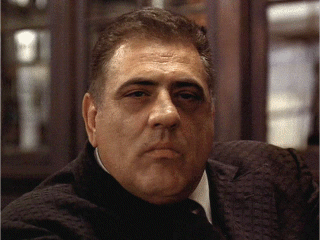
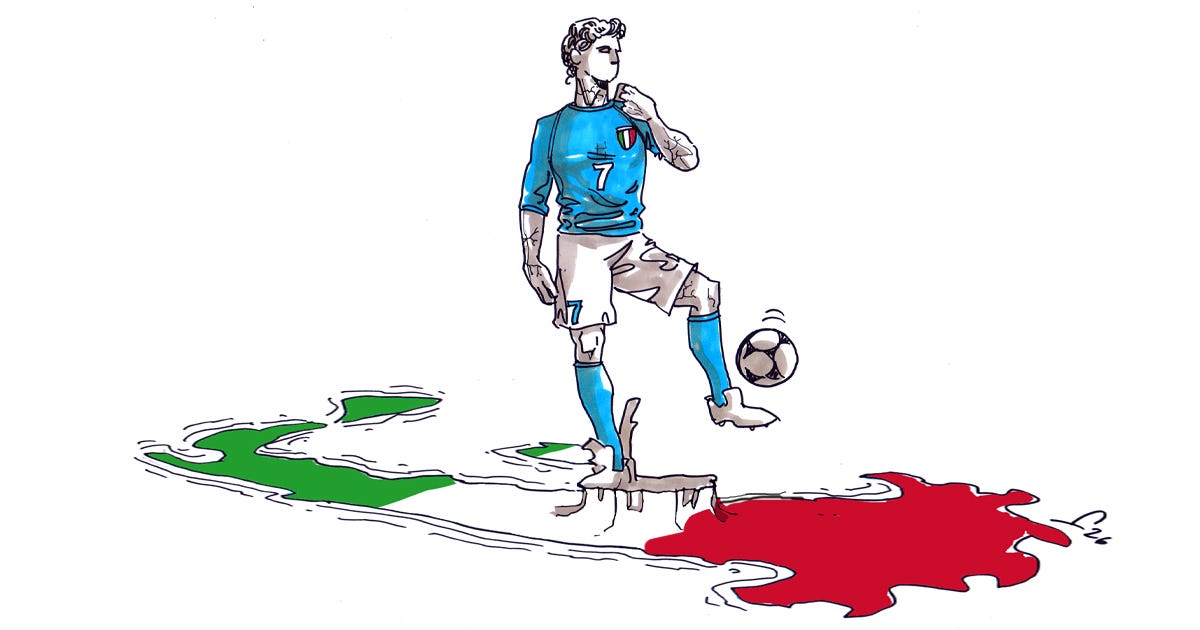
Italian football today sleeps with the fishes. It hasn’t been a protagonist at a World Cup for a full 20 years, and is at an all-time low.
What kind of tournament is it without Italy? Feeling very pissed off about this now.
Jim Kerr, Taormina, June 2026.
The club game is also on its knees, with the most storied brands (like Juventus and AC Milan) a shambles on and off the park.
Many have written well in recent months on the reasons for the decline. Ancient stadia, weak media market, old players rounding out their pensions crowding out local kids, ultra culture and violence, corrupt sporting directors on the take, crushing political interference. No money.
All true, but pragmatically that is just how we got here, and of little interest to the skilled investor on the hunt.
[We are where we are, and I just want to know now if I can buy cheaply on this slump, and fix the underlining issues. Because the asset is truly valuable, if run well.]
Today’s Albachiara Column assesses the possibility that Italian football is perhaps a “buy”.
Surprising?
Never forget, every “bear” is always just a “bull” waiting for the right moment.
We are in the middle of another World Cup without Italy, and for anyone over 35 that just doesn’t sit right. It’s like a documentary about the fashion industry excluding Armani, Valentino and Versace. Or a coffee table opus on the sports car not mentioning Ferrari, Lamborghini, Pagani, and Maserati.
The top end of our global game needs those classic kits, the tanned handsome faces, the national anthem, the Hollywood players.
In short, the beauty.
This asset is serious IP, with a very distinctive brand of perceiving how to play football. It definitely qualifies as “something special”, and not commodity.
Whilst folks like Gentile, Materazzi, and the gloriously-named assassin Romeo Benetti were masters in preventative destruction, the same sides were also full of talents like Rivera, Baggio, Totti, Pirlo, Del Piero.
We will stop them with whatever it takes, you do your thing up there and create something.
Ruthless, cynical, and yet at the same bursting with class and elegance: a perfect simile to the country itself, and its proprietary culture. Saint and sinner, Vatican and mafia, Chaos and art.
How could it be any different, being the grasslands of Caesar, Machiavelli, and Michelangelo?
They don’t make cuckoo clocks in Italy.
It has all been so very epic, like Old Hollywood, and surely worth a brief moment to remember what has been. Always find time to taste the honey.
In any proper history of football, Gli Azzurri are high up on the call-sheet. Their distinct school of football (traditionally catenaccio) has been central to the tapestry of the entire game, as Episode 2 of the Netflix Series “Becoming Champions” explains so beautifully.
Four titles, twice beaten finalists, and arguably the best team in the 1978, 1990, and 1998 editions. Homeric box-office rivalries involving especially Germany and Brazil. Always the team to beat, or more likely the rock upon which other favoured ships would run aground.
On the 5th of July, 1982, a Brazilian team, considered better than the 1970 outfit of Pele, ran aground in a game considered the masterpiece of its, or any, era. The clash of styles, the colours, the horns, a generation of young boys gasping for air after their desperate dash back from school to see it. The Paolo Rossi redemption arc rewarding the stubborn old father coach, Bearzot, who refused to throw him to the wolves. This rare ground-level footage transmits fully the high melodrama of what is better described as Verdi opera.
Italy has for sure always been leading-man material, but you also need worthy co-stars.
Greta Garbo and Monroe, Dietrich and Di Maggio, Marlon Brando, Jimmy Dean on the cover of a magazine. Grace Kelly, Harlow, Jean, picture of a beauty queen. Gene Kelly, Fred Astair, Ginger Rogers dance on air.
They had style, they had grace. Rita Hayworth gave good face.
Madonna Louise Ciccone, Vogue
Germany and Italy when they meet always give “good face”.
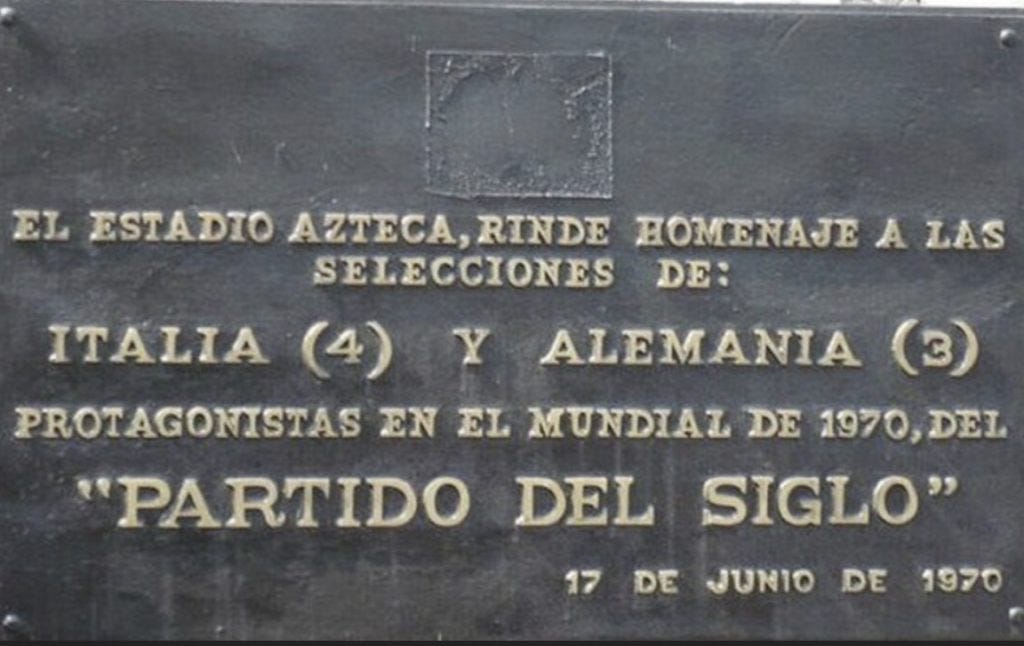
Like in 1970, when they delivered what is still called El Partido Del Siglo. They don’t make plaques for many games at the Azteca.
The history books show that Germany has always struggled to beat Italy, and that really stings their pride. Their relationship with Italians has been complicated, ever since Rome. Their superiority complex gets badly bruised when on the receiving end, whether in football, or seeing their women get seduced by the vitelloni on the beaches of Rimini each year.
On home soil in 2006, as massive favorites, in front of the Wall of Dortmund, they were again very very confident, especially as it was a stadium where the German national team had never ever lost. This would be delicious payback.
Alas no…
A simply colossal game in what would forever be known as the Summer of Fabio Grosso, with Italy’s own “they think it’s all over” moment.
Andiamo a Berlino, Beppe!
All of this is serious unique authentic “brand”, around something that really matters.
Isn’t that a product in which to invest? Especially if currently in a trough?
My career in sports started in 1988 with a side-hustle to cover Serie A for UK newspapers and broadcasters. I lived the zenith of the Empire.
Since the win in 1982, and for a full 25 years after, this was La Scala of football, the league to which all aspired. Any club would do, just make sure you can say you played in Italy. The great Zico signed for Udinese, Socrates and Passarella joined Fiorentina, Platini and Boniek at Juventus, Falcao and Batistuta in Roma, the Dutch trio in Milan, Ronaldo Il Fenomeno at Inter.
Serie A was top dog, also internationally. It exploded in the UK on Channel 4 in the early 90s and left an indelible mark on all fans of that generation.
But it was all about to be thrown away, in complacency, arrogance, and internal jealousies, much like the old Roman Empire itself. Not this time by the sword of the German Hun, but rather the sweet seduction of English TV wedge. The industry of football had moved on, principally on the back of the commercial dynamism in the new Premier league in 1992, and the writing was on all walls in Italy.
Era finito!
It took a few years, but Italian football could just no longer splash the pot on players, recognising a structural competitive disadvantage that has worsened every year since. Losses had to be refinanced and clubs needed to be sold, with the new barbarians at the gate now mostly American. The great Italian family dynasties of Agnelli, Berlusconi, Moratti, Sensi were replaced by US hedge funds and celebrity investors like Cardinale and Friedkin. Many would say the exact same Visigoths and Vandals as before, just by another name.
They have all messed up.
American owners, who now own more than half of Serie A, all have some kind of investment thesis that would claim to be “value investing”:
*
Great Brands
**
Iconic Cities
***
Passionate fans
****
An easy uplift with a stadium real estate play
*****
New revenues from American marketing and commercialisation skills
******
Ever-growing media rights, both domestically and from the global Italian diaspora.
All this at “cheap” entry valuations compared to the going rate of comparable US sports franchises.
That is what has been plastered at the front of the various investment memoranda, and sold to the reckless and vain. How could you lose?
Have we seen any new stadia in Rome, Milan, Florence, Venice, Bologna, Parma?
Have we seen any material improvement in the match day, hospitality, sponsorship, revenues lines since the Americans kindly shared their superior marketing playbook?
Have we seen Serie A media values going up?
Does paying $1.2bn for AC Milan still seem cheap?
It needs to be said, American investment into Serie A has been a failure, as most general M&A towards Italy usually is.
This is important in itself. It is just too quirky a market for corporate playbooks to handle. To quote Gemini:
Italy is a complex, high-friction environment for foreign corporate ownership. Several historical and ongoing issues prevent cross-border M&A from being a success:
*
The Mid-Market Ceiling
Many of Italy’s top-performing companies are family-run SMEs. Foreign buyers frequently struggle with the “founder’s trap” – succession issues, resistance to institutional governance, and a cultural reluctance to fully cede operational control to international management.
**
Bureaucratic and Legal Drag
The slow pace of the Italian civil justice system and complex local regulatory frameworks, historically prolong transaction timelines and increase post-merger integration costs.
***
Productivity Disconnect
While acquired firms often see capital injections, Italy’s broader Total Factor Productivity (TFP) has faced a multi-decade stagnation compared to Northern Europe. Foreign buyers must work harder at the micro-level to drive efficiency gains against macro headwinds.
With that general context, just as well football is an easy sector to manage 😳!
Any Pollyanna investor, a Pallotta, a Cardinale, a Thohir, will get “educated” by the locals within 10 minutes of arriving, like the random tourist looking for a boat trip from Naples to Capri. Principally because they don’t pull focus on the one thing that really matters.
Players that make you win football matches.
In another business, this would be called research and development (R&D), but here it is described as talent sourcing and player trading.
We hear much noise these days, in conferences, podcasts and Masters courses, about building a sports organisation. Mainly around revenue generation and expanding a brand to new fans. It’s all worthy but so so marginal to what really matters. The real due diligence needs to be done elsewhere.
In Europe, where there is no free player R&D draft system, the entire success of your business is in managing the playing side. Growing and/or buying good players cheaply; and ultimately selling them with the right timing. All under a hard ethos of how you want to play football. Ray Ranson, a man with such direct experience in the dressing room and the boardroom, explained this so well on The Confessional:
Anything else doesn’t touch the sides.
Let’s be very very blunt here, hoping not to discourage all those young kids wanting to get into the business side of sport. No matter how good a front-of-shirt deal you do, how you maximise ticketing yield, how you engage fans in fucking Indonesia, it’s all just peanuts compared to the money you lose hiring the wrong coaches and buying the wrong players. Forget the direct money you dissipate on your Amorims, Anthonys, and Garnachos, the real damaging cost is in missing the Champions League, with its riches and global brand promotion.
But well done on bringing in that £200k licensing deal for club Christmas calendars!
Sorry to burst your balloon, but it just doesn’t matter. Great football as a business is in finding and retaining players, and not making biblical mistakes on coaches and big transfer moves.
If I miss a fairway, I’m not trying to hit some miraculous slice through a three-inch gap in the trees to stick it to five feet. I’m going to swallow my pride, chip it back into the fairway, give myself a look at par, and at worst, walk away with a bogey. You can recover from a bogey. Double bogeys kill your momentum and win tournaments for everyone else.
Tiger Woods
To do all this, a club needs modern systems of scouting and recruitment (based on elite data insights), twinned with serious experience in reading human horse flesh and the male personality. Because ultimately these are badly behaved young men with high competitive testosterone, and too much time and money on their hands. Having great passing stats, and exceeding XG, means little if you are getting arrested for grevious bodily harm.
You need a clear organisation of sporting/technical directors with unambiguous lines of communication and reporting. You need a head coach/manager that buys into all of that protocol, without ego. You need an owner who isn’t star-struck and won’t override all of it for a photo opp. (Yes Gerry, I’m referring to you with your “tsar” Ibra. I’m sorry, but you’re a big boy, a Rhodes scholar, and you are better than what we have seen. Previous Sunday Columns foretold the myriad horrors with your current soujourn in Milano.)
Spiace.
In all this, there is one more element to consider for any serious Investment Committee looking at football clubs, especially now in Italy.
It is a huge advantage if you have a local catchment area that produces quality kids, with loyalty to your club.
If you like this work, find out more about the Albachiara content, across the AreYouNotEntertained? Podcast, and the industry book 👇.

Embark on a gripping journey through the intertwined worlds of sports, media, and finance in "Sport's Perfect Storm."
Authored by Roger Mitchell, this illuminating book unveils the challenges these industries face amidst a hurricane of change. Learn how to navigate the turbulent seas of uncertainty, ensuring not just survival but sustainable success.
This book is recommended reading for those starting out, as well as also being a serious manual for experienced corporate finance people, especially those looking to invest in sport.
To secure your Limited Edition copy now, unveil hidden risks, and sail towards a future of informed decision-making, click below 👇
No posts
Comments
Nothing yet. Say the first thing.
Sign in to join the conversation.