
In his book titled ‘The Brain - The Story Of You,’ Neuroscientist David Eagleman writes, “Neurally speaking, who you are depends on where you’ve been.”

My interviewee this week, Tara, has had “a very peripatetic existence” growing up; her father worked for businessman Vijay Mallya so she ended up living a “chopped up” life across India and beyond — Kolkata, where she spent the bulk of her growing up years, then Bangalore, Bombay, Singapore (her grandmother, who was displaced from India by the second world war, is Singaporean by citizenship), South Africa, Scotland, and finally America, first New York where she went to grad school (Columbia University) and now Los Angeles, where she works as a television executive.
Wow, how rich, to have had all these experiences across places.
“Or how inconvenient for a teenager trying to make friends.”
Tara is a published fiction writer with two books to her name, ‘The Magnificent Ruins’ (at one point in our conversation I mixed her up with Lila, the protagonist of this novel!) and ‘Sisters of a Halved Heart,’ due next month. I was supposed to interview her around her new book for a publication called Electric Lit but that didn’t happen because my pitch was gently turned down. I spoke to her for this blog instead, which is just as well because getting to know her has been a joy.
Her third book, still in the works, is about someone on a ‘spouse visa.’ “I could be writing about you,” she said to me, acknowledging both my station in life and the bittersweet coincidence.
Tara first came onto my radar through some delightful authorly serendipity. I first heard her name — Nayantara Roy — during an 1interview I did for South Asia-focused publication India Currents, with author Megha Majumdar about her novel ‘A Guardian and a Thief.’ When I asked Megha about her favorite books and authors, she named Tara. I was later introduced to Tara through my friend Nina (Sharma, author of ‘The Way You Make Me Feel: Love in Black and Brown,’ a memoir about her own interracial love story) who I 2interviewed for a local newspaper, The Palo Alto Weekly. I hope I can say ‘My friend Tara introduced…’ in the future.
Over an hour-long call, I spoke to Tara about a lot of things relating to movement and identity. It was a beautifully baggy, loose conversation that I have enjoyed turning into this tighter, slightly more muscular story.
Anthropologically speaking, as she pointed out, she’s Indian-American. She has spent the last 18 years or so here and is a citizen of America.
“I always felt rootless. By the time immigration happened in full force, I had already lived in so many places that no one place felt like truly my identity…”
Until she visited Kolkata later on, yes, but that was more “homecoming” than “home.”
Growing up in Kolkata, she had had a very “3Olypub Park Street kind of life.” Her father’s side of the family was “very Western… they were very much the post-colonial Bengalis who spoke in English and thought in English…” While describing her mother’s side of the family, words like “legacy” and “old school” and “zamindars” came up — “they were deeply entrenched in Bengali culture.”
Bangla is her mother tongue. And her mother still lives in Bengal.
“Kolkata will always be in my DNA in a very specific way,” she said. “But I know it’s not a home that I will inhabit as a resident.”
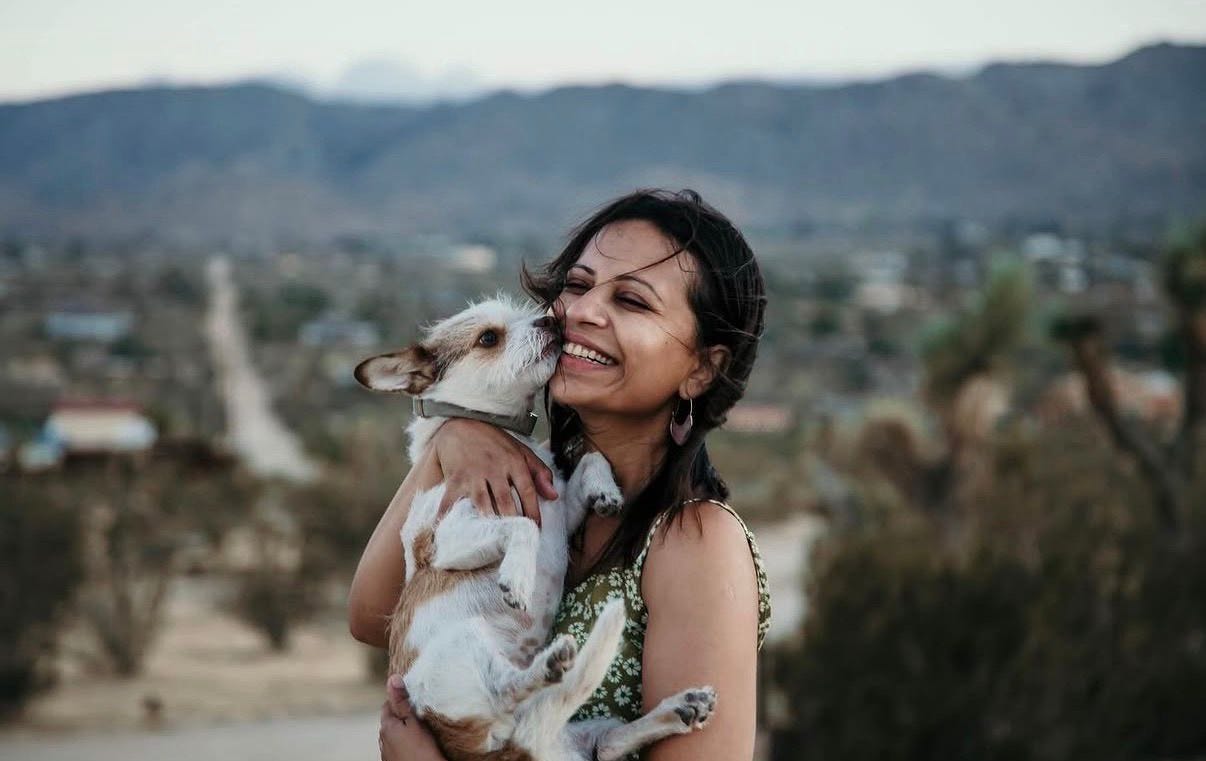
“My dilemma is different. When I’m in India, I sound and look and feel more American than anything else. And here I am brown, immediately and definitively.”
Her reckoning with the realities of color is a relatively recent thing.
When she first came to the US she’d already lived in many different places around the world and knew that having hired help to cook for you and make your bed was not a global phenomenon. Yet, the independence she found in New York was attractive.
“There are many things about being in America that were already familiar to me. I held on to the parts that are familiar to me. I held on to the fact that there are immigrants everywhere who’d come from all over the world. You’re released in a pond full of diverse populations… I finally had permission to be whoever I was.”
By which she meant, she “could be as Indian as I liked” and at the same time could also “give in to the parts of my family that ate ham, travelled, had divorces, were scandalous.”
Aria Aber’s novel ‘Good Girl’ came up at some point in this discussion — “it struck a bone in me.”
She had a great time in Brooklyn. The experience also held up a mirror to her, I gathered.
“I was in the center of it. I was ejected right into a bunch of wild young people, I finally broke out of ‘good girl’ mode, did a few ‘bad’ things. I lived, got it all out of my system in my early 20s, was a little wild, then went to grad school, and really assimilated; I think the toughest parts of immigration are understanding racism…”
This, despite having lived in liberal, cosmopolitan cities like NY and LA.
At a later part of our conversation, I asked her if she meant to say race when she said racism. She clarified that she definitely meant racism. We also discussed what she meant by assimilation, a word that came into my own vocabulary only after 2022, the year I moved here.
“You forget what color you are, sometimes. Sometimes, the more you succeed, the more you forget.”
Come to think of it, I do wonder how brown Sundar Pichai feels. Or how often.
“You forget. And then you’re reminded… I’ve really been reminded in the last decade.”
We didn’t discuss specifics in terms of incidents and such but micro-aggressions did come up.
“Suddenly someone will say something and you’ll realize you’re an outsider in a very specific way or you’re being othered in a very specific way.”
The examples she gave me are relatable.
“It takes someone to make fun of your accent for a second to be reminded that you’re different from everybody, or when someone does the ‘Indian head bob’ thing…”
Both those things have happened to me and I’ve tried to feign a sense of humor around it but I did take offense both times.
“It’s a reckoning of what has been the fitting in… no matter how much you assimilate, your identity remains very fractured until you realize exactly who you are perceived as and who you are…”
Being an author has also brought her closer to this realization.
“I’ve understood how Indian I am in the last decade.”
This realization includes all the lessons she learnt in a corporate context —sometimes one lands an interview because one is Asian, sometimes one doesn’t land it for the same reason. Being an overachiever who is “better than everybody in the building” is just normal for Asians because that’s the only way to “get the gig.” One also has to talk “louder” in boardrooms to be heard.
“Those were the places where I knew I had to assimilate in a big way,” she said about all this workplace wisdom.
My mind goes to a memoir by author Prachi Gupta titled ‘They Called Us Exceptional: And Other Lies That Raised Us’ about the pressures of Indian-American exceptionalism.
Over time, Tara’s identity went from being a “nebulous” thing to a more stable, self-assured sentiment in her 30s. The older she gets, the more “fierce” she feels about who she is, including her Bengali heritage as well as her grandmother’s Singaporean heritage. She has preserved “every one of her grandmother’s things,” including her Malay Singaporean-Indian recipes.
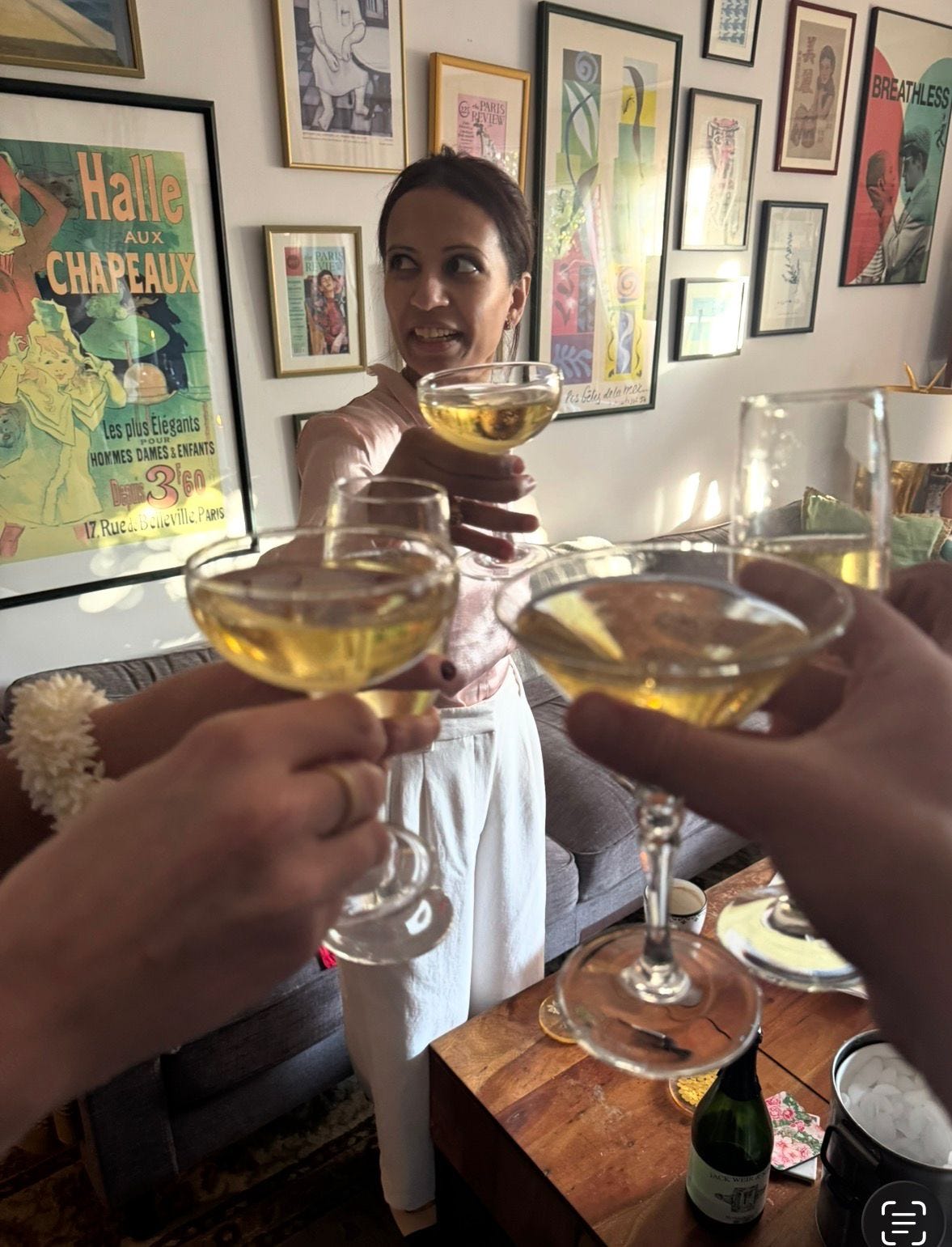
We spoke about the difference between ‘immigrant’ and ‘expat,’ words that subvert their dictionary definitions and are semantically indebted to one other. She identifies as an immigrant. For her, expats are “the people my dad was friends with in different cities across the world.”
Things like villas and “summer homes,” and laidback luxury come to mind here, for there is a certain glamor associated with the idea of an expat. Expats inhabit insular, high-brow bubbles that float above the locals, but immigrants want to belong with the locals, perhaps?
“Being an immigrant, in my opinion, is, like undergoing a little more hardship with identity than an expat who is there of their own choice and desires. I am definitely here of my own choice and desires, but I feel very reminded of my cultural identity and my skin color in many ways that are more pronounced in the last decade…”
I’m reminded of an 4essay I wrote on the subject last year. In it, I teased the economic and racial connotations of the two words. I mused thus: If it doesn’t hurt, is it assimilation at all? To truly qualify as an immigrant, must one suffer?
Tara agrees with my premise: “It’s more backbreaking to live many different citizenships and identities and to find home.”
She found her home in Los Angeles, Silver Lake.
“Home, for someone like me, is where you decide to put down your roots,” she said, and I note the subtext of her statement: volition.
“Home is what I’ve built for myself as an immigrant.”
Olypub is one of those time worn restaurants in Kolkata that have transcended their brick and mortar identity and have become a lot more - a brand, a type, a memory, a vibe, collective nostalgia, all those sorts of intangible things.
No posts
Comments
Nothing yet. Say the first thing.
Sign in to join the conversation.