
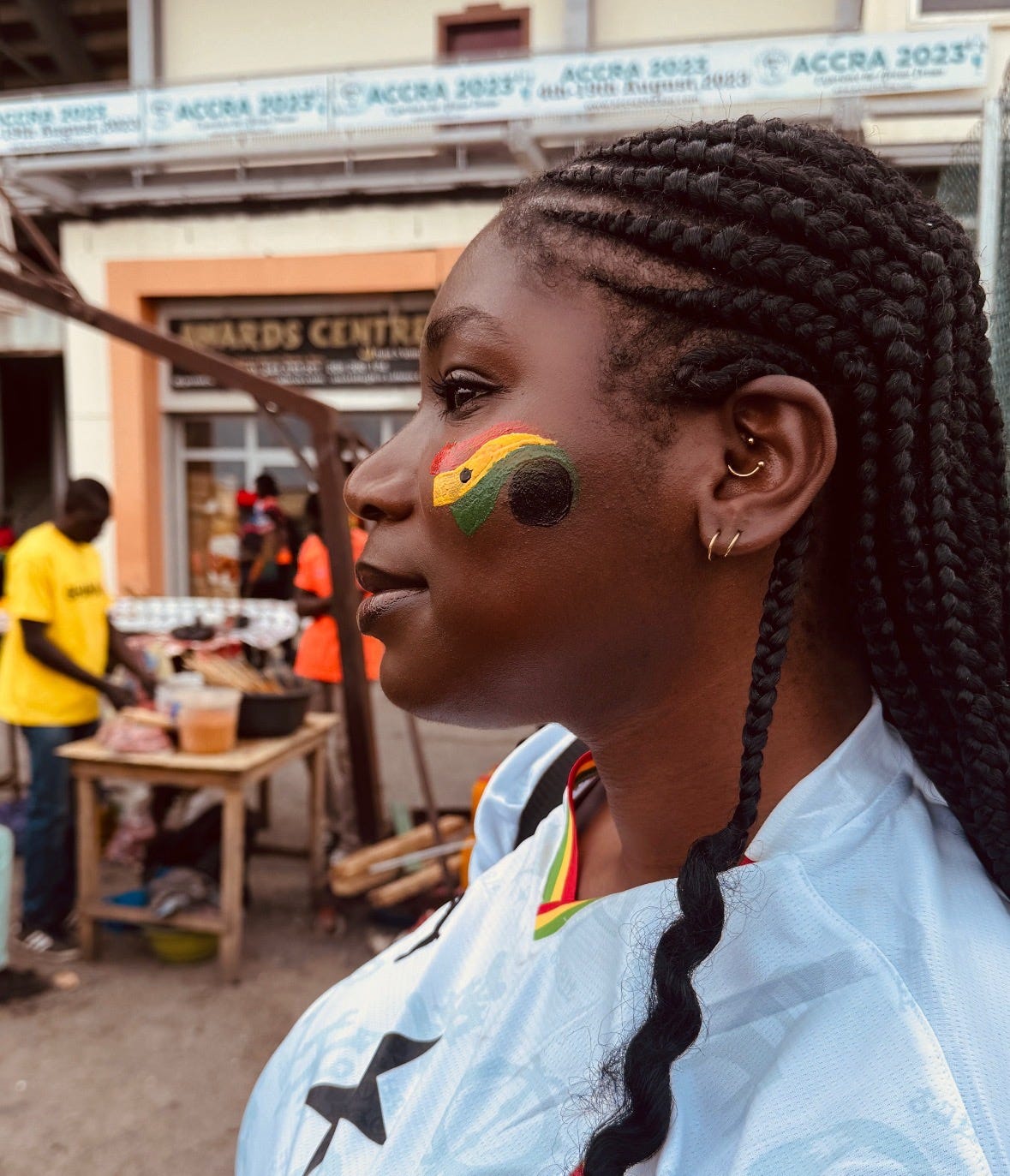
I met Delia at a fiction writing class at Stanford University, where she is also a law student.
When I found out that she wasn’t born in the US, I asked her if she’d be open to being interviewed for my blog, and she agreed at once.
So we settled down after class last week to talk about her experience with immigration, that nebulous word that has as many definitions as the number of people who moved.
We sat on the university’s signature swiveling chairs, and I told her I really liked them, wheels and all. In class, though we all face the same direction, we tend to roll our chairs towards the walls of the room, with a big gap in the center.
“Nice chair, I love it,” I said, all set to begin the interview.
I know Delia did not mean to respond metaphorically when she said, “I like it, but I don’t love that everyone kinda sits on the outskirts, because you’ve to make a big circle… I kinda like being in the middle and a little closer.”
But I heard between the lines.
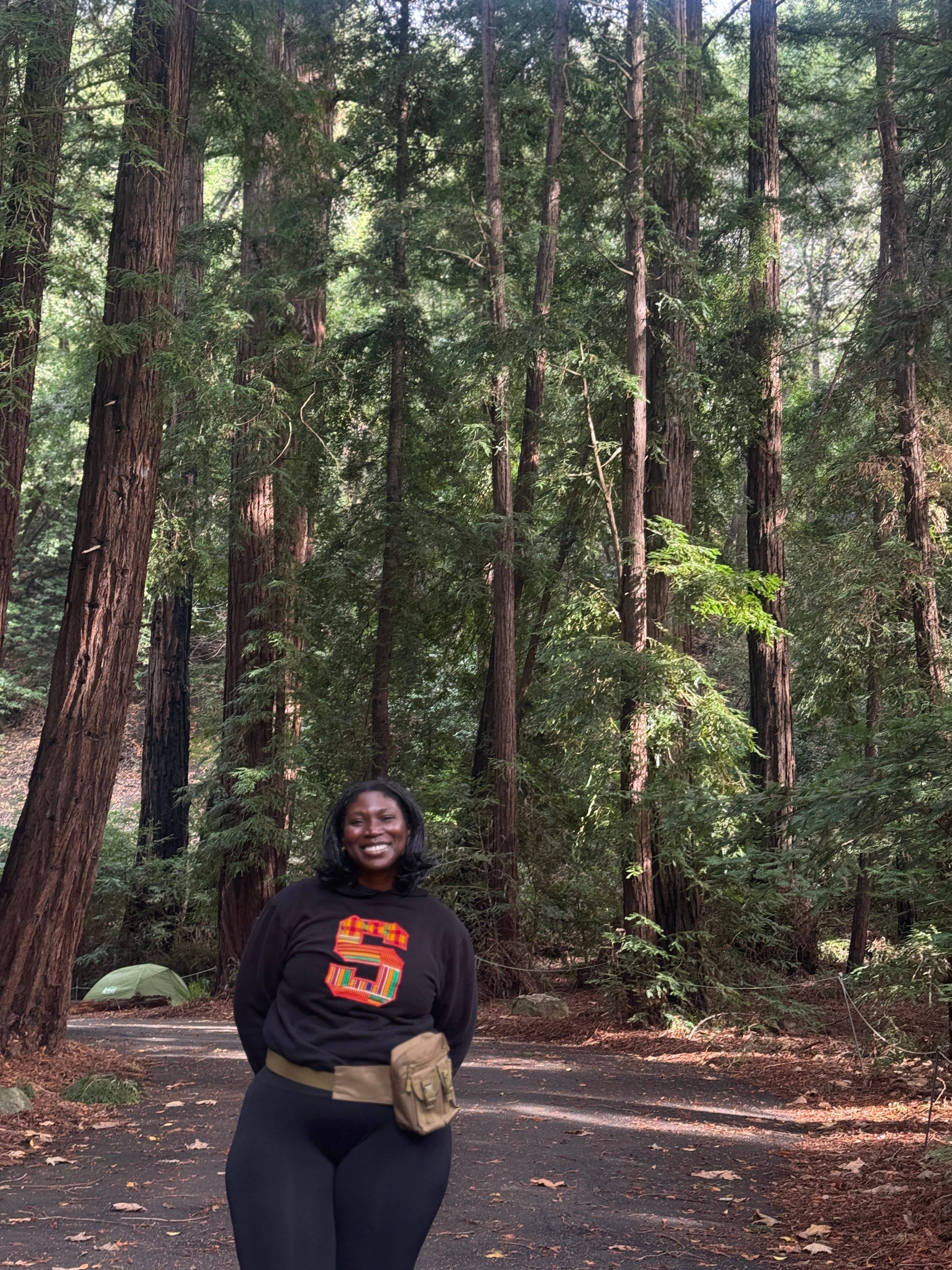
It was her dad’s work as a military nurse that took the family of 7 from Accra in Ghana, where she was born, to the UK, and eventually to the US, all before the age of 10.
She was 5 when she moved from Ghana to Edmonton, a suburb of London. She told me she was bald at the time, because in Ghana it was common to shave girls’ heads as it was believed it helped them focus on studying.
I asked her about her memories from Edmonton.
“All I really remember was the big hill we would ride our bikes down, into direct traffic.” That, and playing knock knock dash — a game that involves knocking on doors and running off before someone answers. It has renditions in many cultures, yes.
After 4 years, the family moved to the US. “I consider that like ‘the big move’ because I was 9 years old and more cognizant of what was happening.”
The first stop was Dallas, Texas, where she stayed till college. What do the memories of that move look like now?
“It was unpleasant, I was severely unhappy.”
Saying goodbye to her friends and teachers was difficult.
“My best friend was so sad that I was moving, that we didn’t talk. So I didn’t say goodbye to her before I left for the US…”
This reminds me of what writer Suketu Mehta said somewhere: everyone who migrates breaks a heart or a promise. I think he wrote this in his book ‘Maximum City: Bombay Lost and Found,’ in the context of moving from rural to urban India, but it fits across situations, doesn’t it?
“I remember getting on the plane… maybe that’s where my anxiety started — I was anxious but also in awe of what was about to happen.”
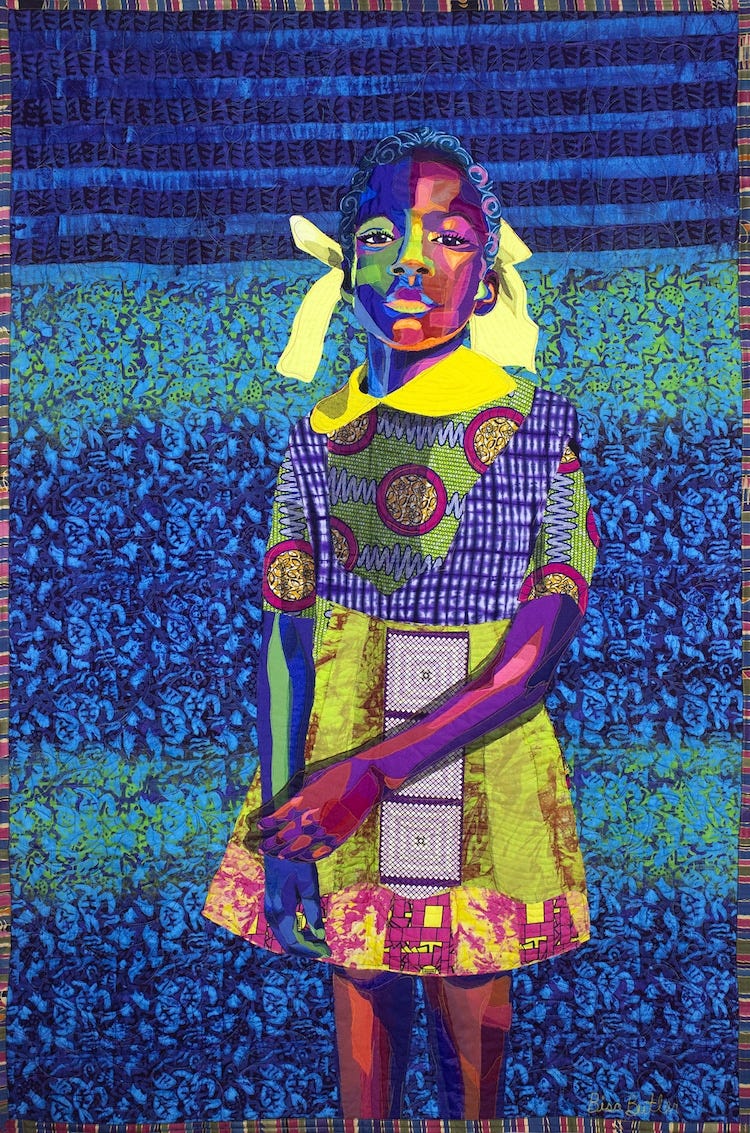
Thinking back to her 9 year old self on that plane, Delia is now reminded of a work of crochet art by Bisa Butler: an image of a 7 year old girl based on the daughter of the artist’s friend, someone who’d also immigrated to the US.
“If you look into her eyes, she looks sad and anxious but also, like, excited…” Delia said about this artwork that she came across years later, as an adult.
“The girl is almost looking at you but a little scared to look at you… when I saw that image it took me back to how I felt in that moment on the plane.”
A print of this image hangs in her bedroom today.
The details people recall about the day they moved always make me sit up. Delia remembers watching her first ever American movie on that flight, The Pacifier, and “bawling” while listening to Kelly Clarkson’s ‘Since You Been Gone.’
“Every time I listen to that song, it takes me back to the plane.”
On landing at Dallas, the first thing she noticed was the bigness of everything. “The airport was so big! My first thought was like - this is America, you know?”
Actually, yes, I do know; for me, those massive 18-wheel trucks on the highways are America. That, and the size of everything, from coffee mugs — small here is also huge — to department stores. Aisles and aisles of stuff.
And sure enough, Delia had the same impression. “That was my first thought when I went to Costco for the first time! I was like, oh this is America. There’s so much stuff. Everything’s endless and at your fingertips.”
And then she noticed other things.
“This white guy with a different accent, a slight country accent, comes to me, and I was like - what are my ears hearing! I was used to African accents -my parents- and British accents -my friends. And I had this weird little British accent myself. I remember he picked us up in this big SUV. We were all really sad and quiet on the drive. He said - do you guys want to go to Sonic? It’s this old school drive-in fast food chain?”
A person on roller skates came out and gave her fries and “a big blue drink.” Now looking back she thinks it was probably Powerade. That American junk food, strangely, made her feel like it was all “going to be okay.”
Fries and a sugary drink. She had arrived in America, all right.
It was very hot in Texas when they first came. She remembers thinking “this is hell but it looks nice and tastes good! I had these weird emotions, like, where am I?”
Delia was naturalized as an American citizen 6 years after she moved here; that lag, she reckons, is probably why she doesn’t feel “fully” American. Up until high school, she was very cognizant of the fact that she’s not “actually” American.
But of course we know that identity transcends one’s passport. So I asked her: when did you become American?
“This is an interesting question. You said you identify as an immigrant? I also identify as an immigrant. People who’ve been here for a shorter period of time have a hard time fathoming why I identify as an immigrant…”
She speaks Twi, her native Ghanaian language. Her parents made sure of it.
“I always felt like I floated between two worlds.”
“It’s interesting because you come to America and you ‘become’ Black. In the UK also you become Black but in America the history feels a little different… I was African but I wasn’t Black American.”
This is, in fact, what her law school essay was about — about not identifying as Black and about having that identity “placed on” her.
This reminded me of the time a Chinese author once told me that after coming to America, she ‘became’ Asian. Similarly, I’m an Indian who ‘became’ South Asian here.
In Delia’s case, of course, the connotations around becoming are wrapped up in history more than geography.
Being asked ‘where are you from?’ by Black Americans was something that made her reflect. “I was like - I don’t know who my people are…”
I want to request her to show me that essay.
“It’s interesting because a lot of Americans will ask me where I’m from, regardless of race, and a lot of immigrants will assume I’m American. I’ve had to exist in those two words… like, this group knows I’m not but this other group thinks I am — I’m kind of in this weird middle ground. Maybe I’m Ghanaian-American… or a global citizen.”
Even within the hyphenated identity, there are sharp individual differences; as she pointed out, some Ghanaian-Americans lean more into their American side, some are Ghanaian only with food and not with language or the other way round. This is probably the case across different kinds of hyphenated Americans.
Delia wishes to be “transcontinental,” in that she wants to spend part of her life in Ghana and do legal work there.
She went to Ghana last year and lived there for a few months. “I wanted to understand where I came from and connect to it on my own terms instead of, like, only through stories of my parents.”
Which American values do you identify with the most?
“You know, there’s a politeness, sometimes a naive and fake politeness, with which Americans carry themselves?”
I know what she means when she talks about that “polite American standard” that people who’re not from here —she cites her own father’s example— don’t abide by. I think back to the way she fielded my question about being interviewed for my blog. She was indeed very sweet, polite and patient with me as I explained this project to her.
“They’re not very direct sometimes… there’s a softness. I’m a soft person and I appreciate that delivery, even if you’ve to sometimes read between the lines.”
Besides “American politeness,” she also enjoys “American excitement,” that characteristically loud expression of childlike excitement, which, as she points out, is most visible when they’re on vacation. “They’re like ‘I want to do this’ and ‘I want to try that’ and they’re walking all over the place like they own it... they’re obnoxious but in a way that I find endearing.”
Two things stand out here. First, her genuine affection for American quirks. Second, her use of ‘they’ when she talks about Americans. And I say as much.
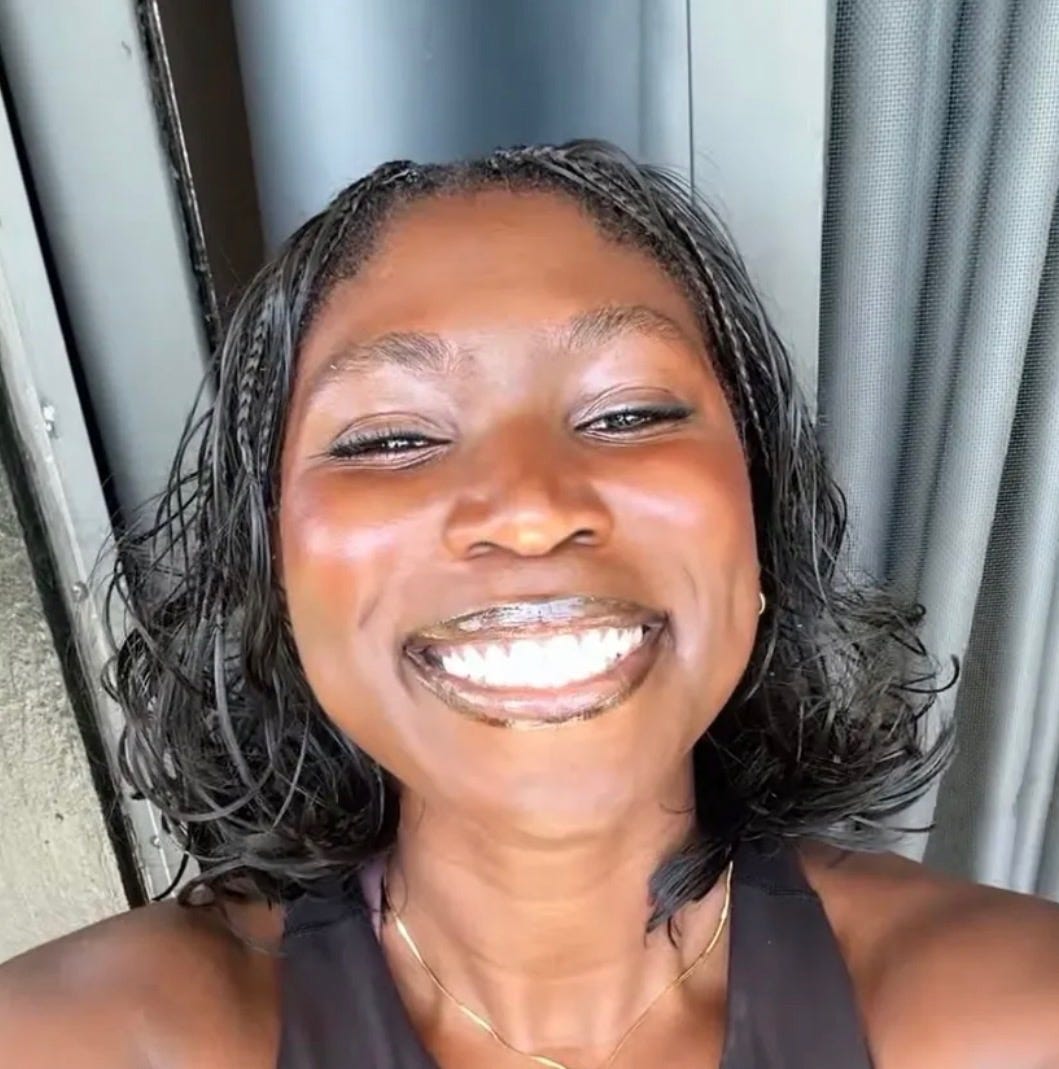
“I know,” she laughs. “I can’t partake in it because I see it! As someone who exists in the middle, I’m on the outside looking in.”
What Ghanaian values do you hold dear?
“There’s a lightness there that doesn’t exist in the West,” she said, attributing the humorous outlook of people in Ghana, in part, to the harsh social conditions there. “In Ghana people don’t take themselves that seriously.”
She now moves around in her “high-achieving, neurotic” world here, with that precious lightness.
Where is home?
“Home is where my little sister is. She’s in Dallas.”
No posts
Comments
Nothing yet. Say the first thing.
Sign in to join the conversation.