
Rereading this story a handful of times, prepping it for publication, I realized it fits squarely into a kind of story I’m apparently a real sucker for. Last week’s “The Long Departure” by Bill Capossere, “Talitha Koum” by Gwen Warner, “Inheritance” by Luke Wortley. Surely others, too, both here in the Short Story, Long archives and just other favorite stories in general. These stories about parents and children, what is passed down, what it means to worry about your kids, what it means to worry about and take care of your parents… all with a small but important magical element that becomes the beating heart of the story, as if the only way we can most honestly wrestle with these relationships and emotions is through the speculative.
That metaphor I just used — the beating heart of the story — feels especially apt for today’s story from Joe Baumann.
On the morning of his mother’s death, Peter Glory wakes to find his heart floating halfway between him and the ceiling fan.
Right from that very first sentence, it pulls us in and tells us what is important. The protagonist’s mother has just passed away, and — since he was little, we find as we continue to read — he has had a… condition (?) where his body comes apart, detaches, leaves itself. From there, it continues to be my favorite kind of read — equal parts funny and sad; at times familiar, while always unique and surprising.
Incredibly excited to get to share this one!
—Aaron Burch
Editor, Short Story, Long
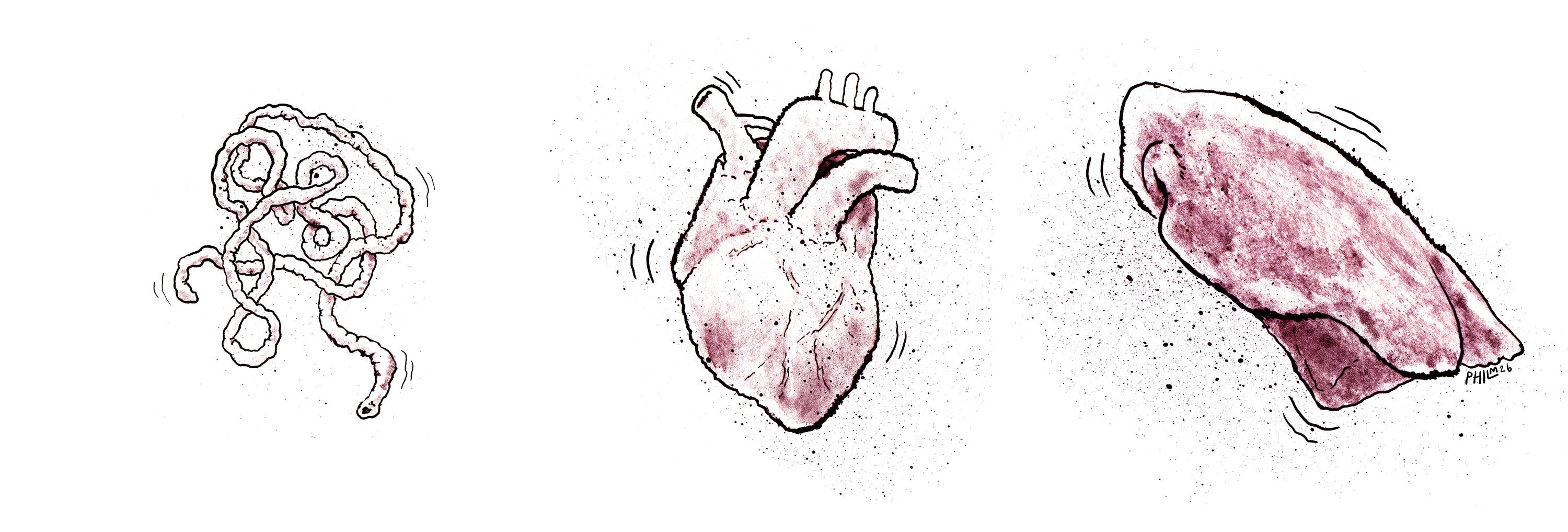
On the morning of his mother’s death, Peter Glory wakes to find his heart floating halfway between him and the ceiling fan. He grunts, sits up, reaches out, and grabs it. The flesh is slick and warm, thumping, the beat of his heart in his fist the same rhythm as the blood still flowing cleanly through his body. Although wet, none of the glistening blood on the surface of Peter’s heart stains his hands. With a tiny wince, more from the disconcerting visual than any actual pain, he pulls open his chest and stuffs his heart back in place, all the tiny connections reasserting themselves; the sound is like a plunger sucking at a clogged toilet many times over. When his skin stitches itself closed, Peter takes a deep, full breath, holds it, and then exhales until his lungs feel flat as paper. Nothing feels lost, but who can really say. He’s never quite sure what it means to know whether something is really gone.
*
At the gym, the first thing Clark says to Peter is, “What was it this time?”
They’re sitting on the bench in the locker room. Clark likes to ask these things; he writes them down in the battered notebook he hauls around from bench to machines to squat racks, keeping track of Peter’s detachments in the same way that he records every set, every weight, every rep count, both on his own and Peter’s behalf, insisting, with every workout, that something change: heavier dumbbells, an extra 2.5 pound plate on the bar, one more rep, another set. Progressive overload, he calls it. Peter has to admit that Clark is onto something: four months of Clark’s way of doing things have produced better results than Peter’s years of flying solo.
When Peter tells him about his heart, Clark frowns. He’s a big man, with veins visible in his deltoids that are always on display thanks to the billowy tank tops he wears. Peter is pretty sure the point is to show off the spectral tattoos that line his left arm from shoulder to wrist.
“That’s strange,” Clark says. “Has it ever been a major internal organ before?”
“Sometimes.”
“Not recently,” Clark says, flipping through pages bloated with ink.
“I’m sure it’s nothing,” Peter says, then stands, shoving his bag in an open locker. He pats his chest, the noise and pressure the same as usual. “Nothing worth worrying about.”
*
After the gym, Clark and Peter go their separate ways, Clark back to his loft apartment where his boyfriend Jude awaits, sets of bench presses and skull crushers not quite his thing; he prefers twilight-hour runs through a nearby park, which sometimes Clark goes on and sometimes he doesn’t, to which sometimes they invite Peter and sometimes they do not. Peter drives to his own much smaller apartment, where he wolfs down a protein bar and then takes a shower. He logs in for work, ready to review timesheets and approve payroll for the east coast company that has hired him to manage their salary system, but then his phone rings: his father, which is unusual. Peter is about to let it go to voicemail but then his heart starts thumping harder than normal and his breathing goes shallow, as though he’s having a panic attack. But Peter feels fine.
Until he reaches for the phone, that is.
Peter, en route to his parents’ house, feels as though he’s falling to pieces. His father has told him not to hurry. That it’s too late. That an ambulance is coming but that there is nothing to do.
“How can you know?” Peter managed to ask. He felt like his tongue was loosening, lips melting, jaw unhinging.
“Anyone would be able to tell,” his father, a fellow accountant, said. “Don’t speed. Don’t be stupid.”
“I’m on my way.”
Peter’s fingers feel like they’re coming unscrewed when he tightens his grip on the wheel. His ankles feel like they’re disintegrating when he presses the gas. When he glances up at the rearview mirror, his eyes feel extra lubricated, ready to slip out of their sockets. Checking for cross-traffic, he can practically feel the vertebrae of his spine unfastening, a zipper coming apart.
He manages to arrive at the house whole. As he crosses the yard, his toes feel like loose keys in his shoes. His wrists are flapping shutters battered by a cyclone. But when he reaches the front door, he is one single piece.
Inside is too quiet. The house is open, airy, the first floor a single large room made up of the living-kitchen-dining space to the right, his father’s office behind French doors to the left, a staircase leading up to a row of second-story bedrooms past that. Late afternoon sunshine blasts through a row of windows looking out on the back yard, the westward-falling sun piercing all the way through the house. For a moment, Peter wonders if he is dreaming. If the phone call, the strange calmness in his father’s voice, the clanking, jittery drive over, this stunning, terrible silence, is all happening in his head. Peter even tries pinching himself, and the little blurt of pain tells him he is awake.
“Dad?”
“We’re up here,” calls a voice. Not his father’s, but one of his brothers.
Peter climbs the stairs. Are his knees uncorking?
The upstairs hallway is dark, all closed doors and looming bookshelves. His mother is a voracious reader, a bibliophile of the highest order even though she teaches science to uninspired—though, in his mother’s words, “never uninspiring”—rural high school students who never manage to correctly memorize the basics of the Krebs cycle. She is rigorous in most components of her life, keeping the pantry and family bills well-organized, always cognizant of social events on her or their father’s calendars, keeping straight which of her five sons will be where and when. But her books are a different story: scattered about the house on shelves in all sorts of places, none of which match one another. Up here, the narrow hallway feels even more catacomb-like thanks to the shelves dotting the spaces between bedrooms and bathrooms, books of all shapes, sizes, genres, and content crammed about.
Peter slinks to the end of the hall. He finds his brother Dallas and his father in the master bedroom, standing in front of his mother’s bureau. They’re staring at a photo, or maybe the bowl of rings she accessorized from every day. When they turn to look at him, Peter almost falls apart completely.
*
Later, when Dallas and Peter and their father move downstairs, after Dallas has explained to Peter what happened, how their mother complained of a terrible headache while standing in the kitchen chopping vegetables for a summer gazpacho, how the pain in her skull was strong enough that she laid down her knife—which is still on the counter—and then dropped onto the sofa and passed out, how what was happening wasn’t a headache but an aneurysm, silent and sneaky and unseen, how her brain flooded with blood from the burst vessel and killed her immediately, how there was nothing to be done, nothing at all except call 911 and let her be taken away, after all of that, Peter drops onto the other sofa and stares at the cushions until Michael and Cal, oldest and youngest, arrive.
None of his brothers come apart at night. Once he could sleep on his own, without waking and wailing to be fed, Peter was moved into Michael’s bedroom, his little car-shaped twin bed across the room from his older brother’s simpler platform-style. The first time Peter remembers waking with a part of him missing he was six years old, fresh out of first grade. Morning summer sun was beaming into the bedroom through the window between the two beds. It caught on the rotation of his left forearm, which hovered two feet above Peter and spun like a dial, slowly, slowly, pushed by an invisible wind that Peter couldn’t feel. Despite his age, he was not afraid. He understood, intuitively, that all he needed to do was reach up with his still-attached right hand and grab his arm, then arrange it against his empty shoulder socket, and it would reattach, which is exactly what happened. When he glanced around, he saw Michael, eight, staring at him, top sheet pulled up to his chin. He didn’t look afraid—Michael never looked afraid—and he didn’t look disgusted—Michael never looked disgusted, either—but he did look as though he now understood something about his brother that he hadn’t before.
Peter spent months forcing himself to wake up before Michael. For a few weeks, he barely slept at all, observing the lump of his sleeping, sometimes snoring, older brother as he tossed and turned at night, mouth open, saliva pooling in the corners of his lips, little bits of mucous and snot hovering at the edges of his nostrils. Michael rolled around in his sleep a lot, sometimes sucking his thumb, sometimes pressing his hands down into his pajama pants, sometimes mumbling. But never did a part of him detach itself to swim up into the air. Not once was a pinky finger or a toe or a kneecap, much less a whole leg or arm, a hand or his lips or an ear or one of his gunky nostrils, separated from his body the way that Peter’s parts liked to make themselves scarce, seeking some kind of doofy freedom.
When he asked his mother why this was, she said, “We’re all built different, hon.”
Peter has his other unique qualities, of course. They all do. Michael’s athleticism, still alive in his late thirties, and middle child Nicky’s innate understandings of the human body and its strangenesses—not Peter’s strangenesses, but those that occur at the cellular level, blood disorders and cancer and such—and Dallas’s way with words, his knowledge of etymologies and linguistics, language acquisition and speech therapy, Cal’s artistry, his penchant with paints and styling pencils and clay, in his hands turned from dry lumps into animals of bizarre shapes and sizes, tigers with wings, lions with forked tongues, bears with outsize claws. Giraffes with blue dots. Peter, besides his floating limbs, with his organizational skills, his tendency toward leadership and delegation.
Peter and three of his brothers sit in unsure silence (Nicky, a traveling nurse, is out of state, somewhere in the Pacific Northwest, Peter’s pretty sure, but who can ever keep track; he’s left three messages already, exhorting Nicky to call but not saying why because Peter can’t bear to leave the horrible news that way). Their father is stationed in his recliner. There’s no sound except their breathing and the air conditioning. Reposed like he is, Peter feels likely to unhook and unhinge, for his body to disassemble and ride up toward the ceiling, bonking the unmoving blades of the fan.
There is much to be done, Peter knows. There are tears to be shed. But for now, no one knows quite what to do, what to say, how to penetrate the terrible silence.
“We should eat,” Peter says eventually.
No one moves, and so Peter, swallowing a sigh, pulls out his phone and orders a pair of pizzas. He tries Nicky again, the call going straight to voicemail. Peter feels the eyes of his brothers on him. Briefly, he wishes they would crumble to pieces, their bones to piles, their flesh to flappy tarps, their muscle to unspooling thread. He can picture them all in disarrayed heaps.
But then, no, he realizes. If everyone else falls apart, the only person left to put them back together would be Peter.
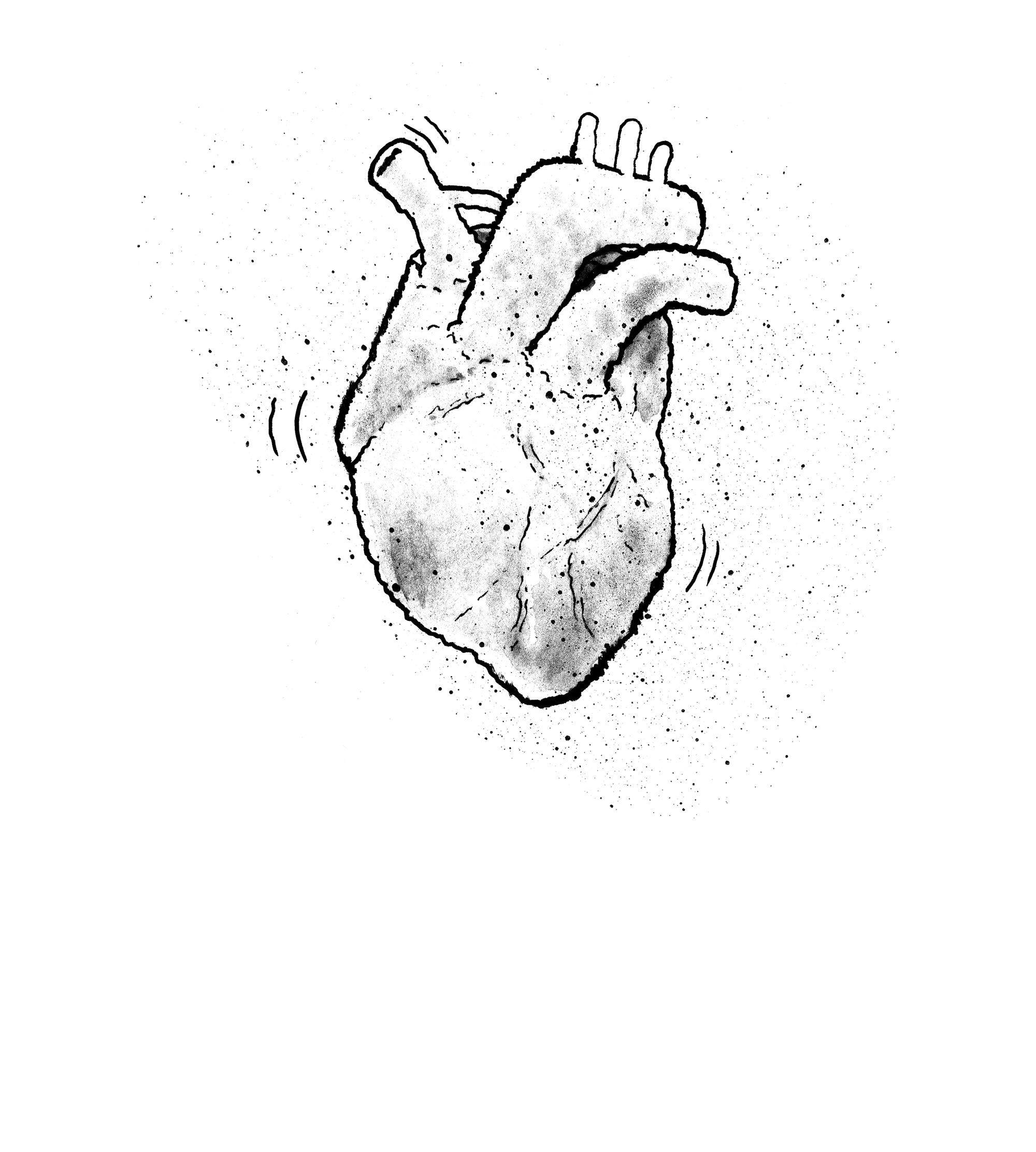
Peter wakes to a familiar sight: his childhood bedroom, with its popcorn ceiling and robin’s-egg blue walls. And his intestines ribboned in the air like a dragon wheeling in the sky. His guts are slick with brownish-red blood, though they do not smell. Peter sits up. He thinks of his mom, but he is surprised by how distant her death feels, the sorrow muted, as though she’s been gone for a long time. His innards float higher; he has to stand on the bed, mattress squealing beneath his heels, to grab them. Peter grimaces as he pries himself open, sets them back where they belong. He is thankful that everything fits into place easily enough. Suddenly, thoughts of his mother crash with vicious closeness, her absence an invisible punch. He remembers the day he shared his acceptance letter from the university of his dreams—a local state school; he did not dream high—and how strong the vanilla and lilac of her body lotion was as it filled his nostrils when she hugged him, how firm her body was, how powerful the muscles of her arms from years of lugging around science equipment at school.
His brothers are waiting for him downstairs. Someone has managed to make coffee, the bitter smell sharp and unpleasant in Peter’s nostrils; he’s the only one that doesn’t drink it. They’ve gotten no further along re: breakfast or anything else, and their father is missing in action; Peter did not think to check on him before coming downstairs. He shoots a text to Nicky—Call me, please—and then looks from one brother to the next, each of them focused on their coffee mug, refusing to meet his eye, as if they’ve all done something shameful.
“What?” Peter says.
“Your ear,” Cal says.
Peter reaches up with his right hand, feels the familiar balloon of flesh with its hard curves and soft dangle.
“Your other ear,” Dallas says.
Peter reaches up with his left hand and finds nothing.
“Oh,” he says.
Still, no one quite looks at him. Peter’s brothers don’t particularly like to talk about his wandering parts, which has always puzzled him, bemusement mixed with a certain amount of frustration. He came out as bisexual when he was sixteen, when maybe Dallas and Cal, who were twelve and ten, were too young to really understand what that meant. But Michael and Nicky, and definitely his mother and father, had no trouble comprehending, and they had no trouble accepting. That was easy, somehow, in a way that Peter’s floating body parts were, are, not. Even in the wake of what’s happened to their mother, this is still a clunky road block between them.
“I didn’t realize,” Peter says, and then before anyone says anything else, he excuses himself and goes back upstairs to find the missing ear.
*
“How weird,” Clark says. “Two parts.” He scribbles in his notebook. “Has this ever happened before?”
Peter shakes his head. He knows it’s ridiculous that he’s at the gym when he should be doing anything else, but throwing heavy weights around, feeling the depletion in his muscles, is the only thing with any appeal. After he got his ear reattached—it was hovering above his bedroom door frame like it thought it was a crucifix or dreamcatcher—he went back downstairs and laid out plans for his brothers and father, who in the interim had appeared downstairs and poured himself a cup of coffee. Peter made himself point person for calling the funeral home and contacting the hospital, connecting with the morgue. No one objected. Dallas and Michael agreed to take their father to said hospital to handle any required paperwork, and even though Peter wasn’t sure that was how things worked, he nodded affirmation. Cal agreed to work on externalities: obituary, social media announcement (which felt crude but necessary these days), contacting extended family that none of the brothers had thought to reach out to last night.
Clark lets out a low hmm but asks no more questions. He slaps the journal shut before standing and leading the way into the gym proper. Peter follows him past the rows of ellipticals and stationary bikes and the army of treadmills occupied by mid-morning cardio enthusiasts, the backs of their shirts blooming with sweat, forearms and shoulders and calves glistening. They pass the rows of exercise machines, retirees flinging handles up and down, left and right. The free weights, where Peter and Clark spend most of their time, are on a lower level like a sunken living room, down a short set of stairs. They claim the last remaining bench and each do a warmup set of presses without saying a word to one another.
Peter is unsure how to break the news. How can you say, My mother died, if it isn’t the first thing you say? How can you say it standing in a gym, spotting your friend as he goes for a PR, when the last thing you should be doing, after your mother dies, is standing in a gym and spotting your friend as he goes for a PR? Clark needs no help from Peter; he hardly ever does, somehow fully aware of what his muscles can and can’t handle, always adding a few more pounds to the bar on the exact right day in the exact right amount. When instead of the thirty-pound dumbbells his arms are ready for the thirty-two-and-a-halves. It’s a certainty, an exactitude, that, today especially, leaves Peter cratered with jealousy.
When he does his own lifts, he’s sure he’s going to collapse. That everything inside him is going to come streaming out, through each pore and orifice, his bones and viscera turned to a tubal mush that will spew onto the rubberized floor.
None of that happens. Instead, Peter feels a deep well of power somewhere inside him. He presses and presses, set after set, rep after rep. He feels winded deep in his lungs, and his forehead and back are slathered in sweat, but he keeps on lifting: endless bench presses, a dubious number of triceps dips, dumbbell flies that last minutes. By the time they’re onto pushup pyramids, Clark is staring at him like he’s a lunatic. He actually asks if Peter has started taking something.
“I don’t care about legality. We’re not, like, prepping for a competition.” Clark raises an eyebrow. “Unless you are, and didn’t tell me?”
“No,” Peter says.
In the locker room, changing out of their sweaty clothes, Peter can tell Clark wants to say something. He has a way of pursing his lips and squinting off into the distance that gives him away. But he remains silent. His tattoos twitch as he stuffs himself into a fresh t-shirt. Another, similar tattoo is drawn across his left leg, swallowing the lower half of his thigh, his entire kneecap, and his calf. When Peter asked how painful it had been to get done, Clark said, “Well, I had it done over several sessions.”
“And?”
Clark poked at his thigh. “Mild.” Then his calf. “High.” He tapped his kneecap. “Like hell.” Peter hasn’t ever asked what any of the tattoos mean; it’s always seemed like a silly, unfair question, for some reason. And if Clark has ever wished to share, he’s never let on.
As they’re leaving the building, Clark stops.
“If you need anything,” he says.
Peter nods.
Clark lowers his sunglasses. “Seriously. Otherwise, tomorrow?”
“Tomorrow,” Peter says.
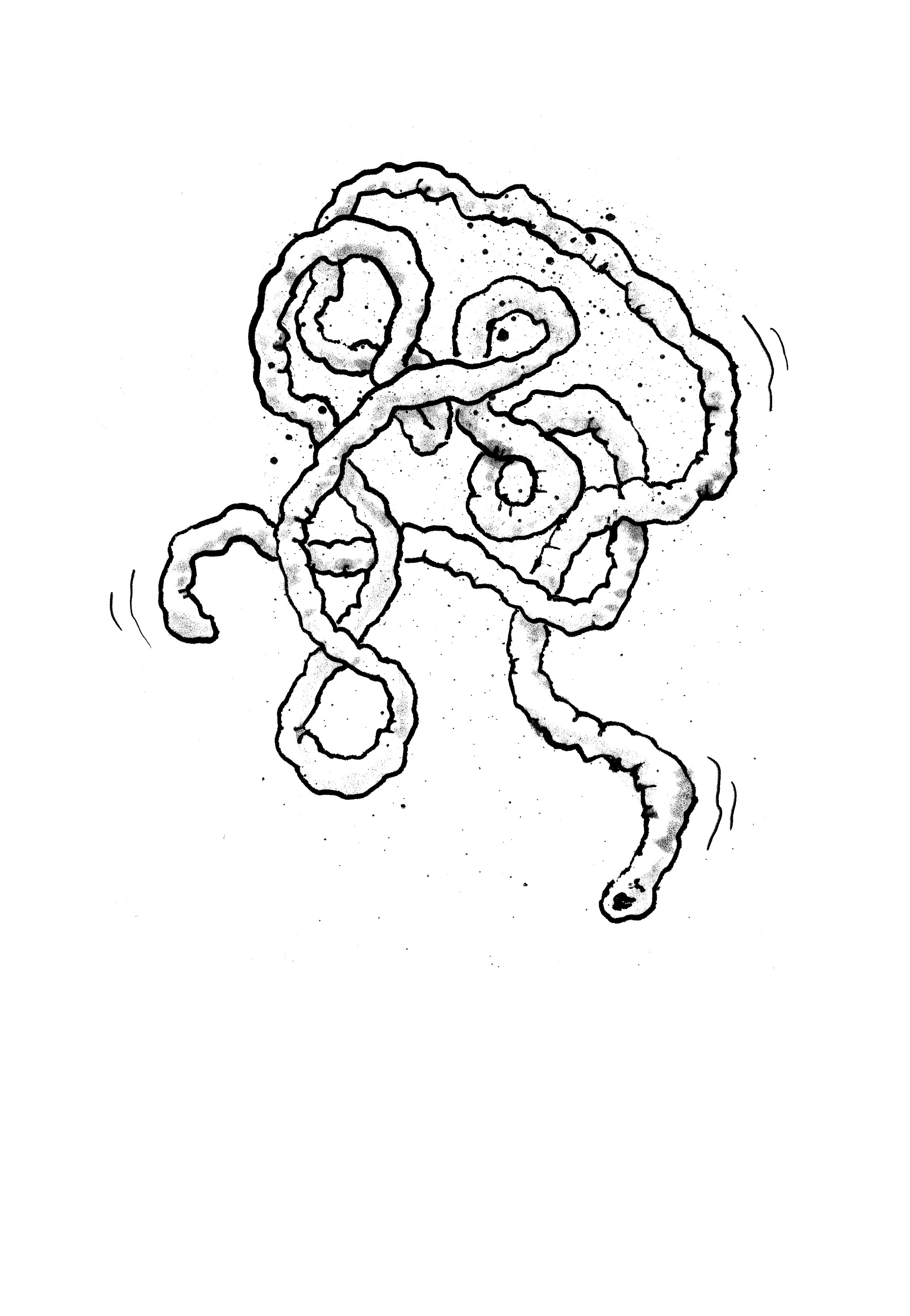
Peter finds his left lung, wet and wrinkly, hovering a few feet from his face. He reaches out but then stops. He lets it hang there as he takes a morning piss, brushes his teeth, fries an egg with wilted spinach. He pictures the lung while he calls the funeral home to discuss details of his mother’s memorial, which he does with a cool detachment, as though he’s taking care of just one more work task. When he goes to put on socks, Peter realizes that one of his toes is missing, the pinky of his left foot. He scans his bedroom like he’s examining the night sky and sees it tucked in the far corner near the window.
He decided to leave them.
At the gym, he tells Clark, who looks aghast. “We were going to do intervals.”
“We still can.”
Peter, in fact, feels refreshed, barely winded. He doesn’t think of his mother at all. Clark, on the treadmill next to him, face flush and body heaving for air, looks at him in half-delirium, confounded by Peter’s poise.
Peter goes to sleep that night with the toe and lung still hovering. The next day he feels refreshed, and his grief over his mother is nothing more than a dull ache at the back of his teeth, in the small of his spine. His right tibia has evacuated, leaving his leg to flop. He sends a picture of his leg to Clark, who, when it becomes clear Peter has no plans to reattach the bone, writes, Rest day, I guess? And then, moments later, What is up with you?
He leaves the bone and hobbles around. Michael writes, wondering if they should make their father some meals. Sure, Peter writes back. Go for it.
I thought we could make a schedule.
You mean that I could.
Only if you want to.
Peter does not, but he takes care of it anyway. He sends it off to his brothers, who reply with various thumbs-up emojis and words of too-serious thanks. Then he puts in several hours of work and answers a few email inquiries from the funeral home.
He takes a nap and then finds two of his ribs dancing above the living room sofa. They look vaguely like an animal’s teeth after eviscerating prey.
Will someone speak at the service? Dallas has written.
Peter doesn’t write back.
He walks to the bathroom, empty leg dragging. The lung and bones are hovering in the hallway near the closet containing the water heater and air filters, looking like they’re kids tucked away in the corner of a party, afraid to mingle. The pinky is nowhere to be seen. Peter parks himself in front of the bathroom mirror, where he pulls off his shirt and stares at himself, leaning against the vanity for balance, having not quite gotten the hang, yet, of managing to stand with one withered leg.
Peter scans his torso. His muscles are plump with power but he’s also sleek, his midsection a pleasant crunch of muscle. He flexes his arms, feeling silly—he’s always found the influencers who pose in mirrors or for selfie videos mildly absurd—but also impressed by the size of his bunched-up biceps.
Then, curious as to what will happen, Peter pulls himself open. As usual, he feels no pain, the sensation more like when the dentist tells him to open wide, stretchy and vaguely uncomfortable at first but easy to acclimate to. His insides glisten under the hard bathroom light. His heart thrums its steady, low-rep (thank you, intervals with Clark) beat. His stomach has its own gurgly pulse. Behind his peeled-aside abs, his intestines are like a clogged train depot.
Peter doesn’t touch; he only looks. His innards give off a weird heat, like an oven starting to cool from a long cook. He takes a deep breath with his one good lung and watches. Then Peter closes his eyes and pictures his mother. He sees himself sitting next to her at a soccer game, cheering on Michael, their mother consoling him after his team loses. He sees her taking him out to dinner, just the two of them, when Peter landed his job, refusing to let him pay for a meal of steaks and fancy red wine that was surely too expensive. These memories are blurry, vague, hardly meaning a thing. Then he pictures the various tasks that must be done, still, in preparation of her memorial service. He snaps his eyes open and grabs the lung, which has floated into his periphery. He reattaches it, and the burden of grief starts to fill him like a tub receiving rising water. Peter plucks out his liver, releasing it like a balloon freed to the sky, and the hurt subsides again.
He pictures his mother in her favorite denim jacket. He pictures her with a fresh, sharp haircut, her favorite short bob that accentuated her precise jawline and her expressive cheekbones that scooped up light in any bright room. He feels the slightest pinch of hurt at these images. He finds the nearest missing piece of himself—the toe, magically bobbing at chest-height above his toilet—and reattaches it. The sadness increases incrementally.
Peter hesitates. He glances down at his deflated leg. His lower back is tight, slightly off-kilter from his hobbling gait. If he isn’t careful, he knows, the pain will flare, and then spread, and become unmanageable; his father has referenced sciatica that plunges his back and hamstrings into untenable discomfort if he sits for too long.
Peter thinks of all he loves about his mother: her unshakeable support of him and his brothers and all of the choices they’ve made, smart or stupid, good or bad. The way she talked about her own students, slouchy high schoolers destined for trade schools, lives on farms, HVAC work and mechanics shops. How proud she was of them despite them not always being diligent with their biology labs and their unsteady grades on human anatomy quizzes. How she danced through the house, running her fingers along every bookshelf like she was playing a piano. How she filled the bookshelves not only with books but tchotchkes of her sons’ lives: trophies, artwork, diplomas, photographs. How she spent over two decades shuttling boys to soccer practices, band practices, dance lessons, painting lessons, after-school math programs, never seeming to tire or lose energy despite how often she must have been running on empty.
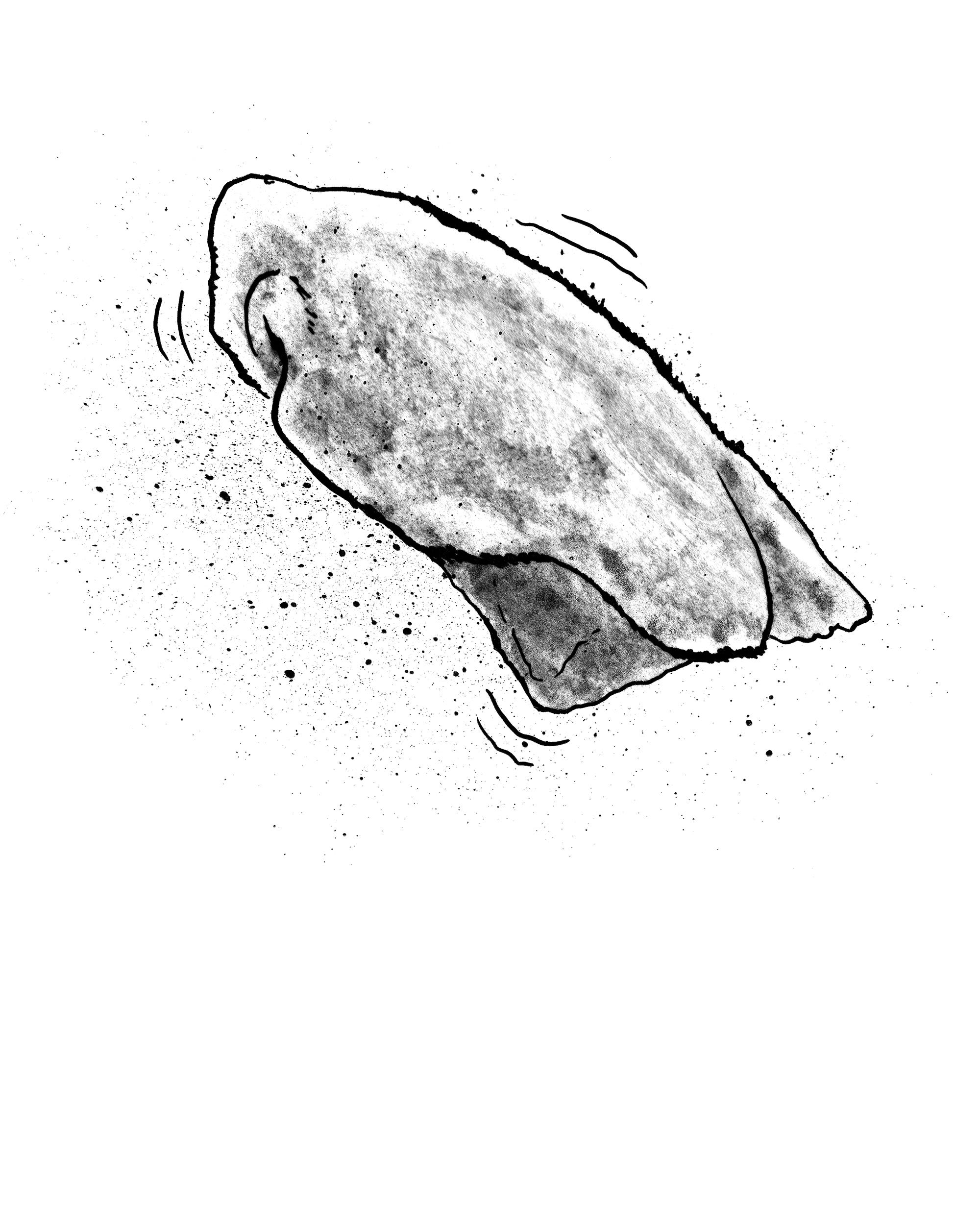
Each remembrance is a weight. But each one Peter balances by reaching in, pulling something out, letting it float around him. Spleen, kidney, his other lung—air still fills his blood vessels, feeds his brain—his heart, once again, shimmering and shining. He imagines pulling everything he has, thyroids, stomach, lymph nodes like wet grapes. Soon enough he would be a sagging, empty bag. He is already shaky, everything quaking. His reflection in the mirror is blurry.
His phone, which he’s brought with him, vibrates: a message from Nicky, finally, the last missing piece.
Thank you for handling this.
Someone—not Peter—has told him. This knowledge tightens Peter’s chest. His liver comes bobbing into view, and Peter snatches it, pries it back into place. He grabs another piece and then another, slowly screwing himself back together. With each bit, the sorrow washes back in. Memories of his mother cut like knives, leaving invisible streaks. Despite how much he wishes to unburden, he won’t let himself collapse, after all. He will live, because he knows his mother would want that. More than anything, he must be here. For his father, for his brothers. For his deceased mother, who would never abide him falling apart, wasting away into a saggy heap. Someone must remain to clean up, to carry, to catch and keep everything, and everyone, whole.
STORY:
Joe Baumann is the author of six collections of short fiction, most recently A Thing Is Only Known When It Is Gone, from University of Wisconsin Press, and the novels I Know You’re Out There Somewhere and Lake, Drive. His fiction and essays have appeared in Third Coast, Passages North, Phantom Drift, and many others. He possesses a PhD in English from the University of Louisiana-Lafayette. He was a 2019 Lambda Literary Fellow in Fiction and currently directs the MFA in Writing at Lindenwood University. He can be reached at joebaumann.wordpress.com.
*
ART:
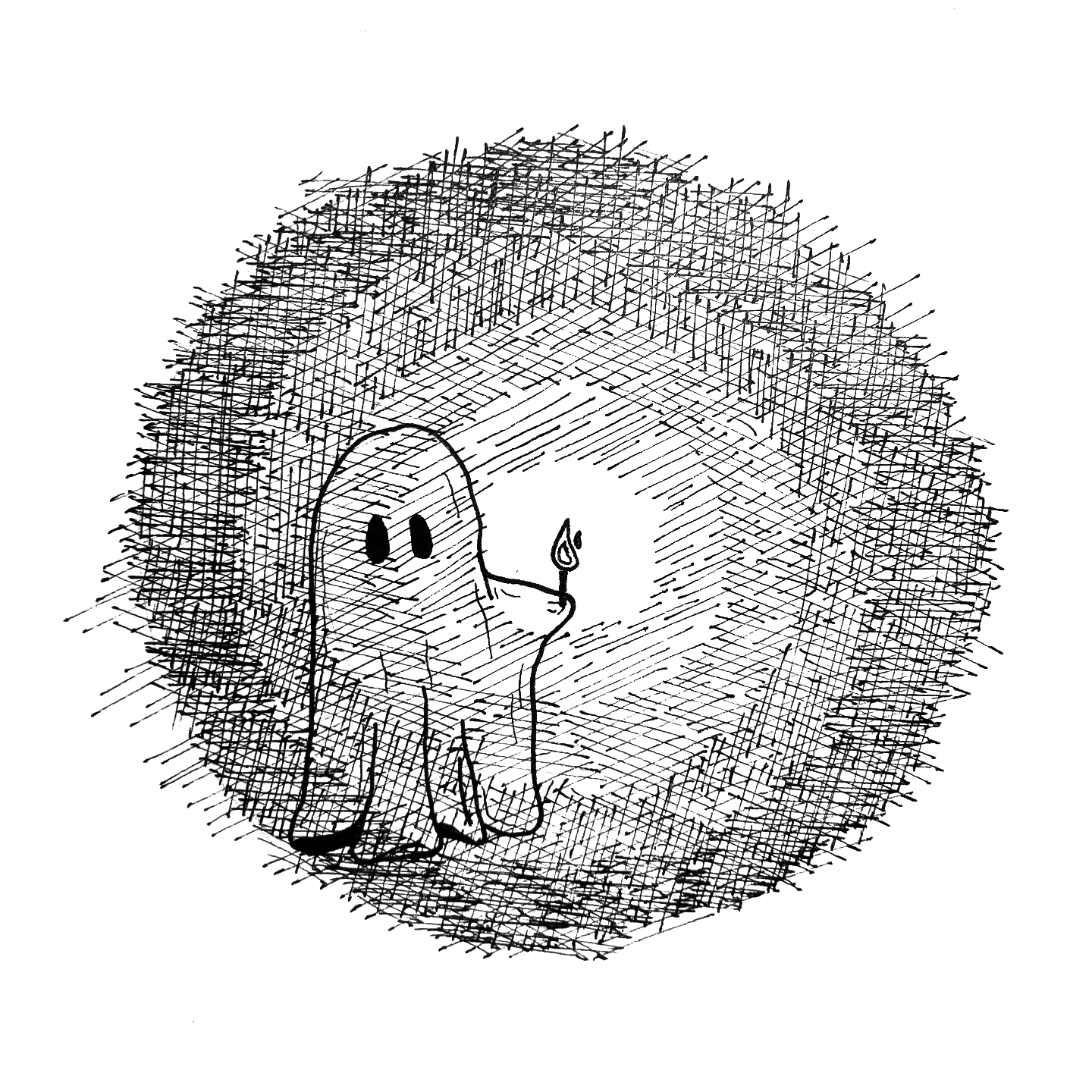
Phil McAndrew is an illustrator, a cartoonist, and a writer. His work has been published by The New Yorker, MAD Magazine, The Nib, Popula, and many other publications. He is the author and illustrator of CRYING IN FRONT OF YOUR DOG AND OTHER STORIES (Uncivilized Books, 2013). Phil has also illustrated a handful of books for kids like the CAVEBOY DAVE series of graphic novels written by Aaron Reynolds (Viking Books, 2016 and 2018), MONSTER SCIENCE by Helaine Becker (Kids Can Press, 2016), and YOUR MIND MAKES THOUGHTS LIKE YOUR BUTT MAKES FARTS by Todd Strauss-Schulson (Wisdom Publications, 2023). Phil lives in the Buffalo, NY area and has taught in the illustration program at Syracuse University.
Next Tuesday, we’ll feature a bonus interview with Bill about this story.
No posts
Comments
Nothing yet. Say the first thing.
Sign in to join the conversation.