
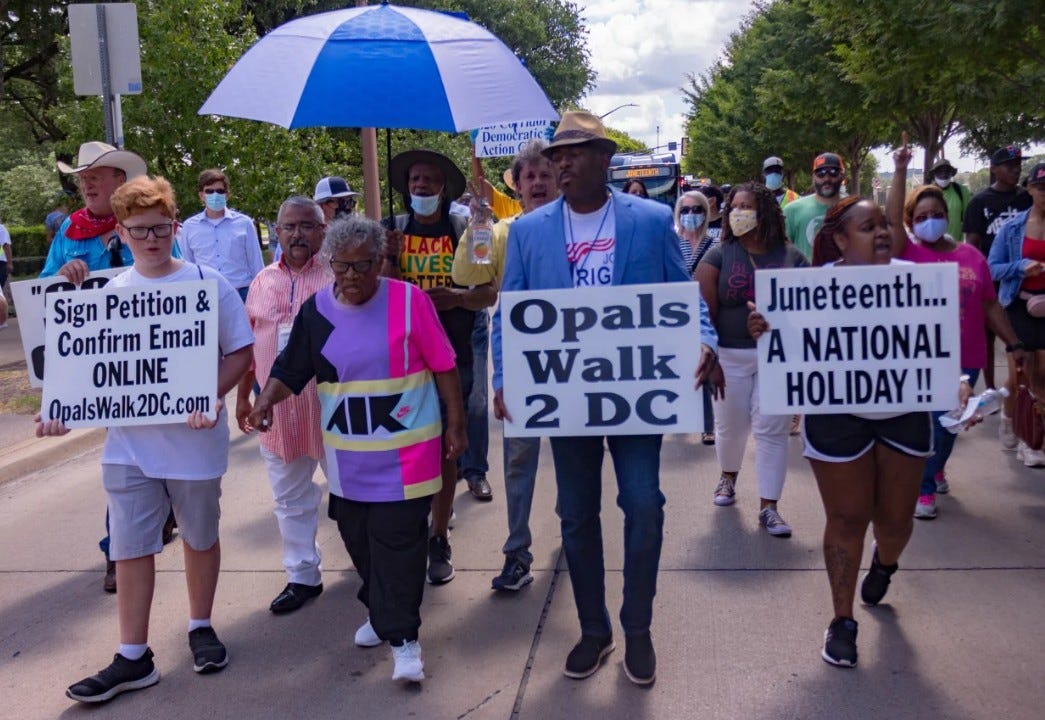
In 2016, an 89-year-old woman named Opal Lee began walking from Fort Worth to Washington to push the country to recognize Juneteenth, and she had her reasons. On June 19, 1939, when she was 12, a mob of hundreds of white people burned her family out of their home in Fort Worth. It happened on Juneteenth, the one day that was supposed to be ours.
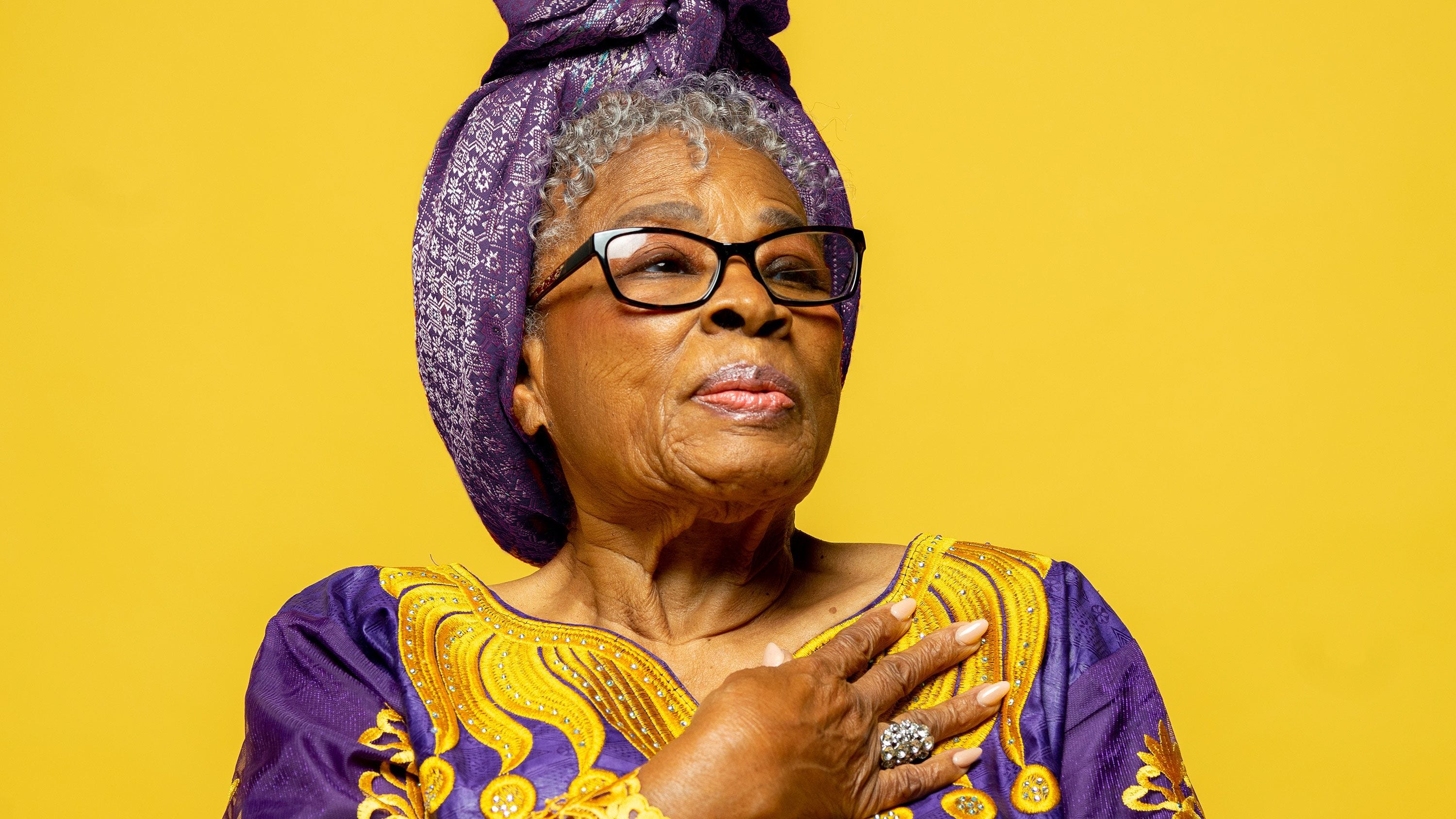
Opal spent her life on this day, but it was ours long before it was hers, and it will be ours long after. To understand why an elderly woman would walk across the country for it, you have to know where it comes from and who it belongs to.
Galveston, 1865
The Emancipation Proclamation was signed on January 1, 1863, but that piece of paper didn’t free anybody. The only thing that ever actually freed an enslaved person was the Army showing up to enforce it, and the Army had not made it to Texas. Slaveholders knew that, so they had been moving the people they claimed into Texas on purpose, to keep them as far from freedom as possible, and by the end of the war, there were around 250,000 Black people still enslaved in the state.
It took until June 19, 1865, for that to be announced, when General Gordon Granger landed in Galveston with federal troops and read the order declaring everyone was free. Two and a half years after the proclamation, and only because someone finally arrived with the power to enforce it. That is the day we call Juneteenth.
Why it’s ours
Juneteenth is a Black American holiday. It marks the end of our enslavement, specifically, the people who were brought here, held here, and built this country for free, and it was born in our own community in Texas and carried by us for more than 150 years before the rest of the country could be bothered to learn the word.
For most of that time, nobody was throwing us a parade. We celebrated it ourselves, in our churches, in our backyards, and in the parks we had to buy with our own money, because the country that took its sweet time freeing us was in no hurry to commemorate it either. That is what makes it ours. We kept it alive when keeping it alive was the only option we had.
We kept it alive when keeping it alive was the only option we had. That is what makes it ours.
So now that it is a federal holiday and there are sales, corporate posts, and store displays, I will say the quiet part. The day belongs to us. Everyone is welcome to honor it, but it was never a generic freedom holiday, and it should not get sanded down into one.
The flag
We have our own flag for it, and almost nobody knows what is on it.
A man named Ben Haith, “Boston Ben,” designed it in 1997, and the artist Lisa Jeanne Graf brought it to life. He made it red, white, and blue on purpose, the same colors as the American flag, because the whole point is that the people who were freed and their descendants are Americans, whether this country has always acted like it or not.
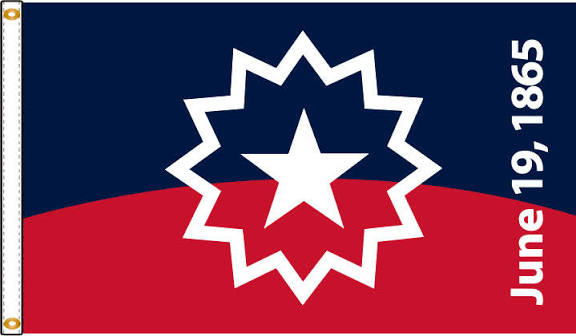
In the center, there is a white star that carries two meanings at once: Texas, the Lone Star State where Juneteenth began, and the freedom of all of us in every one of the 50 states. Around that star is a burst, a nova, standing for a new people and a new beginning rising out of Galveston. A long arc curves across the middle for a new horizon, the future that was finally open. And the date, June 19, 1865, sits on it, so the reason is never in question.
You’ll see red everywhere in the food, the strawberry soda, the red velvet, and the watermelon. That red is not random. It carries blood and survival, and has been on our tables on this day for generations.
What we made of it
The thing I never want lost under the heavy parts is what our people did the second they were free. They went looking for the children, husbands, and mothers who had been sold away. They put their names on paper and were legally married for the first time. They started churches in the morning and schools right behind them. And by the very next summer, in 1866, they were already celebrating.
In Houston in 1872, when white folks would not let us use the public parks, a group of men who had been enslaved themselves pooled about $800, a fortune for people who had owned nothing seven years before, and bought 10 acres outright. They named it Emancipation Park so no one could ever again tell them where they were allowed to be free. It is still there.
Back to Opal
That is the inheritance Opal Lee was walking for. Not a date in a textbook, but a holiday her own people had kept burning for a century and a half, the same one a mob had used to run her out of her house when she was a girl.
She kept walking into her nineties, carried a petition with more than 1.5 million signatures to Congress, and in June of 2021, she stood a few feet away and watched Juneteenth become a federal holiday. She was 94 years old, finally watching the country catch up to something we had been holding the whole time.
Thanks for reading! Subscribe for free to receive new posts and support my work.
Comments
Nothing yet. Say the first thing.
Sign in to join the conversation.