
In 1965, a government adviser named Daniel Patrick Moynihan published a report called “The Negro Family.” In it, he decided the thing holding Black people back was our own homes, and the fathers who supposedly weren’t in them. It was the kind of official, footnoted document that lets a country skip right past what it did to a people and go hunting for what's wrong with them instead. Sixty years later, we're still stuck with the lie he helped put in print.

The lie is the absent Black father. You know him. He’s the punchline every Father’s Day, the shorthand a politician reaches for, the thing people say like it’s just common knowledge. He is also, by this country’s own count, not real.
70% of them did that hands-on care every day, compared with 60% of white fathers and 45% of Hispanic fathers. They were more likely to eat dinner with their kids every night, and more likely to be the one reading the last book before sleep. That’s the federal government counting, the same government that has never once pictured us this way. And it holds even for the fathers who don’t live in the home. Among dads raising children from a distance, Black fathers are the most involved.
In 2013, the CDC studied how involved fathers are in their children’s everyday lives, the ordinary work of raising a kid, bathing, and bedtime reading. Among fathers who live with their children, Black fathers came out ahead of every other group in the country.
Moynihan gave the country the language. Ronald Reagan gave it a face. Reagan ran on the welfare queen all through the 70s and 80s, a made-up Black woman lounging on government checks with no man around. He didn't have to come out and say the father was absent. He let the picture say it. And that picture made it feel okay to pull help from poor families, like they'd brought it on themselves. People still throw out that stat, the one about most Black kids being born to unmarried mothers, like it validates their point. It doesn't. Unmarried and absent were never the same, and folks know it when they blur the two. A marriage license never put a father in anybody's living room. Plenty of those kids are being raised by both parents, who just didn't bother with the paperwork.
When a Black father is missing, the reason is usually not the one the joke is reaching for. More often than not, it’s a prison cell. This country locks Black men up at rates it reserves for no one else, often for the same things other men are sent home to sleep off, and every one of those sentences takes a father out of a house. The count never asks how he got there. It only notes that he’s gone.
I didn’t need a study for any of this. I come from present fathers. My dad was there, not in the bare-minimum, somebody-made-him way, but in the way where it never once crossed my mind to wonder if I mattered to him. My brothers show up for their kids like that every single day, and nobody hands them a trophy for it. My nephew is grown now, raising his own son with that same steadiness, like it’s just what a man does, because in our family it always has been.
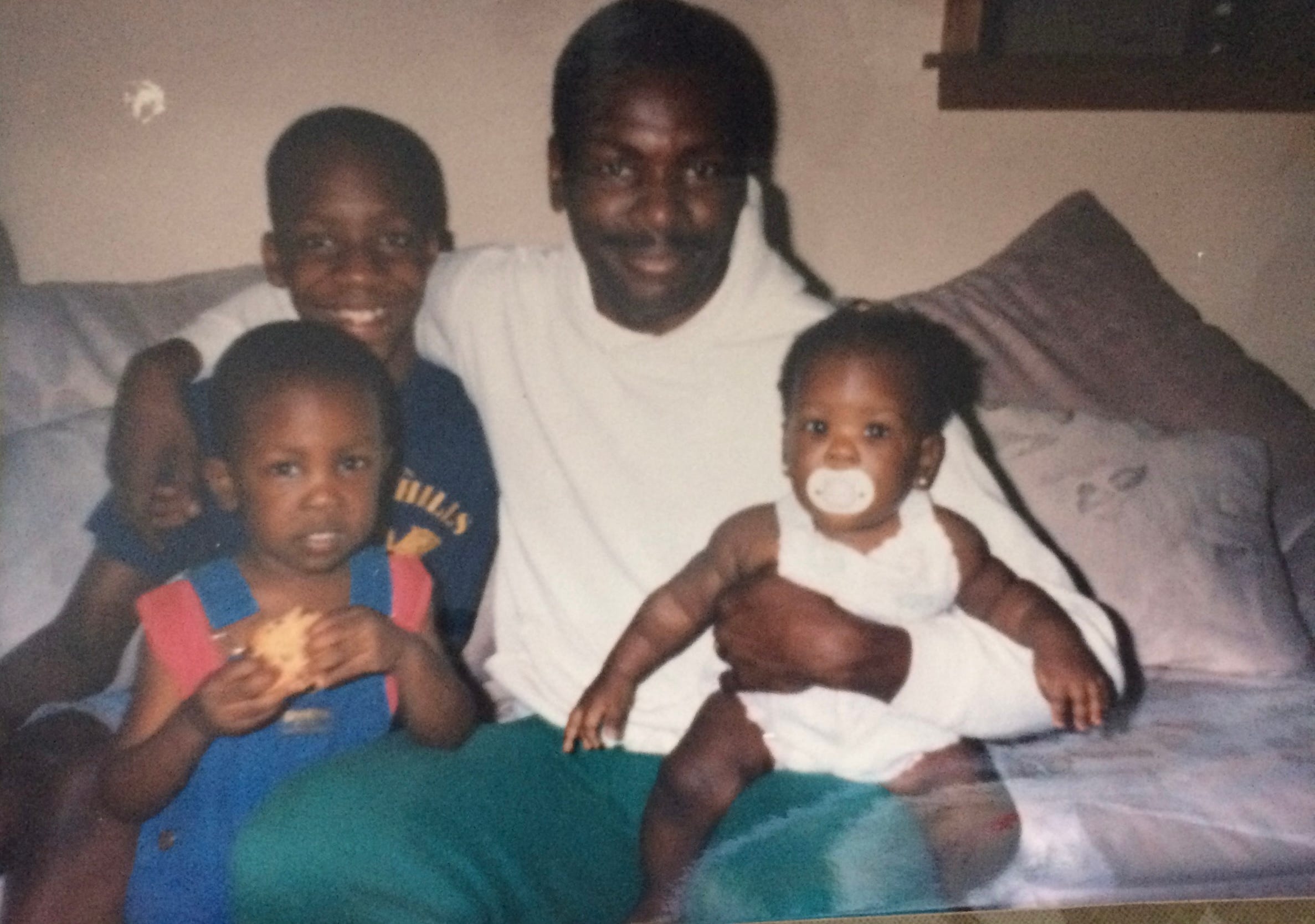
These are the men I think about when the joke starts. The one who came off a twelve-hour shift with his back aching and still drove across town to fold himself into a tiny chair at a recital, clapping like there was nowhere on earth he’d rather be. The one who taught himself to braid because his daughter’s mother was getting herself ready for work, up before the sun, so his baby walks into school with her hair done and her head high.
The men who raised us keep showing up, whether this country ever remembers or not.
The ones who get no credit at all: the men raising children that aren’t theirs by blood, who never once let that child feel the difference, because somebody had to stay, and they decided it would be them. They were here the whole time, doing the quiet work, while the country built a punchline out of their absence to keep from looking at its own. ---
Father involvement data from the CDC’s National Health Statistics Reports No. 71, “Fathers’ Involvement With Their Children: United States, 2006- 2010”
Salon: It’s time to give Black fathers the credit they deserve
CBS News: Black dads are more likely to play, dress, and share a meal with their child, data shows
The 1965 “Moynihan Report” by Daniel Patrick Moynihan, “The Negro Family: The Case for National Action”.
Comments
Nothing yet. Say the first thing.
Sign in to join the conversation.