
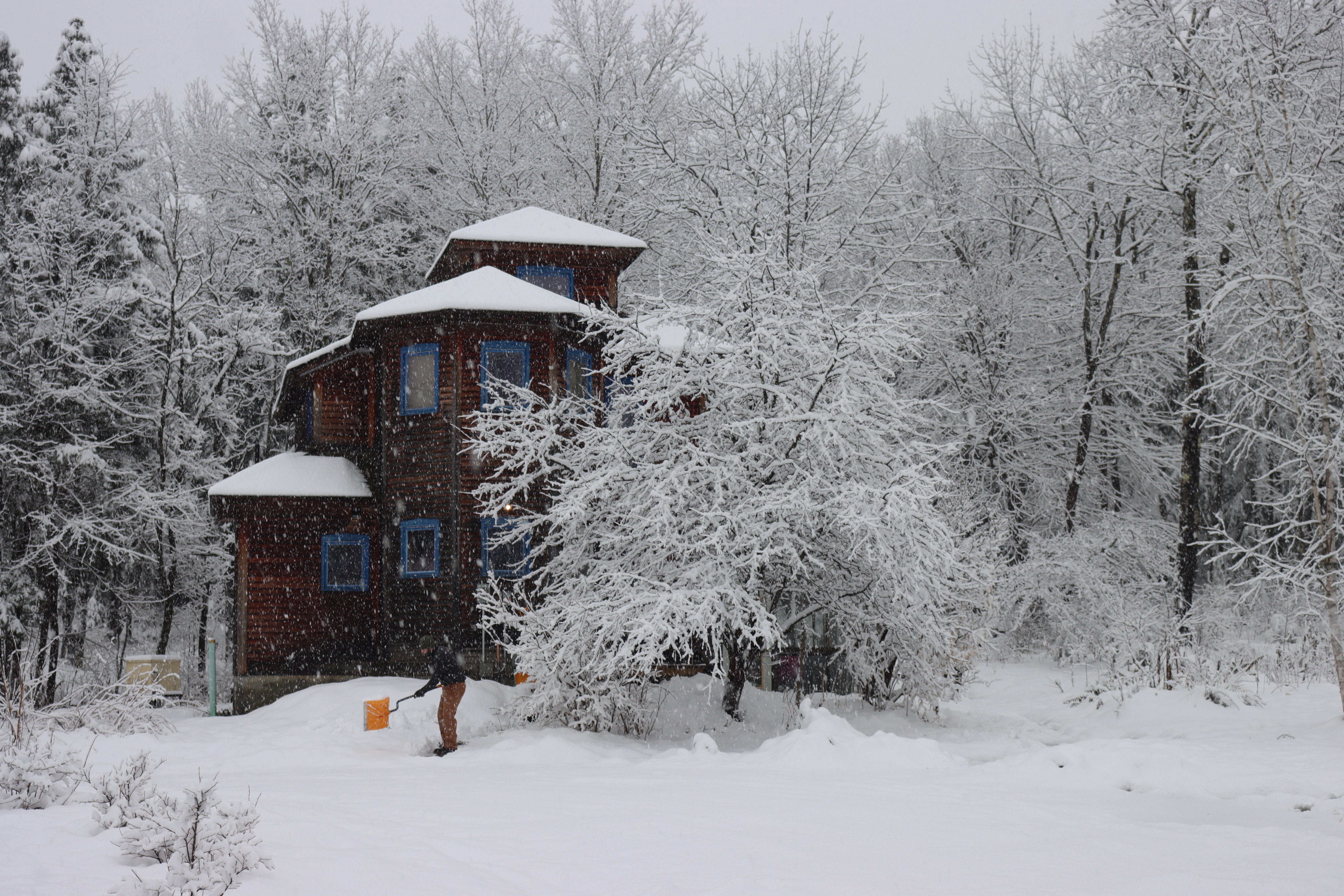
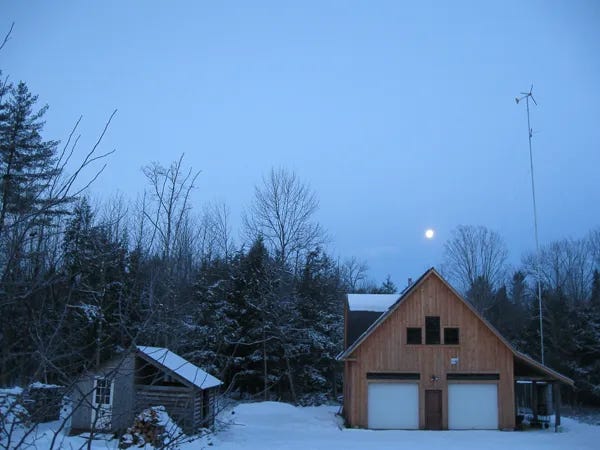
December in Vermont is when the long nights and snow really set in. By this point, the ground is frozen solid, the orchard is bare, and the barn chores happen in icy winds that cut through even the thickest mittens. Highs are usually in the 20s and 30s, and lows dip into the single digits more often than not.
It’s a quieter month outdoors, but that doesn’t mean homesteading stops. The work shifts indoors to food, family, and craft projects, while outdoor chores focus on keeping the animals watered, fed, and sheltered through the cold. The rhythm is steadier than the rush of fall, but every day has its share of work.
I’m often asked what homesteading looks like in the depths of winter. By December, the gardens are long tucked away, the orchard is bare, and the animals need more care than the plants. For people dreaming of moving to the country, it helps to see how the rhythm of the year carries on even after the growing season ends.
Of course, every homestead is different, and December in Vermont won’t look the same as December in a milder climate. Still, there are common threads—woodstoves burning, pantries full, animals tended, and families gathering close indoors.
Here’s what a normal December looks like on our Vermont homestead, as the year winds down and the quiet of winter settles in.
By December, the garden has been put to bed. All the root crops are either pulled and stored or buried deep under mulch in the hopes of keeping them insulated. A few hardy greens like mâche or spinach might survive in a cold frame, but otherwise the beds are resting until spring.
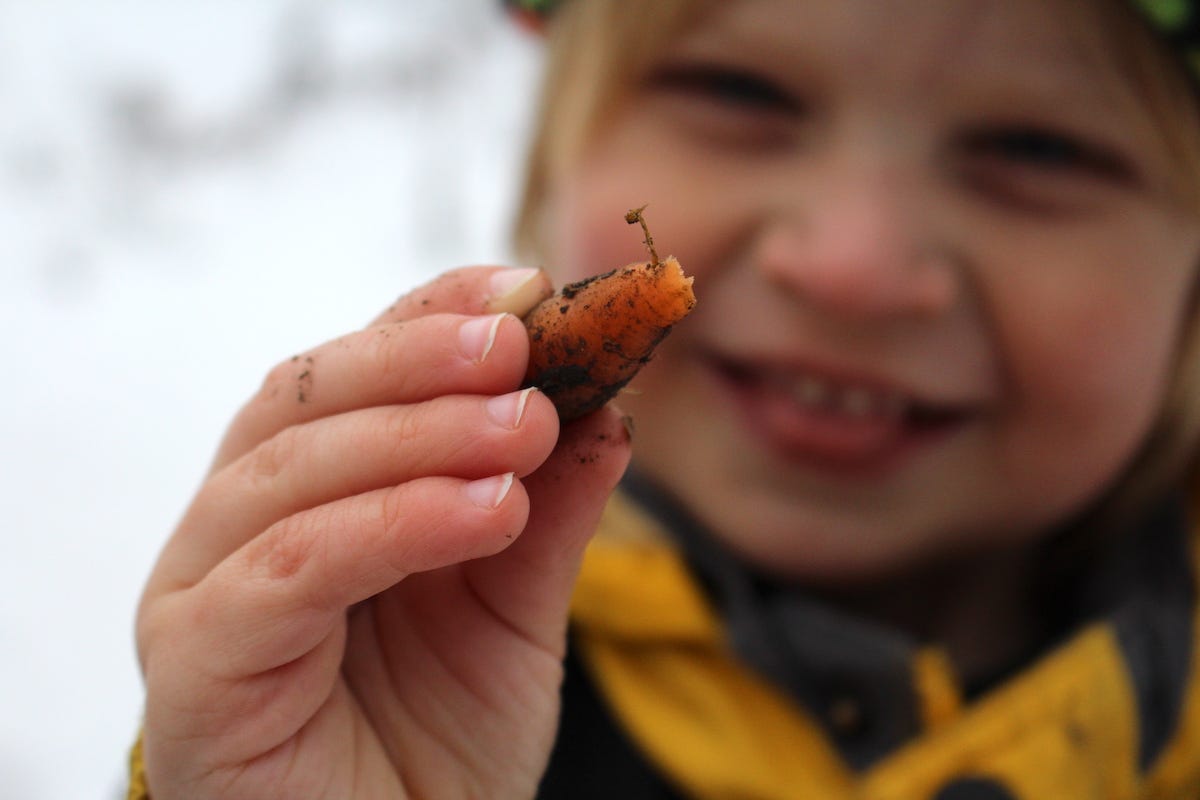
Some years, when we get minimal snow, I can harvest carrots and parsnips from the garden all winter long. They naturally “store” right out there in the soil, sweetening up and waiting for spring.
This is the time for planning. We’ll sketch out garden designs, order seed catalogs, and make notes on what worked (and didn’t) this past season. December is as much about dreaming of the next harvest as it is about closing out the last.
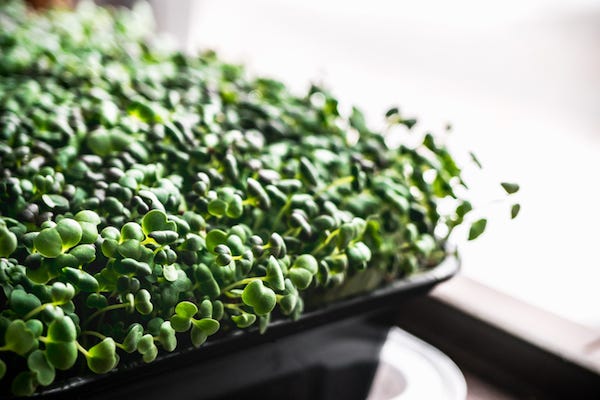
And, of course, so we keep something green going, we’ve got microgreens going on the counter all winter long.
The orchard is quiet, branches bare and often coated with ice. But that doesn’t mean there’s no work to do. We’ll check on our apple storage racks and root cellar bins, culling any fruit that’s beginning to soften before it spoils the rest.
Late December is also the start of pruning season if the weather cooperates. A few mild days above freezing are perfect for trimming back apples, pears, and stone fruits before the deep cold sets in. The wood makes excellent kindling for the stove, and pruning helps keep the orchard healthy for the next season.
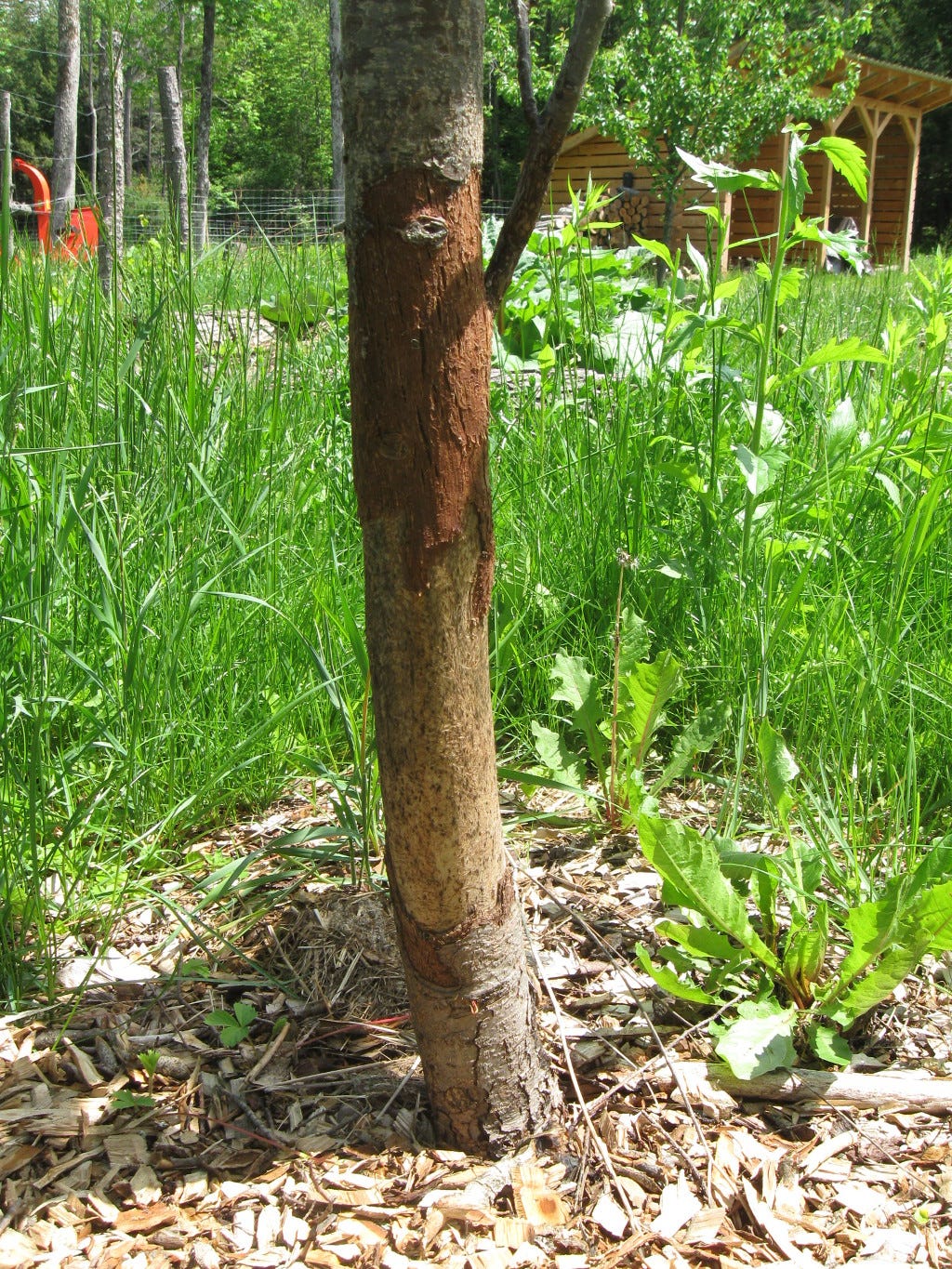
We’re also trying to keep deep snow away from tree trunks to prevent rodent damage. A few years back we lost half our trees to girdling by rodents, and since then, we’ve added more farm cats to the payroll here, but we also try to keep the deepest snow away from the trunks if possible so the predators can do their jobs.
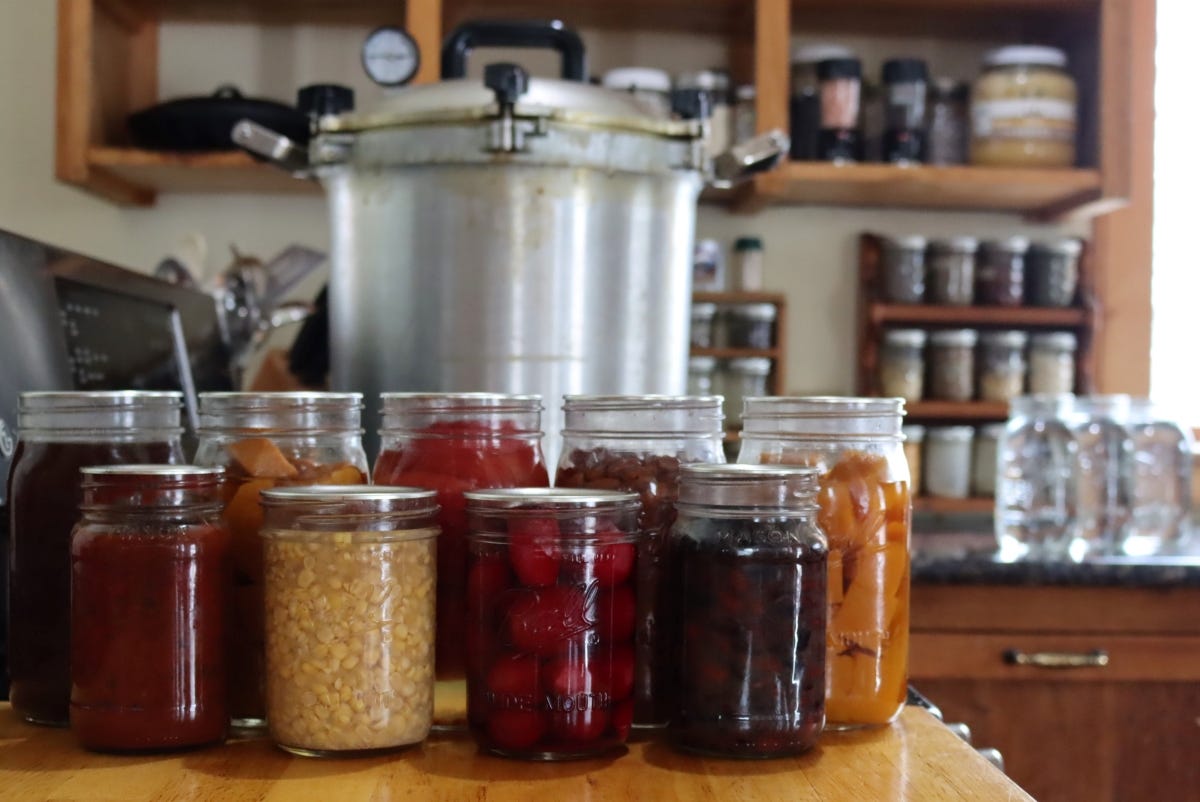
December is the month when the pantry really shines. Jars of home canned corn, homemade tomato paste, and blackberry jam line the shelves, ready for holiday cooking. Baking is a constant—sourdough bread, cinnamon rolls, and hearty stews simmered with bone broth fill the kitchen with warmth.
It’s also a wonderful time for making holiday gifts. We’ll bottle homemade liqueurs, whip up batches of cordials and tinctures, and pull out jars of jam to wrap as presents. The slower pace means more time for experimenting with recipes we don’t always get to during harvest season.
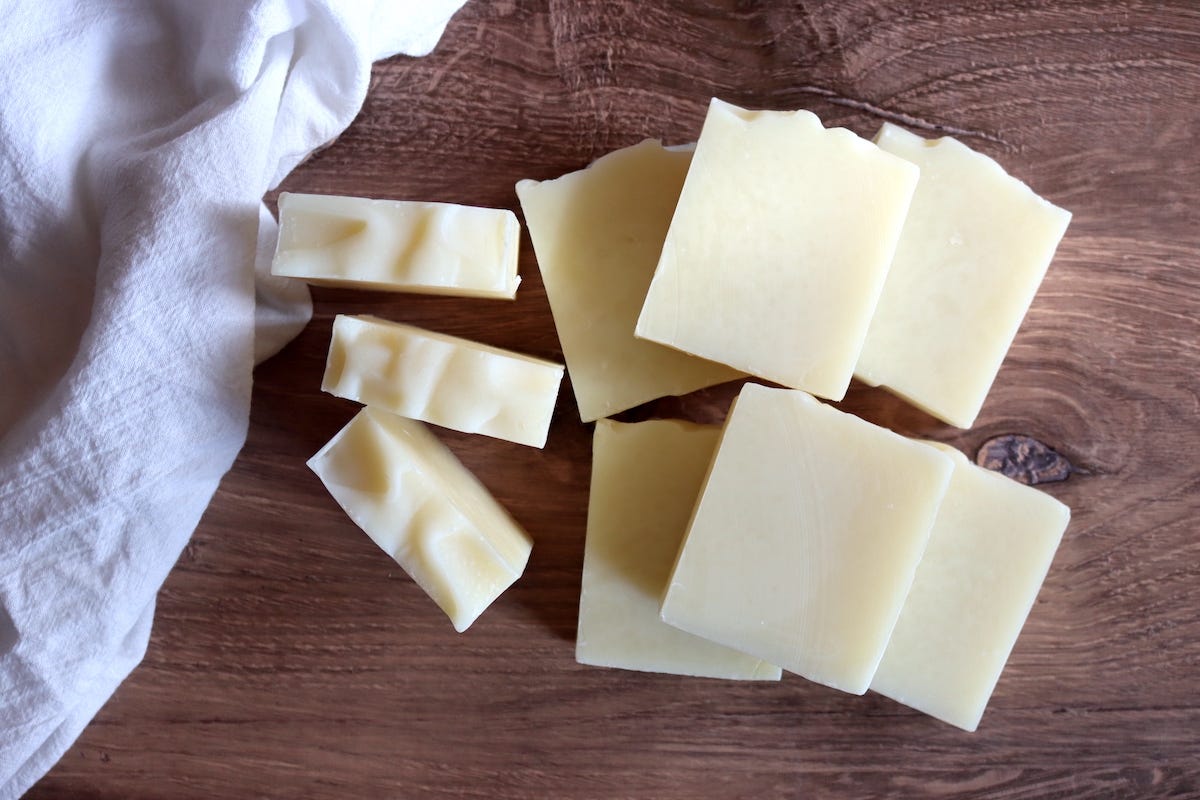
I’m using dried herbs to make herbal infused oils that will eventually be turned into herbal salves, plus a making a batch or two of tallow soap and whipped tallow balm to nourish our skin this time of year.
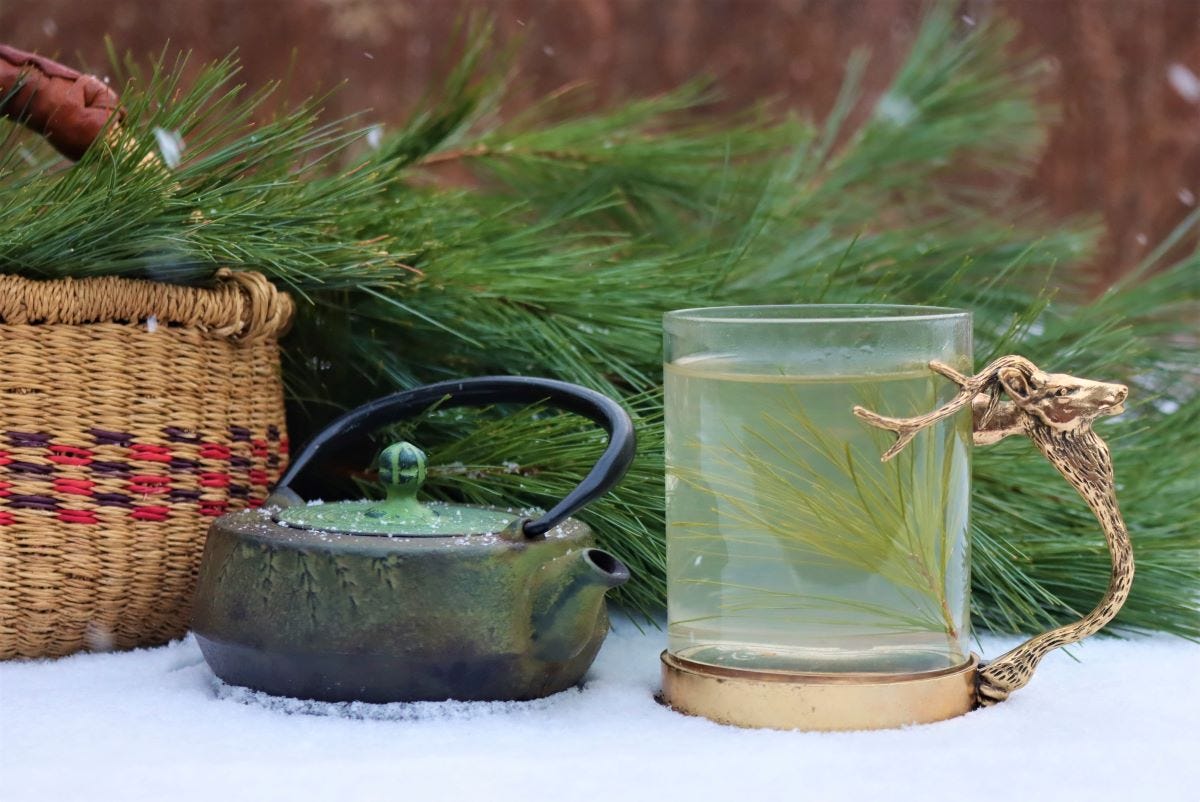
Foraging is sparse in December, but not gone entirely. Wintergreen berries, rose hips, and pine needles can still be gathered for teas, jellies, and syrups. Birch bark and chaga mushrooms are also harvested this time of year, when the trees are dormant and the forest is easier to navigate without heavy undergrowth.
There’s a surprising number of things you can forage in winter, even in climates as cold as ours. And there are even plenty of winter mushrooms, too!
We also spend time simply walking the woods, noting deer trails, wildlife sign, and storm damage. December is more about observing the land than harvesting from it, but those observations shape how we’ll manage things come spring.
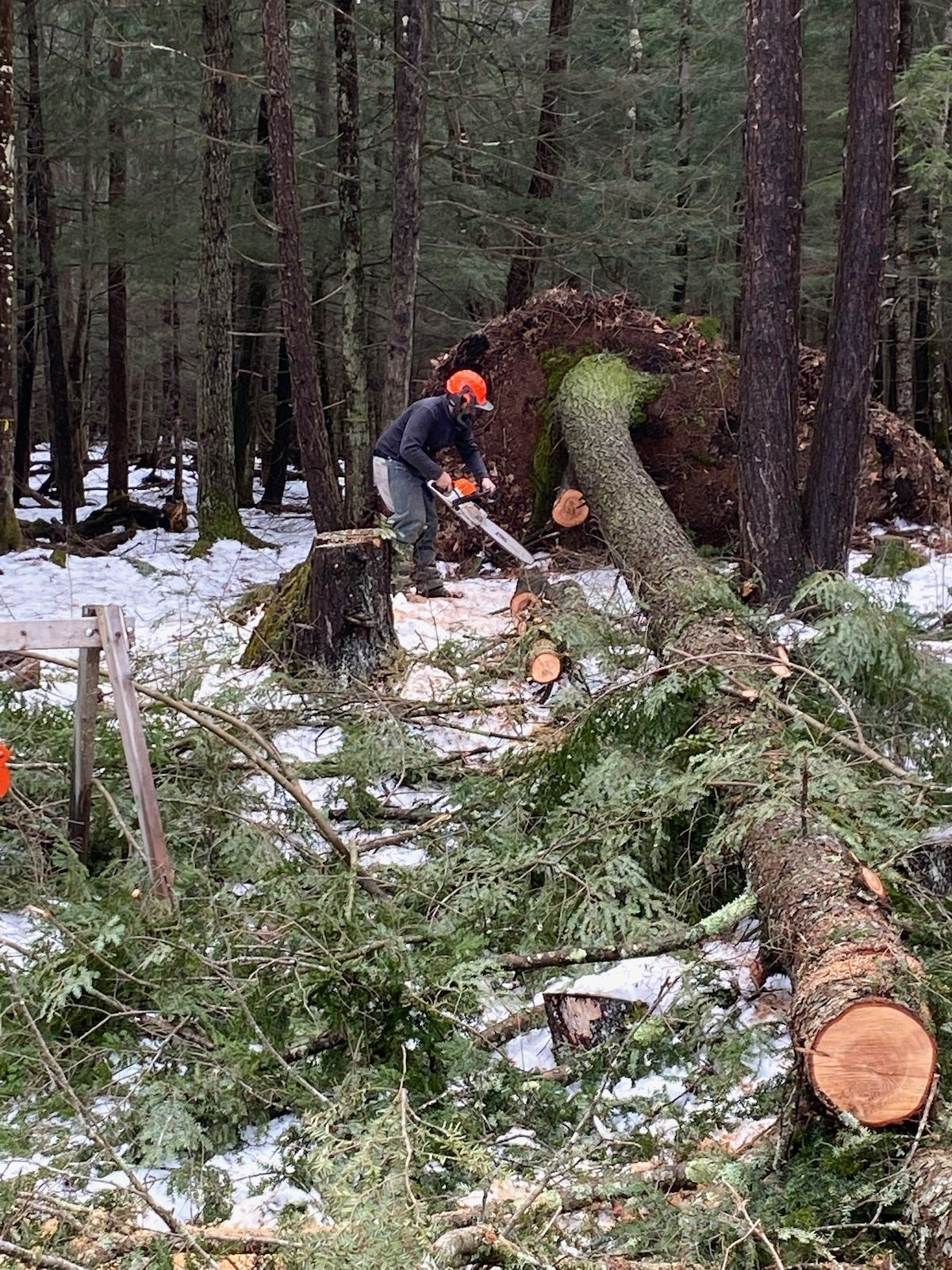
And, of course, cleaning up that storm damage keeps the wood stove stocked and warms us twice as we run the saws in the snow!
With the snow piling up outside, December is the perfect time to turn inward. The woodstove is roaring, and the evenings are spent with spinning wool or working on herbal crafts. The long nights lend themselves to quiet projects, recipe testing, and reading.
This is also when we evaluate our food stores. Are we going through flour bins too fast? Do we have enough canned meat to last the winter? The tally sheets get updated, and we make adjustments for the months ahead.
And this is the time of year when all those pressure canning recipes get put to use, with canned vegetables and meal in a jar recipes making meals a bit easier.
Barn chores in December are simple but relentless. Twice a day, no matter the weather, animals need food, water, and bedding. With our off grid system, we don’t have heated troughs keep the water open, so we’re out there with an axe breaking the ice, or hauling buckets of warm water to the animals again and again. Deep bedding systems keep the geese and chickens comfortable through the cold, but water is important.
If there’s a thaw, we’ll muck out pens and haul manure to the compost pile, but most days it’s just about keeping everyone safe and warm. Having stocked up on hay, grain, and feed in the fall makes a huge difference, since hauling 50-pound sacks through snowdrifts is no one’s idea of fun.
December is a month of gatherings. Neighbors swap jars of cranberry jelly, loaves of homemade bread, and bottles of hard cider at holiday parties. Church suppers and town potlucks feature tables laden with local food, and there’s a spirit of generosity as everyone shares the abundance of their pantry.
It’s also the month when we take stock with each other—who needs more firewood, who has extra eggs, who’s willing to lend a hand clearing a snowy driveway. Community ties feel especially important in December, when winter’s weight is just settling in.
What’s happening in December where you live? What are you baking, preserving, or working on around the homestead this week? I’d love to hear in the comments!
Until Next Time,
Ashley at Practical Self Reliance
Comments
Nothing yet. Say the first thing.
Sign in to join the conversation.