
When he was a toddler, my eldest kiddo was obsessed with yellow construction trucks. So when I taught him about letters, I drew them on cars. When we discussed patience, I modeled turn-taking with his bulldozer and dump truck. I could get him curious about about anything - so long as it had something to do with things with wheels.
Except… (I thought) the kyriarchy, the injustices that come with it, and our role in dismantling it. I mean - how do you teach a kiddo about injustice and all the -isms using a toy school bus and a bucket of kinetic sand filled with cat hair?
I thought transportation wasn’t about justice, it was just… moving people and stuff around.
I mean sure - I always feel a scared getting on an airplane as an Asian American. And having to walk in a car-dependent city has certainly put a dent in my ability to find paid work or access health services. Okay, fine, I guess I would be a little healthier if I felt safe bicycling in a country that prioritizes cars over people’s lives.
Okay… Actually? I guess the systems we’ve built to get us from here to there is actually the perfect introduction for kids learning about barriers and inclusion in society
For many of us — kids, elders, people of color, disabled folks, and assorted forgotten ‘others,’ getting from place to place isn’t just about inconvenience. Every kid who has had to wait for an adult to drive them to the park, or who has dodged speeding cars on the way to school understands the fundamentals of barriers to inclusion and transportation equity.
When your commute means riding over collapsing bridges, four bus transfers, and late night walks through shady areas, the toll of transportation inequity adds up. And when you don’t have reasonable access to a hospital, grocery store, or public library, this lack of access to basic necessities eats away at your survival.
Transportation equity is about making sure everyone can move through our communities safely, without depleting our time, energy, or dignity before we even get to our destination.
Feels like given attacks on immigration, healthcare, education, and well, all our urgently necessary systems, it feels natural to push transportation concerns to the back burner.
But as we’ve seen from ICE attacks on parents picking up kids from school and immigrants commuting to work, a lack of safe, accessible routes is a vulnerable system that connects us with the resources we need to live.
So this month, we’re helping you and your kids explore what it means to move freely - and what it takes to make to protect that right for everyone.
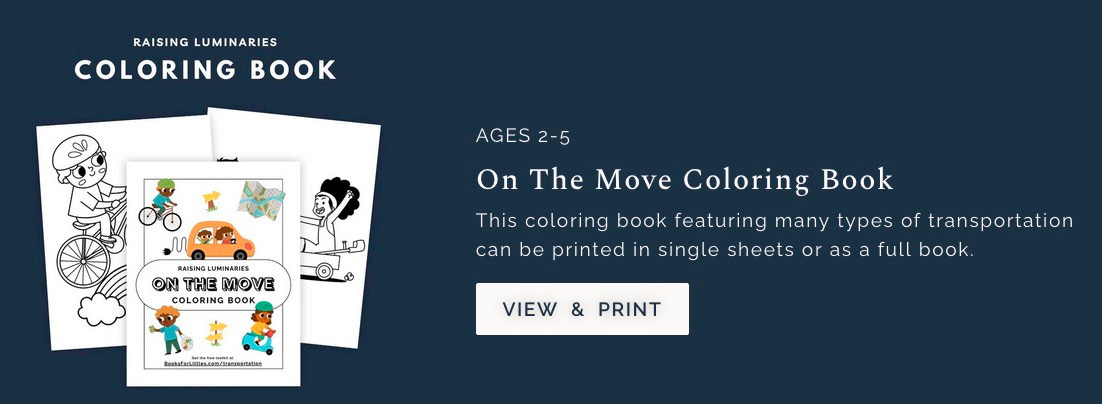
🚲 New Toolkit: On The Move Toward Justice: Help your kids understand their right to move - and how to build safer, more accessible communities for all.
We created this toolkit in collaboration with Shannon Brescher Shea, DC advocate for accessible transportation and the author of Growing Sustainable Together.
Ages 6+
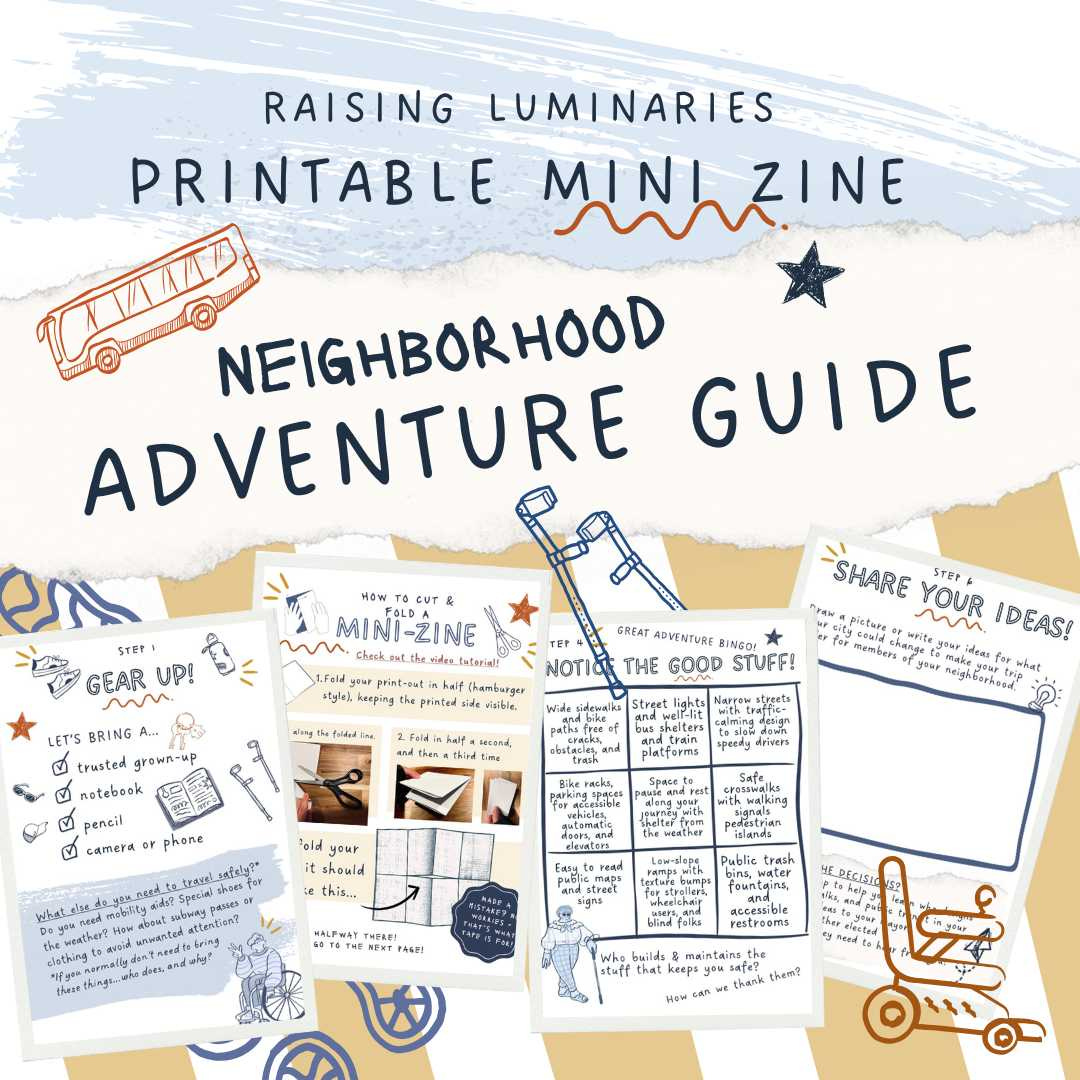
Print & fold this mini zine and explore your neighborhood through new yes. Learn about the challenges and possibilities different people have when navigating your block, and what you can do to make your neighborhood safer for everyone.
When you join the Luminary Braintrust, you fund my work so I can keep creating free & accessible resources like these for families and educators in your community.

I know I said I’d be back with the Oh Shit. What Now? Adventure Map today, but we got so much great feedback during last week’s workshop - and we’d rather make sure it’s easy and accessible the moment you pick it up, rather than rush to push it out before it’s ready.
While I keep chugging away on that (choo-choo!), I’ll give you time to check out the amazing resources Shannon and I have created for you in our Transportation Toolkit. At a nice leisurely pace!
So instead of sending newsletters just to fill the void, I’ll shut up for a couple weeks and get back to you in November when I’ve got something worth reporting!
What are you noticing about how access to safe, affordable transportation (or the lack of it) shapes your ability to keep your family safe?
Drop your stories, frustrations, or advice in the comments to help other parents recognize the gaps in our systems.
with you,
Ashia
No posts
Comments
Nothing yet. Say the first thing.
Sign in to join the conversation.