
Instead of an “in Briefs” entry these last couple weeks, I’ve been focusing on the piecing-together my thoughts on the continued propagandized western media. Here I share how Palestinian voices in Media are cast for a role.
I encourage you to join in the conversation and hang with me, for the next year, this is a reader supported space. And your support means the world, and will open up more opportunities for us to connect. Thank you for being here.

CNN’s Jeremy Diamond just won an award for getting an interview with Hamas commander Ghāzi Hamad.
Yes, I watched the interview. And Yes, Diamond annoyed me. I had to pause and start again a few times.
The interview received its award for two reasons: 1) he’s interviewing the other side therefore it appears “fair.” And 2) He pressed Hamad with liberalized Zionist approved questions, which does not take Palestinian self-determination into account.
Diamond’s had a few decent pieces here and there from the Occupied West Bank and I gave him credit for it, and yet, here, I’m done. His “better” pieces showcasing Palestinian struggle likely worked in his favor to get the interview with Hamad in the first place. Then he sat down and ambushed him with tired propaganda lines.
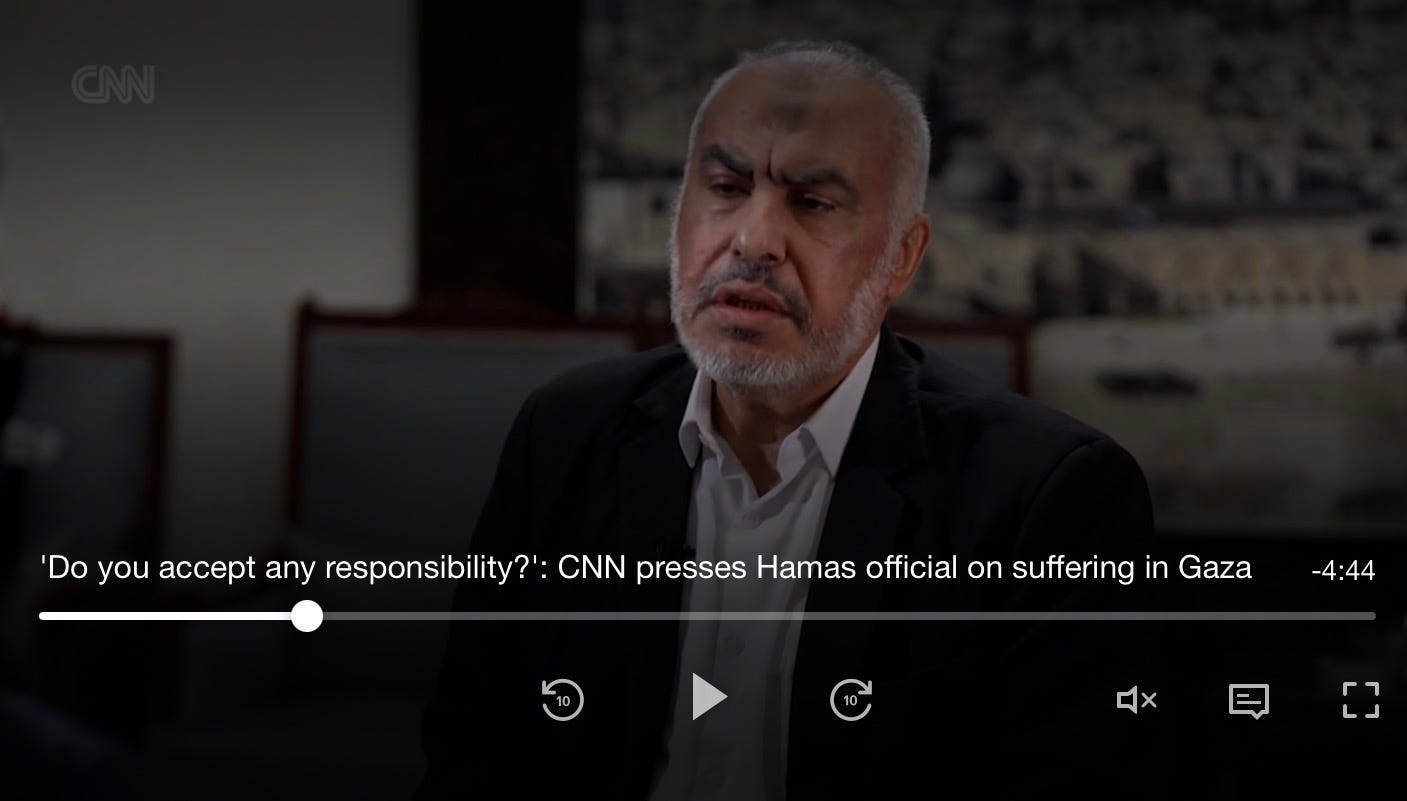
They even framed the interview as “Do you accept any responsibility?”
The perpetrator blaming the victim for the suffering of the victim, when the victim fights back.
Diamond even showed him video of Palestinian people who are fed up with Hamas. His voice over claimed Hamad wasn’t interested. Hamad nodded, because he knows, he knows his people. He even understands them. And yes, he tells Diamond, Palestinian people have every right to dispute the role of Hamas, get angry, demand Hamas give up. It’s their plight, their debate. He acknowledged people have a right to be tired of all of this.
As a Palestinian friend said to me later, this idea comes from “hope more than it comes from a realistic idea.” She pointed out, [Hamas] were “celebrated when they first announced the cease-fire.” —Not Israelis or the U.S.
It is something, even I witnessed in 2014 after the 50-day resistance.
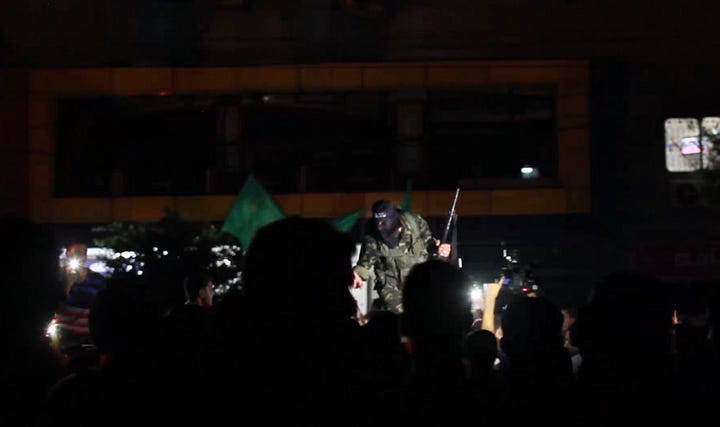

But disarming against abusers? Occupiers? Genociders? No.
CNN used frustrated people as a tactic, a clear manipulation tool to defend Israel. Diamond suggested Hamas was the one who didn’t want to deal with Israel. Hamad corrected him and said they’d been trying, they’d offered hostages, they’d even tried to negotiate. In the past there’s even been peaceful protests, which were met with Israeli bombs and death.
But they were right to defend their land, why should they disarm? Disarming is what Israel wants, what the U.S. says it wants, and Hamad is right not to trust any deal from the U.S. under an erratic regime.
What angered me more in the interview was when Diamond attempted to confront Hamad stating,
“Israel had never unleashed this level of death and destruction of Gaza before, how can you look at me with a straight face and tell me you accept no responsibility?”
Because Jeremy, Palestinian people have endured a Nakba since 1948, and you damn well know 65,000 dead is a far lower number than the reality.
Also, was the destruction in 2014 Okay for you? Was that an acceptable amount? I was under those Israeli missiles. Or how about killing those peaceful protesters in 2018? Was that okay for you?
There’s no two-sides in a genocide, darlin. Wake up.
While it’s true the Israeli onslaught has been weighted against at least 2-Nuclear Bombs (+more) with the destruction they caused, Diamond puts the responsibility on resistance fighters.
Frankly, it’s vile.
It was a master class in coercive propaganda. A Zionist approved airing. So yes, of course, it won the industry award.
A contrast to the award Al Jazeera won (alhummdiallah) for which the reporter dedicated it to the journalists who were killed, who died by Israel’s American paid for bombs. His emotional state said everything.
But let’s go back….
It‘s been nearly 11 years since I met and saw Raeda Taha, a Palestinian artist who once worked as a press secretary under Yasser Arafat. Her father was resistance fighter, Ali Taha, who in 1972, hijacked a commercial plane with three others, including 2-Women. He was subsequently shot by Israeli commandos, which included a younger Benjamin Netanyahu.
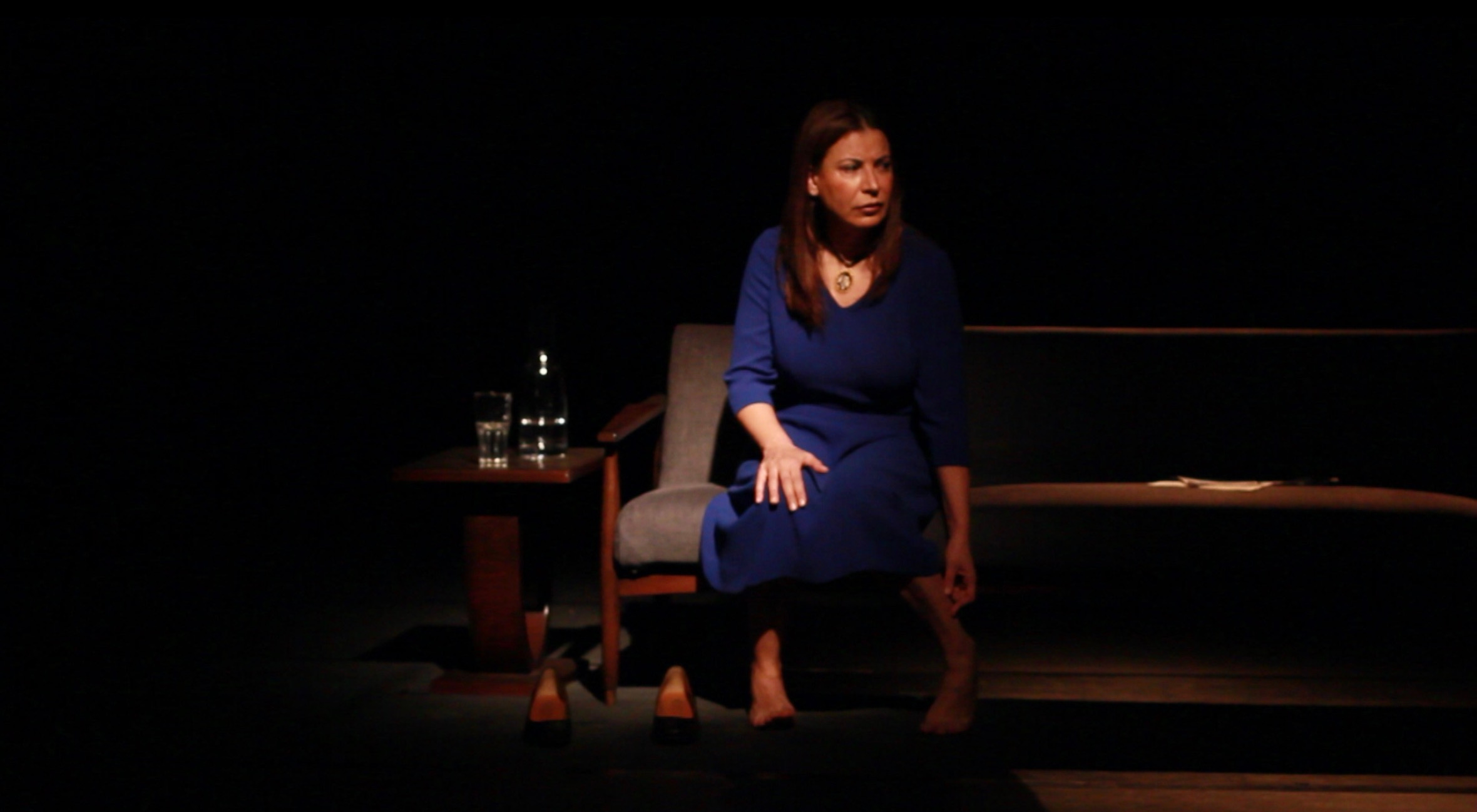
When we met, she was preparing a one-woman show in Beirut, “Where Can I Find Someone Like You, Ali?” The play was a tribute to her 7 year old self, and the women around her, unpacking the loss of a father who disappeared too soon, for the cause.
I was on assignment for Associated Press, to attain footage and interview for an arts and culture wire.
Rightfully, she was weary of me, I was emerging onto the scene, had a history with CNN, for whom she despised. She was curious about me and I was of her. So we sat over tea, and spent an afternoon together even before I started the recording the interview.
She eloquently shared her story,
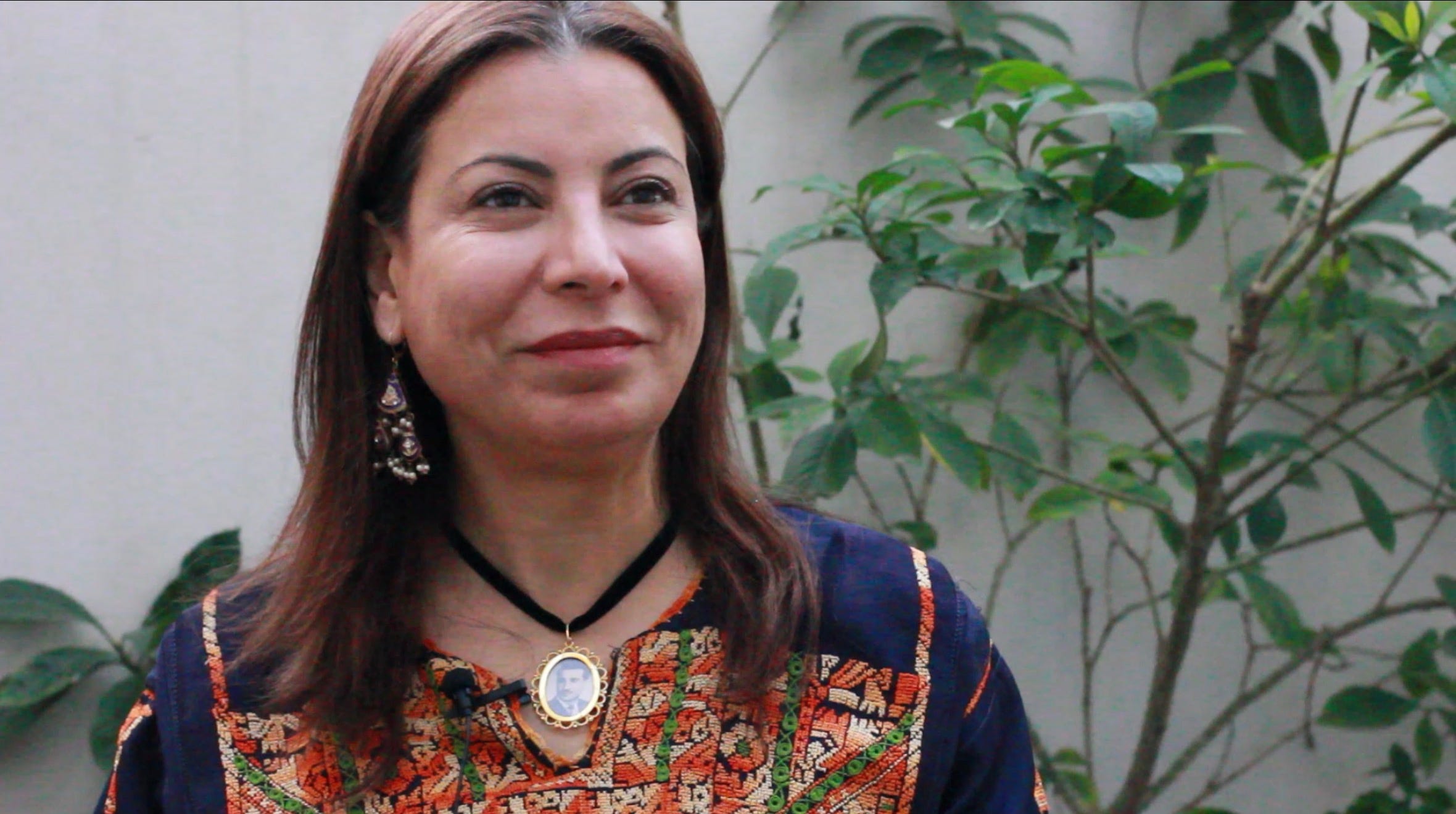
“We were a group of women who were constantly living in the shadow of the memory of Ali and his stories,” she told me, “I grew up in a time when my father’s name symbolized the pinnacle of heroism and martyrdom. Before he was Ali the martyr, he held a major social role in his community. He was a tour guide and had extensive knowledge of the history of Jerusalem. Before he became a martyr, he was a husband and a lover. He was very loving and positive sibling,…he put most of his brothers and sisters through university.“
Her life was burrowed in his shadow, in the memory a man turned resistance fighter. The man she lost, was lifting up his community, defending his land, and he understood the stakes. She continually called him martyr.
A word, which on the surface, is used as someone who dies for their belief or a cause. It’s a word I’ve always had a strange relationship with, particularly as it was framed in white western Christian missionary circles, as if it was sought after, with dominant ownership while disparaging against Black and Brown, anti-Capitalistic governments (China, or anywhere mostly Muslim).
And yet, the word comes from a root across Greek, Latin and Arabic, which means “witness” or applied as a sacrifice for testifying, and standing witness to truth.
Ooofff. That part. To be a memory of witness, a symbol of witness.
For Palestinians, martyr is far more than a word of honor. For better and worse, Martyrdom is expected and lived as part of their very existence. Born under occupation, Palestinians know their lives may be short lived. And for some, it means they must fight for a shadow of life on the way to death for some sense of sovereignty and self-determination.
And she told me,
“His death was not in vain, my mother brought us up and taught us that Ali died because he loves us and because he loves Palestine. My home country, and I do not want to use slogans or clichés, Palestine and the Palestinian revolution demands a lot of sacrifice,”
For Raeda, even her father’s heroism intact, also played out as her wound. And so, her healed expressions came through the aesthetic of the stage.
One of the most powerful women I’ve ever sat with. She defended her father’s armed resistance, while also understanding the importance of negotiation; she worked with Arafat, after all.
Raeda’s presence commanded my attention and unraveling.
What if western journalists who allege to believe in truth or justice —shifted the narrative where it belongs? Let the presence of resistance confront who we represent. What if the story was more than ‘elements’ for awards and boss approvals? What if Palestinians were given the mic for more than their suffering?
I know war journalism has its own energy of martyrdom. We’re targets by industry and by the bullet, by bodies of governance who want to silence truth, to silence our witness.
Western journalism forgot that and made deals with the Devil. Palestinian journalists never did. They can’t, they won’t.
Admittedly, I’ve often told younger western journalists, don’t be martyrs out there, get your story, get out, live to tell it. And yet, and yet….
Even as I write these words, I am reminded our witness is meant to cost us something and if it does not: did we even do it right?
Did we witness as we are meant to? Or were we too eager to be self-asserted white saviors?
In the post-October 7 chapter of Nakba, we watched western journalists fall apart over not getting into Gaza. The lament was “independent” journalists were not being allowed by Israel. Why are white western journalists worthy of “independent” inspection? Why aren’t Palestinian storytellers and journalists worthy of accreditation?
They are the living definition of ‘Gonzo,’ yet, white VICE reporters with special access are given more respect (and it’s known they staged some stories) than a Palestinian journalist, who is immediately questioned about their associations with Hamas (as if it’s a slur). Western conglomerates and some reporters desperately wanted to control a narrative.
Yet, this time, this Genocide, the narrative wasn’t in their control.
It was and it is Gaza’s story, belonging to young journalists and storytellers, artists and children, all putting their English to the test for the world. Their lens’ documenting destruction and signs of life where they could find it in the rubble. And western media didn’t protect them. Now, over 260 journalists are dead.
American media in particular must realize the price they’ve paid for being too willing to trust government agendas, or government sources, whether the U.S. or Israel, the history of government lies is long, I mean really long. Such trust subjects media to a government’s controlled opposition arm, and that’s terrifying.
We can’t assume the DJT fact checks are necessary and then skip fact-checks on Israel, while ignoring Palestinian voices or pushing them to defend their survival mechanisms.
Genocide is word which should have been used over and again, early on, I’ll venture to say December 2023, for this specific chapter. I say it only because South Africa presented a case, clearly and if there was any question before, at least there’s line by line evaluation for reporting, after. Even so, the history of Hamas is rarely if ever discussed, and if it is, any association with Egypt is emphasized rather than say Netanyahu making sure Hamas had cash,
While the stories must include the pain and affliction Palestinians endure, it must also include its leaders and desired solutions. Government entities are making decisions about peace without Palestinians (and in Lebanon without Hezbollah and southern citizens) at the table. No one is asking why, western news just accepts it. Stop.
Israeli leaders are wanted for war crimes, push on that in every interview. Palestinians showcased their demands, list it in every story. Risk getting fired.
Yeh, it’s time to stand up for the truth, don’t you think?
To Be Continue…
Not ready to join up yet? Consider supporting the work through a one-time support link below and I’ll offer an automatic 2-month all-access.
Ash is a writer, a Veteran War Correspondent, analyst, and producer. To connect, work with, consult or interview LIVE, connect here.
Comments
Nothing yet. Say the first thing.
Sign in to join the conversation.