
Welcome, we’re tackling The Invite today. Get the goss, consider the context and stay awhile. This Substack needs more than love to function, and I want to invite you to support this space with a paid subscription to keep it running.
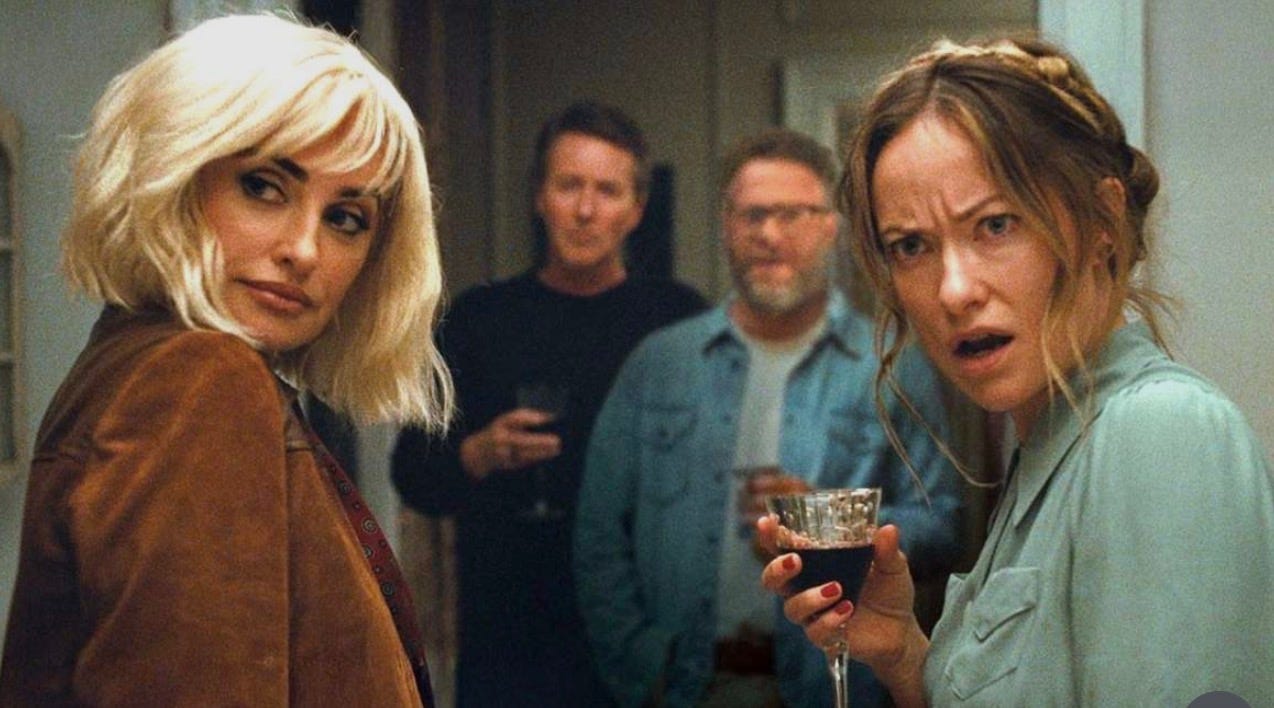
Sexy, intense, hilarious, cringe and ‘Wildely’ playful. I loved the film. And also, I have a few …thoughts… hang with me.
Brilliantly directed (by Olivia Wilde), the cinematic movement of the camera in a small space added depth to the chaos.
In the opening scene, Joe (Seth Rogan) comes home to Angela (Wilde) bustling around the house preparing for the guests, Pína and Hawk (Penélope Cruze & Edward Norton). An argument breaks out. Joe hates them. Angela obsesses over them. The neighbor couple has a reputation for “fucking” too loud, Joe is irritated and Angela wants to have orgasms like Pína.
The shots pan in a half moon around them as they walk from room to room, it’s incredibly attractive, as a viewer, I was following not only their argument, but their body language and energy. I could feel it. In a small space, a flat in San Francisco, it’s gorgeous visual exposé, an array of facial expressions and tone in a small space for an hour and forty seven-minutes.
Wilde’s use of the mirrors in each room to reflect them vs. straight on shots is smart, a subtle examination they’re reflecting each other’s pain. One in the mirror the other just cut off or not in the shot, as they argue and their voices get louder.
Underneath, during different points of intensity, a heavy cello comes in then it stops and then the next person fights and then the strike of strings. So, there’s a dance in the argument with intensity building until it softens into a piano as they soften toward each other. Then back to the strings.
The visual and sound flawlessly follow each other and the opening scene was its own master class in direction.
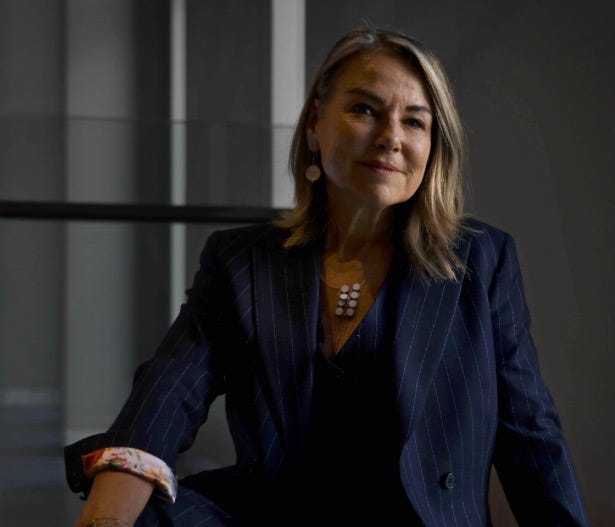
Esther Perel consulted on this film. Of course, the context is group sex and sensuous obsession, why not? It’s well known, Wilde is a fan of Perel’s work. And sex consultants are must for today’s filmmaking.
Except parts of the film didn’t feel like Wilde’s film anymore. It felt like Perel lifted her book Mating in Captivity had it placed in the script.
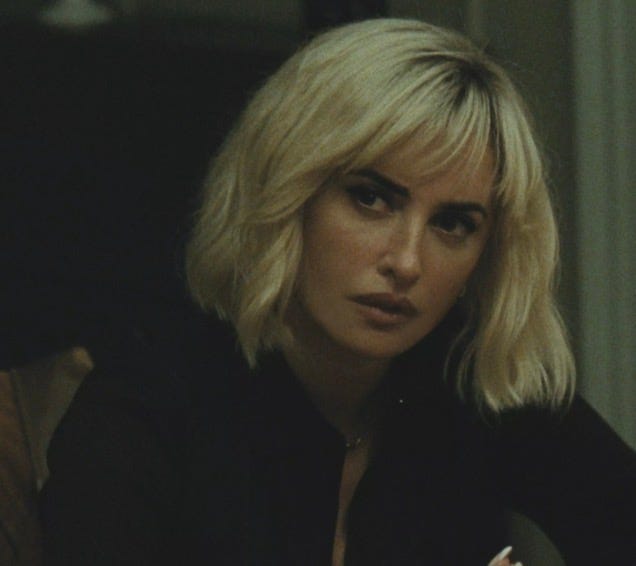
It was awkward. As someone who has followed Perel’s work for years, had the pleasure of meeting her once, who has read, listened and been heavily influenced by her, there were moments, the flow of the film felt disrupted with one of her common drop lines. Pína, or Cruz’s character, is a sexologist, with blond dyed hair and a sexy accent (Spanish vs. a Belgium/French), she’s clearly modeled after her. And so the content follows to place Perel’s theories in the mix.
Penélope Cruz, of course is a great actress and I really like her, however the scripting for her character sometimes felt like the clinical podcast or conference curated lines.
While I think Perel is a poetic woman, I do wish the character had been scripted with more backstory to showcase Pína’s edge, especially since, Hawk was once her client in the storylines and the dialogue could have been reshaped a little bit more.
What I adored in the dialogue, were the conversations around consent, and exploration of fantasy and intimacy.
What it missed was a warmer embrace of queerness. Wilde is known to play openly bi-sexual characters while publicly denying “labels” and Cruz’s Pína opens up about “bi-curiosity,” which has both benefits and complexities.
On one side, it opens the door for a straight woman to explore her desires, her needs her attractions, her excitement, and yeh, why not call it bi-sexuality? Pína’s experiences stimulated Angela’s wants and needs. The two team up to combat sexist statements from Joe and push women’s self-ownership and body appreciation, throughout the film. Of course, I loved that.
On the other side, how much of the male gaze was still being tended to?
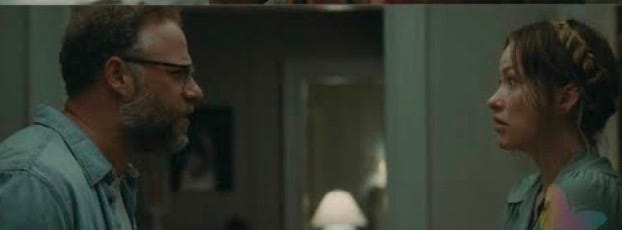
The exploration comes down to Joe’s stringent consent and what he’s getting out of it, which is access to Pína’s breasts. His consent feels more like he’s relenting to permission for Angela than full agency with her. Particularly when his jealousy shows in her and Hawk’s dynamic.
It can come off as a bi-erasure for women.
With that in mind, we DO need to have more open conversations about sexuality in our culture, to break the chains of patriarchal and religious traumas, particularly as right wing nationalists are trying to silence better sex education, LGBTQ youth and women.
And honestly, one of the most beautiful moments in the film was Hawk’s monologue about his journey. If there’s an embrace of queerness to be had it’s in Hawk’s exploration.
How the hell did he get from straight-shooter firefighter to massage therapist who likes to be pegged?
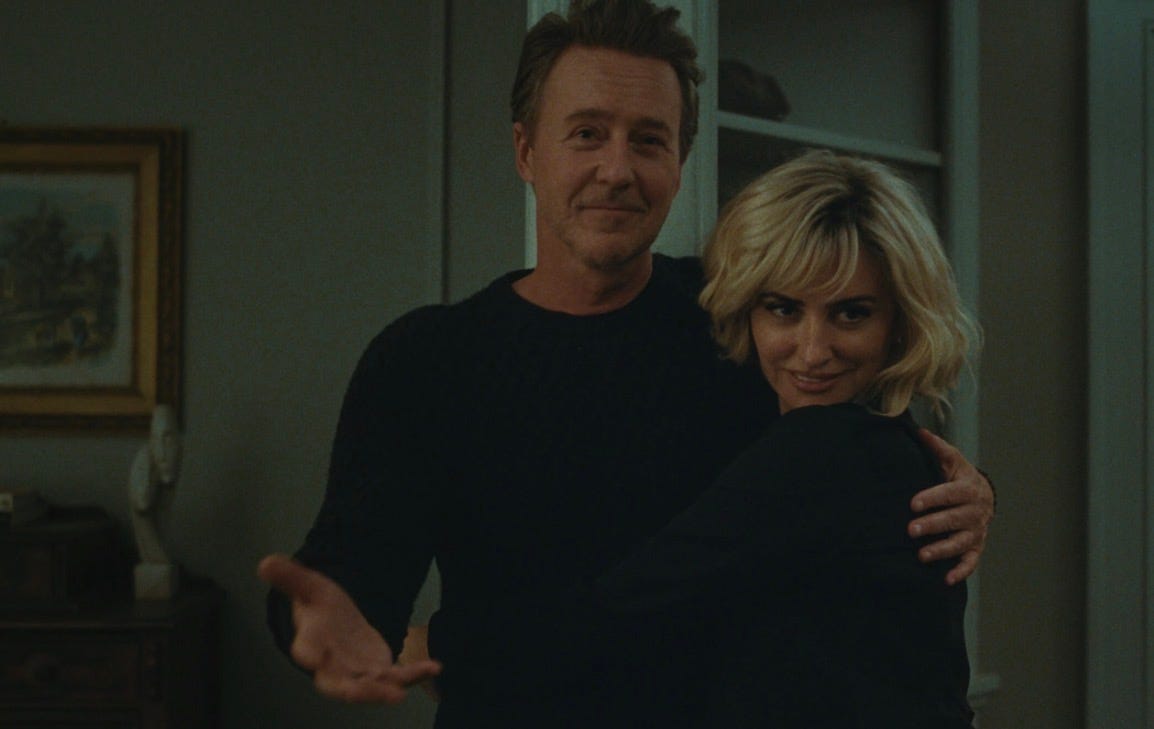
Hawk opens up, and gets really vulnerable discussing his late wife’s death and how he’d kept her from who she really was, who she needed to be, how she wanted to explore to make their lives richer.
It wasn’t about sex parties, it was about her body being able to experience freedom before and while combatting cancer —then, she was gone. So he had to face himself too.
It’s less about sex at that point and more about self-acceptance and longing.
It challenges Joe, a more sexually conservative character, who doesn’t hold it well at first, but by the end he’s faced with what he hides and the music he let die inside of himself.
Ultimately, yes, I recommend the film. We’ve long needed a sexy adult dark comedy and this is a summer sensation, another film by Wilde I gladly found appealing.
It’s about finding the fire in our relational well and how we can break open from the inside out.
And if you’re straight man, please, for fuck’s sake, watch with an open mind. The women in your life need more than what you realize.
Though for anyone, here, I recommend you grab your friends, partners devour it, break it apart and open the fantasies of what relationships can be when we’re honest about our bodies, love and honoring each other’s desires.
If you’re not ready for a consistent subscription yet, consider a one-time support / tip-jar for the author and receive 1-3 months all access to Ash’s writings here.
Ash is an emerging director, writer/poet examining the eroticism of healing and justice, and coach. To connect / intv or work with her, email her here.
Recommended Further Reading:
No posts
Comments
Nothing yet. Say the first thing.
Sign in to join the conversation.