
As a child orphaned in India, Anne Ralte survived because of USAID food aid. She would later serve at the agency. She’s shared her story below.
Over the past week, 426 Americans have bought USAID flags for their members of Congress. Help us reach our goal of 1,000 flags by buying a flag at https://givebutter.com/usaidflags
Buying USAID flags for your members of Congress is like writing them a letter they will see every day.
Buy an $8 USAID Flag for Your Senator
We’ll let your members know the flags are from you. You can specify who you want us to give your flags to on our donation form.
The Flag that Fed Me
By Anne Ralte
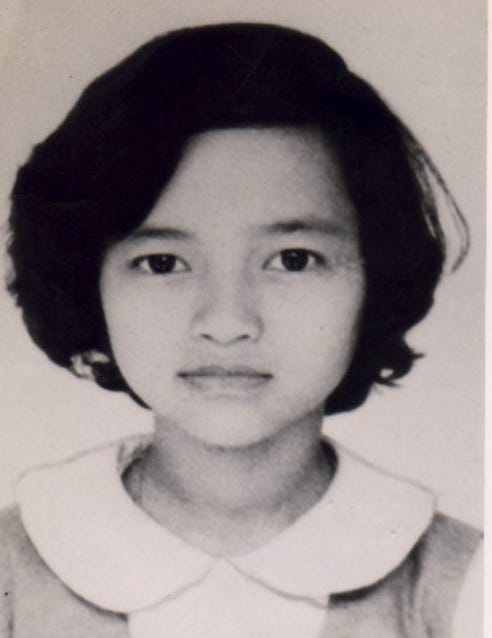
I began my USAID career in 1996 in the Office of Food for Peace, where I led development of the first Title II emergency food aid strategic plan and results framework. Joining the Office of Food for Peace brought my life full circle. From 1963 to 1971, as an orphan in Calcutta—now Kolkata—in West Bengal, India, I received USAID food aid at a school for disadvantaged children sponsored by the Old Mission Church, the first Protestant church in West Bengal. USAID food helped me survive: bulgur wheat; milk for breakfast porridge; milk and bread for a mid-morning snack; and rice and dhal for lunch and dinner. Bags bearing the familiar handshake and the words “From the American People” arrived at my school through USAID’s implementing partner, CARE/India.
That nourishment helped me succeed in school in ways that drew the attention of a New York family participating in the Christian Children’s Fund—now ChildFund—sponsorship program. Education became the path that changed everything. After my mother died when I was ten, the school connected me with Drs. Donald and Sally Hoople, music and English literature teachers from Mamaroneck, New York. They became my sponsors and provided monthly support so I could remain in school. Without them, I would have returned to my hill tribe in northeast India, where educational opportunities, especially for girls, were limited.
Although sponsorship rules limited what Don and Sally could provide, they found ways to do more. Nearly every month, they sent books—English literature, U.S. history, and more—and funds for a sitar and Indian music lessons to complement my piano studies, unaware that I had little interest in the instrument. They stretched the rules again when they arranged for me to come to the United States for further study. Only later did I learn that Sally had spent more than a year corresponding with my former high school principal, who had mentored me. Sally, and my birth mother, are my role models: strong, fierce, and determined.
Sally’s determination brought me to the United States on June 4, 1971, and that initiated my lifelong career in international development. After college, I joined UNICEF, which led to years of overseas work and adventure in service of greater good. Yet my work with USAID meant the most because it connected me back to my beginnings. The USAID flag reminds me of that journey. My difficult early life gave me the courage to confront complex challenges and the ability to build lasting alliances to advance USAID’s mission.
Not a day passes without my gratitude for having been part of the USAID family. The flag reminds me of the millions of lives saved and of our commitment to meeting urgent needs based on need, not political ideology. It also reminds me of USAID colleagues, past and present, who shared my journey of service and discovery. With technical expertise, determination, and innovation, we solved problems, grounded new ideas in policy needs, built coalitions, and passed knowledge forward. USAID’s legacy endures in the lives it touched, the systems it strengthened, and the empathy and collaboration that defined our work.
Because the USAID flag is closely tied to my own survival, education, and life of service, what has happened to USAID feels deeply personal. I remain deeply grateful to Sally Hoople, who demonstrated for USAID long before I found the courage to speak out. At ninety-five, Sally attends a political protest every Saturday in Freeport, Maine, as recently reported by the Portland Press Herald. To me, the USAID flag stands for the generosity of the American people—people like the Hoople family.
Today, the flag also reminds me of the unnecessary suffering caused by the reckless dismantling of USAID—the beneficiaries abandoned, the harm done to staff and their families, and the cruelty with which the process unfolded. It reminds me, too, that gratitude for USAID’s legacy must be matched by a national commitment to protect it. That is why I believe we must elect lawmakers committed to rebuilding and safeguarding USAID as legally established, rather than allowing it to be dismantled by political whims.
I remain an optimist. The flag calls to mind our founder, President John F. Kennedy, who understood that even in moments of disappointment and despair, our mission and values endure. Like any journey, ours has suffered a setback—an unimaginable one. Yet the meaning of that flag cannot be dismantled. It lives in the children who were fed, the communities that endured, the systems that were strengthened, and the people who carried its mission forward.
If anyone ever wondered whether USAID’s work mattered, know that it did. I am living proof. A flag can be lowered, an agency can be wounded, but a life transformed cannot be undone.
No posts
Comments
Nothing yet. Say the first thing.
Sign in to join the conversation.