
The author is a West Point graduate, former U.S. Army officer, and career diplomat who has led multilateral counter terrorism and conflict-prevention work across Europe and Asia.
At a moment when our global survival demands unprecedented cooperation, the question preoccupying many isn’t how to prevent the next crisis: it’s how many armed military conflicts we should be prepared to fight, and where. As time for meaningful change is wasted, leaders are working to dominate the remains of a ruined planet.
After two decades in uniform and at the negotiating table, I have come to the conclusion that we have the phrase backwards. It isn’t peace through strength. It’s peace as strength.
I had hoped COVID-19 would be a forcing function: a shared global crisis severe enough to finally push nations toward real cooperation on the problems that do not respect borders: climate change, poverty, water shortages, conservation. But the lockdowns ended, the old rivalries resumed, and the underlying problems were left largely where we found them.
Worse, in hindsight, the pandemic made things harder. Prolonged isolation left people more susceptible to disinformation and radicalization; months spent alone and afraid turned out to be fertile ground for extremist recruitment. The threats we tend to treat as separate—public health, information warfare, violent extremism—are more tangled together than most of us want to admit.
Here is the problem as I see it. Multilateral spending still overwhelmingly favors hard power: military preparedness, arms control, nonproliferation, kinetic counterterrorism. Meanwhile, the conditions that precipitate instability in the first place such as climate fragility, resource scarcity, and the loss of natural habitat, are treated as secondary problems. They are sidelined as development issues, not security ones.
The evidence does not support this order of priorities.
The UN’s own counterterrorism strategy has a section dedicated to what those of us in the field call Pillar 1: combatting violent extremism by empowering youth, women, and civil society; building social cohesion; investing in communities before they fracture. In practice, though, Pillar 1 is often under-funded and overlooked, while hard security still receives the lion’s share of national budgets.
The recent resurgence of populist politics has only hardened political will against redirecting hard-power resources toward this kind of crucial “soft power” prevention work. Community capacity-building, education, youth empowerment: these kind of interventions continue to be boxed off as separate from “real” security, which remains overwhelmingly in the realm of armed confrontation and traditional military engagement. In 2026, the prevailing consensus still seems to chase peace through strength. I’m sorry, but I believe something different: peace as strength.
Left unaddressed, traditional and non-traditional threats do not stay in their lanes: they coalesce. The situation becomes a perfect storm when climate stress, water scarcity, and habitat loss feed directly into conditions that produce violent extremism, while the funding architecture built after the War on Terror stays oriented almost entirely toward traditional military threats.
This isn’t theoretical to me. The recent surge of asylum seekers arriving in Ceuta, Spain, should serve as a wake-up call. Climate stress and desperation push people to move, unprepared systems strain in response, and the resulting instability becomes exactly the kind of grievance that extremist movements can exploit.
The link between climate fragility and the risk of extremist recruitment is now well-established. It’s a threat multiplier, and the evidence base behind that claim has grown substantially over the last twenty years. We do not need more studies to establish the connection. What we need now is to translate that research into funded, sustained action, before the unintended consequences of inaction further compound.
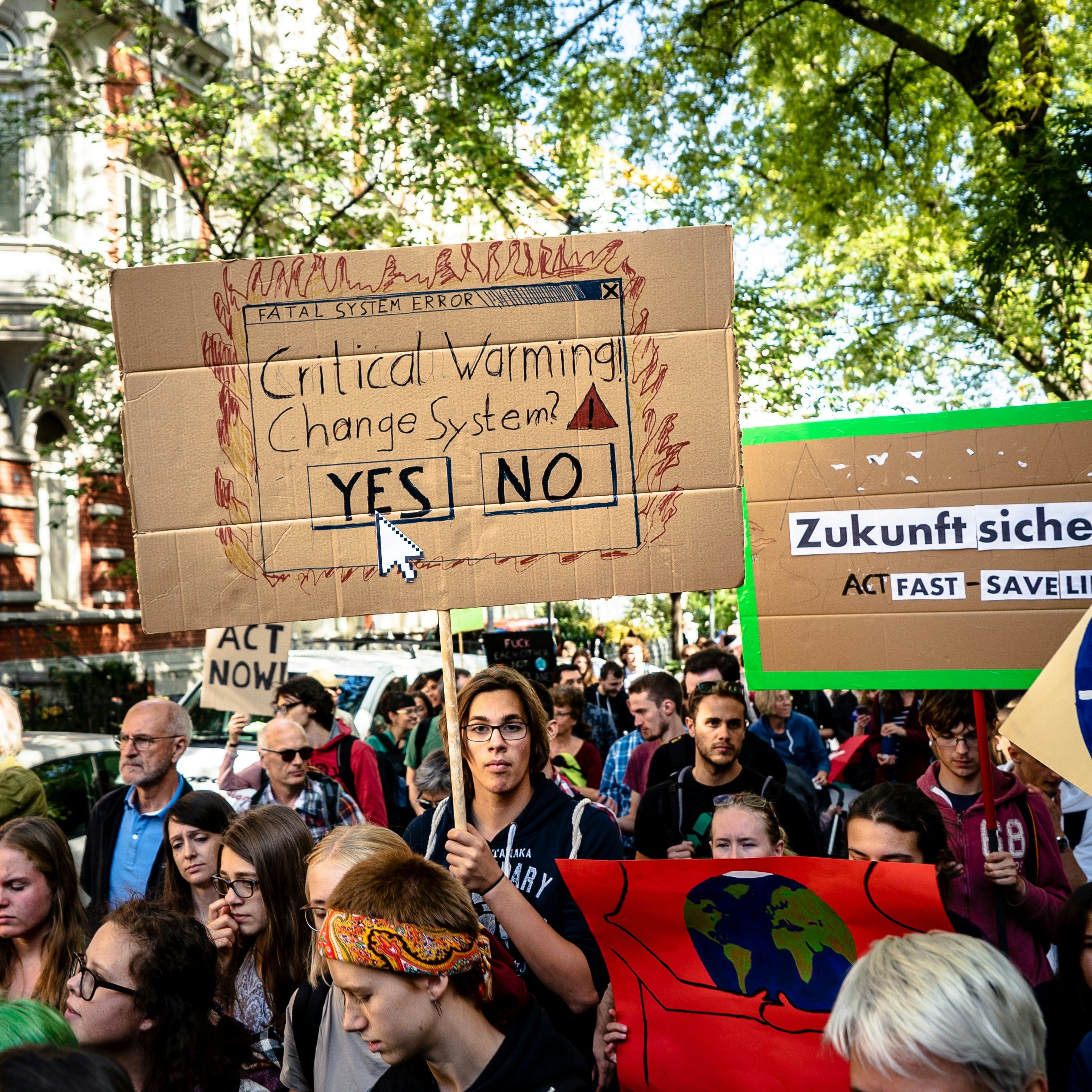
As the United States has reduced its foreign aid footprint, organizations like the Global Counterterrorism Forum which funds community-centered prevention work led by civil society, have lost major partners practically overnight. I find the retreat of the United States in this area especially baffling given how directly these activities serve its national interests.
What I see is a deep ideological shift: away from collaborative soft power prevention programs and back toward isolationist, security-focused kinetic counterterrorism — tanks and guns, instead of the education and opportunities that help make societies peaceful. It raises the question: are we no longer seriously interested in prevention?
My answer isn’t a new pot of money or another appeal to conscience. It’s a rebalancing of our funding priorities, and it takes just pennies on the dollar. I support the Two Penny Pledge called for by the Alliance for American Leadership: a request for two cents of the U.S. federal tax dollar to support international development and diplomacy. This is precisely the work that dampens expensive wars, terrorism, and hostilities before they break out.
Here are the concrete shifts I’d like to see multilateral bodies commit to:
• Fund and encourage networked climate-fragility partnerships across international and sub-regional organizations, so lessons learned in one region reach the next.
• Create sub-regional dialogues built specifically for sharing implementation experience on climate fragility, not just headline commitments.
• Resource capacity-building properly — meaning real, sustained funding, not a one-off two- or three-day training session. Come with money, not just a curriculum.
• Treat development, economic, and security priorities as one integrated agenda rather than three competing ones when working with regional and sub-regional partners.
• Bring civil society’s technical expertise on climate fragility and Pillar 1 directly into UN bodies like the Office of Counterterrorism, rather than keeping it at arm’s length.
I would also like to see this conversation move beyond the Security Council, where climate fragility still hasn’t found real consensus within the peace-and-security nexus. I have proposed starting donor dialogues as a form of early warning at the UN Office at Nairobi, followed by a regional push through the Bangkok UN Conference Center: building toward practical templates that let participants map their own donor needs and implementation priorities, region by region.

Underneath all of this is a simple wager, and it’s the one I have staked much of my career on: that patient, unglamorous multilateral cooperation of the kind that takes longer and rarely makes headlines produces more durable peace than firepower alone.
I make this case as a former Army officer and diplomat who has spent my career inside the system funding hard power. That is precisely why I see the pursuit of peace itself as our greatest strength. Whether our institutions are ready to act on that, with populism rising and aid budgets shrinking, remains an open question. But as climate stress and instability keep colliding, it’s a question we can no longer postpone.
Thomas Wuchte is proud to serve as an Advisory Board Member for A4AL and its efforts to build support for the Two Penny Pledge.
No posts
Comments
Nothing yet. Say the first thing.
Sign in to join the conversation.