
Þá skyldi blóta í móti vetri til árs, en at miðjum vetri blóta til gróðrar, hit þriðja at sumri, þat var sigrblót.
Then [one] should blót in winter meeting for a good year, and in the middle of winter blót for good crops, a third at summer, that was sigrblót.
-My translation
Thus is the single attestation of sigrblót, in the Heimskringla by Snorri Sturluson. As an aside, remember: there were two seasons in ancient Germanic reckoning, summer and winter. So, “the middle of winter” is actually as spring approaches, “in winter meeting” is actually as the (prior) year moves to a close. “At sumri”, meanwhile means “at summer”, which is referring to roughly when summer starts. This is about April.
Academics have made various attempts to link this attestation to various Germanic summer festivities. The problem with this endeavor is that these attempts were built upon the hermeneutically erroneous idea that blót was a singular and regular event that was performed solely as a matter of state cult rather than any sort of personal piety or devotion. This itself is based on 20th-century academic views on religion and Whig history, which we don’t need to get into, but for simplicity: the idea that there must be a singular blót in each quarter is based on the idea that no one would ever humor the idea of doing blót anytime else, with any group less than the totality of society. That’s just obviously not true, as both textual and archaeological sources attest.
A further complication is that if you actually look at what Snorri is saying, he’s describing three (not four) festivals that all occur relatively clustered together, and then throws in a general harvest festival later. So, he’s not actually describing a regular, quarterly, series of gatherings at all.
So, the idea that any and all attestations of a festivity “at/í sumri” are in reference to one event falls apart because there were many blót at various levels of society throughout the year, occurring all across the calendar. Indeed, some academics go so far as to assert that Snorri just invented this holiday wholecloth. I have no dog in that fight, because we have no evidence to posit it as an alternative, because it’s possible that sigrblót was a universally and regularly practiced event, Snorri is just the only attestation of it, and all other “blót in summer” are unrelated.
The standard academic line regarding this holiday is that Snorri is relaying to us the event that officially kicked off the “raiding season”. There’s some evidence that Norsemen did prefer to start using boats at this time, but, 1) “vikingar” were just “any guy with a boat”, and they mostly fished and traded with those boats, with piracy being a relatively rare (but salacious) event, 2) Norsemen used boats to do fishing, trading, and piracy year-round, 3) there’s no evidence of a conscious “raiding season”, it’s just that this period was one in which there was relatively little farm-labor to do, so one could earn some quick cash by doing things other than planting or harvesting (and this shows up outside of Scandinavia at the same time).
What’s more interesting is sigrblót as we do it today, and what it means to us.
The first time sigrblót shows up in modern Ásatrú is in 1985’s Spring issue of the Runestone, where it’s in April and attached to Sumarsdag. This is based off of the “Icelandic Thesis”, which essentially attaches sig(u)rblót to the traditional Icelandic celebration of the victory of warmth over cold.
But in 1987’s Spring issue, the Herald, in his capacity as Allsherjargoði and thus decider of the matters of doctrine and practice of the Ásatrú faith, introduced the origin of the modern sigrblót. I’ve talked about the problems with viewing sigrblót as a singular event that only happened once per year, but it is also true that blót “til sigrar” was a thing. More importantly, Medieval Ásatrúar, and practitioners of Indo-European religions as a whole, did not adhere to a particular Christian notion: that winning is bad. Christians want to lose beautifully, they do not want to win. Sigrblót, as the Herald tells it to us, is a conscious meditative ritual meant to not do that: it is literally turning one’s mind to victory.
Thus, the Herald had essentially taken the domain of victory at sea and iterated upon it. Most people cannot engage in piracy these days, but that’s not really the point of the holiday (as it was understood at the time). The point is victory. The point is working towards victory. The point is winning gloriously, and presenting your victories to the Æsir as an offering. Your victories not only advance their cause in this life, but make you a better man for the next. Sigrblót is the presentation of that offering, and the movement towards the victories that you will be offering.
And of course, once you recognize that, you don’t have to do this only in April. Working towards victory is something you should be doing all the time, after all. And so, during his time as Allsherjargoði, Matt Flavel moved the holiday to July. Why? Simple: we needed a holiday for July.
Keeping this holiday fixed to April, which was only done out of an Icelandic parochialism that I will get to shortly, that happens to line up with theories about when Norsemen intensified their piratical activities, is absurd. And so, Allsherjargoði Matt Flavel, like Herald and Allsherjargoði Steve McNallen before him, used his Allfather-granted authority to determine the how and when of blót. Specifically, that sigrblót would be in July, as a movement towards and offering of victory to the Æsir.
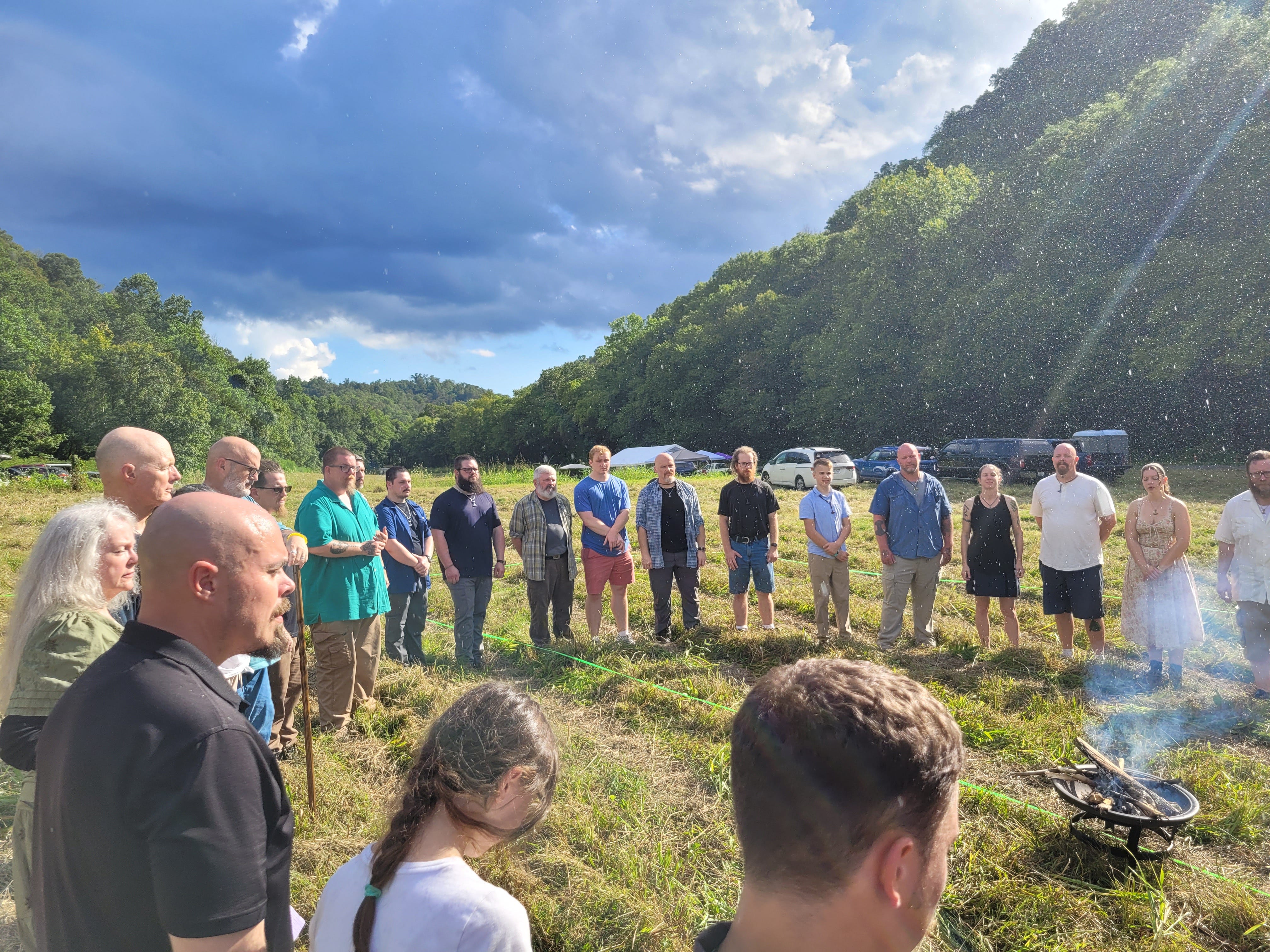
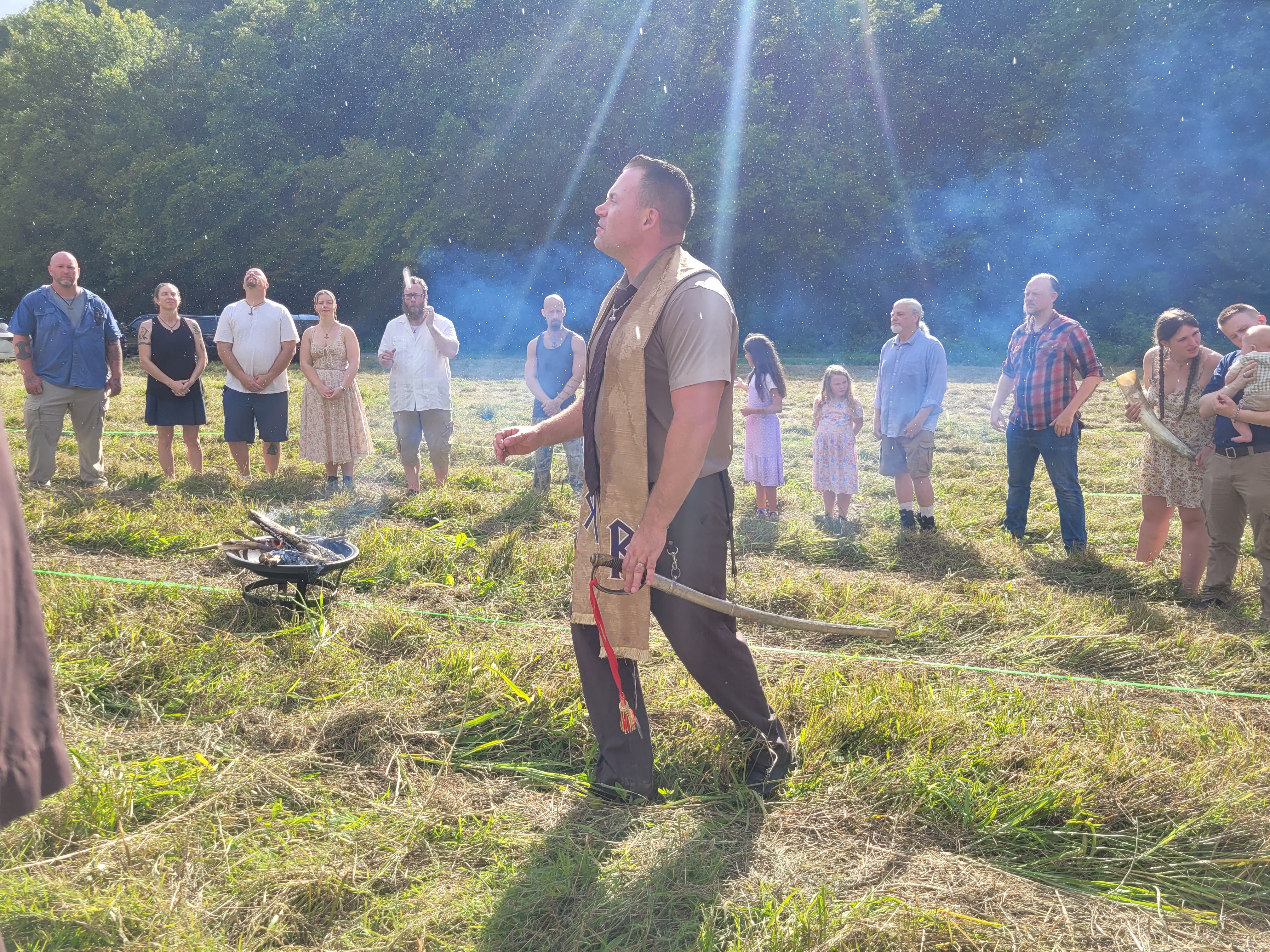
Perhaps the most important Sigrblót thus far has been the first Sigrblót at Sigrheim. Sigrheim is the site at which Týrshof, the first purpose-built temple to the Æsir in over a thousand years, will be built. It’s also where we hallowed the first official Ásatrú Sword in the modern era, Relentless.
If you couldn’t tell, this is a relatively modern holiday. That’s not just reflected in how we do things, but how the Ásatrúarfelagið does things over in Iceland. Specifically, their Sigrublót became deeply intertwined with the group’s own history, and existing Icelandic custom.
I found a series of brief interviews wherein some of the Ásatrúarfelagið’s goðar speak on the holiday. Of course, because the Ásatrúarefelagið does not believe in dogma and doctrine, they all disagree, and because they do not actually educate goðar but instead expect them to educate themselves before being democratically elected, they all disagree on why they disagree. Where they do agree is that Icelandic Sigurblót is not about victory, but the general return of life in the summer. Which, honestly is not at all what the sole textual source on the matter tells us.
However, to be fair, the Ásatrúarfelagið does have somewhat of a reason to do this: the Ásatrúarfelagið was founded on Summer’s Day, 1972. This was the day that the true faith was resuscitated in Iceland, and it’s a heroic event that we in the Asatru Folk Assembly look quite fondly on. The betrayal of the true faith and that first generation of Ásatrúar, we’re not so keen on, but that comes later. But, this is why Icelandic sigurblót happens in April: because the Ásatrúarfelagið was founded on the start of summer, which the Icelandic calendar puts in the middle of April. Other Germanic calendars don’t actually agree that “at sumri” is in the middle of April (the Anglo-Saxon calendar has summer starting in May, for example), which makes Snorri’s reckoning extremely Icelandic in character
In the Asatru Folk Assembly, we’ve moved away from this “start of summer as victory” paradigm, in part because it’s wrapped up in the particulars of the Icelandic climate, but also because, quite frankly the victory of order over chaos is better described by the metaphor of the sun and the length’s of the days, which doesn’t really have anything to do with April. We’ve instead focused this holiday on the first offerings of victory to the Æsir, when Allfather Óðinn began our tradition in 1968 by initiating and ordaining Steve McNallen.
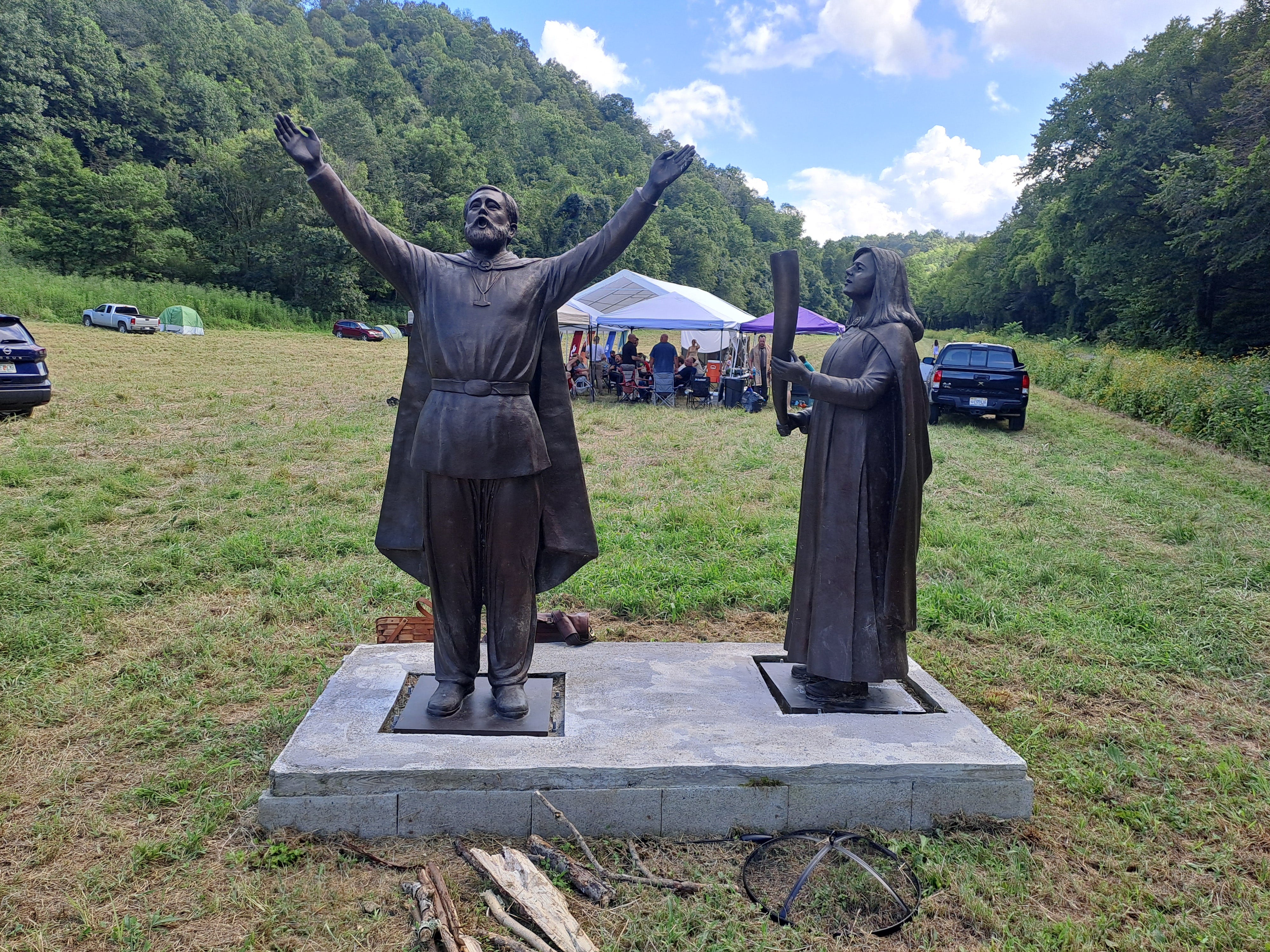
I’m going to offer a trimmed-down version of the Herald’s meditative practice, rather than posting the full article here at length. Sit down in a comfortable place, such as before your home-altar, or maybe in the sun. Visualize the struggles ahead of you, and around you. What hardships, hurdles, and foes are involved? What do they do? Now, visualize victory. What does it mean to win? Think hard: what does that state actually look like? Now, trace a line between those foes, and that victory. What do you have to do to achieve it? I call this practice “sigrarhyggr”, “to think on victory”. It’s something that we all should do more often.
Perform this exercise. Then, when you gather with your folk for blót, place your victories into the horn. Speak them out loud, telling the Gods, the Ancestors, and the Folk of your triumphs. Offer them up to the Æsir. Strive to be a virtuous and noble Aryan worth of the gifts that you have been given, and of the attention of your Gods.
-Folkbuilder Chris Savich
For more about the Ásatrú Folk Assembly, visit our website!
Thanks for reading the Runestone Newsletter! Subscribe, share, and donate to help bring the Folk home.
No posts
Comments
Nothing yet. Say the first thing.
Sign in to join the conversation.