
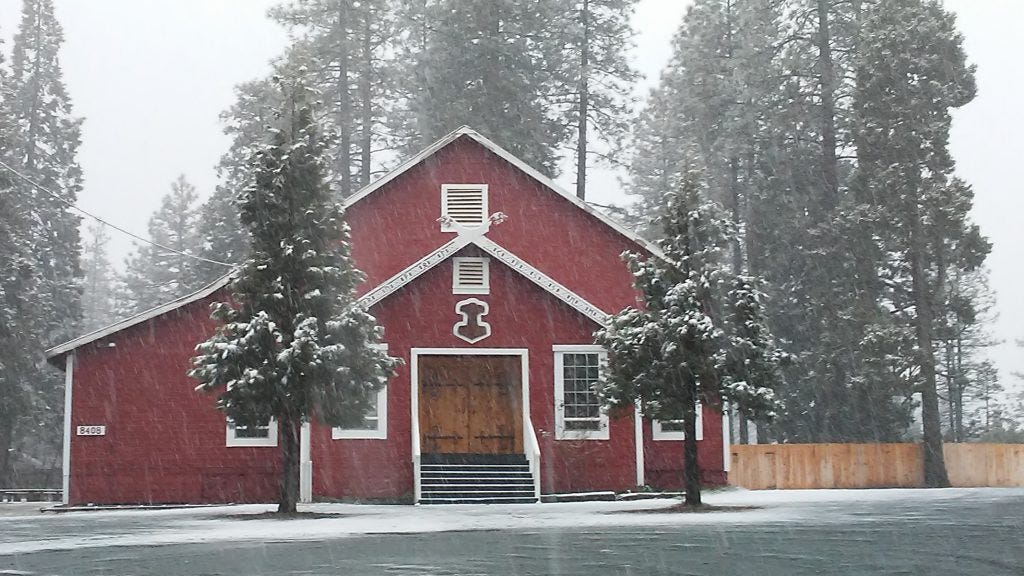
This is a transcription of an interview between Allsherjargoði Matt Flavel and then-Apprentice Folkbuilder Chris Savich on Óðinshof, which was the first hof that the Asatru Folk Assembly acquired. A hof is a temple to the Æsir. Óðinshof was also the first new hof in the world as of that point, and was certainly the first one in the Americas.
In the premodern era, hofs were freestanding buildings that were owned in trust by the community and clergy and taken care of by said clergy; the community would pay regular donations of hoftollar to upkeep them. While blot-houses, the Asatru equivalent of chapels, which are privately owned structures for ritual purposes, had been constructed in the past, no institutionally owned temple operated by ordained clergymen had been acquired. Asatru had no buildings that were equivalent in standing and stature to a Christian church, Muslim mosque, or Jewish synagogue, until this point.
Since the beginning of Asatru’s modern form in 1969, this had been the dream. Enacting that dream eluded us several times, with both Wotanwald and the Protohof. This event, in 2015’s October, marked the turning point of Asatru becoming something real: a quest that had taken some 46-years had finally been completed.
While Allsherjargoði Matt Flavel is the Allsherjargoði of the entire AFA, his at the time physical proximity to Óðinshof and presence during the acquisition, and having gone from a mere member to the Allsherjargoði, meant that he was ideally suited to discuss this (literal) world-historical event from a unique perspective.
Chris: So, to begin, tell us about yourself.
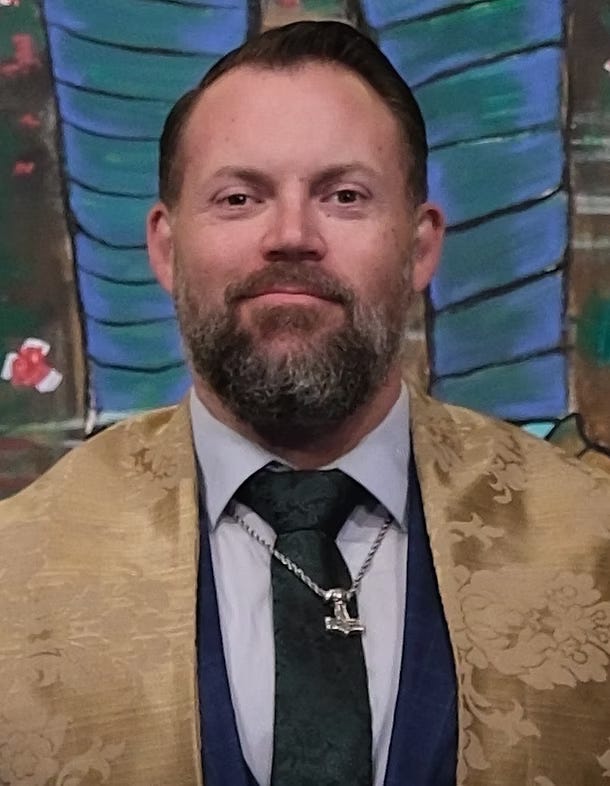
Matt: Sure. My name is Matt Flavel, I am the Allsherjargoði of the Asatru Folk Assembly, I have been involved in the Asatru Folk assembly since 2009, Asatru [in general] since 2001. I’ve been actively involved in AFA leadership in one degree or another all of that time that I’ve been in the AFA. I started as a Folkbuilder in Alaska, and eventually moved up to Folkbuilder Coordinator, as well as a Goði, then the Allsherjargoði in 2016.
Chris: And that was shortly after we got Óðinshof, correct?
Matt: Yes. We got Óðinshof, I believe September of 2015... yeah September of 2015.
Chris: So, setting the stage, what was the environment like leading up to Óðinshof, because this was the first real hof ever.
Matt: Yes. Certainly, since our ancestor’s day: the first hof of its kind in two-thousand years, certainly that we’re of. Certainly the first of its scale in the United States. At that point, the AFA would either have, y’know, small gatherings at people’s private homes or at people’s private property, or we would have to rent out locations to have events. So, for example, our flagship event was, at that time, Midsummer in the Sierras, and that was, y’know, held variously at the Sons of Norway Camp, at the CYO Camp, and at a variety of other private venues, which was less than ideal: we were always guests somewhere, and it wasn’t really our space. It traveled around.
We had this distant dream in the air, since the founding of modern Asatru: “we’re going to have a hof, our own space to worship our Gods and to do stuff”. But, at this point, it was still a dream. We had a couple of people actively, kind of, looking around. At that time, the AFA’s center of membership was... I suppose we had a couple of different hubs, but the main hub that was doing stuff that we had a lot of community around was in northern California, and it kind of revolved around the personality and, I guess geography, of our Founder and at the time Allsherjargoði Steven McNallen, and his wife Sheila, in Brownsville / Grass Valley, California.
Chris: And they had tried in the past a few times to get [a hof] going. Actually, they’d been trying for quite awhile. Was that something that was known about at the time, really?
Matt: No. There was a couple of rather serious endeavors to get our own space before this, and I think that there’d been a gap of some time between the last serious attempt of us getting something falling through, and us getting what would become Óðinshof. I know that when I first went to my first event in 2010, there was talk of an AFA Hof and Land Fund, that was being, y’know, fundraised for or tossed about. I don’t think [the fund] got a lot of traction, but it was always something that was tossed around and in the air, that people were dreaming on.
Chris: Tell me about the leadup to the hof, and the buying process. How did that happen?
Matt: We’d have to ask Sheila about when she started looking, but for probably a couple of years prior, Sheila had been just exploring the market and dreaming about different stuff, and she’d share different properties that she’d found that were all very far outside of our price range, but [we’d all say] “man wouldn’t it be great if we could have X, Y, or Z”. So, I know that she’d been looking at the market and looking at stuff on there for some time.
In the month’s preceding Midsummer of 2015, I know that she had talked to some local realtors, kind of letting them know what our needs were, and exploring the market. And, I believe, that one of those realtors interacted with Goði Thorgrun Odden a week or two before Midsummer, and so we had set out to look at a really promising property in Brownsville[, California] the Sunday following the event. So, Midsummer 2015 when we were getting done with the event and before those of us who’d traveled would return home, we decided to take a drive up to Brownsville and check out the property that would eventually become Óðinshof.
[EDITOR’s NOTE: 2015’s Midsummer was over June’s 5th-7th, with the 7th being the Sunday that the property was first inspected by AFA Leadership. The IndieGoGo campaign trailer was put onto YouTube on 2015’s July 29th. The fundraising campaign formally began on 2015’s August 3rd. The closing on the property was in late August. The hof was, officially, unveiled in The Runestone (then called The Voice) in 2015’s August edition, and confirmation that the hof was purchased successfully was made in 2015’s September edition.]
Chris: Which was at the time a Grange Hall.
Matt: Yes. At the time it was originally a Grange Hall, and it had gone through a number of different iterations. I think it was last some kind of a religious summer camp spot. But, it had been a number of different things throughout the years.
Chris: You mentioned realtors: did they have any hesitation or concern with working with us?
Matt: I don’t believe so at the time. I don’t think we were a known quantity on people’s radar, and that was right before the current, as of the time of this interview, extremely polarized political climate that’s going around. It was about a year before the Cancel Culture hypersensitivity towards working with different people. It wasn’t in the political climate at the time, and it wasn’t something that we were a big enough deal that people took note of that way.
Chris: That was in the leadup to Trump[‘s election]. There was a lot of stuff online, but it hadn’t really left containment into the real world yet.
Matt: Yeah.
Chris: So, Sheila McNallen was looking around, and Goði Thorgrun Odden was also in that part of California.
Matt: Yeah, he[, Goði Thorgrun Odden,] lived in Penn Valley, which is about a third of the way between the McNallens and the hof. All up in the foothills of the Sierras.
Chris: So, did the realtor get passed off to him? Or did they both happen to be looking for hofs and just happen to bump into the same guy?
Matt: I think it was a connection of he and Sheila kind of working together. I think each of them doing a “this is close to me, I can check it out” kind of thing. But, I think they cast a fairly wide net. But, I’m not certain on it.
Chris: But they were collaborating?
Matt: Yeah.
Chris: Okay. So, they found the place: how did we go about funding it once we decided that this is what we wanted?
Matt: Oh, lots of different ways. At the time, it was an unprecedented thing, not just within the AFA but within Asatru to try to do something of that level. I’d have to go back and look at specific numbers regarding what that cost was, but we were able to raise like $70,000 upfront in the big leadup to it, which was a very, very big deal to be able to mobilize that much. I think that was the down-payment that we ended up putting down.
Chris: How much was the property over all, if I may ask?
Matt: I don’t recall, and I don’t want to give you a number that’s not accurate. I want to say under $200,000? But I’m not sure exactly.
Chris: Ballpark.
Matt: But, we tried a variety of things. We tried... It wasn’t GoFundMe, I think it was IndieGoGo or something?. We tried stuff on that, we had a number of different donation levels to where you could donate a certain amount and get a little prize, or a little somethin’, and we had tiers for what people would get and how that would work out. There was a variety of different ways there. Because it was the first of its kind, a lot of people were very eager to donate to it, both AFA members and people who were in the periphery of things that we were involved in. There were members of the Rune-Gild that donated substantially, there were other people, y’know not members of the Asatru Folk Assembly, but y’know Asatru adjacent that made substantial donations as well.
[EDITOR’S NOTE: It was IndieGoGo.]
Chris: So, did we get outside help from any kind of groups, as opposed to individuals who saw what we were doing and supported in abstract?
Matt: Not that I’m aware of. All that I’m aware of were individuals.
Chris: Did we have any open support from other groups? Within and without Asatru.
Matt: Not that I recall.
Chris: Do you know what the Lefty inclusive heathen universalist side was saying about this at the time?
Matt: No. I realize that I’m not giving you meaningful answers on these last questions because I really don’t recall, but for what it’s worth the sides weren’t nearly as polarized. There was still a degree of overlap between Lefty groups and more Folkish groups at the time. It was the tail end of it, but there was still some of it there. I believe the Troth was still representative of the Left side of things at the time, and their Steersperson at the time[, Steve Abell,] was not hostile to Steve.
Chris: So, I know that with The Quest For The Hammer, Diana Paxson like... I don’t know what this means [materially] but like, got behind him and lended her voice to him. That sort of thing didn’t happen from what you saw?
Matt: Not from the Left from what I recall. I remember folks in the Rune Gild personally spoke up, but I don’t remember if there was any official institutional support. I don’t remember if there was any official support or word from the Asatru Alliance, which was much diminished by that time. The Odinic Rite wasn’t really existent by that time either. I don’t recall any other groups particularly cheerleading for it or having much to say, as far as groups go.
Chris: So, at this time, Steve Abell, and then Rob Schreiwer, were in charge of the Troth.
Matt: Yeah, I don’t remember if it was he [, Steve Abell,] or Rob, that was kind of not... trying to be openly hostile. And again, at the time I wasn’t... there wasn’t a lot of overlap with me I suppose, it was just whatever back and forth between the McNallens proper and their [, the Troth’s,] leadership just in whatever back and forth there might have been. But, there didn’t appear to be an open fight with [them]. Their focus wasn’t on constantly counter-signaling us as it would become at later times.
Chris: Relatively quickly, too. I know they use your becoming Allsherjargoði as a “well it looks like the AFA has shown its true colors!” moment.
Matt: Yes. And remember, this was right before any of that. So, very much their stance was playing nice and everybody kind of... There was a... I don’t know how I want to characterize it, the calm before the storm I suppose.
Chris: Did we receive any kind of denunciations for this? Within and without Asatru.
Matt: I don’t think so. I think everybody was on board with “hey, it would be really cool to have a hof”. There was, by then, an understanding that the AFA the group that did stuff, and I think kind of a general support of a hof happening.
[EDITOR’S NOTE: Óðinshof was dedicated on 2015s October 10th. ]
Chris: So, really, this was actually a pretty peaceful endeavor in terms of media attention and hoopla in comparison to subsequent hofs.
Matt: Absolutely, and I don’t even think there’s been that much of all of that. Other than Baldrshof, everything has been pretty after the fact, if they get any media attention at all.
Chris: Tell me more about the financing.
Matt: I don’t think there was anything that remarkable. We were trying to figure out how to mobilize funds quickly. I wasn’t in a position to where the AFA accounting was visible to me, so I don’t know how much we had saved that the AFA was able to to put down on it. I know to get the loan, and it was a traditional loan through a bank, the McNallens had to underwrite it. So like, they were on the hook for it as much as the AFA was. I don’t know how the initial down-payment worked as far as how fast we raised it. I think it was on a ten-year payoff plan, but I’m not certain. I believe we paid it off in three?
Chris: Really, that fast? Wow.
Matt: I’d have to look. It was really important to me when I became Allsherjargoði to work diligently to pay that down. But, I’d have to look back at the time.
Chris: Yeah no, that’s actually really fast.
Matt: Yeah.
[EDITOR’S NOTE: The mortgage on Óðinshof was recorded on 2015’s September 4th, and the discharge was recorded on 2019’s January 29th; 1243 days, or 3 years, 4 months, 25 days, later. However, the final payment was actually made sometime in 2018’s December.]
Chris: So, we got the place, and did the opening ceremony and unveiling. How did that go?
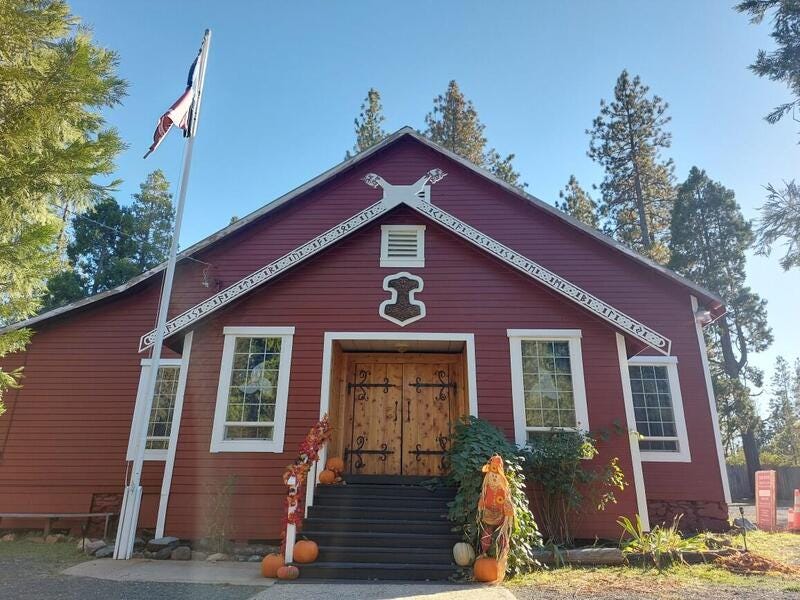
Matt: We had a number of local people putting in work out there on sprucing the place up and doing some cosmetic stuff to it. We had a guy come out from Florida, and spend... I want to say almost a month in the area doing different things. They built the wooden doors out front with some iron hinges that they’d made. A local member carved the big redwood Þórr’s Hammer that’s over the door, they worked on the crossed-gables for the entryway. So, they had folks out there for about a month doing cosmetic stuff, sprucing the place up and making it ours. The first event, I think, was in October. I think the first thing was Winter Nights there.
[EDITOR’S NOTE: It was indeed Winter Nights, on 2015’s October 10th, which was the formal consecration and opening of the hof.]
Matt: The local community didn’t know what to make of it. We had a former member, I was told, that lived in the town and was spreading some negativity about us. He tried to poison the well with locals from what I was told, and locals were grumpy about the devil worshipers, or whatever they perceived it was going to be at the time. The community was cold at best to us at that time.
Chris: But the building didn’t get burnt down so they weren’t openly hostile.
Matt: No, and we’ve never had that kind of vandalism there in any way.
Chris: So, the locals were standoffish and cold. Has that changed? If so, how soon did that change?
Matt: It changed tremendously over the years. We’d have to go into the archives to figure out when this happened, but one of the things early on [that happened was,] we met a woman who was very active locally in charities and community involvement. She was that lady. A lot of small communities will have that just super involved woman who wants to go to all of the meetings and be involved in all of the local civic stuff. And she immediately took a liking to us. It was just kind of interesting and unexpected and out of nowhere, but [she] took a big liking to us and helped us get involved with a number of local services and things there. She consistently spread good things about us to the community. I think that the initial coldness stopped being a thing very very quickly. The warmth that we’ve received from the community really kicked up after we’d started the food pantry. I’d have to go back and see when that was. I want to say that was in 2018 sometime, but I’m not certain.
[EDITOR’S NOTE: The Food Pantry was first announced in 2018’s July issue of The Runestone (then called The Voice). ]
Chris: We do food pantries at all of our hofs: how did this start?
Matt: So, that was really cool and fortunate for us in how that went about. So, Brownsville is a... significantly economically depressed community that is... y’know, an hourish from a big grocery store or other food resources. A lot of the community was relying on a kind of mom and pop gas station mini grocery-store there. That was a source of food for a lot of folks there. California also has significant fires every year, and a lot of them are in the area of the hof. That year, that gas station slash grocery store burnt to the ground.
So there was a food crisis in the local community, and the local food bank, the Yuba County Food Bank, was looking for local people to facilitate a food pantry or distribution hub. They went to the local churches in the area, and they were not interested in helping out unless they could have anyone who showed up for the food sit for a sermon or sales pitch kind of thing. They weren’t interested if that wasn’t going to be the case. So, we were told that they’d gone to all of the local churches in the town, and they didn’t want to do it, so eventually the reached out to us and asked us if we wanted to do it.
We jumped at the opportunity. I remember, I setup for that the next day to drive out to Yuba City and meet with them and get stuff planned out for an immediate food distribution there. We worked with the Yuba County foodbank for, I want to say...two-years, until they had a change in their leadership board and they no longer wanted to work with us there. But by that point we’d had a number of years of experience with them under our belt, and we’d figured out how it worked, so we knew how to do it ourselves on our terms, and we’ve been doing it ever since.
[EDITOR’s NOTE: There are 7 Christian churches in the Brownsville-Challenge area. The Asatru Folk Assembly, via Óðinshof, is the 8th religious organization in the area. ]
Chris: So, the Yuba County foodbank turned us down presumably due to their internal politics.
Matt: Yes.
Chris: Does the food pantry and local charity get to interface with other institutions [in the area], or is it just us on our own?
Matt: No, it’s usually just us on our own. But, it’s been such a positive thing there. People have been very, very appreciative. It’s given us a chance to get to know some of our neighbors, and to talk to folks about what’s going on, and build reputation there. That’s been a really nice thing. It’s been nice for everybody involved. We’ve had local Boyscouts come out and help out as part of their community service badge. We’ve had a number of people come out and help that way. We’ve had locals come out and help, which we’re appreciative of. But, not really any interface with anything official.
Chris: So, in an older strata of Asatru, there used to be this mentality of “we don’t proselytize, we don’t evangelize, we don’t talk about our religion”. Have there been attempts to spread the faith in town there?
Matt: It’s not that there’ve been none. There’s been a lot of soft evangelizing, I suppose. We get asked “hey, what’s this that y’all’re doin’ up there? What’s that about?” and us being excited to tell them and check it out. There hasn’t been someone standing with literature [on a corner] there, or like door-to-door ministry, but there absolutely have been people looking for opportunity to speak to locals and let them know who we are and what we’re about.
Initially, [it was] to reduce any kind of anxiety that they might have based on whatever they might have heard about us, and subsequently [it was] to genuinely see if they were interested in coming home to Asatru. A lot of locals have come out and been interested since we’ve gotten our hof there.
Chris: So more like education and reputation building than pulpit pounding.
Matt: Yes.
Chris: Cool, cool. So, tell me about the local traditions of Óðinshof. Other than the obvious, what’s unique about it?
Matt: Sure. So, Óðinshof doesn’t have a lot of differentiated space. It’s got one main room where all of the activity has to happen, or it has to happen outside. So that’s kind of affected some of the traditions, and how things just end up working practically. There’s never really been a separation inside the hof between sacred and profane, there’s just “this is the room where all the stuff happens”. So, it’s been a long time coming to get an altar space up front, and to get the Óðinn mural up there, and to get as much of a pious usage of the building as possible. It started from a fairly rough group of California people without a lot of religious tradition amongst them, so getting the feel locally to be less of a clubhouse and more of a temple has been a long process.
Chris: So, speaking of sacred spaces: before we talk about the mural, the black-sun... I don’t even know what to call it, I want to call it a mosaic, the one out back...
Matt: I mean, I don’t know that it’s not, technically. But yeah! The brick black-sun.
Chris: Yes! Do you want to talk about that?
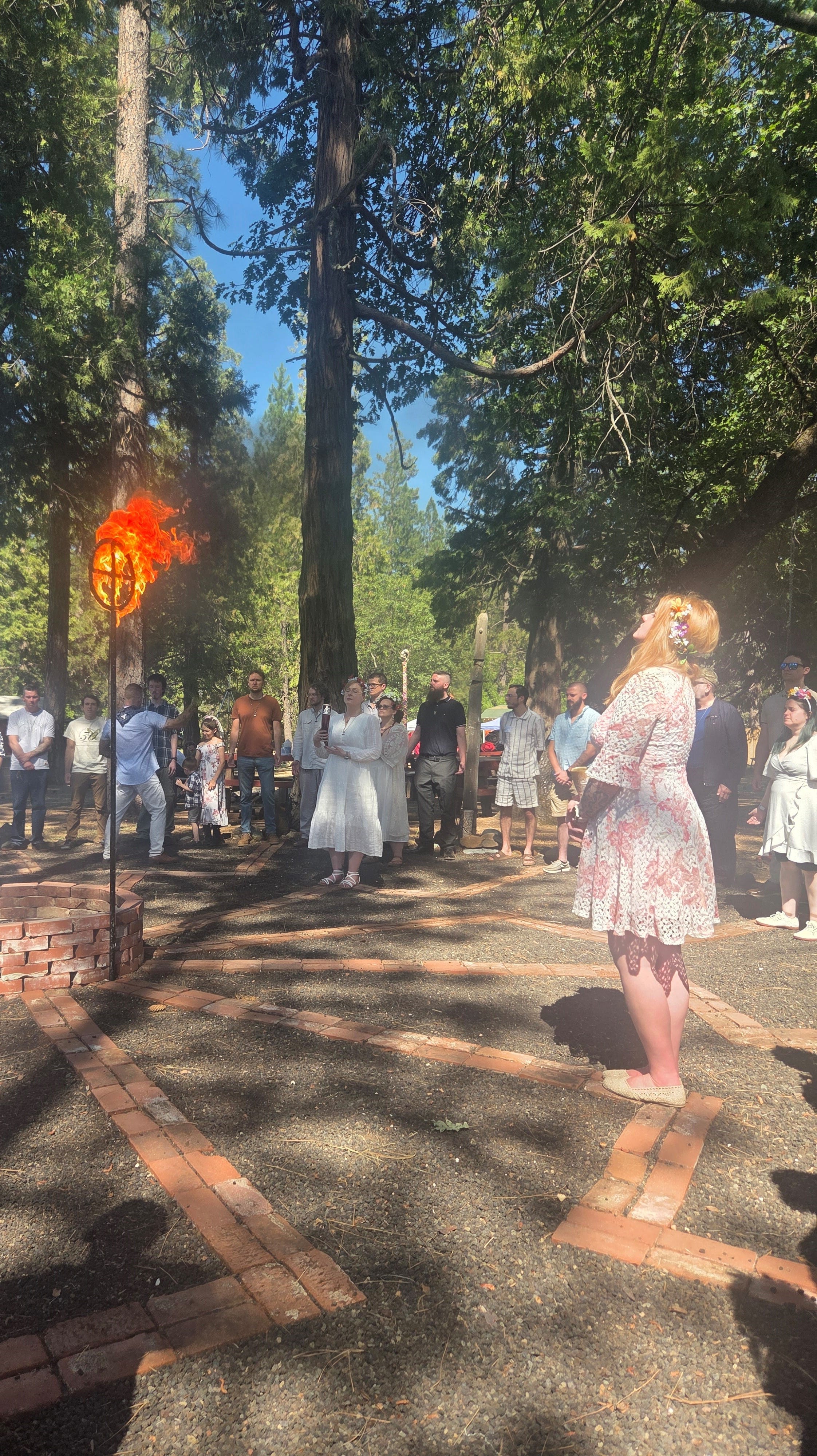
Matt: Sure, but I don’t know what to say about it. Some of the guys who were part of the initial workforce set it up. When we moved the [outdoor] ritual space from where it initially was, we ended up having to move it over a few feet to expand it. At that point they had inlaid in brick in the ground this beautiful black-sun motif there, with the center being [a] fire pit. They did a beautiful job on it, and it’s something that we very much are proud of today. It’s kind of iconic: it’s something that we try to adopt in different ways at different hofs.
Chris: Could you talk about the theology of the symbol? Of the “black”-sun? We use it in different colors.
Matt: Sure. It’s hard because the name is distracting: that’s become the moniker of it, but it’s any depiction of the crooked spoked sun-wheel, in a lot of its varieties. Our people have always used the symbol of the sun, and from very early times began to see that symbol in movement and in rotation. I think that the crookedness of the spokes is indicative of that movement, and the constant rotating of the sun. That solar imagery has always been extremely powerful to our folk. The idea of the solar illumination serving as a halo is why we use it in our religious iconography: we use the gold sun-wheel as a halo for divinity, and the red sunwheel as a halo for ascended mortals. That idea of sacrality and solar might, our ritual practice being at the rotating cycle of life, cycle of gifting, cycle of existence, is why it’s particularly fitting to have with its center being our ritual fire or place of offering.
Chris: I’ve heard Gyðja Sheila McNallen talk about the large rock that is used as an altar. Is that rock in the black-sun circle?
Matt: Yeah. Well, it’s directly at the north end of it and, and that’s our altar stone. That is the altar stone for our worship there. It’s tremendously heavy, it was originally probably 10-feet from where it is between two trees where we found it. It was perfect there for the circle at the time, but when we moved the circle over 10-feet to expand it we also had to move this altar stone...
Chris: [chuckles]
Matt: ...Which was a Herculean feat of engineering and movement.
Chris: [Chuckling] That’s pretty cool that you guys had to move it.
Matt: It’s enormous and I don’t know... I couldn’t tell you what the actual weight of it is, but y’know, we were winching it off of different redwoods and oaks that were in the area, and a number of us were heaving, and we had some [men] with pry bars, and others were leveraging off of the trees trying to roll it and get it to where it currently is. It worked out very well. But, it was quite a task.
Chris: Oh wow. It looks pretty big.
Matt: Oh yeah.
Chris: So the mural. The mural is pretty striking. What can you tell me about that?
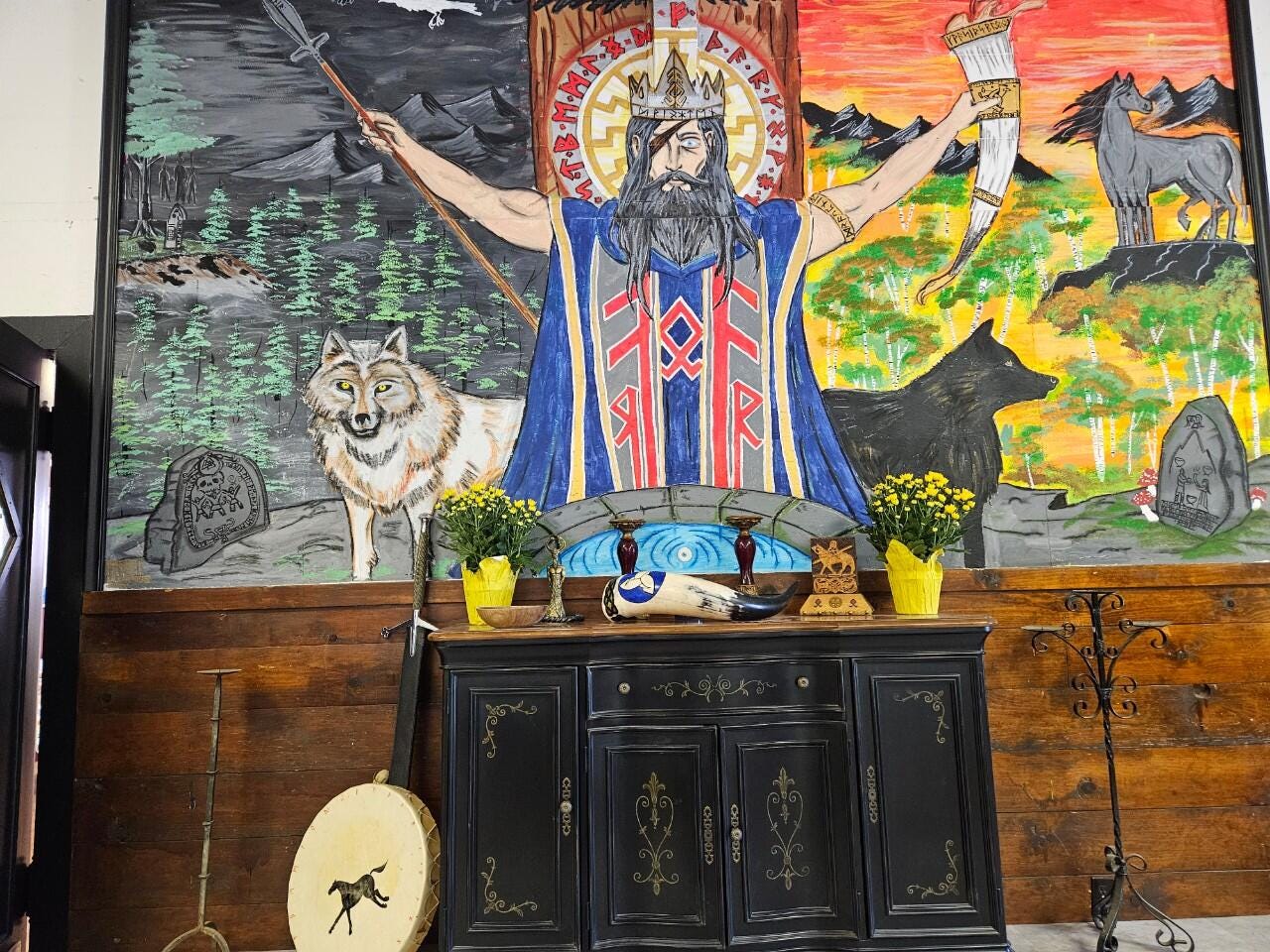
Matt: So, the mural is not as old as one might think that it was. I want to say that it was in 2022? It’s the third mural. Svan painted the mural at Þórshof, then the mural at Baldrshof, and then later after learning from those ended up coming out to Óðinshof and painting the Óðinshof mural. It’s hard to imagine the space now without the mural. But yeah, he came out and painted that over the course of 2 or 3 days.
It’s really special. It’s striking. One of the most powerful things about it is Óðins eyes, both of them, both the one in his head and the one that’s in the well, [they] follower you around the hof and every point that you find yourself in the hof, it’s as if they’re looking right at you. It’s really powerful that way.
Chris: The hof Hero is another interesting thing: I believe that it’s Guido Von List?
Matt: Yes.
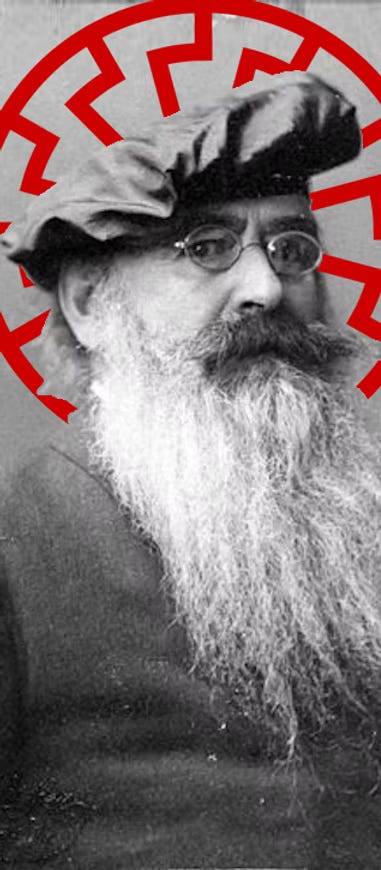
Chris: So, he was an interesting figure. Why was he chosen for Óðinshof, and why is he one of our Heroes?
Matt: Last question first: he was one of the first, or certainly one of the first people of note to begin the reawakening of our folk to our Troth to the Æsir. His rediscovery of runes and preChristian German esoterics was groundbreaking at the time, and was a fundamental moment of awakening for our Folk in a lot of different ways. He was a very receptive man to awakening and to being moved by the Æsir. This flows into the next question: the work that he did and the things that he laid out, his Armanen Rune row, and the initial momentum that he caused towards the reawakening the reflourishing of our faith set so many other things in motion. Steve McNallen is the father of modern Asatru, but Meister Von List is the grandfather of modern Asatru. He set off those initial ripples that one day would inspire and fuel the full resurgence of Asatru.
One of the things that he did as a kid, when he first became enamored with Óðinn, and with the practice of Asatru, he vowed one day to build a temple to Óðinn. That was going to be his thing: one day, he’d grow up, and he’d build a temple to Óðinn. I wanted to honor him at the first temple of Óðinn as a posthumous fulfillment of that vow in his name. To make good on that promise, because the things he set in motion are largely responsible for that temple becoming manifest, even though it was nearly a hundred years later.
Chris: So, we venerate him because his efforts in reviving the faith, not necessarily because of any of his esoteric works?
Matt: I don’t know how I would separate his esoteric works from his efforts to revive the faith. I think that’s how he worked to revive the faith. They were all a reflection of how his soul was awakened to our ancestral faith by the Allfather, and his subsequent spiritual development is a result of that inspiration, and that process of awakening.
Chris: Makes sense. So, the hofgyðja of Óðinshof is Sheila McNallen, who is Steve McNallen’s wife. Where did that start from, and what does it look like? Has she just always been there?
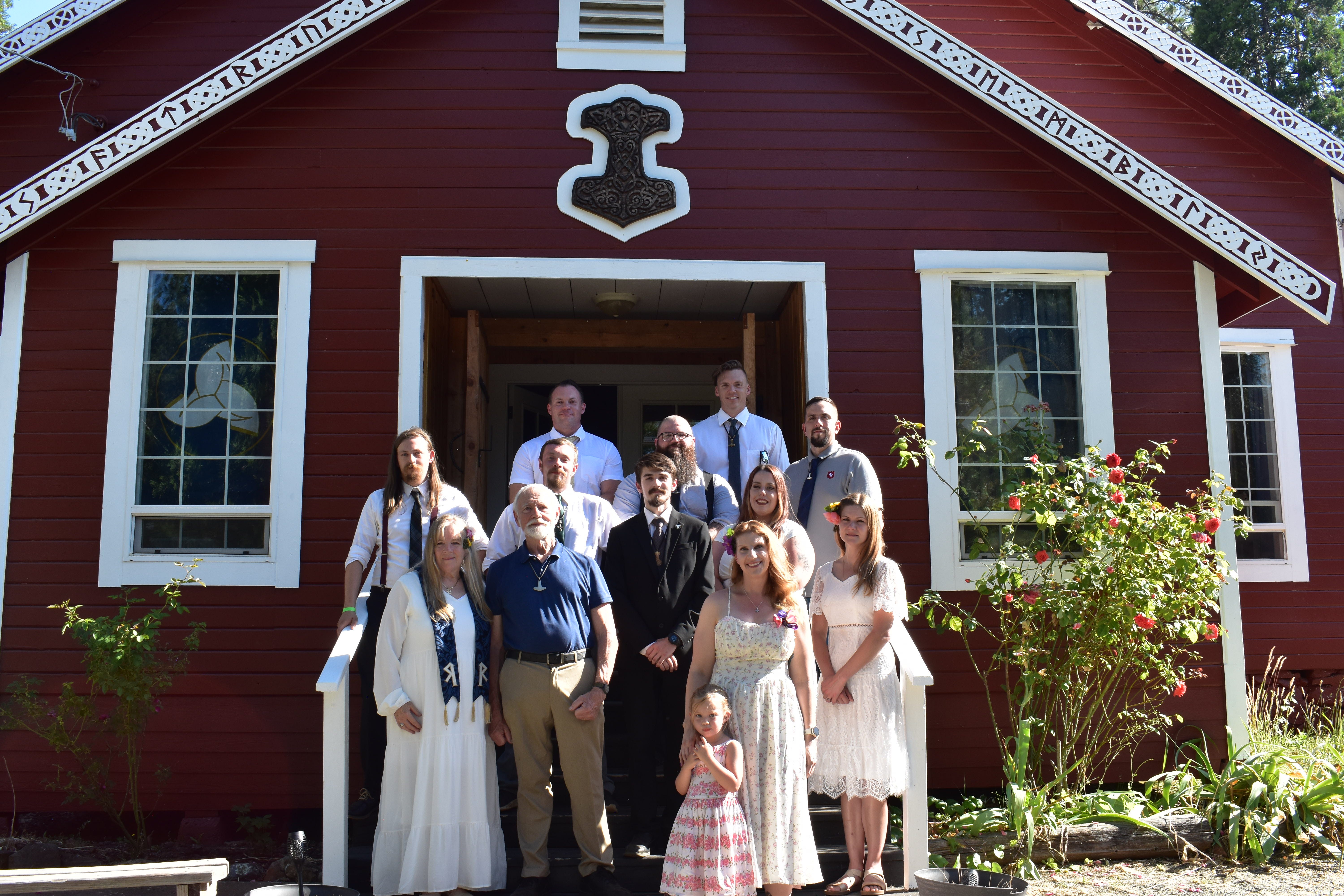
Matt: Yes, but getting the hof and making that happen was very much a Sheila lead effort. Sheila had seen the need for it for a long time. In a large part, Sheila was and continues to be the heart of the AFA. She wanted to, and wants to, mother all of our Folk, and really create home. That idea of coming home was something that she very much internalized as far as having that place and building our AFA family as a family. I think an extension of that is that we needed a place that’s ours to gather and do things. She recognized that, and she was the effort that pushed that forward and made that happen.
Not that others didn’t think that it was a cool idea, and weren’t game to be a part of it, but that the efforts to really make that happen were certainly hers and something that she wanted to do. She was the first one to have that dream in that way, and to really push it forward. Her involvement at the hof has always been in such a manner that she’s at the forefront of what we do there, how we plan events there, what the overall theme of stuff is, how we’re getting members signed up to be there and participate in whatever way we get them. She’s really been the innards of moving that forwards and making that such a special place for us.
Chris: So, in a lot of ways she has been a core aspect of the hof since even before we got it.
Matt: Yes, absolutely.
Chris: It’s really cool that they managed to make that dream happen in that part of the country.
Matt: Indeed. We certainly wouldn’t have gotten Óðinshof where it is and when it was if not for the efforts of Sheila. It’s really easy to look back now and take that as [a matter of] “well of course we have hofs”. But the distance between not having hofs and having the first hof cannot be overstated.
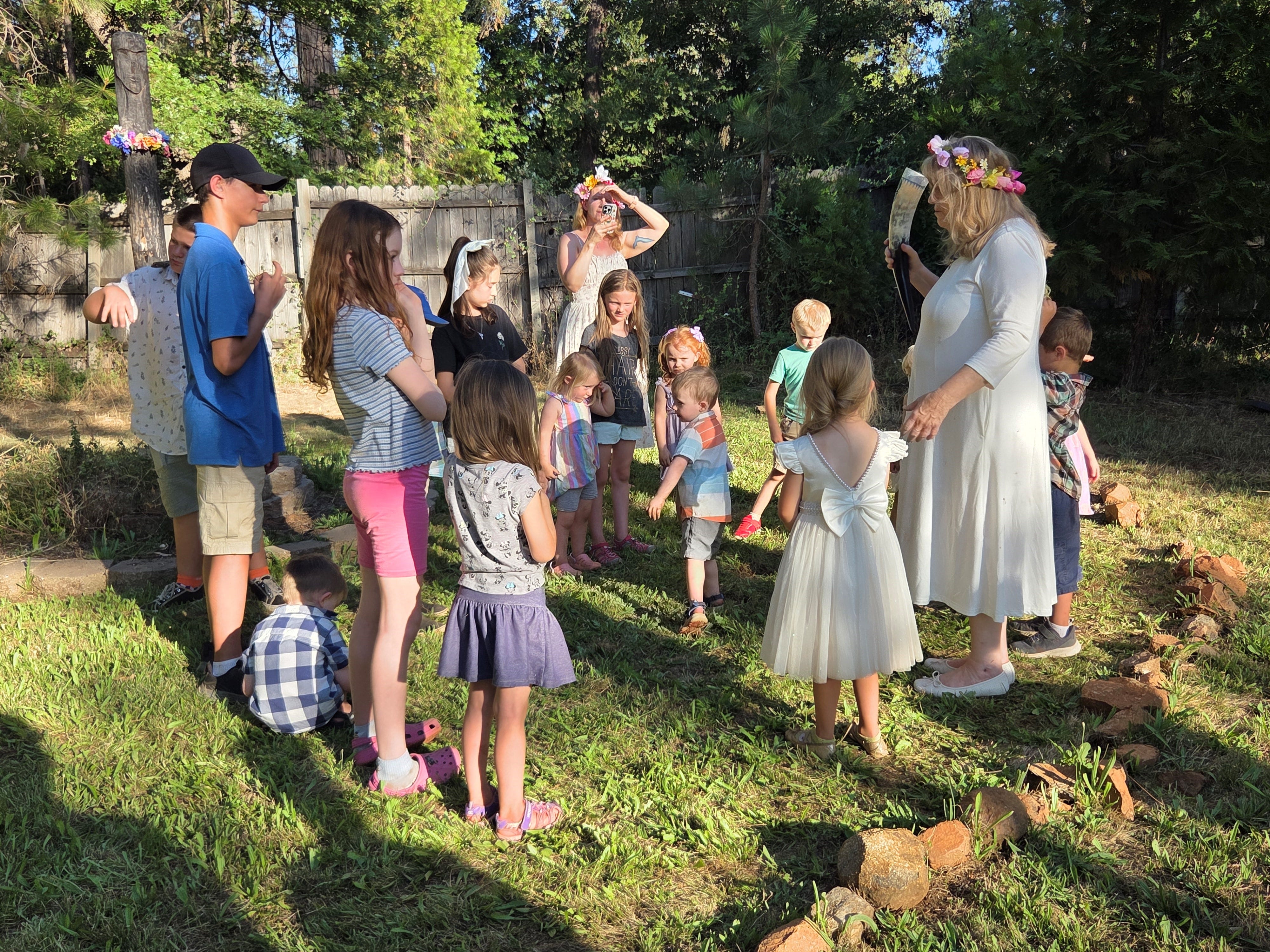
That distance is huge. In a lot of ways, it[, Óðinshof, ] is a physical manifestation of an idea, or a concept. One of the hallmarks of the AFA is that we’re not just endlessly navel gazing, we do things. We get out in the real world and we exist. The most powerful expression of that was going from sporadically wandering place to place, renting out spaces, to having physical property in the world that you can reach out and touch, and that remains ours. The establishment of sacred space in the world and a physical location. It sounds so silly, maybe, but it is a really special thing that you can type in our hofs on Google Maps and wherever you are, you can find a blue line that will take you from where you’re at to our hofs. There’s something about the reality of being able to reach out and touch it, and know that it’s not going anywhere, that takes Asatru to another step of legitimacy that we all benefit from.
We’ve seen that with new members, we’ve seen it with member’s families. All of the sudden there’s something more serious about who we are and what we do, that we do actually have physical locations in the world, that are ours, and that are dedicated to the worship of our Gods. It makes Asatru that much more real in Midgard. Óðinshof set the tone for that, and continues to inspire all of our people to want a hof near them. Largely, that takes shape and inspiration from Óðinshof.
Chris: We had been doing the Hammer Rite for awhile, and people still doing it when they’re going and doing these nomadic gatherings at moots and events to make these places temporarily sacred. How does that interplay with us having an actual place that is permanently sacred?
Matt: I think it’s interesting. It had been so very ingrained in our practice that you always had to do the Hammer Rite to create sacred space for temporary use. That had become such a fundamental of Asatru culture, certainly here in the United States, because we were making do with nonpermanent space. We were making do with public parks or rented camps somewhere.
We have a ritual of marking a space out and making it holy for the purpose of other rituals, temporarily transmuting it into something different. It was very meaningful to get to a place where we didn’t have to do that; to where there was need to create some kind of theoretical sacred space, but where we had physical sacred space that was sanctified by months, and now years, of piety. Specifically, starting this month, over a decade of sacrality in that spot; of it being set aside for exclusively ritual use, and exclusively sacred function. It’s palpable: you can feel it. It’s a really special thing that we have.
For more about the Ásatrú Folk Assembly, visit our website!
Thanks for reading the Runestone Newsletter! Subscribe, share, and donate to help bring the Folk home.
.
Comments
Nothing yet. Say the first thing.
Sign in to join the conversation.