
Paperpal, an AI-powered tool now lets you Chat with PDFs to get instant insights and summaries. Analyze data, boost comprehension, and make your literature reading more efficient with the most reliable free AI Chat PDF tool for students and researchers.! Try Paperpal Today - https://bit.ly/3tUcGR3 Use code : “ASADPRIME30” to get 30% off! #Ad
Hi! Have you ever heard of the following study designs?
Prospective case-control study
Randomized case-control study
Cross-sectional case-control study
I am glad you haven’t because they do not exist.
However, many researchers unknowingly mislabel their studies with such terminology, leading to misinterpretation of findings.
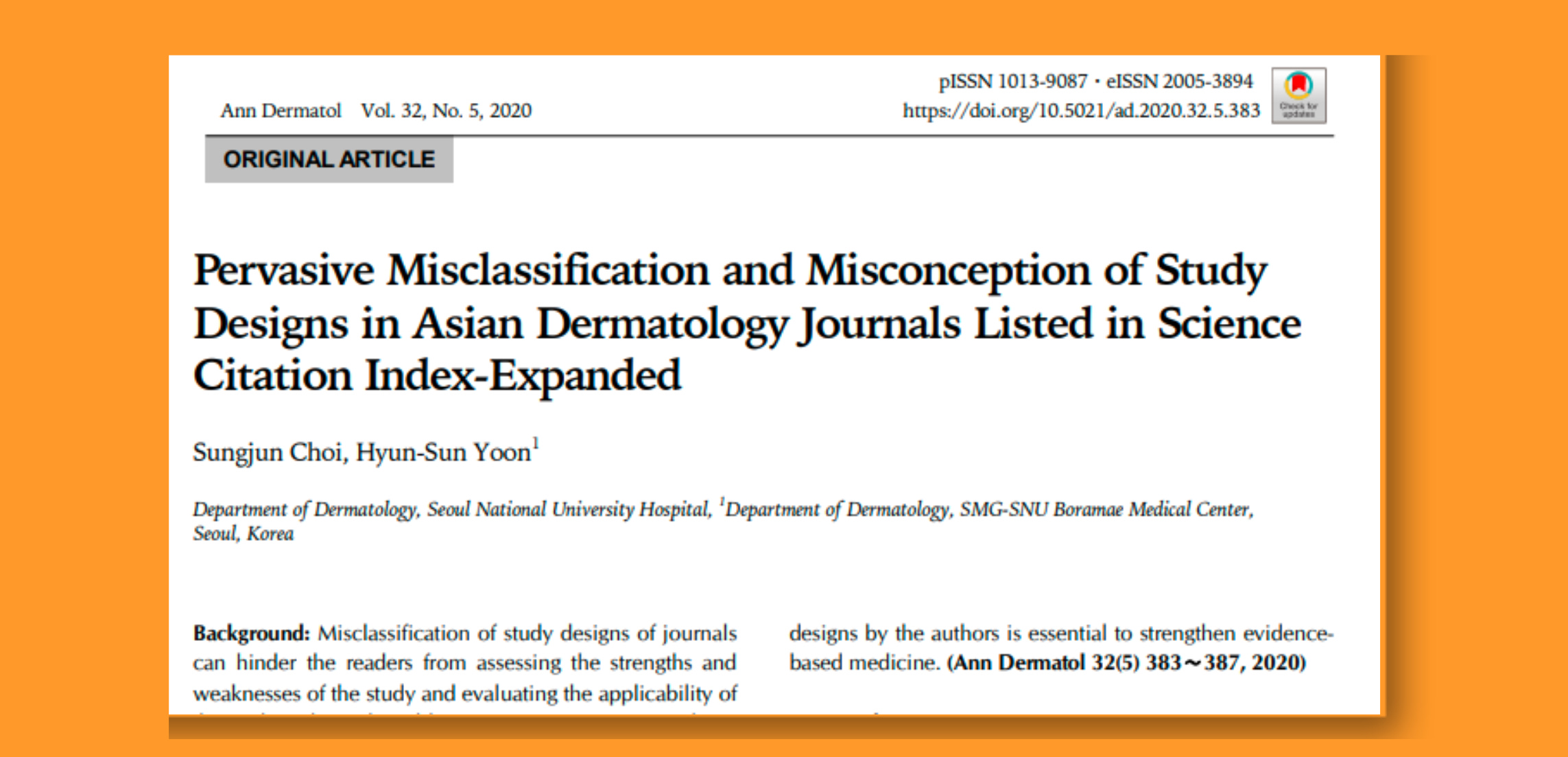
Sometimes authors don't mention the study design in their paper at all.
So, I am on a campaign to tell more people about study designs and in this edition of the newsletter, we will cover 7 common study designs:
Cohort study -
In this study design, the exposure (or risk factor) is known (e.g., smoking), but the outcome (or disease status) is unknown (e.g., cancer).
It can be both retrospective and prospective.
Case-control study -
In this study design, the exposure status is unknown, but the disease status is known.
Case-control studies are always retrospective, i.e., you look backward to see if people develop the disease.
This is the best design for rare outcomes.
Cross-Sectional Study -
In this study design, both the exposure and the outcome status is uknown.
A cross-section refers to a single point in time or a descriptive snapshot of the study population.
There is no temporal relationship between the exposure and outcome i.e., you can’t tell whether the exposure occured before the outcome.
Ecological Study -
This study design, examines the relationship between an exposure and an outcome in groups of people rather than individuals.
It can be prospective or retrospective.
Inferences are made at population level. It does not allow for the examination of individual-level factors.
Randomized Control Trial -
This is an interventional study.
The investigator assigns the exposure status through randomization and follows the study population over time to measure the outcome.
It is always prospective.
Quasi-experimental design -
This is an interventional study in which investigator assigns the exposure status for each individual through a process other than randomization.
Typically due to cost, logistical, cultural, social, or political reasons.
Systematic reviews and meta-analysis -
These studies amalgamte other studies and the results are synthesized after papers are included in a systematic, unbiased and reproducible manner.
That is it! Knowledge of the strengths and limitations of different study designs will allow you to select the most appropriate method for your study.
I hope this was useful.
Regards,
Asad
How can I help you:
Week 3 of my webinar-series: How to Publish a Paper (with Ethical AI) is on May 3, 2025 at 11:00 am EST-
This is a 7-week program that takes you from research idea to publication. If interested, you can check out week 1 & 2’s recording and join week 3 this Saturday.
Sign up here→ https://stan.store/asadnaveed/p/how-to-publish-a-paper
No posts
Comments
Nothing yet. Say the first thing.
Sign in to join the conversation.