
The version of meditation that circulates widely looks something like this: you find a quiet place, sit down, close your eyes, and try to let the mind settle. Sometimes it does, a little. Mostly it does not. You keep going anyway, because the general idea seems right, even if what actually happens during a session is hard to describe and harder to measure.
Traditional concentration practice and that version are separated by a distance that is rarely acknowledged.
Traditional concentration practice is not a relaxation technique. It is a precision training system for consciousness itself, with defined stages, measurable criteria for progression, and specific mechanical explanations for why each component is what it is. The tradition set it out in technical detail, and the reasoning behind every element is not ceremonial. Each one is solving a specific problem.
What the system can produce goes considerably beyond feeling better. And what it warns against is specific enough to have names.
There is a state that arrives when the mind becomes highly sensitive without becoming stable: vivid imagery, unusual perceptions, a feeling of having broken through to something. The tradition calls this wild fox chan, and it is not a sign of advancement. There is another state that feels like genuine depth, a settled, pleasant stillness that practitioners have sat inside for years believing they were making progress. The tradition calls this water buffalo chan. The tradition’s position on both is the same: they are traps, dangerous precisely because they feel like the destination.
When sessions start feeling noisier, with more thoughts and more distraction than before, the reflex is to conclude that something has gone wrong. The tradition’s reading is the opposite. The noise was always there. What changed is that the practice developed enough stability to register it. That is what progress looks like at this stage, and it is the point that ends more serious practices than any other difficulty on the path.
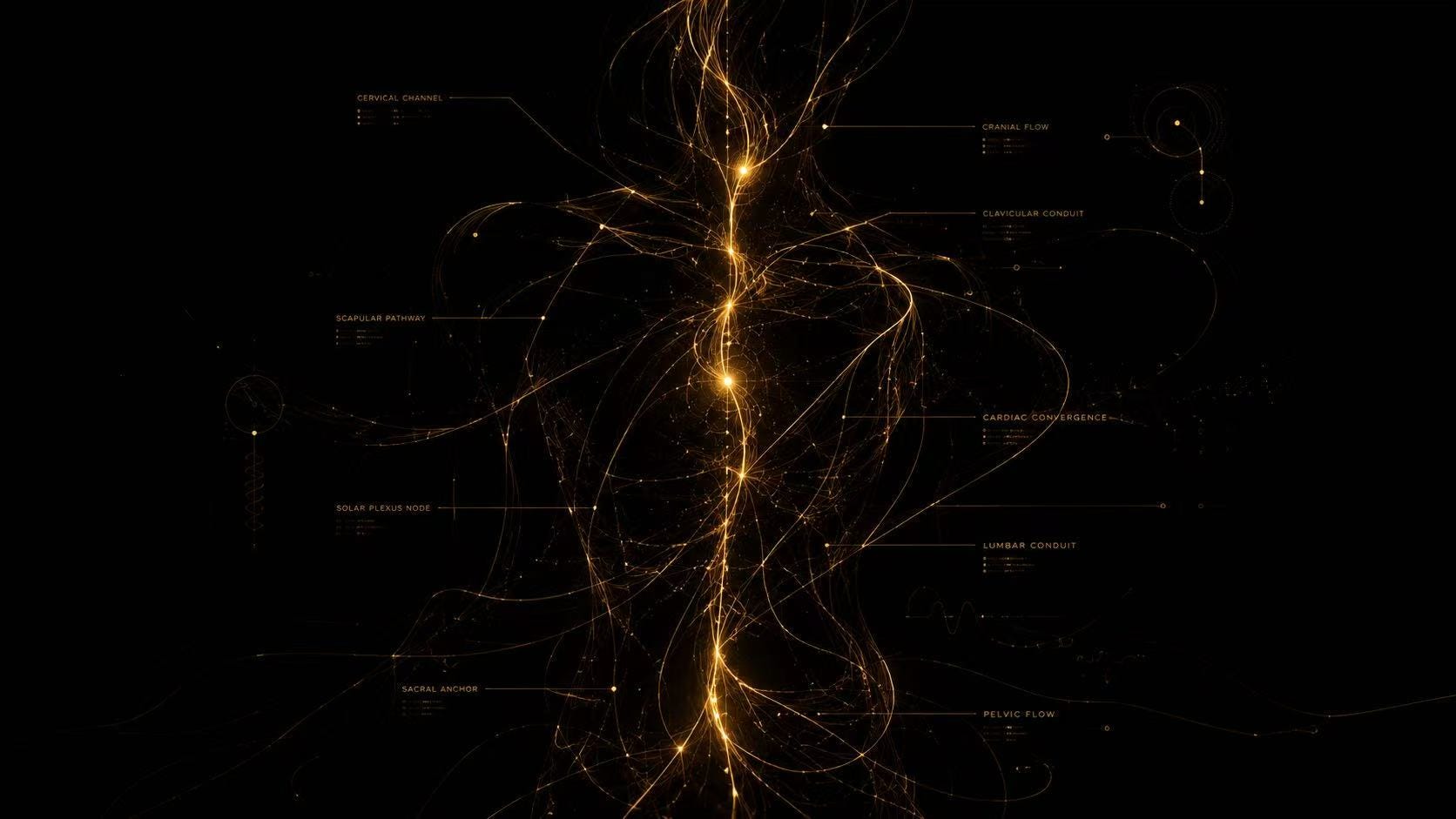
The body and mind in this framework are not separate systems sharing a space. They are carried by the same wind-energy, and the physical configuration of the body has a direct effect on how that energy moves through the channels the practice is working to settle. This is the reason the sevenfold posture exists. Each of its seven points addresses a specific source of interference, and getting the body right is not preparation for the practice. It is the opening move.
The legs cross and the base of the body grounds into the floor. The specific geometry matters less than the result: a foundation stable enough that the body does not need ongoing muscular adjustment to maintain it. Every session in which the body is subtly fighting its own posture is a session in which energy is being spent on structural maintenance rather than concentration. The body should become stable enough to forget.
The spine extends upward without strain, following its natural curve. The central channel runs along this axis, and the wind-energy the practice is working to settle moves through it. A collapsed spine compresses the channel, and what the practitioner then experiences is a heaviness that gets read as laxity, when it is a postural problem that laxity is then compounding. Sitting upright without rigidity is not ceremonial. It is keeping the primary pathway unobstructed.
The hands rest in the lap, right over left, thumbs lightly touching, forming a bowl below the navel. This keeps the arms from pulling tension into the shoulders, which is where agitation tends to settle in the body first, quietly and continuously, in a way that is easy to miss until a session runs long enough for it to become hard to ignore. Practitioners who press their palms against their knees or fold their arms introduce a sustained muscular tension that feeds directly into the restlessness the practice is trying to quiet.
The shoulders draw back slightly and release downward. The instruction is to allow them to drop rather than force them back, which is a different movement and one that takes some finding, because chronic tension in the shoulders tends to have been there long enough to feel like the neutral position. When they genuinely release, the change in the character of the session is immediate and often surprising.
The chin tilts slightly downward. A head angled back even a little produces a quality of elevation that feeds agitation. A head dropped forward produces dullness. The adjustment is small and its effect is disproportionate to its size, and once a practitioner has developed enough body sensitivity to feel what it does, this single point can shift an entire session.
The mouth stays closed, tongue resting lightly at the upper palate just behind the front teeth. Breathing through the mouth during practice introduces a subtle agitation into the rhythm of the breath that the mind registers without the practitioner necessarily noticing it consciously.
The eyes stay open at a downward angle, just enough for a thin line of light to register. The tradition does not hedge on this: fully closed eyes favor laxity. They tip the system toward the settled, pleasant dimming the previous post described as water buffalo chan, the state that feels like depth and is a gradual erosion of the faculty the practice is meant to sharpen. The slight openness maintains a level of alertness the practice requires. The image of the meditator with eyes closed is one of the most widespread misrepresentations of what the practice actually involves.

Comments
Nothing yet. Say the first thing.
Sign in to join the conversation.