
I started my charity INARA, the International Network for Aid, Relief, and Assistance, because I was about to implode. I felt like I was on the edge of a mental abyss, trying to claw my way out, fingernails bleeding. I would stare at the mirror and try to will myself to cry, scream, anything to get rid of the weight on my chest, the strangulation in my throat.
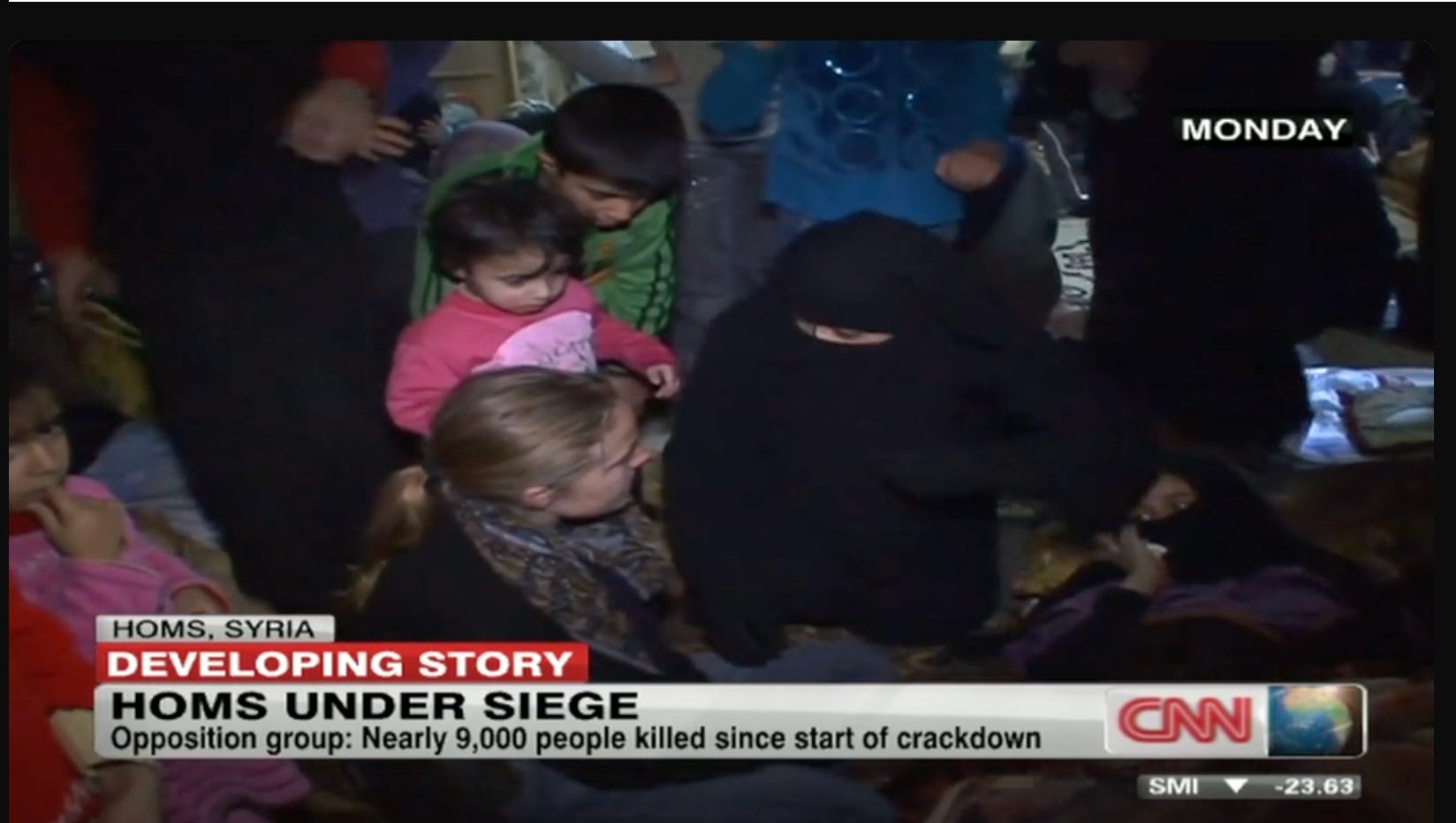
By 2013 a decade of reporting from Iraq coupled with the first few years of Syria had turned me into a hot mess ball of angry. I was angry at people not caring about the suffering of others. I was angry at world leaders, decision makes, those who perpetuated the narrative of dehumanization, of “otherizing”. And I was angry at my own industry, journalism. Oh yes, even back then we were already failing ourselves.
Syria was a sledgehammer to the psyche. Many of us covering it were from the old Iraq gang. We could see it, predict the worse case scenario. It had been nicknamed the youtube revolution, an army of young brave media activists risking their lives every day to prove to the world that yes, the Assad regime was killing demonstrators. We watched hope rise as the US would make comments about red lines only to have those crushed. We filed reports on what was at risk if the US did not take decisive action, did not protect those demanding freedom and democracy. Nothing changed. I can feel that rage, that helpless rage as I write this. No matter how many of those brave souls who we generally spoke to on Skype (yes it was Skype back then) were killed or disappeared getting the story out, no matter that once the death toll hit 200,000 the UN stopped counting, no matter that we could see the radicalization, the ties between Iraq and Syria, the rise of extremism.
Watch: My journey from CNN to INARA
I was angry at me. I felt as if I must have failed as a journalist. For surely if my reporting had properly depicted the pain of all the people who had bared their souls people should have cared on a basic human level. Surely if I had properly explained all that was at risk, world leaders, namely the US would realize that it was in American’s security interests to end Assad’s massacres of his own people. Surely if I had done my job properly, something should have changed. The rational part of my mind realizes it’s irrational but my inner monologue to myself was all sorts of nasty, its favorite phrase being “not good enough” (If I ever do write an autobiography that will be the title).
I wanted to crawl out of my own skin. I had this visceral, primal need to do something and see the impact of it, as if that would somehow justify my failure as a journalist, justify the failure of journalism. I sank into that abyss, but if anything my brain does have a fantastic ability to do this percolating thing. I am really good at digging metaphorical tunnels if doors shut. The story of how I got to be a journalist, covering Iraq from the get-go with zero journalism experience and then to CNN is a lesson in that, but that’s a story for another day.
Somehow in the middle of that mental cesspool, by the end of 2013 an idea started to crystallize, pulled from the threads of my experiences. The 2007 story of this little boy named Youssif who had masked men pour gasoline on his head and set him on fire when he was just five years old. When we reported the story, it was at the height of the bloodletting in Iraq, a point in time when those of us in the CNN Baghdad bureau kept hearing “no one wants to hear about Iraq anymore.” And yet the response was massive, global and Youssif and his family ended up going to America for his treatments all funded by donations from CNN viewers. The thread: there are good people out there willing to give, find them.
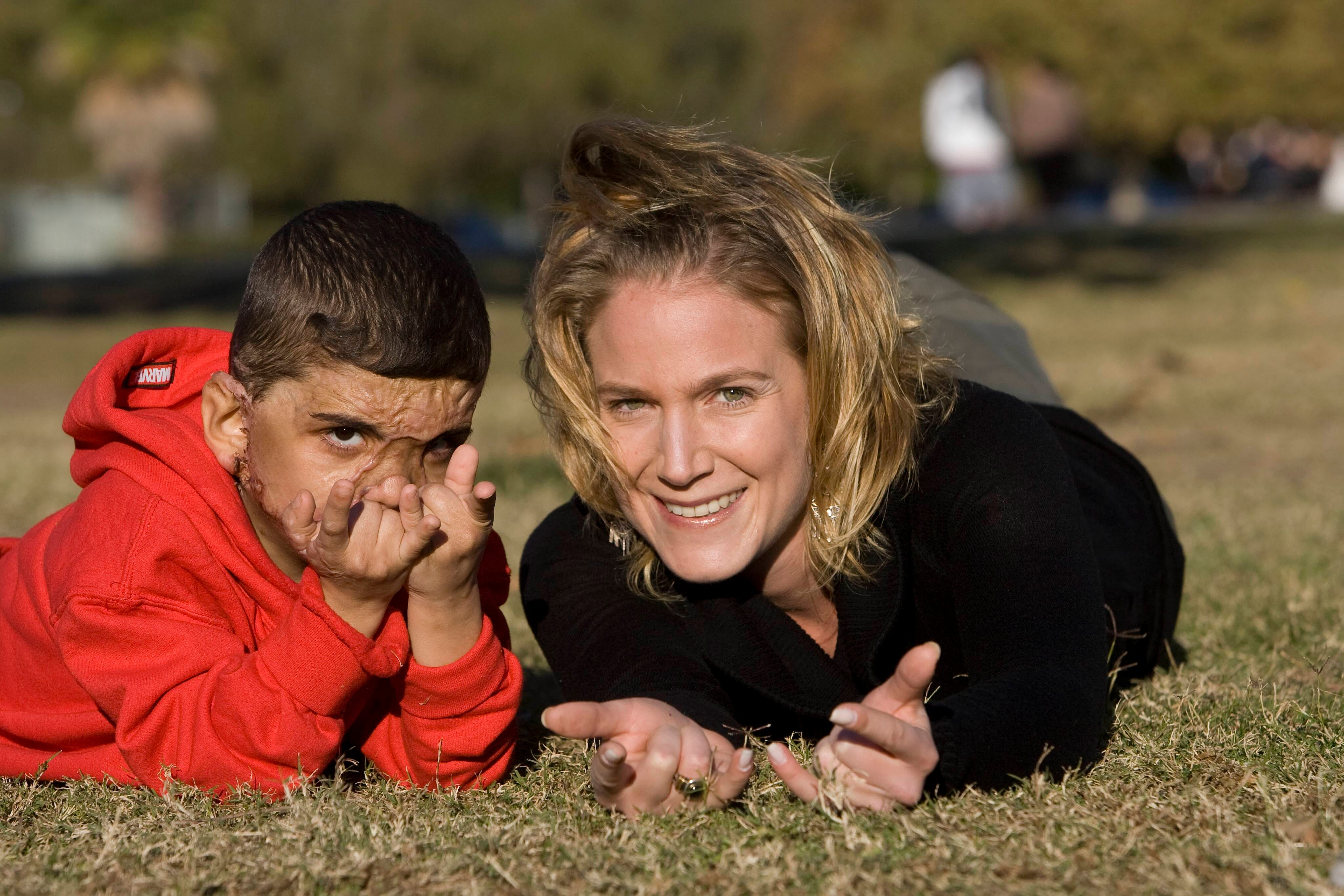
We did a piece on three year old Safa, also out of Iraq, who looked like Violet from Charlie and the Chocolate factory, the growth in his belly was so big. An organization in the US initially came forward after our report, but then backed out when they saw his medical records. We, in the CNN bureau, ended up contacting the King Hussein Cancer Center, finding a donor. The surgery was given a 2% chance of success. Today, he’s living his life, totally fine. The thread: you can figure this out, make the needed connections, pull it all together.
But the reality is that both of those stories are rarities. The reality is that we did plenty of stories where no organization came forward. The reality is that you cannot do a piece on every child you meet. The reality is that there are countless children whose life story can be changed, to whom I do believe we owe that change. The thread: Do something about it. Build that organization that is going to get kids the surgeries they need who other organizations are not helping.
So I did. And it was both the best and most self-destructive idea I’ve ever come up with. For anyone thinking of starting a charity, let me tell you this: it’s a nightmare. I cannot even count the number of times I wanted to curl up in the fetal position, that I have cursed me for being me, and just gone “f*ck this”.
In fact, I got the word “INARA”, which in Arabic means “ray of light”, tattoo’ed on my wrist in Arabic. I did that before we even officially launched so that if I did decide to throw in the towel at any point in time, I’d have a permanent reminder of my failure. I know, psycho-analyze that.
Like much of what I do, I went into it like a bull in a china shop. I had zero patience or experience for what actually building a sustainable charity looked like, what the foundation needed to be. In some ways I was just this silly girl tunnel vision focused on getting kids into surgery. I emptied my savings. I was trying to do it all on my own.
I got a kid whose face had practically melted off and could barely breathe into surgery. I sent a friend to his dentist to lobby for free dental prosthesis for a girl that had her jaw blown off. I was reporting from the field getting shot at and trying to coordinate transport for a mother to take her kids to physical therapy post-op on their hands.
And when I started meeting those first kids INARA was treating, I started to breathe a little. Journalism’s failures still had a bitter bite, but at least I was doing something else for people as well. I could justify my existence. I had an outlet for my angry, where I could turn the angry into action.
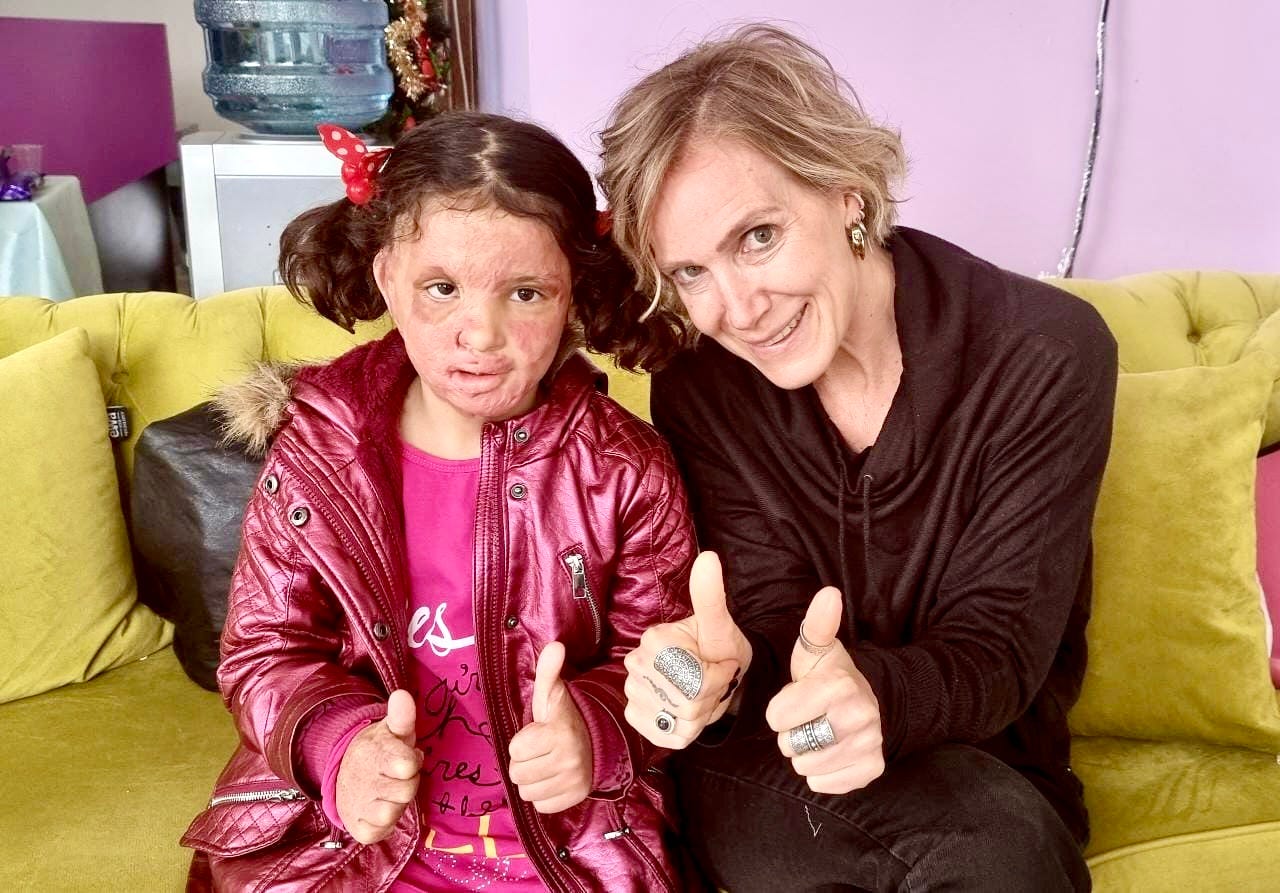
Prologue: While yes, INARA has given me an outlet for my angry, it also exacerbated it. Nothing about getting INARA to where it is today was easy. I’d need to write a book if I wanted to get into the betrayals, broken promises, how utterly disheartening it is to see just how hard it is to do the right thing, to do right by others. During the bulk of those early years, up until a few years ago, I was rowing the metaphorical boat mostly alone, gripped by this terror that I was about to lose what I had built and with that lose myself. INARA has become my “raison d’etre”, my reason for being.
CNN was extremely supportive of me starting INARA. The first thing I did when I started having to manage people - which by the way is the WORST - was to call my CNN boss and apologize because I had no idea how hard it was to manage people.
None of what you see INARA doing today is thanks to me. Sure, it was my idea, but INARA’s real growth has come in the last few years. Don’t worry, INARA is run and managed by those who know what they are doing, has expanded its programs beyond anything I could have imagined, and has a solid foundation.
I don’t “work” for INARA. I am its founder and board president. I do not, did not, and never have taken a salary from INARA. It is my passion project, not my job.
My own mental health journey, that whole “working on yourself” utterly annoying process would take years and a couple more hitting pretty close to “rock bottom” to get me to where I am today and is still a work in progress.
I left CNN in 2022 for multiple reasons, which yes included wanting to focus on INARA, but more to explore different forms of storytelling. I directed my first documentary that tells the story of four survivors of war from Ukraine, Syria, and Afghanistan who come together to summit Mt Kilimanjaro, to unite in demanding an end to war. It was another project that my brain would not let me ignore, and so I left CNN and did it, draining that good old bank account again. All proceeds from “Seize the Summit” are going to INARA.
Click here for where you can watch "Seize the Summit"
I cannot wait for the day, and we are very close if not already there, where I can be confident that INARA will survive past me. Yes it morbid, but my goal is always “is INARA strong enough to keep going if I die, can it stand on its own, hold together, if Arwa is no longer there”.
I’ve often questioned why I built my own personal hell. Why I, someone who is fiercely independent who does not want to be attached to anything, would construct her own ball and chain. I’m laughing as I write that sentence. I’m laughing at myself.
No matter how many times I have cursed the day I started a charity (which happens significantly less now) there is always that voice that goes “but if you hadn’t …” and then i remember all the faces, stories, the way that the spark of life comes back into a child’s eye and the rest of it doesn’t matter.
Thanks for reading Humanizing the Headlines! This post is public so feel free to share it.
No posts
Comments
Nothing yet. Say the first thing.
Sign in to join the conversation.