
It’s Aug 19 2003 and I was at the start of my journalism career, a puppy freelance producer and up in Tikrit at the time, on what the press called “Saddam watch” amid rumors that the US military was closing in on Iraq’s former dictator somewhere near his hometown. We had called in for a broadcast only to be told to stand by, there was breaking news out of Baghdad: a strike on the UN headquarters.
Footage that day from the UN attack showed US soldiers shouting at people to stay back, cordoning off the area, twisted metal from the gaping hole in the side of the building, smoke blanketing the sky. I later met someone who survived by pure luck because she was up in Mosul.
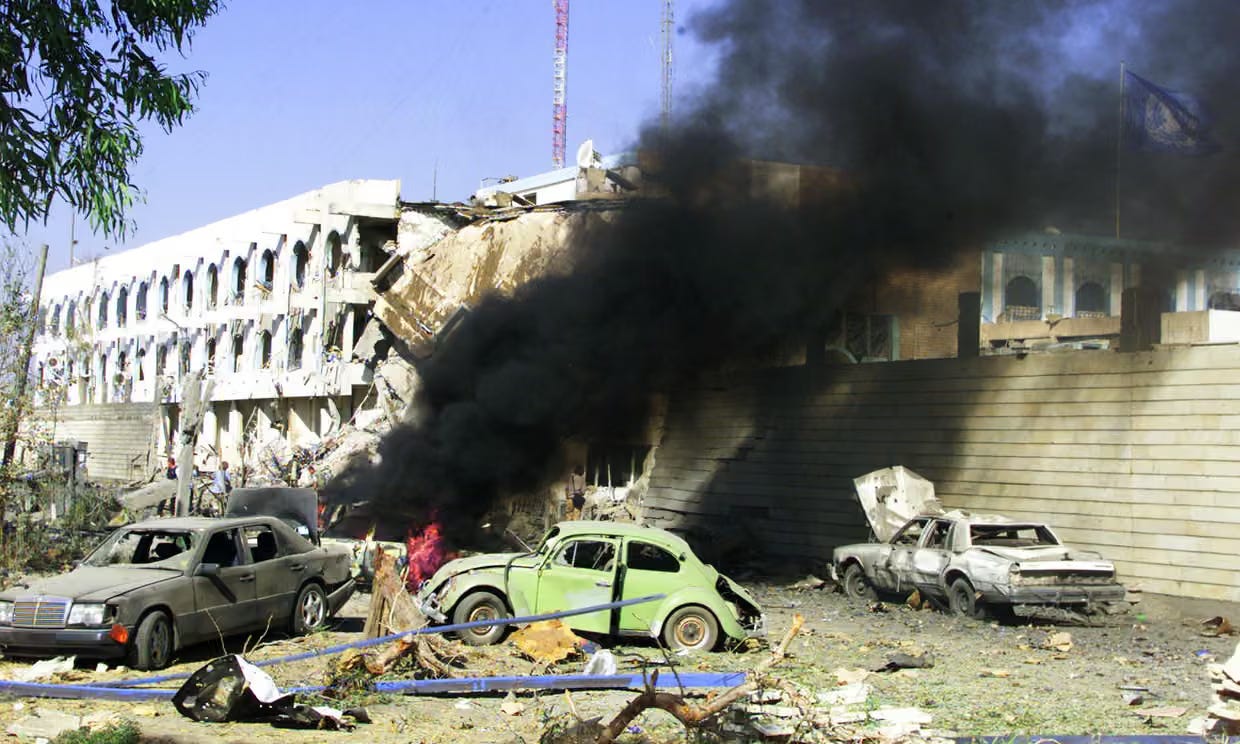
“I came back to Baghdad and people thought I was a ghost.” She told me. “When I walked into the building I understood why. My workstation was gone. I would have been pulverized just like so many of my colleagues. There weren’t even any real remains to recover.”
It was the deadliest direct attack on the UN. 22 dead, among them the UN’s Special Representative in Iraq, Sergio de Mello. Abu Musab al Zarqawi, the head of “Tawhid wa al-Jihad” and just itching for Al Qaeda’s approval, later took credit for the strike.
(Note: In 2004 post the battles for Falluja, Tawhid wa al-Jihad became Al Qaeda in Iraq which later morphed into the Islamic State of Iraq, then ISIS, and then broke with Al Qaeda in some surreal clash of the terrorist titans that played mostly out in Syria)
At the time of the attack on the UN in Baghdad, there was already a hefty price on journalists heads, with award money depending on if you were killed, injured or captured (bigger bucks) and nationality. Now it was also open season on the humanitarian sector as the US utterly lost control of the Iraq train. More blast walls went up, missions shrank and then grew with new security parameters.
Two months later a suicide bomber drove an ambulance packed with explosives into the International Red Cross HQ, part of a wave of seemingly coordinated attacks across the Iraqi capital that also targeted police stations. I was in Baghdad at the time and I remember standing outside the security cordon staring at a palm tree that had chunks of flesh smashed into its bark and thinking “The blast send human pieces flying this far? That used to be a person? Who were they?”
August 19th, World Humanitarian Day was designated by the UN General Assembly in 2008. Fast forward through the years and the threat posed to humanitarians is no longer majorly confined to non-state actors, ie terrorist and armed groups, but state actors themselves, ie nation states. It’s no longer an arena of suicide bombers, ambushes and ground attacks but one of bombs, drones, and air assaults. One could argue that we cannot control what terrorists and non-state actors are willing to do to kill, maim, damage and destroy, after all that is why we call them terrorists. But what is the argument for allowing state actors to exhibit the same behavior with utter impunity?
There was a point in time when world leaders did - it would seem - be willing to hold themselves accountable. In 2016 sparked by growing attacks on healthcare facilities in Syria by the now deposed regime Bashar al-Assad and the Russians, coupled with a US strike on an MSF facility in Afghanistan, the UN Security Council passed resolution 2286 calling for the protection of civilians, healthcare facilities and humanitarians in war zones.
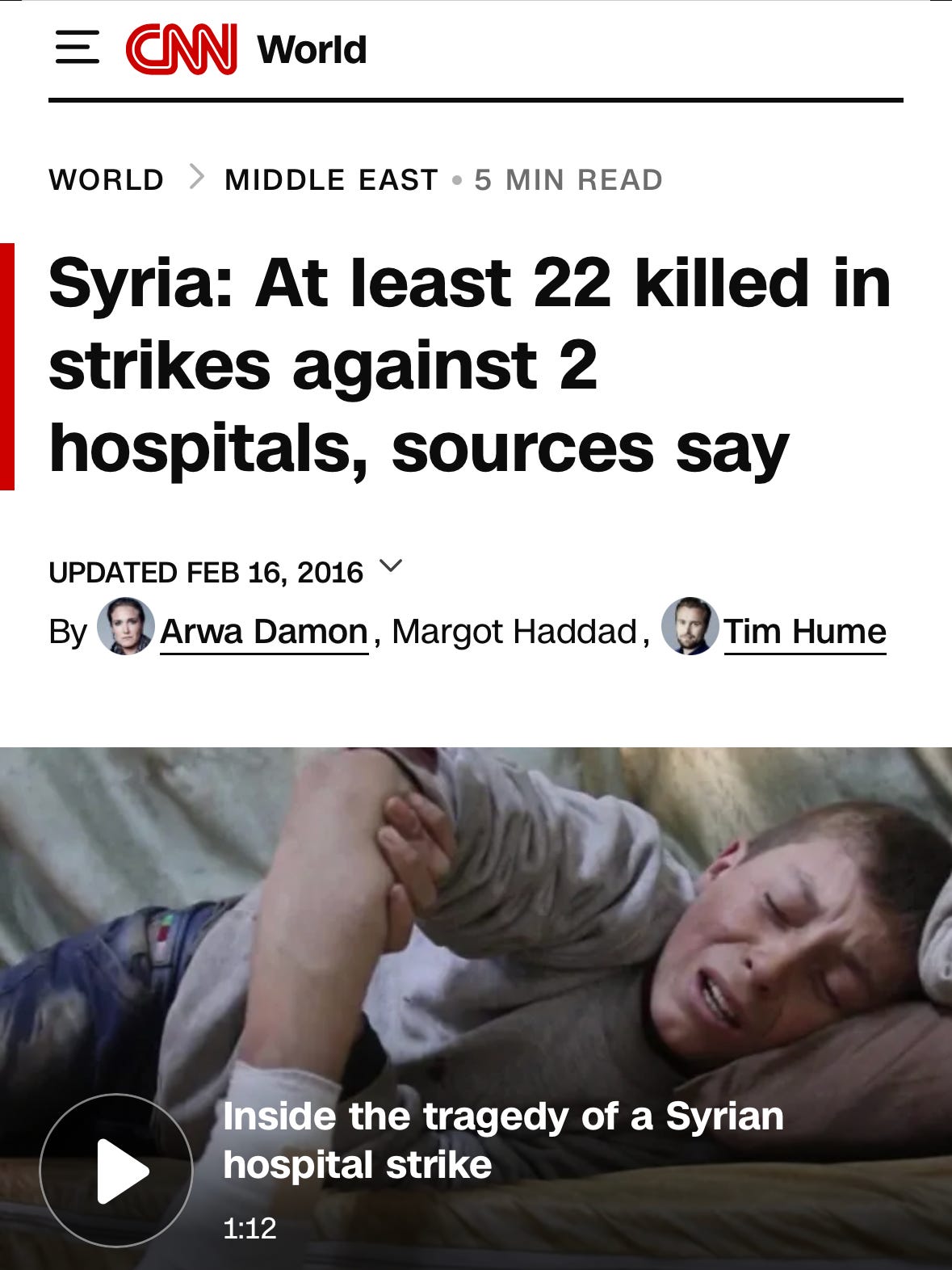
The seriousness of the already rising trend was recognized back then, with the resolution “stressing” the need to fight against impunity and to ensure accountability for war crimes. Here is the kicker, the US voted yes and the resolution was co-sponsored by 84 member states including Israel.
(Note: The US would later investigate the MSF hospital bombing in Kunduz but say that it was a mistake. Fast forward to Gaza and among the many gallows humor jokes is the one that goes “I really don’t want to be an Israeli oopsie”)
As MSF stated earlier this year, on the 10 year anniversary of the passing of resolution 2286, “It carried a promise to match that outrage: that such attacks would never be accepted as a normal feature of war — and that when they did occur, states would take responsibility for stopping them and ensuring there were consequences.”
Gaza tops the list again for the third year in a row when it comes to the killing of humanitarians, deaths mostly caused by Israeli bombs and strikes, followed by Sudan where drone warfare has taken killings, among them humanitarian, to a new level. The majority of those have been carried out by the RSF which numerous investigations, like this one from Human Rights Watch indicate has ties to the UAE. The Emirates have consistently stated that its airbases and activities are strictly for humanitarian purposes. We cannot forget about Russia, where this year during just one week in May, Russia hit four humanitarian convoys in Ukraine. South Sudan has also been especially nasty with MSF reporting multiple attacks on its facilities. The list goes on.
And, as is always the case, it’s the local humanitarians that are being killed. Those who are willing to take bigger risks because it’s for their own people, those who get paid significantly less than their expat counterparts, those who don’t have a choice because its a job and they have to feed their children, those who don’t have the option of rotating out. In 2025 there are 350 recorded humanitarian deaths. 349 of those are local staff.
(Note: at my charity INARA we do not differentiate, everyone gets their salary based on their experience level and local scale not what passport they hold and all our country level staff is local to the country or part of the community we serve)
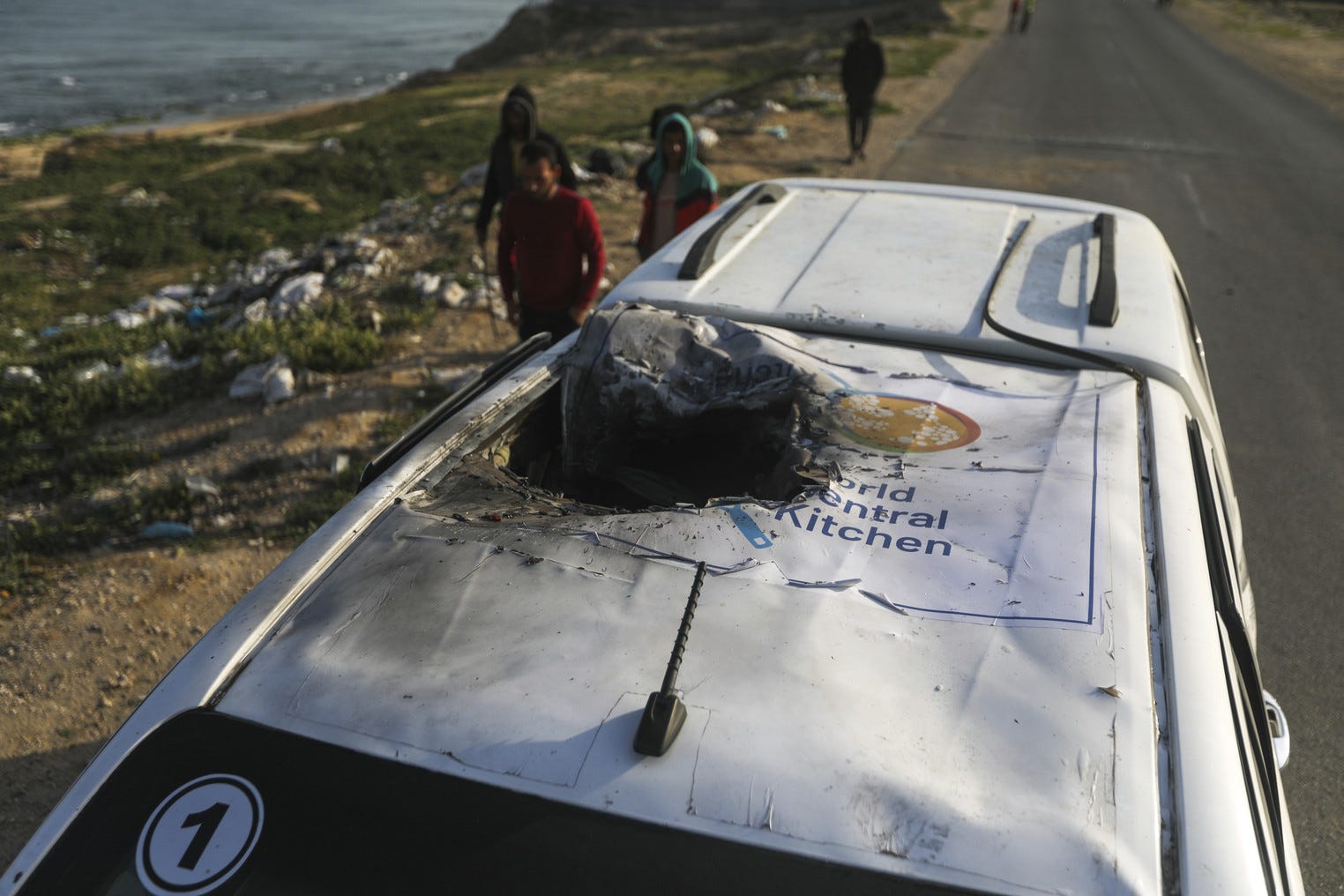
This year the World Central Kitchen on Aug 19th released a scathing statement about the IDF’s decision not to pursue criminal investigations into the killing of seven WCK staff in Gaza in Apr 2024. Those deaths sent a ripple of fear through the humanitarian community, not because of the deaths of expats but because the WCK was at the top of the list of organizations that had a - relatively speaking - decent relationship with COGAT (the Israeli military unit that coordinates all things relating to Palestine, be it Gaza or the West Bank). WCK was able to get approvals for movements and supplies into areas that rest of us were shut out of.
I arrived to the strip a few days after that Apr 2024 WCK strike with my charity INARA. A colleague from another organization warned me “Don’t do any TV interviews about the situation until you are out.”
I held out for two days without doing any interviews before popping up on my former employer. I cannot find the clip, but this is what CNN later wrote up in its live blog.
"To have that pit in your stomach of, 'Am I going to be targeted because I am part of an aid organization, or because this whole deconfliction process isn't working properly?'" said Arwa Damon, the founder of the International Network for Aid, Relief and Assistance (INARA). Damon, a former CNN correspondent, described the humanitarian situation as "inexplicably desperate" for the people of Gaza as organizations struggle to safely distribute aid.
I don’t know if it was paranoia, but sitting alone in the dark after that interview, listening to the drones outside that I swear sounded like they were getting closer and louder “This is absolutely batshit crazy.” I remember thinking to myself. “I’m used to being a target as a journalist, but I’m here as a humanitarian. I’m used to being scared of any number of terrorist, insurgent, armed groups and I’m sitting here terrified of Israel, a democratically elected nation state that is being backed by America because I’m doing humanitarian work?”
At that point in time we did not even know all the details. We had not yet seen the video that showed the clear WCK markings on the roof, how one strike sends survivors running into other vehicles and then there is a second strike that targets them there. It was a coordinated movement, meaning that COGAT gave them the green light to move along specifically pre-designated route.
“There has never been any excuse or justification for the attacks, and there is nothing in this account that does so. The decision is inconsistent with the full truth and deeply offensive.” The WCK statement released a few days ago reads.
The UK, Australia, and Canada whose citizens were among those killed have expressed “outrage” and called the decision by Israel not to open a criminal investigation “shameful.” I mean really, is that they best that the UK, Australia, and Canada can do?
Key leaders from the humanitarian community, the UN, various other groups have just about gone hoarse calling for world leaders and nations to abide by international law. It’s absolutely nuts when you think of it.
A scroll by headline, a shrug of the shoulders, a “oh isn’t that awful” comment. The immoral has become normal. And that’s a world that terrifies me.
Thanks for reading Humanizing the Headlines! This post is public so feel free to share it.
No posts
Comments
Nothing yet. Say the first thing.
Sign in to join the conversation.