
Happy Sunday,
From (roughly) 2016 to 2019, the fashion and apparel industry experienced what many now recognize as the golden age of digitally native, direct-to-consumer brands. Investment poured aggressively into start-ups built around a familiar formula: a clean aesthetic, a tightly defined product category, a Shopify storefront, strong paid social acquisition, and a narrative centered on disruption and sustainability. Terms like “digitally native,” “disruptive,” and “direct-to-consumer” were not simply marketing language; they were investment theses.
Brands such as Allbirds, Outdoor Voices, The Girlfriend Collective, and Parade became case studies in modern brand building. Earlier category-focused players like Stance were often cited as proof that a focused product strategy combined with strong branding could reshape legacy retail models, while companies such as Baldwin rode similar waves of expansion and, in some cases, restructuring. The broader narrative suggested that wholesale distribution was outdated, physical retail was in decline, and that middlemen were inefficient obstacles to growth. Direct-to-consumer (DTC) distribution, cheap digital advertising, and exploding social platforms appeared to be a rational and scalable path.
For a period of time, that thesis seemed valid, and it performed. Customer acquisition costs were relatively low, capital was cheap, and profitability was second to growth. Investors were willing to underwrite expansion based on sales momentum and brand storytelling, often assuming that margins and operations could be solved later. Sustainability, heavily positioned as a core differentiator, became central to brand identity, and investors gobbled it up.
Everything following this “golden age” has been a bit more complex. A number of the most celebrated brands from that era have since contracted, restructured, been acquired at significantly reduced valuations, or died. In many cases, investors absorbed huge losses. However, not every company followed the same trajectory. The Girlfriend Collective, for example, built a durable foundation by bootstrapping for as long as possible, focusing on community development and a disciplined product mix before layering in additional funding. That sequencing, prioritizing product-market fit and customer loyalty before adding in outside capital, proved materially different from growth-first models. The brands that struggled most often encountered structural challenges: rising digital advertising costs, increased competition, supply chain volatility (hello covid and tariffs), and the fundamental difficulty of converting growth into actual bottom-line profits.
The disruption was real, but the industry itself did not collapse. Instead, it recalibrated. DTC distribution did not disappear; it normalized. What was once considered disruptive is now expected. Nearly every brand operates some form of a DTC channel, making it less a competitive advantage and more a baseline requirement. Sustainability messaging did not vanish, but its prominence shifted. Rather than serving as the primary headline, it increasingly became one component among many, balanced alongside price sensitivity, product quality, design relevance, and customer experience.
Perhaps most notably, physical retail regained strategic importance. Not in the form of wild expansion or the legacy mall model, but through curated, experiential, and community-driven formats. Brands rediscovered the value of touch, fit, and in-person interaction, as well as the value of (the right) wholesale partnerships. The earlier assumption that wholesale and retail were now obsolete gave way to a more balanced approach: distribution channels are tools, and durability requires diversification.
The 2016–2019 boom did not so much invalidate traditional retail as expose the risks of relying on a single growth attack. Digital efficiency proved powerful but not infinite. Performance marketing could accelerate demand, but it could not compensate indefinitely for weak unit economics. Valuation momentum could not replace operational discipline. The brands that have endured tend to be those that built around product integrity, realistic margins, diversified distribution, and repeat customer behavior rather than headline growth alone.
The current environment is more restrained. Founders and investors are more selective, digital acquisition is more expensive, supply chains remain sensitive to policy and geopolitical shifts (hello tariffs), and consumers are more value-conscious. It is not a golden age of endless funding; we now have to be defined by scrutiny and operational discipline. In that sense, it may be healthier.
We’ve learned that disruption, by itself, is insufficient as a long-term strategy. Direct-to-consumer is now standard practice rather than innovation. Sustainability is most effective when embedded in product and operations rather than a messaging buzzword. The brands that survived are not really defined by their launch narrative, but more by an ability to withstand (crazy) volatility while remaining relevant.
Solid fundamentals: disciplined financials, product quality, broader distribution, and brand equity built over time. In an industry that often celebrates rapid ascent, the more telling measure may be simple durability.
As always, thank you for reading! Enjoy the news below, and we wish you a great week!
Hope you enjoy today’s Clean Up. We would love to hear from you. Comment here on Substack, hit us on social, or email us at info@arvingoods.com. Have a great week. Cheers,
Stories Of The Week…
Design
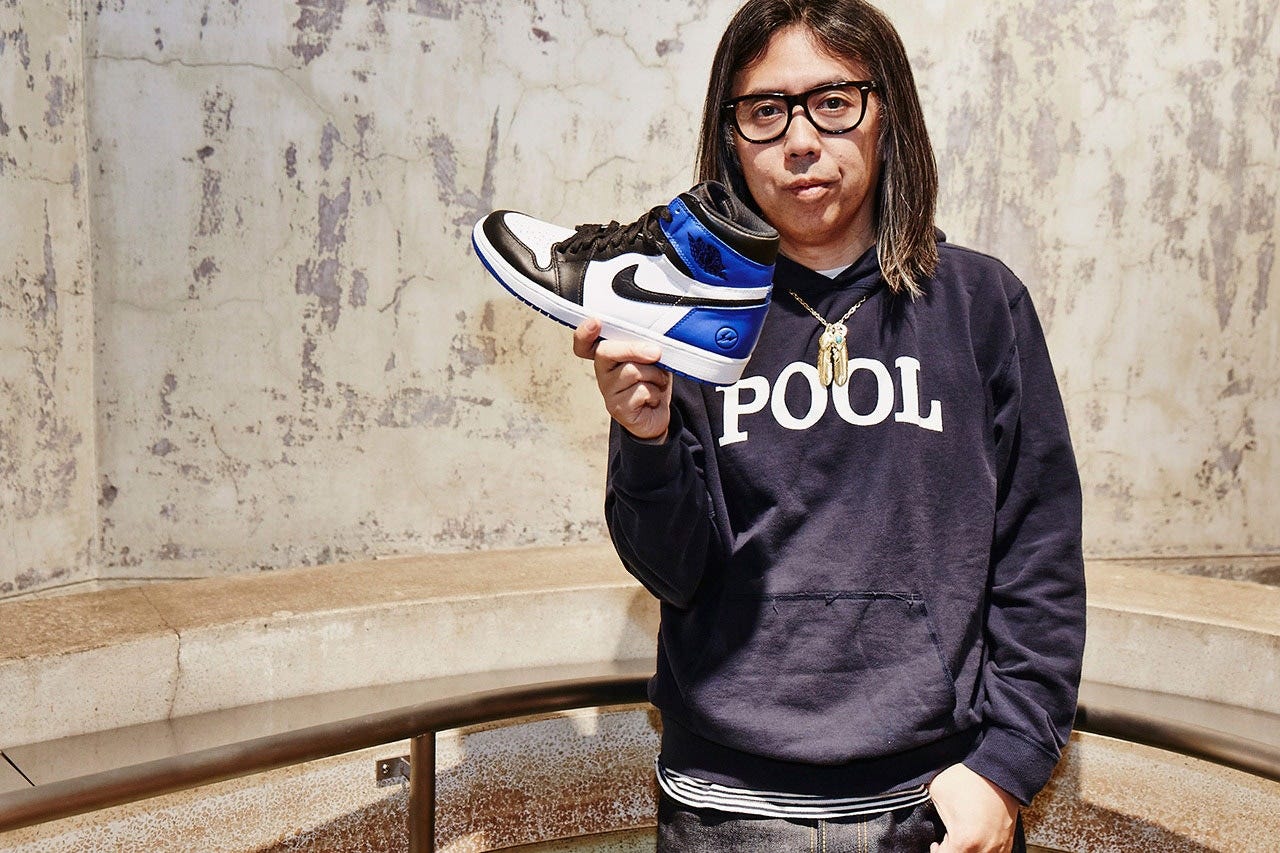
Hiroshi Fujiwara - Highsnobiety
Often cited as the godfather of streetwear, Hiroshi Fujiwara was (and continues to be) a pivotal figure in shaping streetwear culture as we know it. The Japanese streetwear designer and musician connected the dots between his native Tokyo and the West already in the 90s, bridging streetwear and high-fashion and acting as an influencer and tastemaker – a sort of precursor to today’s influencers – long before the advent of the internet. He also popularized hip-hop in Japan.🇯🇵👟
Photo

Photos of the Week, Feb 26 - Reuters
A lot of emotion can be pulled from a series of photos, especially in our world right now. We have always believed in the power of visuals like this, and we always try to focus on the beauty and the art, but sometimes humanity speaks louder. Check out this week’s series.📸✌️
Industry
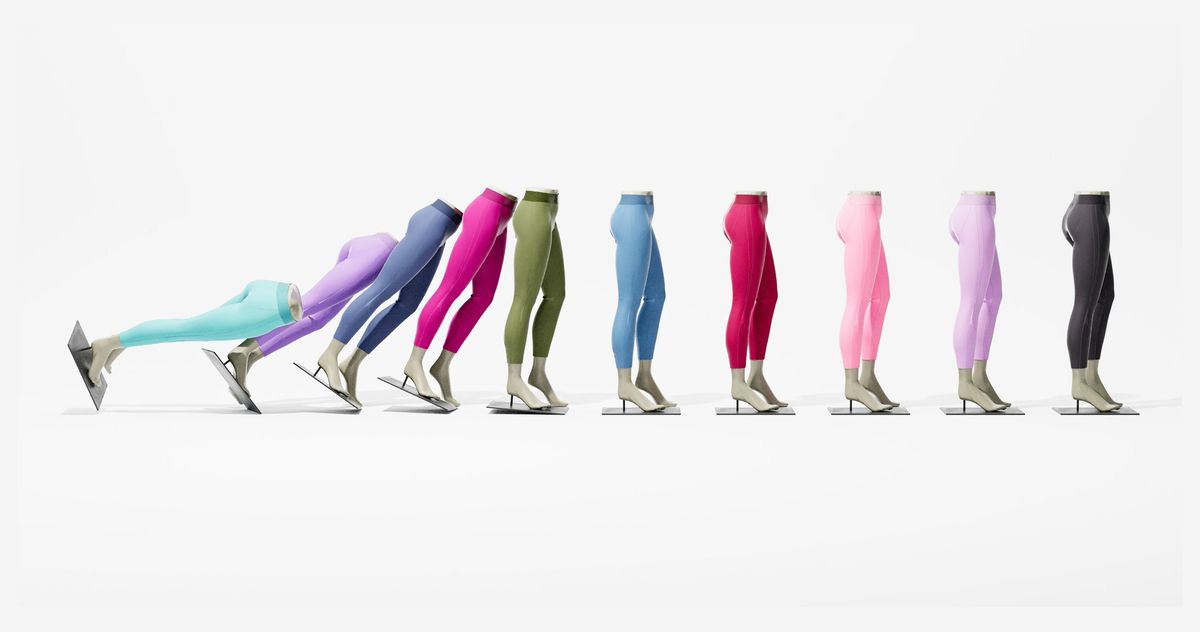
Life After Leggings - New York Magazine
On a Monday afternoon in January, four NYU sorority girls are huddled in front of a mirror on the ground floor of the airy Soho flagship store of Alo Yoga, the low-cut, logo-heavy athleisure brand that has become the unofficial outfitter of $42 boutique fitness classes from L.A. to Miami. Today, the central tables are covered in “candy-heart pink” bra tops, leggings, and sneakers, just in time for Valentine’s Day, as Sean Kingston and Justin Bieber’s 2010 duet “Eenie Meenie” blasts from the speakers.
Twenty-year-old Mercy, wearing a limited-edition Parke sweatshirt from its New York City pop-up, is looking for a new puffer jacket. For these girls, Lululemon is the “OG,” but they aren’t shopping there today. “I haven’t bought stuff in the last year from Lulu, but I’m wearing Lulu right now and I wear Lulu every day,” says Clara, 19. As they see it, Lululemon is for exercising and Alo is for looking cute. “Alo is very ‘Pilates girl’ with the socks and the sets,” says Mercy.🧘🏼♂️👖
Entertainment
James Blake @TheLotRadio 02-26-2026 - YouTube
Tracklist on https://link.thelotradio.com/IMrvZk
A curated hour of songs and beats I’ve produced over the years - from early cuts to recent releases - a look back through my catalogue. 🔊🎧

'The Clean Up' is a weekly newsletter that mixes in some Arvin Goods news, products, as well as stories we saw during the week that are worth a share. From books to podcasts, sustainability to business news, we try to keep it interesting, and fun. If you are not a subscriber, sign up and join everyone who receives The Clean Up directly in their inbox every Sunday.
Thanks for supporting Arvin Goods. Subscribe for free to receive new posts
Comments
Nothing yet. Say the first thing.
Sign in to join the conversation.