
[Disclaimer: written with the help of ChatGPT 4o as part of my AI experiments]
We spent last weekend at Hoysala Village Resort with friends, four other families and us. The older kids are all about the same age and we wanted them to spend time together before heading off to college later this year.
We were given rooms at the “Malnad Palace” at the resort, where the rooms were enormous and ornate, with heavy wooden doors, four-poster beds, and copper bathtubs! The food at the resort was a highlight, especially the breakfast, which was filled with unique Malnad cuisine dishes I had never tried before. Each member of the staff at the resort was very hospitable, making us feel like we were guests in their own home.
However, there were also several incongruities at the place. The rooms were stocked with tiny bottles of soap and shampoo (just enough for 1 person!), and it was a struggle to get drinking water or ice in our rooms; the staff also forgot to clean our room. While the food was terrific, the dining experience left much to be desired, with long waits at lunch and a raucous and loud singer belting out popular hits at dinner!
The recreation area was another oddity. It was located almost outside the resort, on a large plot of undeveloped land with a big room in the middle. This room was well-stocked and maintained with indoor games like Foosball, table tennis, and chess, but it lacked water and air conditioning!
Through all this the staff were friendly, cheerful, and responsive to our complaints: however, why did we have to complain at all in the first place?!
This experience highlighted to me the value of good management. The contrast between the warm hospitality and the lackluster hotel management was stark. Great hospitality and good intentions are wonderful, but they alone are not enough: good management transforms good intentions into great outcomes. It’s the difference between feeling welcome and feeling well taken care of.
At Hoysala Village Resort, the potential for improvement is evident. With better management, this place could truly shine: it was a valuable lesson in how much impact good management can have.
Last Sunday, our large group took a short drive from Hoysala Village Resort to Belur and Halebid. It's about a 30-minute drive to Belur, and another 30 minutes to Halebid from there. The temples themselves were outstanding: ancient architectural marvels with intricate carvings in stone.
The Chennakesava Temple in Belur and the Hoysaleswara Temple in Halebid are prime examples of Hoysala architecture, dating back to the 12th century. These temples are renowned for their intricate carvings and sculptures, depicting scenes from Hindu mythology, everyday life, and various deities. The craftsmanship is so detailed that even the smallest sculptures tell a story, making these temples a treasure trove of ancient art and architecture.
The thought that crossed my mind as I marvelled at these temples was: “Why haven’t I visited these places before? Maybe I would have known more about them if they were farther away from Bangalore!”
The following day, my wife and I said our goodbyes to the group, packed off our daughter with friends, and visited a wonderful, overgrown, and wild coffee plantation in Sakleshpur for our anniversary. We saw many frogs and toads, chameleons, beetles, and other creepy-crawlies. It was not what most people may enjoy, but we both loved the greenery, the several leech bites we got, the basic food at a quiet homestay, and the insect life!
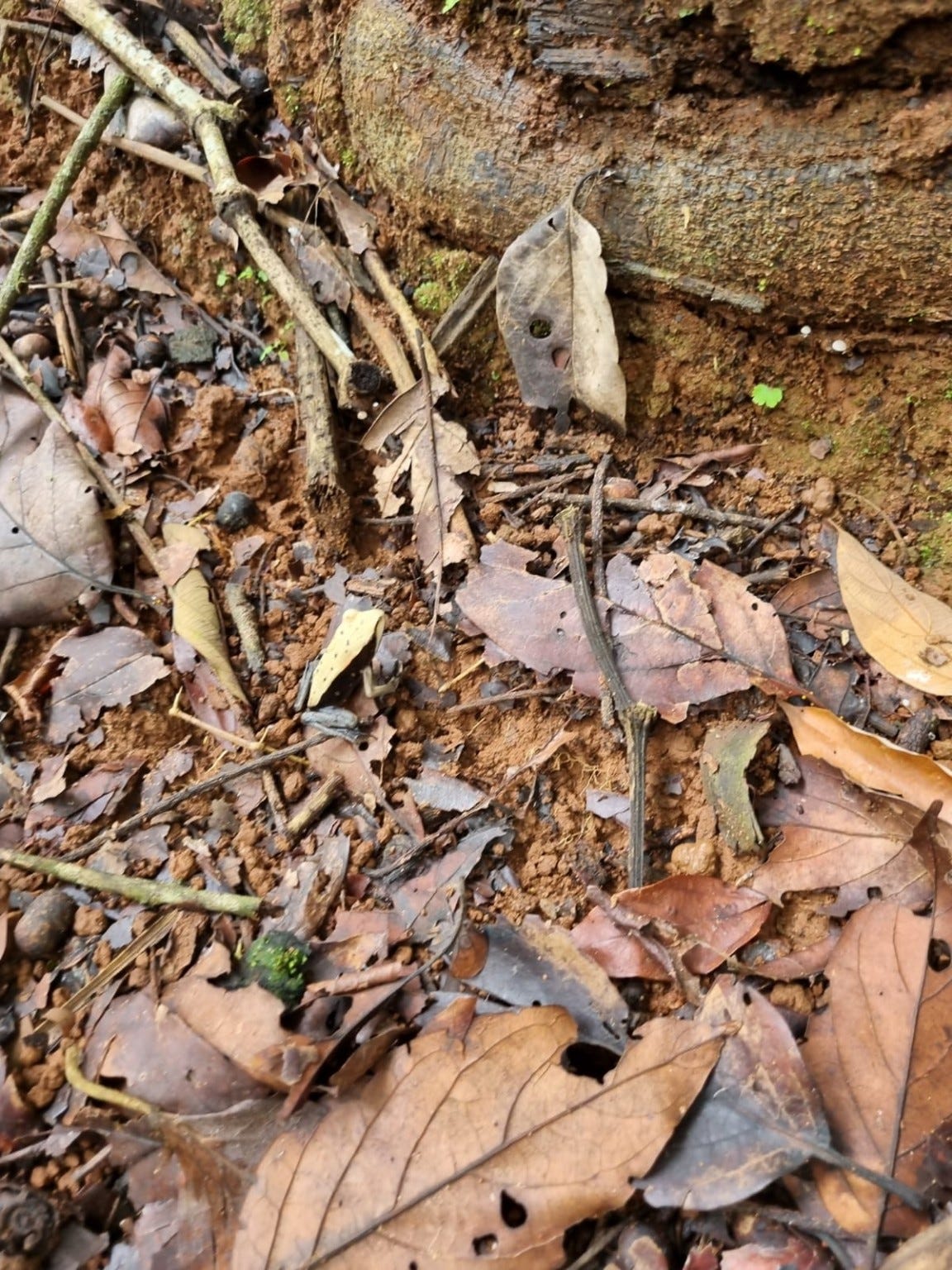
This picture — of a frog, can you find it? — was the highlight of our trip :)
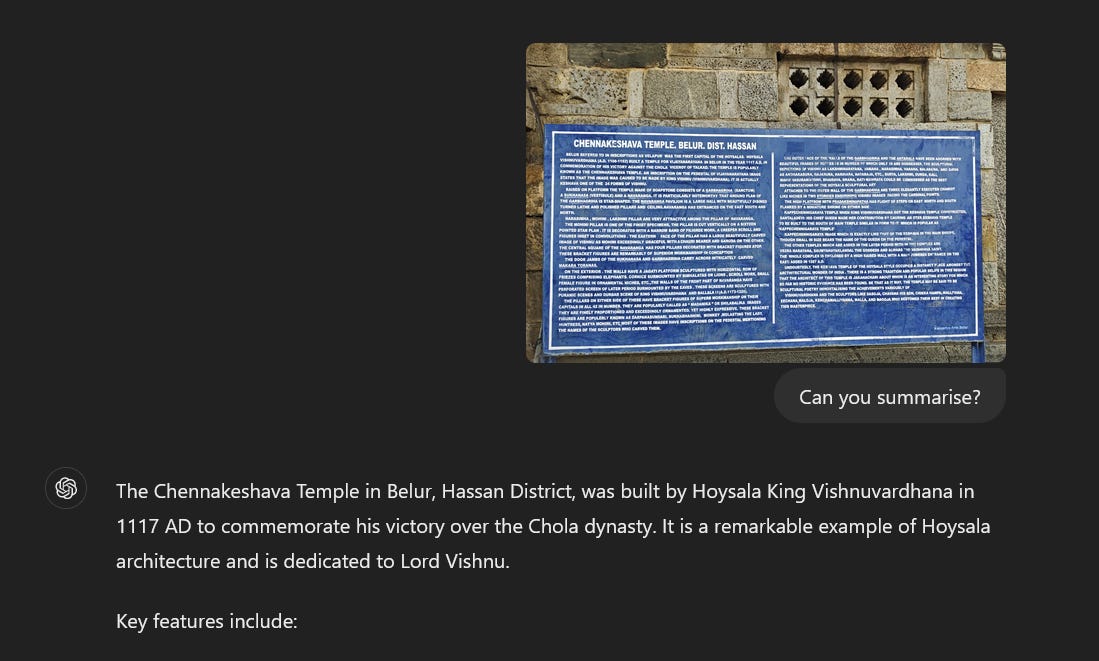
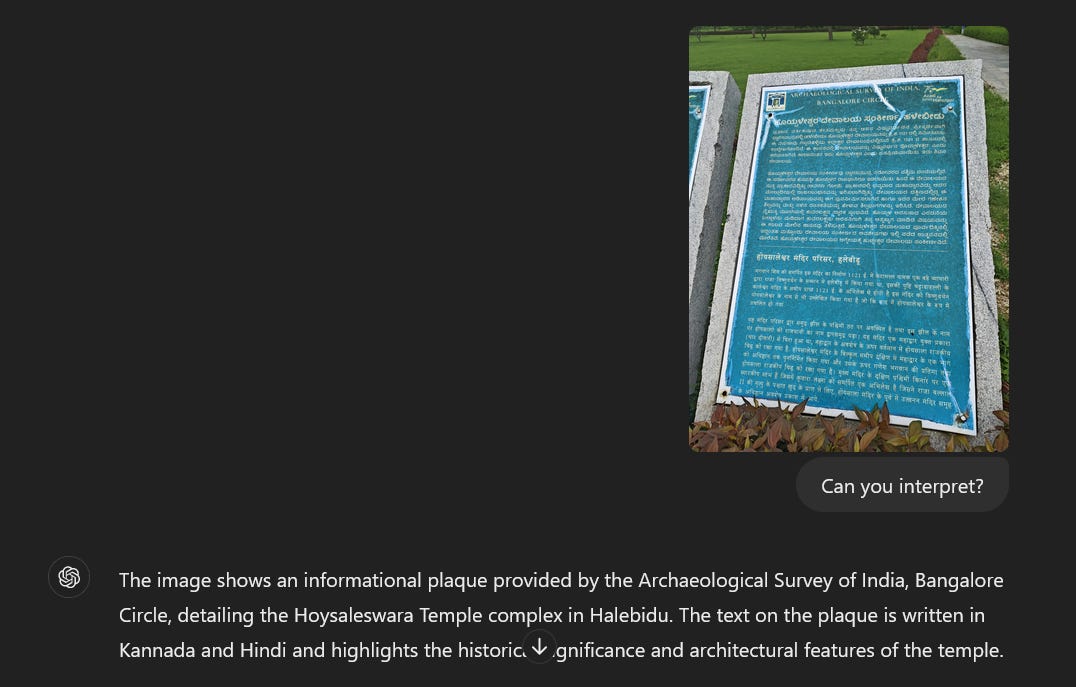
During these trips, I used ChatGPT quite a bit. I was amazed at how ChatGPT does a fabulous job in identifying and summarizing the “known.” For instance, I gave it a signboard from Belur and a signboard in Kannada from Halebid, and it translated and explained them perfectly.
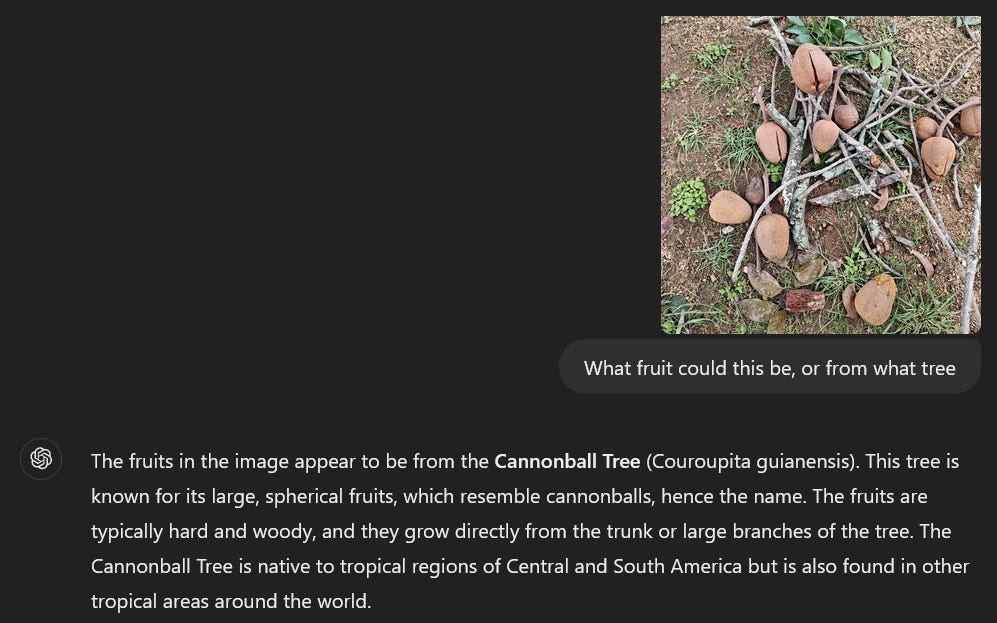
However, I was also underwhelmed by how ChatGPT struggles with identifying specific trees or wildlife. I uploaded a picture of an uncommon fruit and several pictures of frogs and beetles, but it failed to identify them accurately.
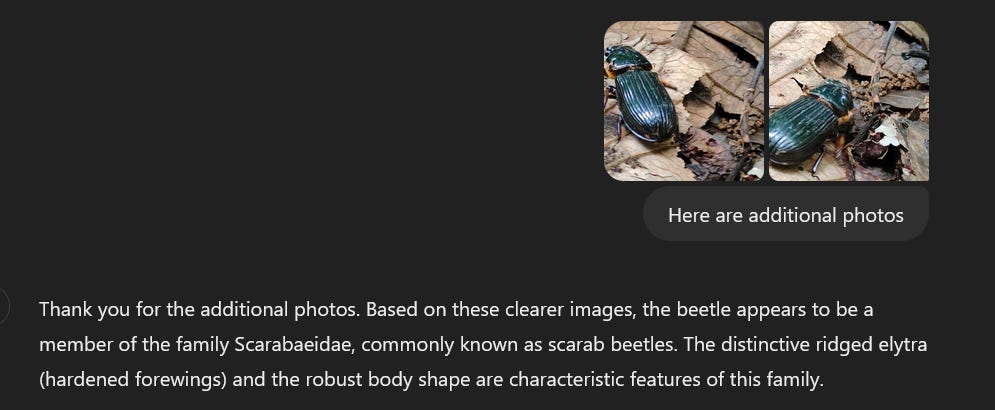
This experience highlighted the strengths and limitations of ChatGPT. It excels at summarizing and explaining widely available information but falters with specific, less common knowledge. This gap in performance is due to the general nature of ChatGPT’s training data.
After discussing these observations with my wife and doing some reading, I realized the gaps in ChatGPT and the value of domain-specific GPTs. General-purpose AI like ChatGPT can handle a wide range of tasks, but for more specialized knowledge, domain-specific models are necessary.
ChatGPT's Limitations: ChatGPT can identify general categories but not specific breeds or types. For example, it can recognize an animal as a frog but might not pinpoint the exact species.
Training Data Bias: The training dataset for general AI is biased towards more common information. There isn't enough detailed, specific data on niche subjects like certain tree species.
Scalability Issues: Even with more data, scaling up models with highly granular information is expensive and time-consuming.
This leads to an interesting implication: there will be a significant opportunity for startups to build custom GPTs for specific domains. Large companies are working on making general AI more granular, but this will take time. In the interim, smaller companies can develop specialized models to address specific needs.
Generic vs. Specific: General AI is excellent for broad, common tasks, like writing code for everyday problems. However, the more specific the task, the higher the chances of AI "hallucinations" or errors.
Breakthroughs and Customization: The 2017 breakthrough in “attention” mechanisms enabled the development of transformers, which are the foundation of ChatGPT. Custom GPTs can be tailored for specific domains, and they will likely outperform general-purpose AI in those areas.
As I discussed and learned more about ChatGPT, I realized there are two distinct uses for it:
Custom GPTs as Decision Support Systems: Imagine creating a GPT on a particular domain, infused with specific domain information and personal data to create an AI agent or assistant that excels in that particular task. For example, if I fed GPT a lot of information about the elephant census in India, elephant sanctuary data, and allowed participants to upload photos of dung, we could create a Custom GPT to help identify duplicates and provide better estimates. This would be a custom, domain-specific model, enriched with specialized and personal data.
World-Building and Storytelling: On the other hand, ChatGPT can be an excellent tool for world-building or storytelling. For instance, it can assist in brainstorming ideas about elephant conservation techniques in Karnataka, even though it may not have specific data on the topic. It can help generate creative ideas and solutions, working with you to imagine new possibilities.
These two uses—decision support systems and storytelling—highlight the versatility of ChatGPT. While it may struggle with hyper-specific tasks due to a lack of granular data, its potential in creative and imaginative applications is immense.
I heard the fantastic George Harrison album “All Things Must Pass” on our road trip to Belur and Halebid last weekend. This wasn't an album I'd heard before—how had I missed it? It’s a fantastic blend of rock, folk, and Hindustani classical influences, and shows how strong an artist and guitar player George Harrison was just by himself.
Some standout tracks include “My Sweet Lord”, “What Is Life”, and the title track “All Things Must Pass.”
Till next week!
No posts
Comments
Nothing yet. Say the first thing.
Sign in to join the conversation.