
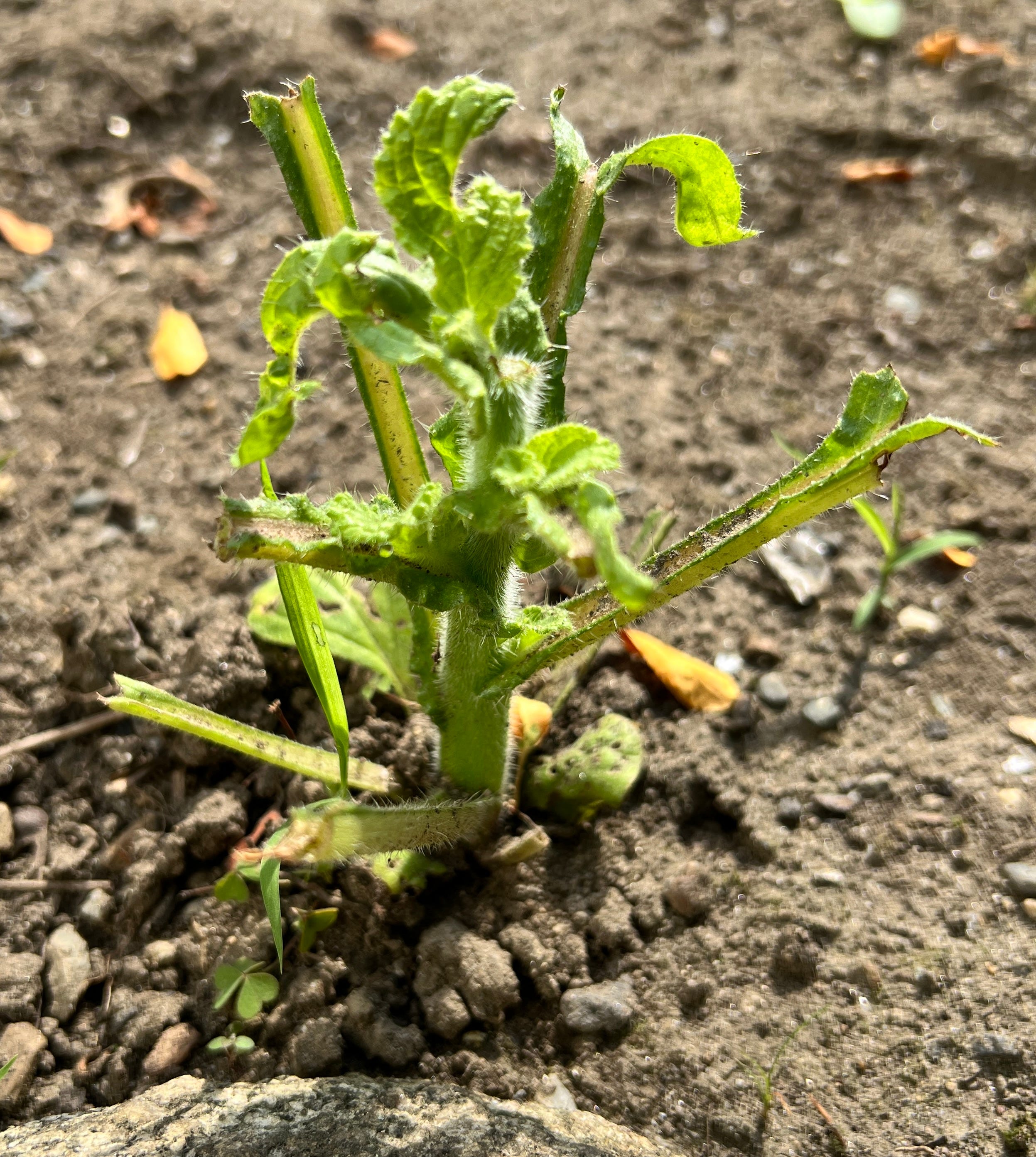
EVERY DAY THE WOODCHUCKS scuttle across our driveway, usually one at a time, sometimes an adult with young. They’re well-fed, plump; they have sleek coats. They don’t eat asparagus or garlic, but given the chance they’ll eat almost every other vegetable I grow: lettuce, spinach, beans, carrots, radishes, celery, chard, beets plus parsley, nasturtiums, and borage, even clover grown as a cover crop. When the seeds sprout, the woodchucks enjoy microgreens. If the plants get larger, they sometimes uproot them. They have preferences; they love dill, and they wait weeks for perfect small cucumbers and both green and ripe tomatoes. They don’t share — they eat 100 percent of everything they like. A woodchuck, you probably know, is also known as a groundhog or, in the UK, a marmot; “woodchuck” is sometimes applied to certain deeply rural Vermonters.
My first gardens were out in the countryside beside large fields. I never had any sort of fence. Deer weren’t a problem; they had plenty of other things to eat. Rarely, I spotted a woodchuck in the distance, and only once did I have trouble. A mound of dirt and a hole appeared between two rows of vegetables. The creature was eating methodically in linear fashion: every carrot, every head of lettuce! A woodchuck always has at least several holes leading to its den. The holes are surprisingly far apart; you can never find more than one or two. Blocking one is useless, and if you do block one, the woodchuck digs a new hole next to it. But with a hole inside my garden I felt a sense of emergency. I was young and had certain different attitudes compared with now, such as toward gasoline. I spotted a second hole in the field, and I poured gasoline down it and tossed in a match. It was so much gasoline that flames were still burning at 11 o’clock at night. The woodchuck never came back.
Now I live in a relatively suburban situation in a town of about 6,000 people. The yards around me are somewhat large, and not far away are a few wild places. After we moved in 15 years ago, I cut down some small trees and with my next-door neighbor hired someone to chainsaw a row of cedars past their prime. That gave me space and sun for vegetables. I planted roses to separate the garden from the lawn, but the space was open to small creatures all around. I liked the openness. Then a woodchuck showed up.
My first idea and the one everyone suggested was trapping. I borrowed a large Havahart trap, planning to capture the woodchuck and release him on an unpopulated back road, which is something people do, although it’s not legal. Instead of a woodchuck, however, I caught a skunk. After a little research, I found that, if I followed the rules, I was supposed to call a state-approved trapper to get rid of it. He arrived with his serious ten-year-old daughter who held a clipboard. I managed to ask what she wanted to be when she grew up. “A trapper,” she said. I’m horrified to say that the trapper shot the skunk right there with his pistol, releasing the smell.
Woodchucks continued to appear, and I began building fortifications. I was pretty sure they were slipping under the picket fence on two sides of the garden, and I sealed that off with wire fencing. At one point, I again borrowed a trap, setting it on path a woodchuck had taken, using gloves to keep the trap fee of my scent, and using the prime recommended bait: ripe cantaloupe. I refreshed the cantaloupe for several days — it was never touched.
Once, we had a surge of skunks in this part of town. At dusk, so many would appear on the lawns of the residential section of Main Street that people would walk in the street to stay clear of them. After a few years, the skunks largely disappeared. I hoped in vain that the same thing would happen with the woodchucks.
One day, checking my garden, I saw they had tunneled under the wooden lattice below some outdoor stairs. I added wire fencing in that spot and below it buried a tight line of granite fieldstones. I put coils of chicken wire in the gap between the stairs and the clapboards of the house, thinking they might be sneaking in there. I read that, exceptionally, woodchucks will climb as high as ten feet. On the side of the garden with a tall hedge, I increased the height of the fence to seven feet. Still, somewhere, they continued to get in.
At that point, I realized I had made some progress because the damage was less rapid and thorough than it had been. Checking the garden perimeter, looking everywhere, it seemed clear that only young woodchucks were getting in and it could only be that they were passing through the fence itself. I should have chosen a smaller wire grid. I bought more wire fencing (my defenses were starting to be an investment), doubling it up and burying it deeper along the wooden pickets and by the roses, wiring the two fences together.
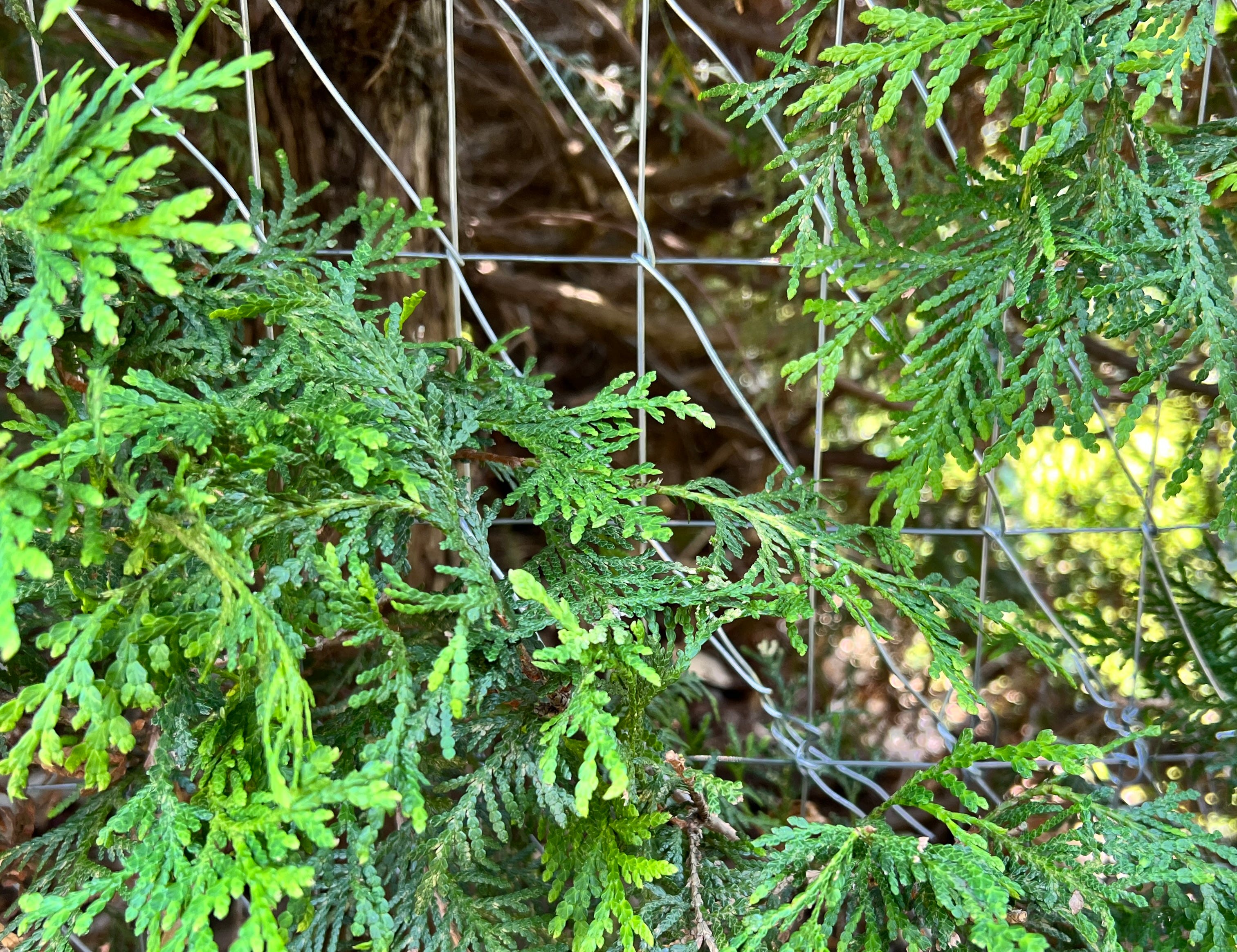
And yet the little woodchucks could still get through the fence by the tall hedge. I’d set that section of fence deep in the hedge to make it invisible for aesthetic reasons and so I could give the hedge its annual trimming. I couldn’t replace or add to it out without damaging the hedge. Fanatically, I spent hours weaving strands of wire through the bottom 12 inches of that fence to reduce the size of the openings. That was last year. Finally, I seemed to have seemed to have won. Then I startled a woodchuck in the garden. He ran and disappeared into the poured concrete foundation of the garage, as if by magic. He had discovered and excavated a drainpipe that I never knew existed. I stuffed it with wire and blocked it with stones.
This year the neighborhood has as many woodchucks as ever. They’re back in my garden, although only the young ones. A few times, I’ve seen where they tried to dig under the picket fence from inside the garden, wanting to get out! How did they get in? I think it’s through the fence in the hedge above where I wove in the extra wire. They’ve learned to climb over it.
When I’m not sad or angry, I feel a grudging respect for the woodchucks’ relentlessness. They don’t quit. But as of the past three days, the little ones finally seem to have grown too big to fit through any part of the fence. For this summer, maybe that’s the end of the problem. But I’ve had a reprieve before. I’m going to continue to work on my defenses. ●
No posts
Comments
Nothing yet. Say the first thing.
Sign in to join the conversation.