
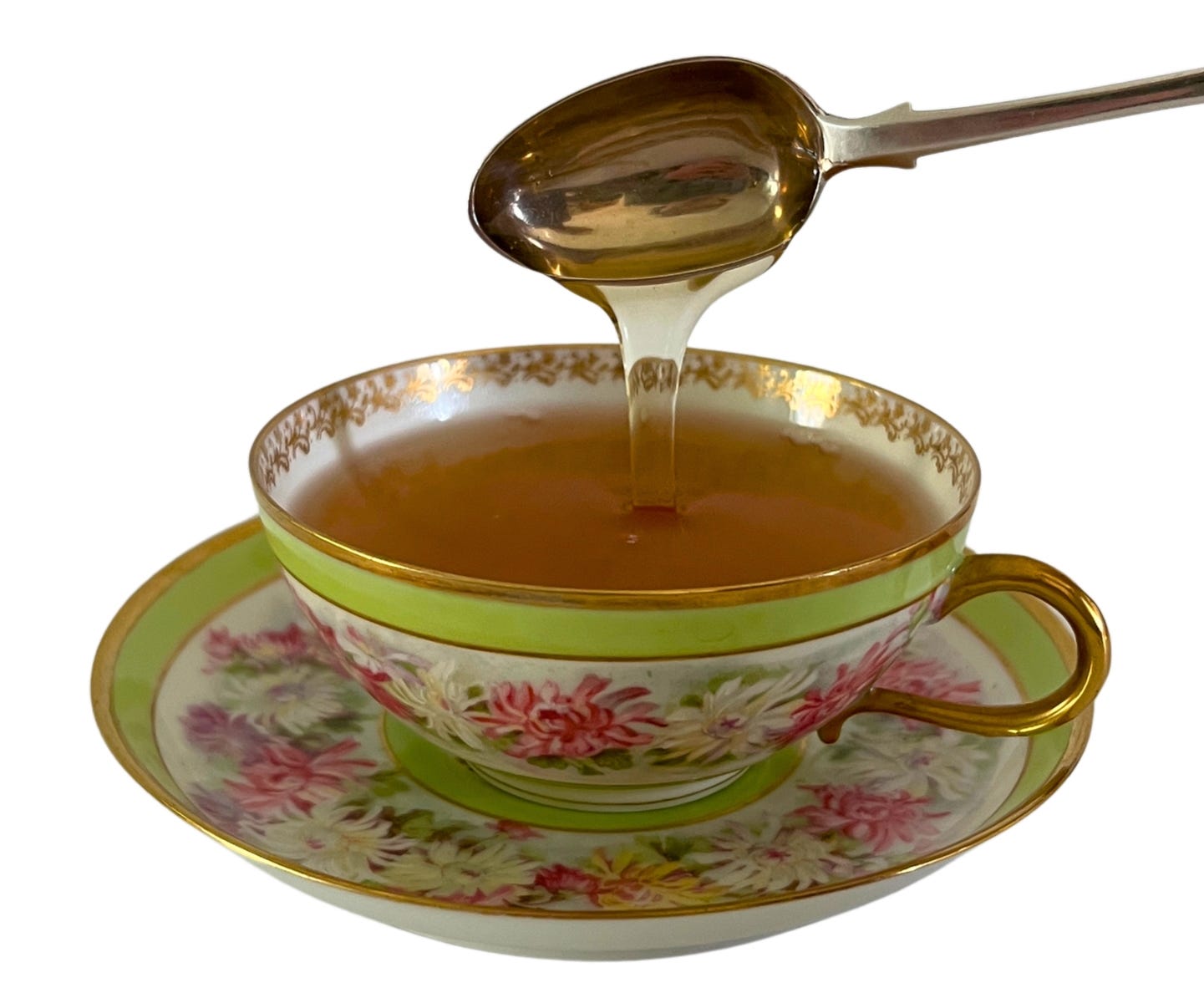
ALMOST ALL of the many wonderful flavors in wine we describe by comparing them to a fruit, a flower, a spice, something in nature. But how do you recognize a flavor if you aren’t already familiar with it? (How do you know how delicious something can be if you’ve only ever had it from a supermarket? That’s nearly the same topic.) For instance, I especially enjoy dry and sweet Loire Valley Chenins, in which a key flavor is acacia honey, which can also appear in sweet wines from elsewhere, including Sauternes. When I first learned that, I sought it out to taste because, unlike Europeans but like most North Americans, I didn’t know it. Acacia is an exception among honeys, one of the few kinds that naturally remain liquid because they have a low proportion of glucose to other sugars and water. (When you see liquid honey, as a rule it’s either relatively new or it was heated and tightly filtered to prevent it from crystalizing.) Pure acacia honey is unusual too because it’s practically colorless, although the nectar that makes up any honey is almost always somewhat mixed, and acacia honey is commonly a pale straw yellow. Acacia honey is also low in acidity, so its sweetness stands out. The flavor of pure or nearly pure acacia honey is delicately floral with a hint of vanilla and a small hint of new beeswax, and there’s some of what you might call generic honey flavor along with a cooked sugar flavor. Delicate is the positive word; you might equally call the flavor weak. But with its paleness and refinement, acacia honey has always been regarded as prestigious.
Comments
Nothing yet. Say the first thing.
Sign in to join the conversation.