
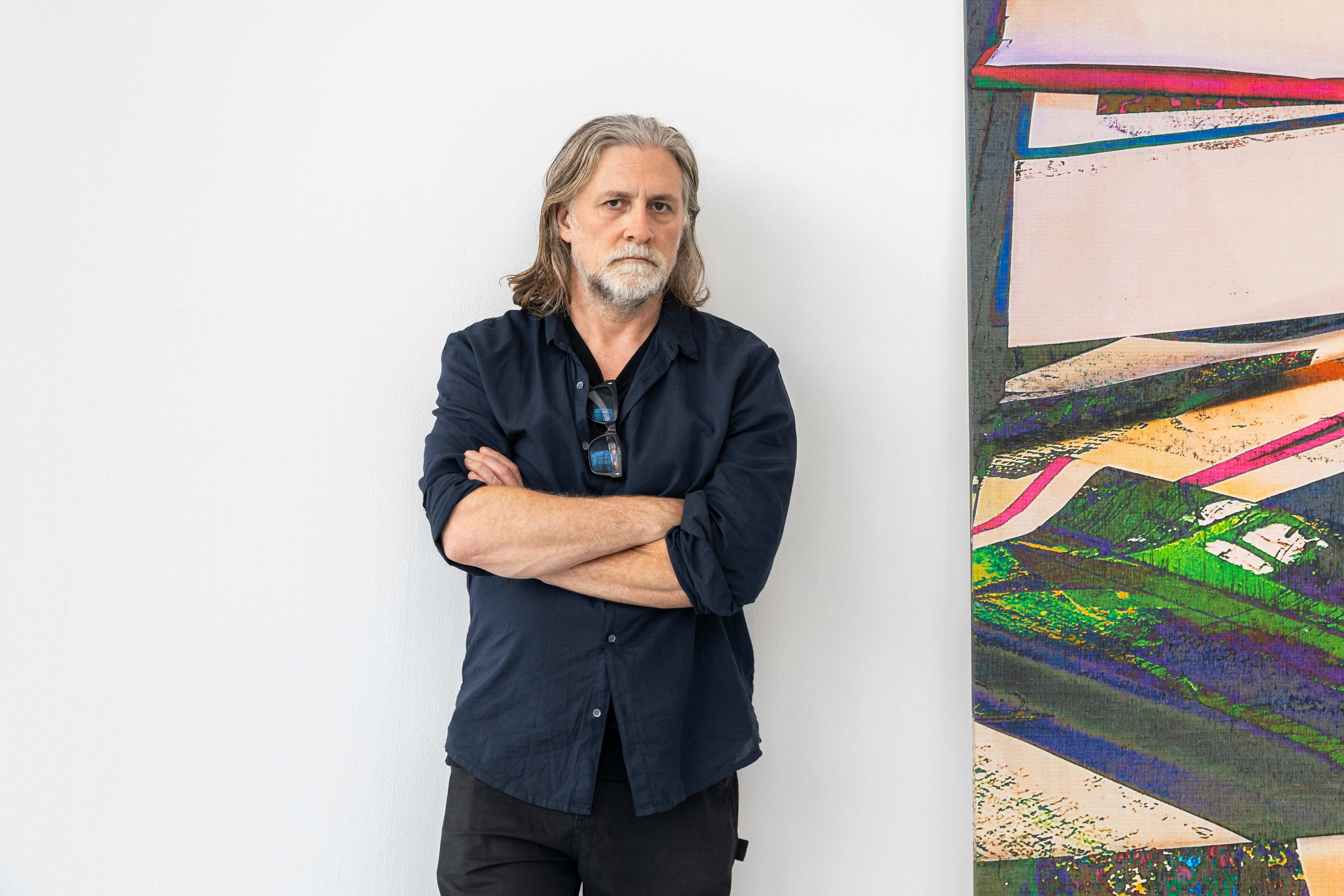
Wade Guyton’s practice begins with a deliberate displacement of the painter’s hand. By using inkjet printers to apply ink onto canvas, he introduces a mechanical system into a medium historically defined by gesture and touch. Yet what initially appears as a surrender to automation quickly reveals itself as something more complex.
The printer, rather than functioning as a neutral tool, becomes unstable. Canvases jam, ink misaligns, files repeat imperfectly. These disruptions—streaks, smudges, distortions—are not corrected but embraced. They become the site where the work actually happens.
Guyton’s paintings expose the fragility of digital precision when confronted with physical material. The “error” becomes a form of authorship, reintroducing contingency into a system designed for perfect reproduction. In this sense, his work stages a confrontation between two regimes: the infinite reproducibility of the digital and the resistance of the physical.
What emerges is a redefinition of gesture—not as the mark of the hand, but as the trace of a system breaking down.
Christopher Wool’s paintings operate in a space where language begins to fail. His iconic text works—black stenciled letters on white grounds—initially present themselves as direct communication. Yet their structure quickly disrupts readability. Words are fragmented, spacing is removed, syntax collapses.
This breakdown forces the viewer into an active role. Reading becomes labor. Meaning is no longer given; it must be reconstructed. In doing so, Wool transforms language into a visual system rather than a communicative one.
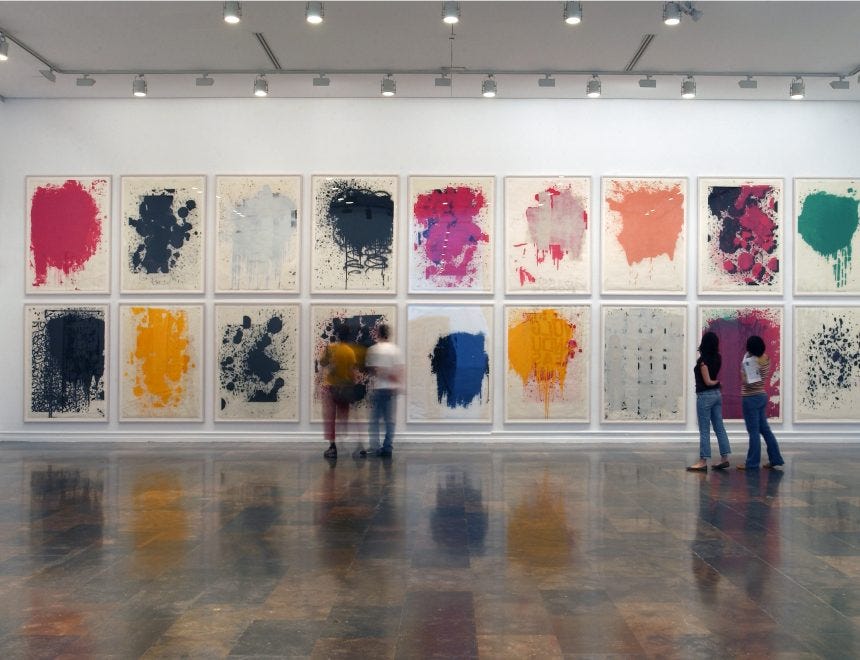
His abstract works extend this logic. Built through layers of silkscreen, spray paint, and wiping, they resemble surfaces subjected to time—eroded walls, overposted streets, traces of repetition and removal. The image is never stable; it is always in the process of appearing and disappearing.
Wool’s practice reflects the condition of contemporary visual culture: saturated, repetitive, unstable. His paintings do not clarify this condition—they embody it. They exist as fields of interference, where meaning flickers but never fully resolves.
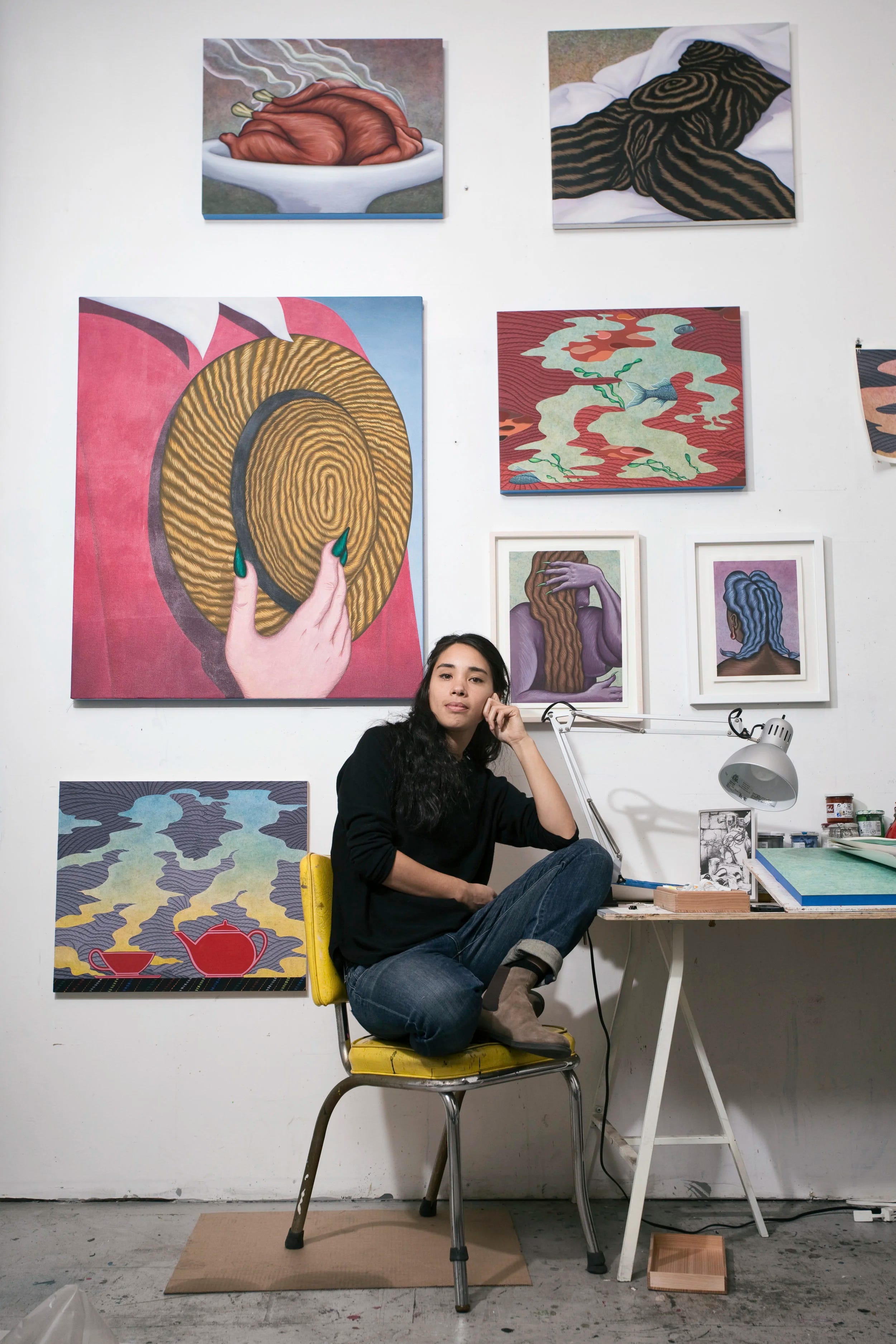
Julie Curtiss approaches painting through fragmentation, focusing on isolated body parts and objects that feel both familiar and estranged. Her compositions are tightly controlled, often cropped in ways that deny the viewer a complete image. Hair fills the frame, hands perform ambiguous actions, legs become sculptural forms.
This strategy reflects a broader condition of image consumption. In advertising, cinema, and social media, the body is rarely encountered as a whole—it is segmented, stylized, optimized. Curtiss adopts this visual language but subtly disrupts it.
Her surfaces are smooth, almost artificial, echoing the polished aesthetics of digital imagery. Yet within this precision, there is unease. Proportions feel slightly off, gestures ambiguous, narratives unresolved. The familiar becomes uncanny.
Curtiss’s work operates at the intersection of desire and control. By isolating fragments, she reveals how the body is constructed as an object of consumption—while simultaneously reintroducing ambiguity, refusing to fully satisfy the gaze.
Luc Tuymans’ work can be understood as a sustained meditation on the afterlife of images. Rather than painting from direct observation, he works almost exclusively from mediated sources: photographs, film stills, archival material.
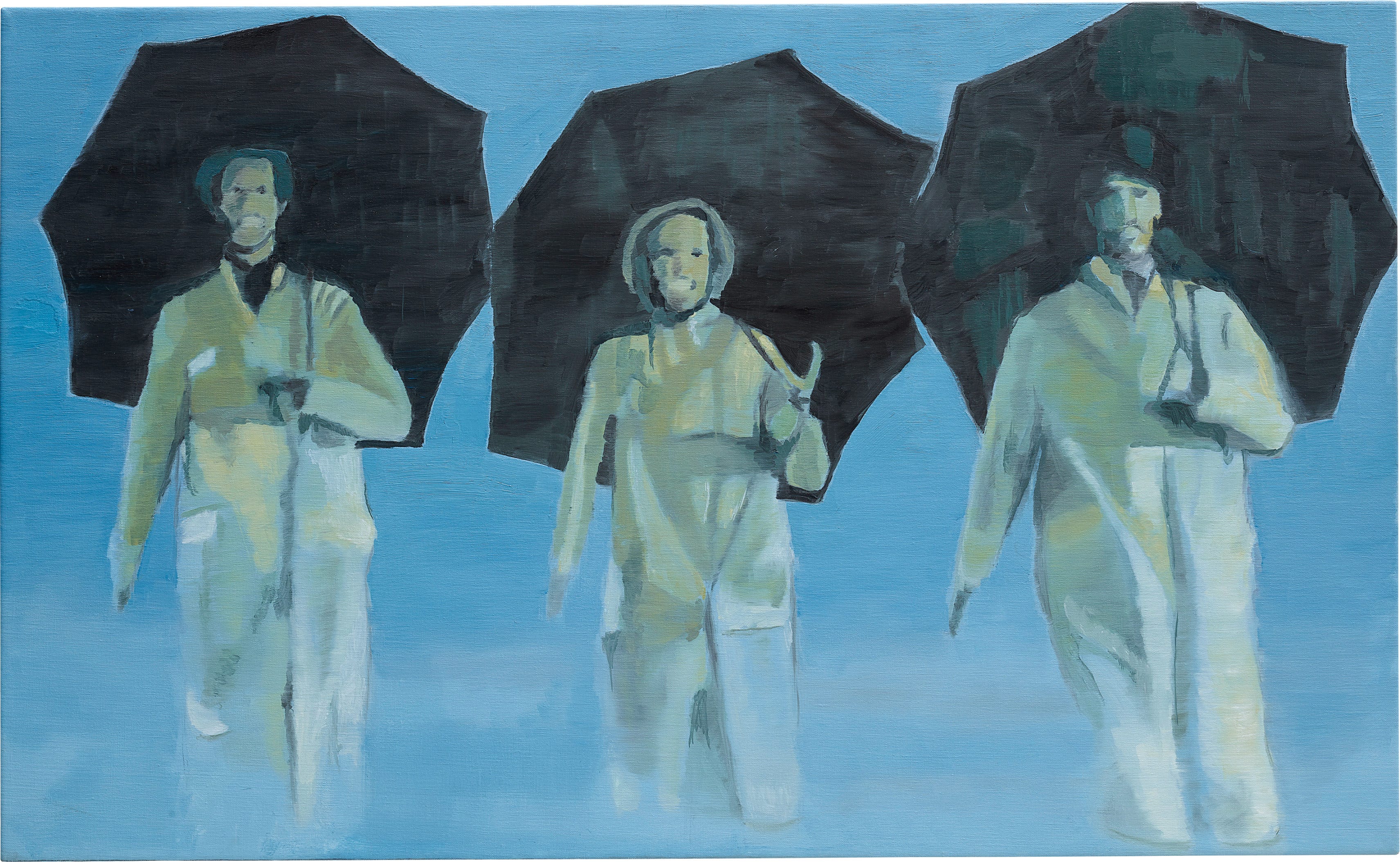
However, his process is not one of translation but of reduction. Images are stripped of clarity, color is muted, details are lost. What remains is a kind of residue—an image that feels distant, incomplete, and emotionally restrained.
This distancing is critical. In a culture where images are consumed rapidly and often uncritically, Tuymans introduces delay. His paintings slow down perception, forcing the viewer to confront the gap between image and meaning.
Importantly, many of his subjects relate to historical trauma—colonialism, violence, political power. By rendering these images faint and unstable, Tuymans resists spectacle. He refuses to make history visible in a straightforward way, instead emphasizing its elusiveness and the difficulty of truly seeing it.
Painting, in his work, becomes a space of doubt—where images are not trusted, but questioned.
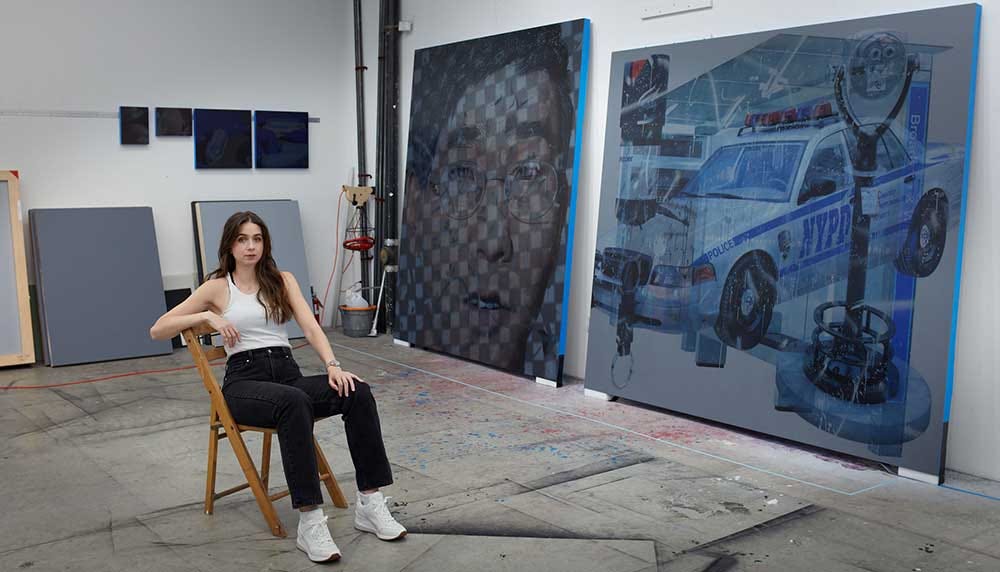
Avery Singer’s practice begins in a fully digital environment. Using 3D modeling software, she constructs scenes that resemble architectural simulations, virtual stages, or speculative spaces. These compositions are then translated into paintings through airbrush techniques, resulting in surfaces that appear both mechanical and atmospheric.
What is striking is not simply the use of digital tools, but the way Singer reintroduces friction into them. The precision of the digital model is softened through gradients, tonal shifts, and subtle inconsistencies. The image hovers between clarity and dissolution.
Her paintings reflect a spatial logic shaped by screens—flat yet deep, structured yet ambiguous. Figures, when present, appear integrated into these environments rather than distinct from them, suggesting a new relationship between body and space in the digital age.
Singer’s work does not reject digital imagery; it absorbs it. But in doing so, it transforms it. By slowing down and materializing virtual space, she creates a reflective distance from the immediacy of the screen. Painting becomes a site where digital experience is not consumed, but examined.
No posts
Comments
Nothing yet. Say the first thing.
Sign in to join the conversation.