
On November 23, 2015 — exactly one decade ago — I wrote the following essay. It is without question the most important set of words I have ever assembled.
Like many people, I can worry myself into a frenzy. I wrote this essay, “The Dangers of Dismissing Donald Trump’s Hateful Rhetoric” for two specific reasons: The first is that when I heard candidate Donald Trump campaign for the office of the presidency in 2015, I knew without question that I was hearing echoes of Adolf Hitler’s rhetoric. But was that sensible? Was it even sane?
Everyone I knew said “No.” And in fact, my own mind said, “No; no, you cannot compare anyone to Hitler.” But then, another part of my mind argued, I’m not comparing a person to Hitler; I am comparing the divisive, scapegoating, panic-rallying rhetoric of a charismatic hatemongering politician to that of another—and one who has been said by his own spouse to have admired Hitler’s speeches. I studied English and writing and I’ve worked with words all my life. I am qualified to notice this. Maybe I’m not crazy.
So I began to write my thoughts to make sense of my thoughts, to work out if there was any sense to them.
By the time I finished, I knew that the observation was valid and that it would be wise to be wary and cautious, even if the likelihood of the same type of rhetoric leading to the same type of conditions that led to disaster in 1930s Europe was unlikely.
So I pushed the publish button on a personal blog. That’s the second reason I wrote this essay: To freeze my thoughts in time. Because I have constantly fleeting concerns and anxieties and worries, but this one felt different. It felt more valid and it felt more important than most worries. I shared the article on Twitter at the time with a scholar of autocracies not expecting any response. To my surprise, she shared it and urged her followers to read it. An editor from a major national political magazine replied with these words: “Any comparison between 1930s Europe and the United States is hyperbolic and not something we would ever consider publishing.”
Rather than quelling my anxieties, it inflamed them. We learn history, we’ve all been conditioned to believe, so that we will not repeat it.
The reality is starkly different: We learn history and then we repeat it because historians, pundits, journalists, and others who tell us what to think have a deep prejudice that “Anything bad that happened in history happened then and there, and here and now we are automatically smarter and we automatically make better decisions.” We are self-destructively self-superior. Just as white supremacy is invisible to most white people in the United States, the supremacy of the here and now is invisible to historians, to journalists, to pundits, who believe that since they, the smart people of contemporary times, are elevated to positions of public influence and education, they are necessarily preventing anything too bad from happening. I call that denial.
Here we are, exactly ten years later. Below is what I published exactly a decade ago, without a single word changed. This, to me, is the most important thing I’ve ever written—because having written it down, I have been able to revisit it over the past decade during times that have been intentionally disorienting; it has served as a continual reminder that I wasn’t being “dramatic” or “hyperbolic” then, and wherever we have been in the timeline of surreal events that have occurred since 2015, this has served as a guidepost. I am sharing this as evidence in support of the case to believe your eyes and ears, to believe evidence of what is true, even when people tell you to “calm down and get a grip.” Complacency is what got us to where we are today. Would you rather be where we are today as a society or where we were before 2015?
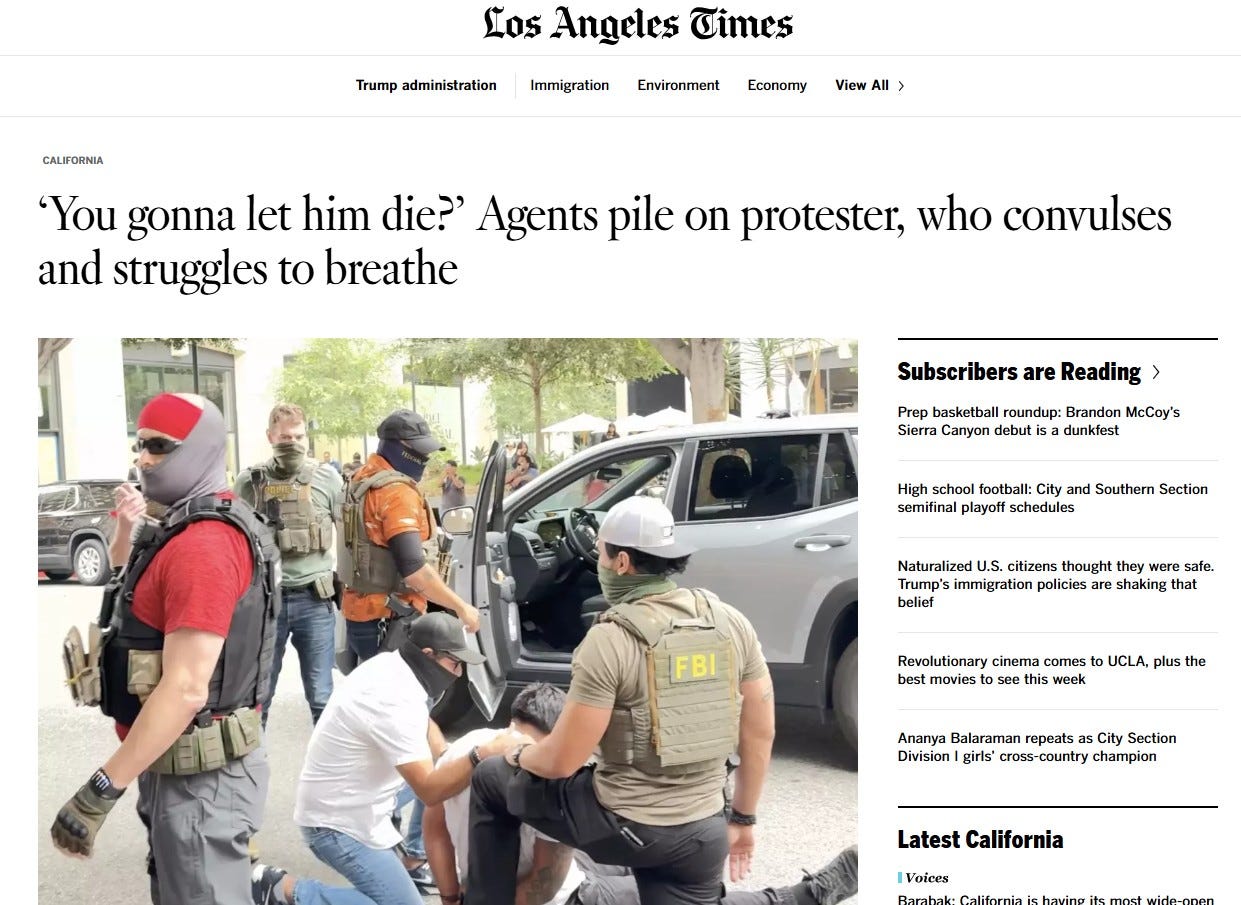
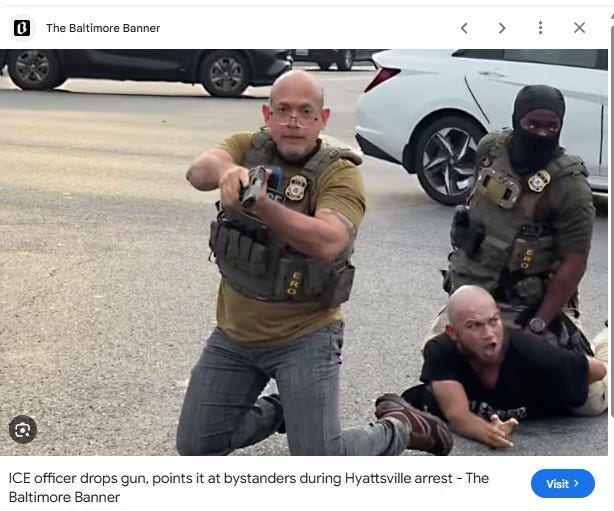
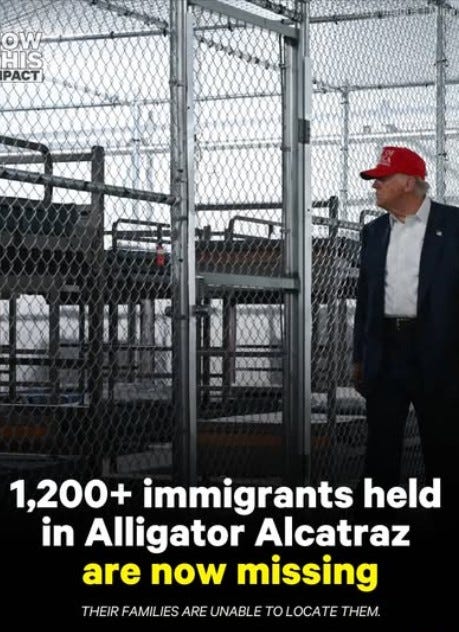
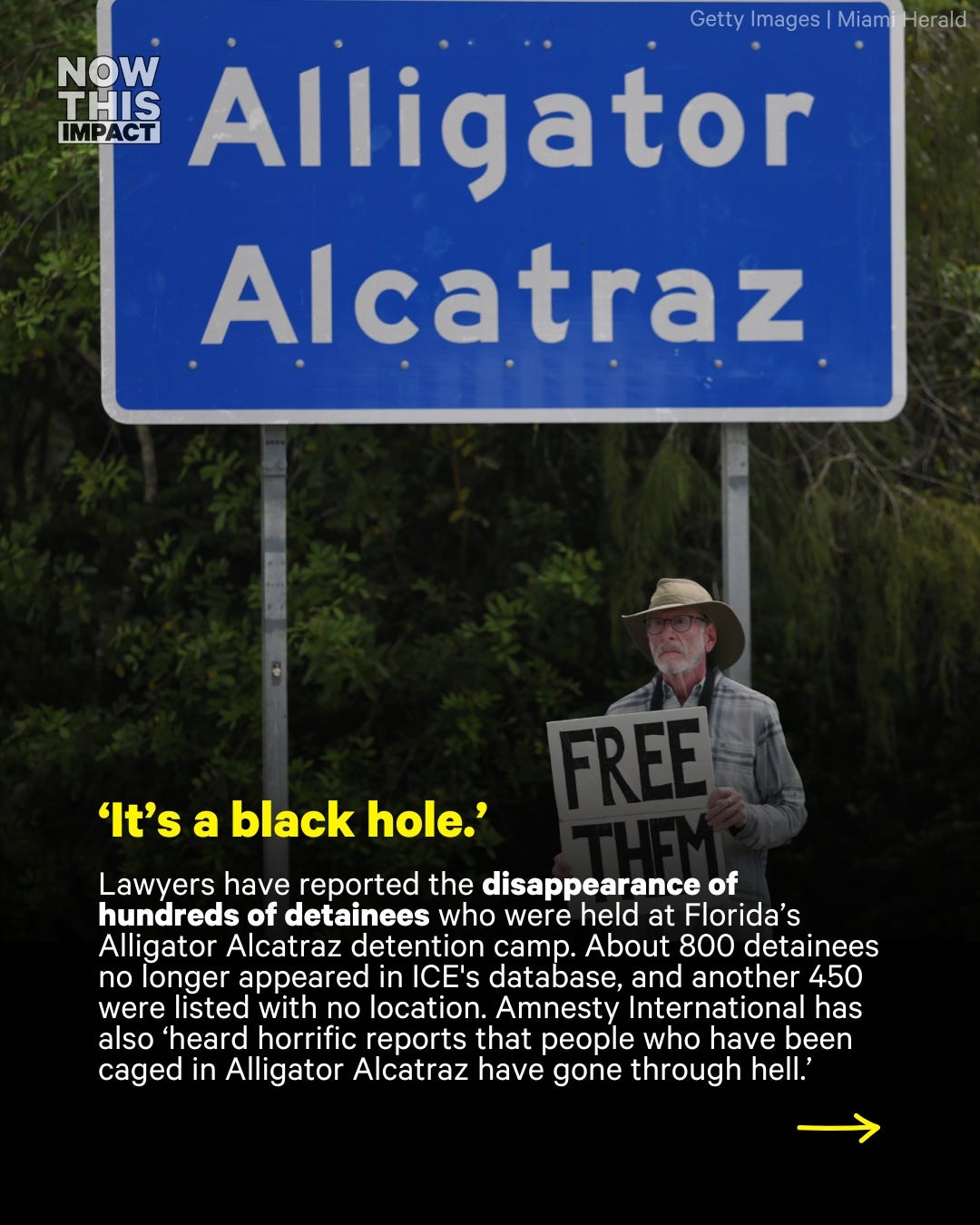
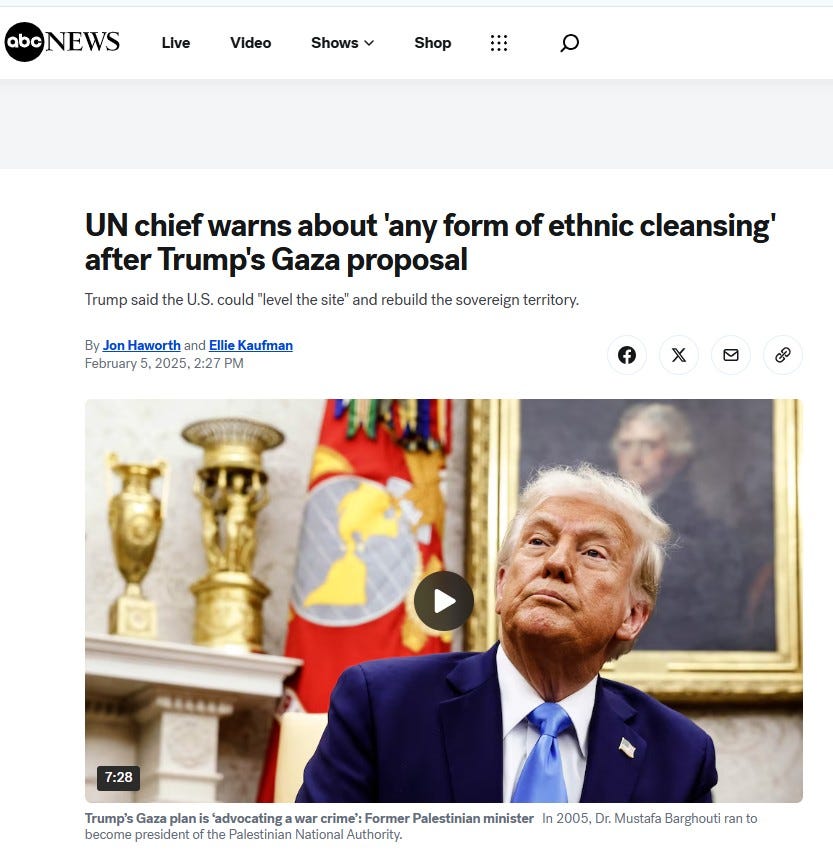
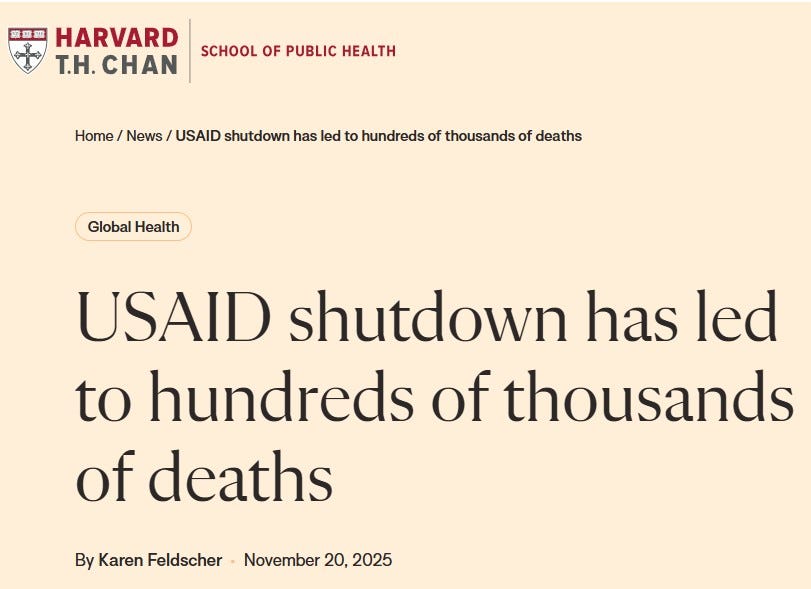
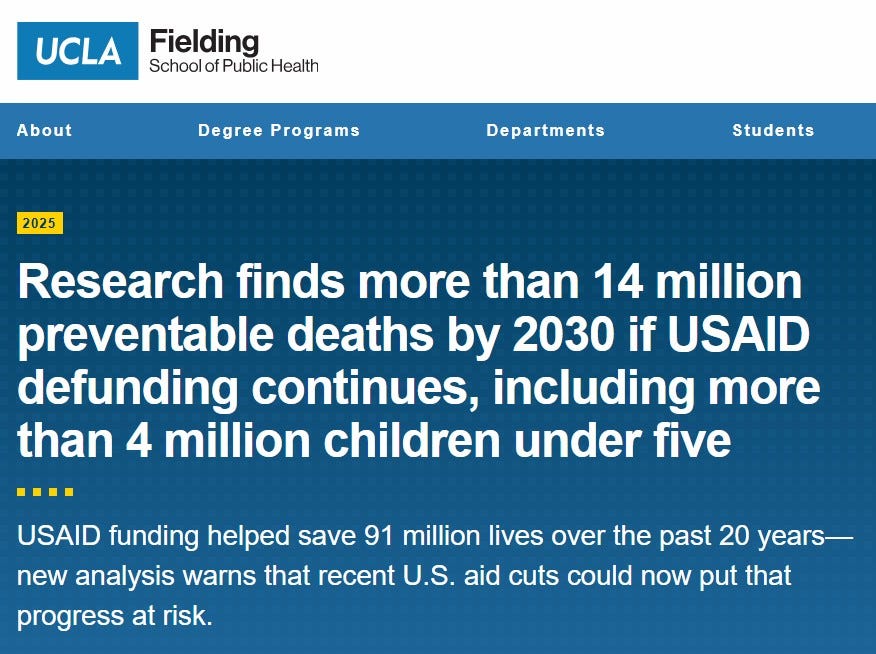
From the vantage point of 2025, I ask: Does any comparison between 1930s Europe and the United States still seem inherently hyperbolic? The problem is that, despite the Coast Guard declaring swastikas that represent the murders of 12 million people are no longer hate symbols, despite U.S. concentration camps being built to house and then disappear people arrested without due process, despite masked secret police and armed military officers being deployed into our cities, despite peaceful protesters being abused and arrested by authorities, despite a failed violent coup attempt that nevertheless led to the later empowerment of the man who orchestrated it, many people would still answer “yes” to that question—only because we’re conditioned to deny reality as it plays out day by day. If we look back at the events of the past decade, it’s impossible to say yes honestly.
November 23, 2015
An examination of the parallels between Donald Trump’s rhetoric and well-documented warning signs for the German holocaust reveal too many disturbing similarities to dismiss.
Yesterday, I came across a 2012 BBC editorial that asks “how was it possible that a character as strange and personally inadequate as Hitler ever gained power in a sophisticated country at the heart of Europe, and was then loved by millions of people?” This is a question that has been reverberating within my mind more and more recently–but about someone other than Hitler. As I kept reading, I got chills:
His inability to debate was taken as strength of character and his refusal to make small talk was considered the mark of a “great man” who lived apart from the crowd…
…”The man gave off such a charisma that people believed whatever he said,” says Emil Klein, who heard Hitler speak in the 1920s…
…Not everyone felt this charismatic connection, you had to be predisposed to believe what Hitler was saying to experience it. Many people who heard Hitler speak at this time thought he was an idiot.
…”He shouted out really, really simple political ideas. I thought he wasn’t quite normal.”
With these points in mind, I can give myself permission to state the worries that have been running through my head—at the knowing risk of coming across to many as an alarmist. Not having transcripts or video of Adolf Hitler’s speeches handy, these observations conjure not a bygone era, but today, with U.S. Republican presidential frontrunner Donald Trump’s bizarre, idiotic, and hateful comments about Mexican people being rapists, obsession with building a great wall “with a beautiful gate,” and vapid pronouncements about how he will “make America great” and plans to do “something terrific, terrific” garnering increasing public support.
Political commentary isn’t my standard fare, but I am becoming concerned—very concerned—about the political climate here in the United States. I have never seen anything like it in my lifetime, but I have learned about something like it, and the similarities trouble me greatly.
My 10th-grade year in high school was traumatic, and not only for the typical gay teen drama. During this year, my English class read the memoir Night, in which author and humanitarian Elie Wiesel details the horror of surviving Auschwitz and Buchenwald concentration camps. Throughout the harrowing narrative, Wiesel describes not only how he managed to live through these experiences, but how in the process his God and his faith in humanity died. To complement the reading, our class took a field trip to the then-new U.S. Holocaust Memorial Museum in Washington, D.C. The year was 1993–the same year in which Steven Spielberg released his magnum opus Schindler’s List.
I am in touch with reality enough to know that, having been born in 1978, I can only know the devastation of the Holocaust secondhand. Yet, the deep immersion into that inconceivably terrible event during my youth had a lasting effect on me. As years have gone by, we’ve witnessed genocide-motivated crimes against humanity through the news media, but none has been presented with the singular focus with which the Nazi holocaust has been ingrained into American culture. Reasons for this are probably many: The scale of the killings during the holocaust is (thank God) unparalleled. Many would argued that the Rwandan genocide was all but ignored because the victims were too dark-complected to be of as great concern to the Euro-centric Western world, and those people have strong evidence to support these arguments.
It’s also likely that the Holocaust has become so deeply ingrained in the American psyche and integrated into our history because, first of all, we can call ourselves the winners of World War II—and history books tend to focus on their writers’ wins far more than on their losses. But also because the United States of America took in Jewish refugees of the war, and those refugees and their descendants have been integral to making the United States what it is today. It’s impossible to conceive of 20th-Century Hollywood without the influence of Holocaust survivors and their descendants. Likewise American literature. So with these individuals being some of our most gifted storytellers, it makes sense that their stories would become known to the American people at large–and especially when their story is one of such high stakes.
All this is to say that the people of the United States of America are largely familiar with the Holocaust and World War II. Even for non-readers and non-academics, it is impossible to turn on the History channel or so many other cable networks on almost any given day without running into a program reflecting on the Holocaust and the Nazi regime.
“Those who cannot remember the past are condemned to repeat it.” -George Santayana
“When you know better, you do better.” -Maya Angelou
Many of us likewise have at least one of the above quotes emblazoned into our psyches, and we believe these wise words. And yet, both saying assume that we recognize terrible people and events as they are happening. So another useful saying comes into play: “Hindsight is 20/20.”
The truth is that most of us assume that people’s natures are better than the worst-case scenario, or that society collectively makes wiser decisions and certainly takes saner actions than are required for atrocities such as the European holocaust to occur. And the truth is that most of us are wrong about that.
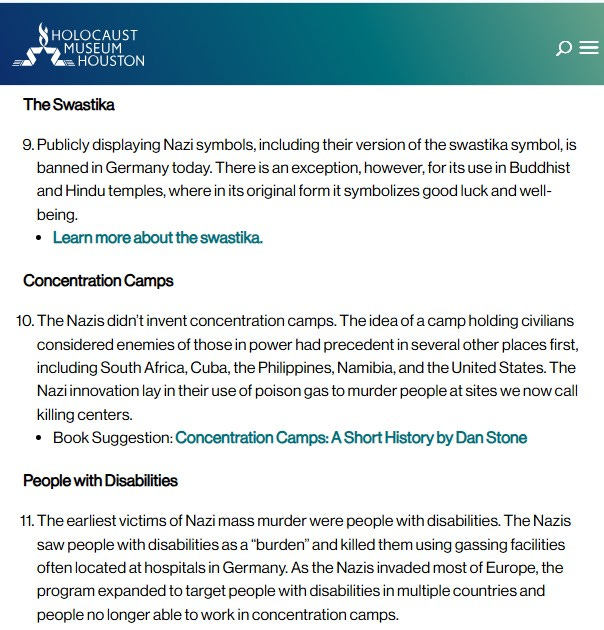
The Holocaust Memorial Museum dedicates a page of its website to early warning signs of the impending genocide–and with 20/20 hindsight, it is no surprise that there were many. [2025 NOTE: The aforementioned resources appear to have been removed from the U.S. Holocaust Memorial Museum website; the resources still can be seen here, via the Internet Archive’s Wayback Machine.] Yet, the German people did not suddenly wake up one morning with radically different views and a desire to gas and burn millions of people. So what happened? People ignored the warning signs:
Territorial expansion: Germany invaded Austria and implemented anti-Jewish legislation
Discrimination spreads: Following Germany’s lead, other countries implemented discrimination against Jewish people
Refusal to accept immigrants: The U.S., along with many other countries, expressed sympathy for the Jewish people of Europe but refused to accept refugees (with the exception of the Dominican Republic)
Systematic persecution: The Nazi party opened the first concentration camp
Legal discrimination: Jewish people were required to adopt Jewish names and register them federally
Forced emigration: Germany and Austria forced Jewish citizens from their countries, requiring everyone who left to pay a fee and surrender property
Neighboring nations surrendered and allowed German laws to spread across Europe
Targeted violence: The German government burned synagogues and homes, and Jewish people were arrested and killed by federal forces
Economic exclusion: Germany prohibited Jewish people from owning and operating businesses
It is probably natural for rational and decent people to think that this couldn’t happen again, and certainly not in our country where it never happened in the first place—but we can’t let pride cloud our vision.
Actor George Takei, an American of Japanese descent, recently has been outspoken about growing up in an internment camp, and increasingly outspoken in the aftermath of the Paris bombings. “The internment happened because there ‘was lack of political leadership. Political leadership failed. And the same thing is happening now,’ Takei told CNN.”
It is easy to think that the United States of America is too good and fair ever to support these sorts of activities–easy especially given that our government is less than forthcoming about the truth. For 50 years, the U.S. Census Bureau denied accusations of having used its household data to identify and round up Japanese Americans for internment (based on a German SS model of identifying Jewish people this way), but ultimately had to admit its complicity when the statute of limitations on its confidential information ran out less than a decade ago. With the disclosure of this information, we know better. Does that mean we will do better?
Not if Donald Trump has anything to say about it—and he has a lot of disturbing things to say. To some, Trump’s comments are just what they feel they need to hear right now, but it is useful to remember that this sentiment is exactly how Hitler won over Germany.
“@JamesPWilson1: @realDonaldTrump When you become president, we will avenge all of the innocents who isis killed”
— Donald J. Trump (@realDonaldTrump) November 21, 2015
Hitler has been so rightly vilified in our history books that he takes on a kind of supervillain status which makes comparisons to an actual living person seem preposterous. But the truth is, Adolf Hitler was just one troubled human being with a great power to persuade. So is (inexplicably) Donald Trump. Weeks ago, Trump was a joke because he had nothing of any real consequence to say: “I will do something…terrific! I’ll be terrific! I’ll make America great again.” Like so many others, I laughed at the idea of Donald Trump running for president because he was vapid, unselfconsciously pompous, and made such foolish exclamations that he didn’t seem to have a prayer. Now Donald Trump says these things:
“Our leaders are stupid, our politicians are stupid, and the Mexican government is much sharper, much more cunning. [So] they send the bad ones over because they don’t want to pay for them, they don’t want to take care of them.” –GOP debate, August 2015
“When Mexico sends its people, they’re not sending their best. They’re sending people that have lots of problems, and they’re bringing those problems to us. They’re bringing drugs. They’re bringing crime. They’re rapists.” — Trump’s presidential campaign announcement
“We better get tough with RADICAL ISLAMIC TERRORISTS, and get tough now, or the life and safety of our wonderful country will be in jeopardy!” — Twitter, November 2015
“13 Syrian refugees were caught trying to get into the U.S. through the Southern Border. How many made it? WE NEED THE WALL!” — Twitter, November 2015
At my most generous, it’s impossible to deny that Donald Trump is a true racist and a xenophobe—not just the kind that curmudgeonly complains from his front porch, but the kind who wants to change laws to punish people for being something other than white and wealthy.
At my most paranoid, it’s impossible not to think that Donald Trump has the capacity to let his ego drive this country toward a great atrocity.
If we take each of the holocaust warning signs from above, Trump checks off many and his rhetoric indicates he would be willing to check off even more: He wants to expand our country’s influence abroad, violently, by “bombing the shit out of Syria.”
He wants to deny innocent refugees from that country, while bombing the shit out of them, any safe harbor in any other place.
He attributes ISIL’s violence to all Muslims, expanding on the anti-Mexican bigotry with which he began his campaign.
Among the most troubling, he responded “absolutely” when asked whether he thinks Muslim Americans should be forced to carry federally issued ID cards and be entered into a national database; while he now backtracks on this, when an NBC reporter asked him how this would be different from the Nazi Jewish registration process, the best answer he could give was “you tell me.”
I know that most people will regard a comparison of Adolf Hitler and Donald Trump to be a huge leap, but the facts are there. I hope, truly, that Trump is all talk–but his talk is terrifying. His talk is loaded with all the potential energy that it would take not only to launch World War III, but to transform this country from our historic beacon-of-liberty status to its polar opposite: a contemporary Nazi-era Germany.
Trump, like Hitler, can only be partially blamed for the hateful sentiments he is spreading. The real responsibility lies within the masses of people who follow these lunatics.
I came along long after Hitler, and there are too many sources with too many theories to speculate what drove him to becoming a living and breathing version of extreme mental illness. Trump’s cause seems simple: It’s his ego. Early in the campaign, he proved that he would say anything that got him a headline, and he’d repeat anything that caused his poll numbers to go up.
Great poll numbers all over and beating Hillary Clinton one on one. Thank you!
— Donald J. Trump (@realDonaldTrump) November 22, 2015
A glance at Trump’s Twitter feed on any given day reveals that “winning” is still his motivation. Trump’s only vested interests are (as stated) realizing the United States’s global superiority again and (as demonstrated) being first in the polls so that he can call himself a leader, and in his effort to do so, he panders to all of us and tells us we should be first. The ways by which he wants to do this have become inexplicably and frighteningly contagious among the American people, and taking the actions he proposes would be adding gasoline to the fiery words the man is spewing.
Donald Trump is a recollection of what I learned in the history was the greatest atrocity of the past, not a beacon of hope for the future of the United States. The only place his presidency would lead us is straight to hell.
I challenge anyone to read this short essay from the Holocaust Memorial Museum and deny the parallels between the pre-holocaust warning signs and Donald Trump’s current election platform. I feel sick even suggesting it, but with the Japanese internment and federal agencies’ complicit involvement and subsequent denial, we have ample evidence to be aware that we are not too good or too smart to fall into the evil trap of ethnic profiling and persecution. We must heed the warning signs before it’s too late.
Comments
Nothing yet. Say the first thing.
Sign in to join the conversation.