
AI and Blockchain are two “trendy” technologies. Both will have major impacts on the internet and our Society. They can both automate tasks, but they are very different. Blockchain has a lot of qualities where AI has defaults… so let’s see how can blockchain make AI better?
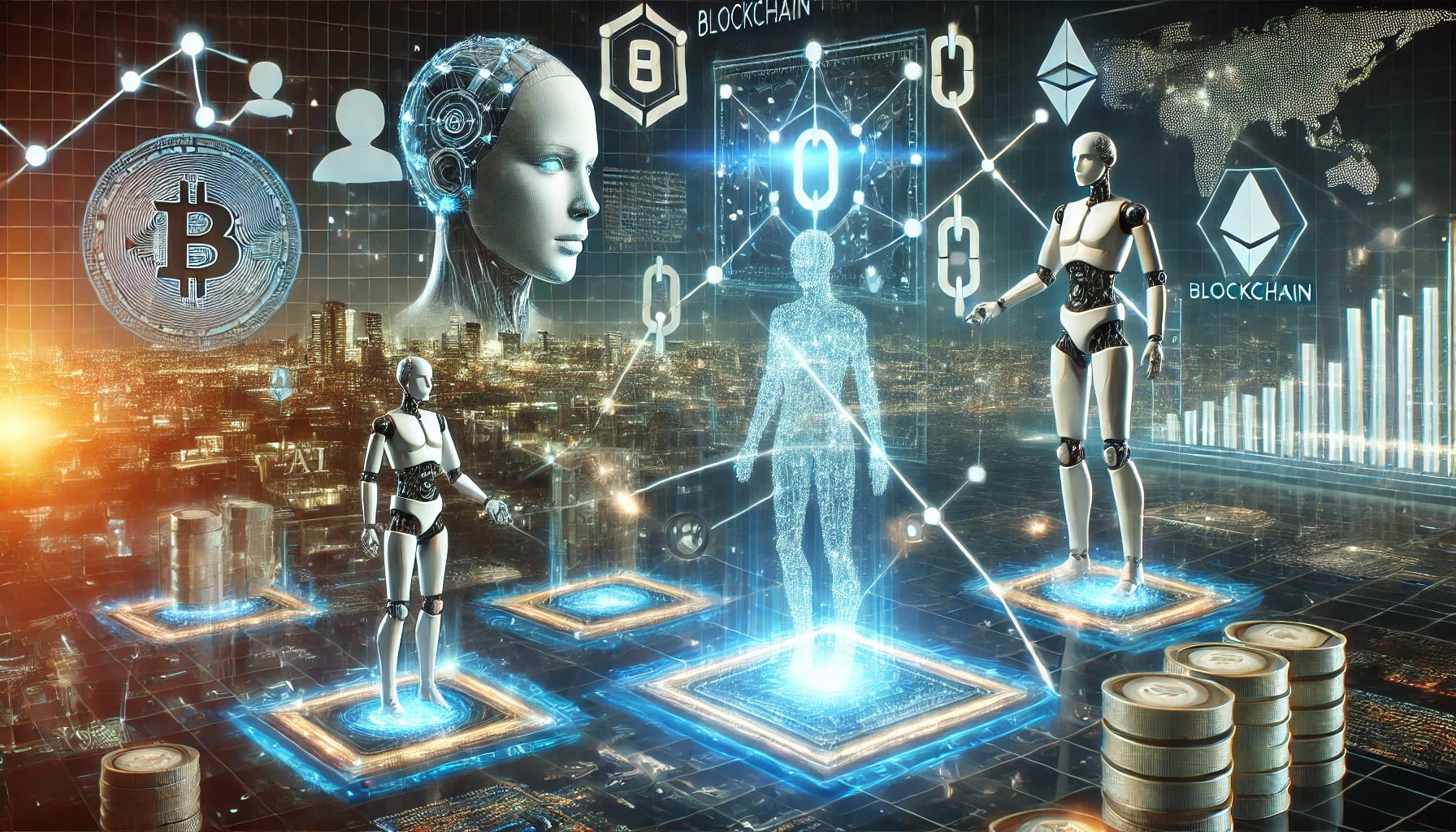
But first, let’s start by a quick reminder of what are AI and Blockchain.
Artificial intelligence (AI) tries to replicate human problem-solving and decision-making. AI includes sub-fields like machine learning, deep learning or more recently Generative AI, which use algorithms trained on data for predictions, classifications or content generation. Benefits of AI include automating repetitive tasks (more or less complex), enhancing decision-making, and improving customer experiences.
Blockchain is a shared, immutable ledger for transparent and secure data exchange among multiple parties. This decentralized network tracks orders, payments, accounts, and more without third-party authentication. By providing a unified view of the truth, it enhances trust and efficiency. Blockchain's reliable, auditable data sharing is now used, for example, in healthcare management, cross-border payments, and supply chain monitoring.
Blockchain is essentially the opposite of AI in key ways: it is transparent, traceable, trustworthy, and tamper-free. It has the potential to counteract the opacity of AI's black box solutions and provide the safety, security, and trustworthiness essential for AI applications.
By using the blockchain, AI could be more decentralized in the storage of data, the computing power, the proof of provenance and even in its development itself. Indeed, decentralization spreads decision-making authority across a network of participants, encouraging collaboration, innovation, and diversity in AI development. This shift from the centralized model could create a more agile and adaptive AI ecosystem.
Here are the main ideas on how blockchain can help AI be better:
Security and Privacy of Data: Blockchain's cryptographic algorithms and decentralized architecture ensure that sensitive information stays encrypted and is accessible only to authorized parties.
But, the data is public, even if encrypted, so not all data should be stored on the Blockchain.
Transparency and explainability: blockchain operates as a transparency machine, ensuring data integrity. Transparency aligns with ethical requirements for AI, especially the explainability.
Traceability and integrity of data : immutable records enable audits, review of datasets, and identification of biased algorithms.
Public auditing: recording all variables and processes in the blockchain increases explainability of AI systems and help to solve the black box problem.
Decentralized Data & computing networks: it prevents data manipulation and allows small AI companies to access trustworthy data directly and computing power.
Data ownership verification: blockchain's capacity to decentralize identity and verification can guarantee the authenticity and ownership of intellectual property used in training AI.
Incentive systems for secure data sharing: blockchain can create incentive / royalties systems for users or companies to contribute and share data in a secure and private way. It promotes a more ethical governance of data.
To conclude, Blockchain can make AI more transparent, trustworthy and ethical. It can, as an example, be used to fight the deepfakes as it can create a documented and traceable data trail, enabling the distinction between synthetic deepfakes and the original, unaltered content.
Find all the sources here.
Comments
Nothing yet. Say the first thing.
Sign in to join the conversation.